

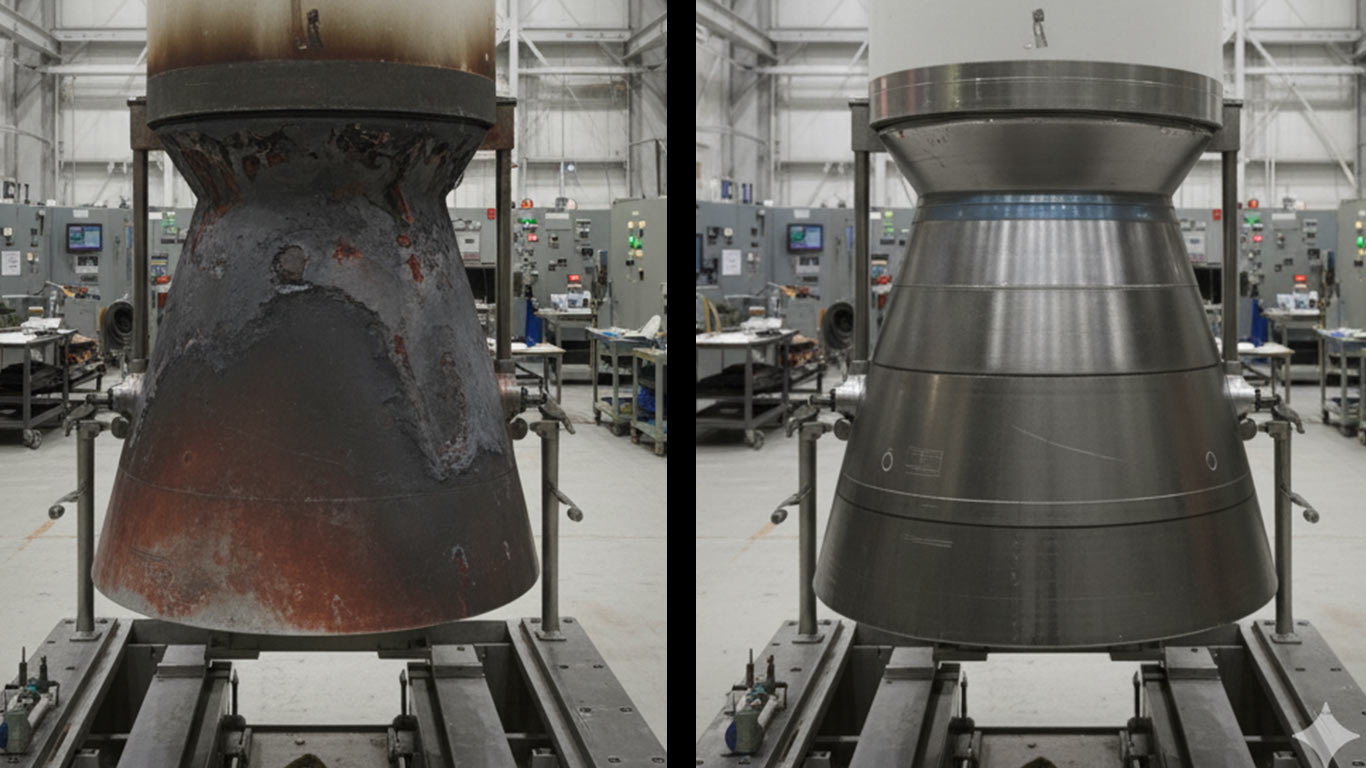

Titanium Carbide surface undergoing laser cleaning showing precise contamination removal
Alessandro Moretti
Alessandro MorettiPh.D.Italy
Laser-Based Additive Manufacturing

Titanium Carbide Laser Cleaning Settings

When laser cleaning titanium carbide, make sure you watch its exceptional hardness compared to softer ceramics like alumina, which can crack under aggressive pulses while this one resists without fracturing. You must start with controlled power to avoid overheating its dense structure, unlike metals that dissipate heat faster. This difference demands slower scan speeds, so you bring back the surface cleanly without compromising its tough, corrosion-resistant finish.
Titanium Carbide Machine Settings

Power Range

150
W
1
150
120

Wavelength

1,064
nm
355
1,064
1.1e4

Spot Size

50
μm
0.1
50
500

Repetition Rate

50
kHz
1
50
200

Fluence Threshold

2.5
J/cm²
0.3
2.5
4.5

Pulse Width

15
ns
0.1
15
1,000

Scan Speed

500
mm/s
10
500
5,000

Pass Count

3
passes
1
3
10

Overlap Ratio

50
%
10
50
90

Titanium Carbide Material Safety

Shows damage risk across parameter space. Green = safe, Red = damage danger.

EXTREME
Fluence:152.79 J/cm²
From optimal:83%
Pulse Duration (ns)
1000
750
500
250
0
1
21
41
61
80
100
120
Power (W)

Titanium Carbide Energy Coupling

Shows laser energy transfer efficiency. Green = high coupling (energy absorbed), Red = poor coupling (energy reflected).

VERY GOOD
Fluence: J/cm²
From optimal:17%
Pulse Duration (ns)
1000
750
500
250
0
1
21
41
61
80
100
120
Power (W)

Titanium Carbide Thermal Stress Risk

Shows thermal stress and distortion risk. Green = low stress risk, Red = high stress/warping/cracking risk.

VERY HIGH
Fluence: J/cm²
From optimal:71%
Pulse Duration (ns)
1000
750
500
250
0
1
21
41
61
80
100
120
Power (W)

Titanium Carbide Cleaning Efficiency

Shows cleaning performance across parameter space. Green = optimal effectiveness, Red = ineffective.

POOR
Fluence:152.79 J/cm²
From optimal:63%
Pulse Duration (ns)
1000
750
500
250
0
1
21
41
61
80
100
120
Power (W)

Titanium Carbide Heat Buildup

See if your multi-pass cleaning will overheat and damage the material

Safe

Heat Safety

Heat Control

Cooling Efficiency

Pass Optimization

📈 Heat Profile

Safe (<150°C)
Damage (>250°C)
0°C100°C200°C300°C✓ Safe🚨 Damage20°CPass 1Pass 2Pass 3

🔧 Laser Settings

Pulse Energy:3000.00 mJ
Total Sim Time:90.6s

🌡️ Live Temperature

20°C
✅ Safe
Pass 1 of 3
Time: 0.0s / 90.6s

▶️ Simulation Controls

Diagnostic & Prevention Center

Proactive strategies and reactive solutions for titanium carbide

🌡️thermal management

Heat accumulation

Impact: Excessive heat can damage substrate or alter material properties

Solutions:

  • Reduce repetition rate
  • Increase scan speed
  • Add cooling time between passes

Prevention: Monitor surface temperature and adjust parameters accordingly

🔍surface characteristics

Variable surface roughness

Impact: Inconsistent cleaning results across different surface textures

Solutions:

  • Adjust energy density based on surface condition
  • Use multiple passes with progressive settings
  • Pre-characterize surface before cleaning

Prevention: Standardize surface preparation procedures

Titanium Carbide Dataset Download

License: Creative Commons BY 4.0 • Free to use with attribution •Learn more

Parameter Relationships

Shows how changing one parameter physically affects others. Click any node to see its downstream impacts and role.

PowerRangeWavelengthSpotSizeRepetitionRateFluenceThresholdPulseWidthScanSpeedPassCountOverlapRatio

Power Range

Amplifies damage risk in Pulse Width. Keep low to maintain safety margins.

Spot Size

Same power in a smaller spot creates much higher energy density.

Pulse Width

More power means higher peak intensity. Too much can damage the material.

Pass Count

Using more passes means you can use lower power and still get the job done.