

FDA
FDA 21 CFR 1040.10 - Laser Product Performance Standards

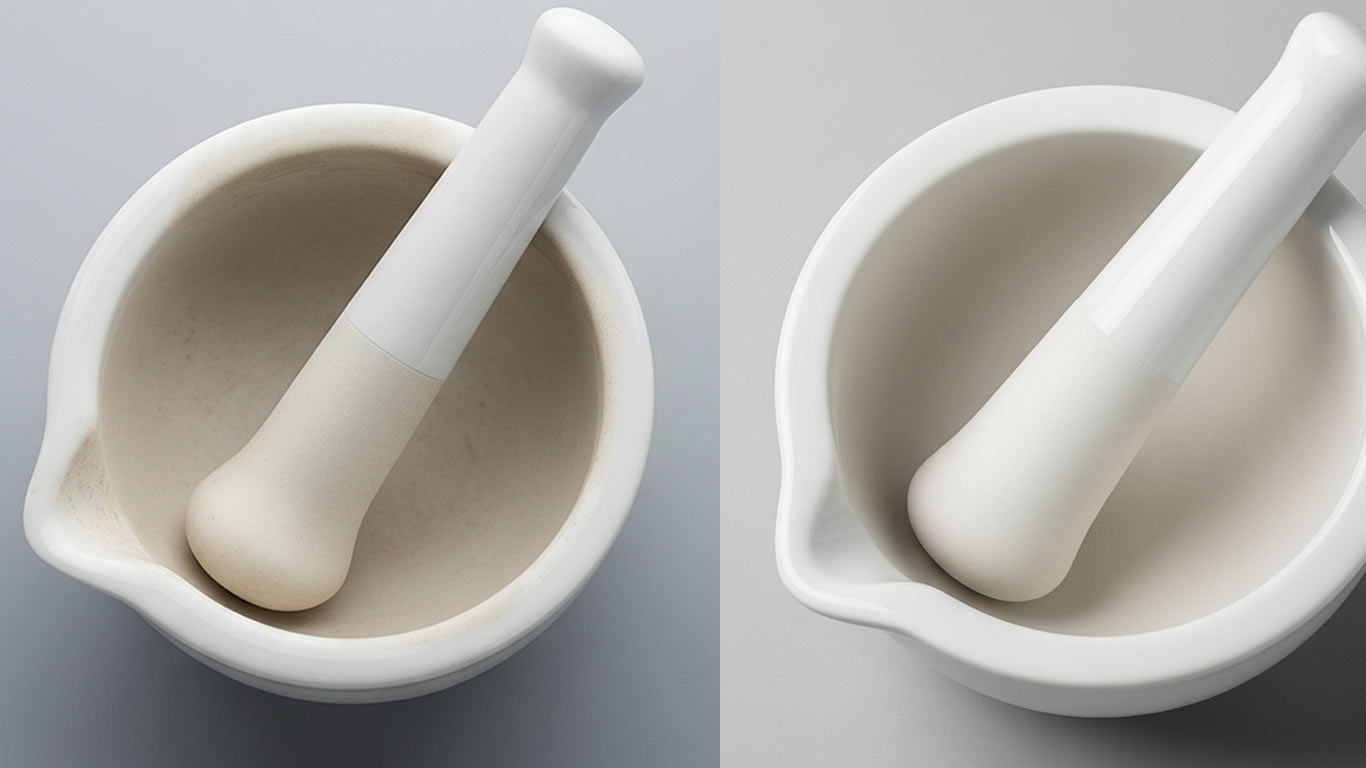

Porcelain's combination of high compressive strength (414 MPa) and low thermal expansion (5.5×10⁻⁶ K⁻¹) makes it more forgiving than softer ceramics — but the 70% surface reflectance at 1064 nm means most IR energy bounces back, raising backscatter risk while delivering only modest cleaning energy to the surface. The practical limit is 2.8 J/cm²; above that, the glaze and body expand at different rates and thermal shock fractures propagate through the cross-section. UV wavelength (355 nm) cuts through this problem by improving absorption and reducing backscatter simultaneously. Bay Area customers include Victorian-era property owners restoring bathroom tile in Alamo Square, BART station facilities managers cleaning transit wall panels, and commercial kitchen operators in San Francisco and Oakland removing baked-on residue where chemical cleaning is restricted. High compressive strength (414 MPa) makes porcelain mechanically robust, but 70% 1064 nm surface reflectance means more beam management is required than tile hardness suggests — backscatter risk rises with flat, polished surfaces and must be accounted for in operator positioning.
This laser is amazing at tackling intricate woodwork designs.

Fluence (J/cm²)
Exceeding 2.8 J/cm² on porcelain causes thermal shock cracking and glaze spalling. Porcelain has low heat spread rate at 6.9×10⁻⁷ m²/s. Heat spreads slowly and can create steep thermal gradients. The damage threshold is 1.8 J/cm². Effective cleaning uses 1.0-2.0 J/cm² for most contaminants. Above 2.8 J/cm², micro-cracking begins. Porcelain's low fracture toughness (0.9 MPa√m) makes it susceptible to crack propagation from thermal stress.
Porcelain has compressive strength of 414 MPa and density of 2.4 g/cm³. Thermal expansion is very low at 5.5×10⁻⁶ K⁻¹. The laser damage threshold is 2.8 J/cm². Thermal conductivity is 1.5 W/m·K, higher than plastics but still low. Porcelain reflects about 70% of 1064 nm energy. UV wavelengths are preferred for better absorption. Porosity is extremely low at 0.003 (0.3%).
Use UV wavelength (355 nm) for best absorption. For 1064 nm systems, start with energy level at 1.0-1.8 J/cm². Scan at 500 mm/s with 70% overlap. Pulse length at 20 ns. Porcelain has high surface reflectance (70%) and low fracture toughness. Never exceed 2.8 J/cm². Two passes maximum. Allow cooling between passes to prevent thermal shock. For glazed porcelain, reduce energy level by 20-30%. For antique or crazed pieces, start at 0.5 J/cm² and increase slowly while monitoring for crack propagation. Always test on a hidden area first. UV wavelengths are strongly preferred over IR.
Laser cleaning porcelain produces fine silicate particulates requiring P100 respiratory protection and HEPA filtration. Porcelain is kiln-fired to 1200–1400°C, producing a dense vitreous matrix (typically >95% sintered feldspar, quartz, and kaolin) with crystalline silica phases incorporated into the glass network — the laser-generated dust retains free crystalline silica at concentrations that trigger Cal/OSHA CCR Title 8 Section 5155 PEL compliance (50 μg/m³ respirable crystalline quartz). Porcelain's high surface hardness (Mohs 7–8) means effective cleaning requires energy level above 1.0 J/cm², generating finer, more respirable particles than softer stone. Bay Area applications include Victorian-era bathroom tile restoration in Alamo Square, BART station wall tile cleaning, and commercial kitchen floor tile decontamination in San Francisco and Oakland where chemical cleaning residues are regulated. Porcelain reflects about 70% of 1064 nm energy, increasing backscatter hazard. Use full beam enclosure and laser safety eyewear rated for the specific wavelength. UV wavelengths reduce backscatter. Follow ANSI Z136.1. The primary hazard is thermal shock cracking, not fumes. Monitor for crack propagation during processing. For antique or valuable pieces, consult a conservation specialist before cleaning.
FDA 21 CFR 1040.10 - Laser Product Performance Standards

ANSI Z136.1 - Safe Use of Lasers

IEC 60825 - Safety of Laser Products

OSHA 29 CFR 1926.95 - Personal Protective Equipment
Historic preservation contractors working on Victorian bathroom and kitchen tile throughout San Francisco choose laser cleaning because abrasive methods crack glazed surfaces and chemical strippers damage grout lines — laser cleaning removes staining and mineral deposits without contact. BART and Caltrain facility managers use it for station wall tile where high-traffic grime accumulates and power washing causes water infiltration. Commercial kitchen operators in San Francisco and Oakland need degreasing that meets health department standards without chemical residue; laser cleaning leaves no secondary contamination. Dental and medical device manufacturers in the South Bay use high-purity porcelain components that require particle-free surfaces before assembly.


Porcelain reflects about 70% of 1064 nm energy, increasing backscatter hazard. Use full beam enclosure. UV wavelengths (355 nm) are preferred because porcelain absorbs UV better. Standard laser eyewear is required.
Laser cleaning crazed porcelain carries crack propagation risk. Start at 0.5 J/cm², well below the 2.8 J/cm² damage threshold. Use UV wavelength. Increase energy level slowly while monitoring for crack growth. Test on a hidden area first.
Use UV wavelength (355 nm) when possible. Energy level at 1.0-1.8 J/cm². Scan at 500 mm/s with 70% overlap. Never exceed 2.8 J/cm². Two passes maximum. Allow cooling between passes. For glazed surfaces, reduce energy level by 20-30%.
Antique vase cleaning: $50-200 per piece. Porcelain insulator cleaning: $5-15 per linear foot. Dental porcelain prep: $10-30 per unit. UV laser systems cost 30-50% more than IR but are strongly preferred.
Porcelain's vitrified glaze absorbs 1064 nm differently than unglazed ceramic — glaze type and contamination depth together determine the appropriate settings.