ANSI
ANSI Z136.1 - Safe Use of Lasers

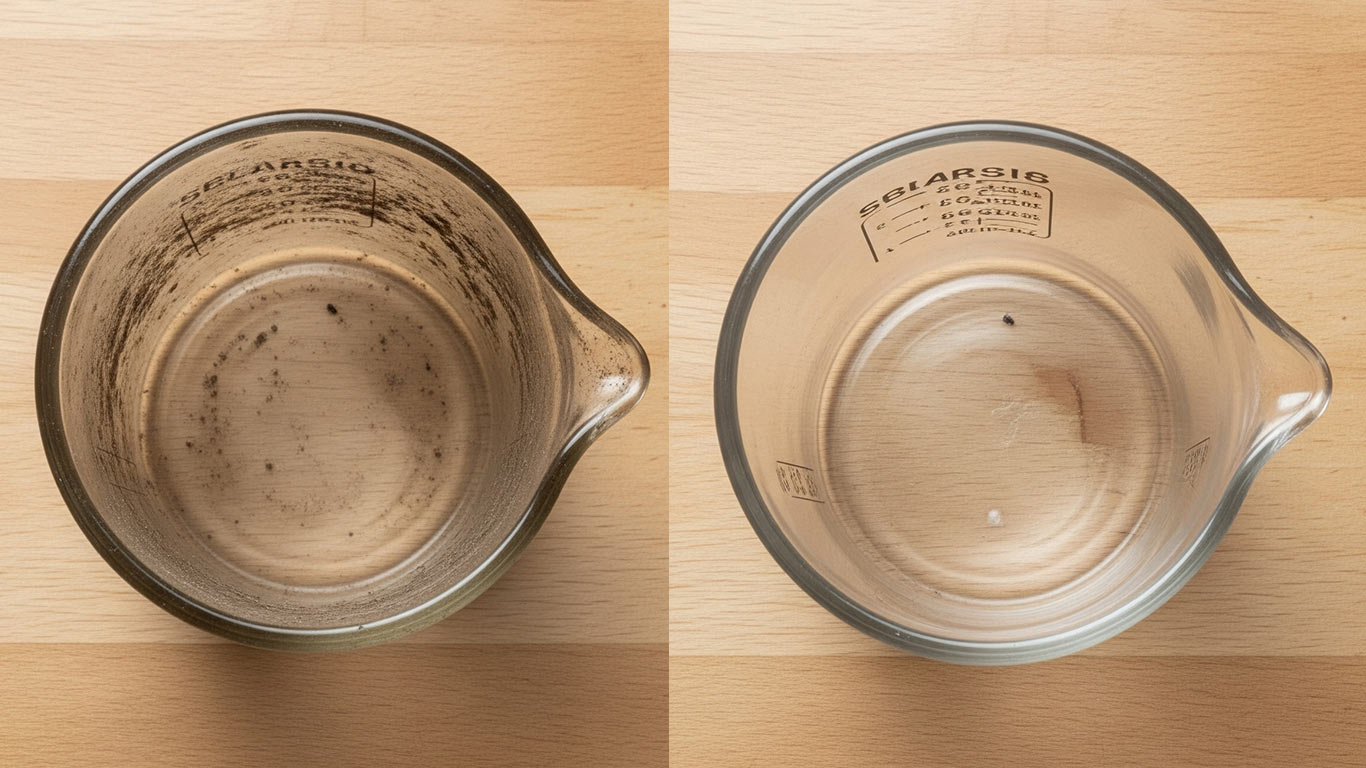

Soda-lime glass absorbs only 2–4% of 1064 nm laser energy, which means most of the beam reflects or transmits — but the thermal expansion coefficient of 9×10⁻⁶ K⁻¹ (nearly three times borosilicate) means the small fraction that does absorb creates steep thermal gradients. Thin glazing panels above 3 J/cm² can fracture from that gradient alone. The damage threshold at 12.5 J/cm² precedes the damage threshold at 18.5 J/cm², making UV wavelength (355 nm) the preferred approach for surface contamination removal, with better absorption, less thermal gradient, and lower backscatter risk. At 2–8 J/cm² in IR mode with 1,500 mm/s and 50% overlap, organic films and graffiti clear safely on thick architectural glass. Bay Area landmark buildings — Salesforce Tower, Chase Center, Mission Dolores stained glass — present cleaning challenges where chemical methods are either prohibited or technically inadequate. The 3× higher thermal expansion coefficient compared to borosilicate means thin soda-lime glazing panels above 3 mm face thermal gradient fracture risk — a constraint that limits pulsed cleaning to thicker architectural glass where heat can dissipate before gradient stresses accumulate.
Hands down, this was one of the most effective tools I've ever used for a restoration project, and one that delivered real savings in both time and effort.

Fluence (J/cm²)
Soda-lime glass has low absorption at 1064 nm. Only about 2-4% of laser energy absorbs. The damage threshold is 12.5–18.5 J/cm². Damage occurs before cleaning. Heat spread rate is 4.8×10⁻⁷ m²/s. Heat spreads slowly. High thermal expansion (9×10⁻⁶ K⁻¹) causes poor thermal shock resistance. Effective cleaning relies on contaminant absorption, not glass absorption. UV wavelengths (355 nm) are strongly preferred. Never exceed 12 J/cm² at 1064 nm. For 355 nm, use 1-5 J/cm².
Soda-lime glass has compressive strength of 1000 MPa and density of 2.5 g/cm³. Thermal expansion is high at 9×10⁻⁶ K⁻¹. Far higher than low-expansion Borosilicate Glass. The laser damage threshold is 12.5–18.5 J/cm². Thermal conductivity is 1.06 W/m·K. Fracture toughness is 0.75 MPa√m, low. Thermal shock resistance is poor due to high expansion. Soda-lime glass is more thermal-shock sensitive than borosilicate (Pyrex).
Use UV wavelength (355 nm) when possible. For 1064 nm systems, start with energy level at 2-8 J/cm², well below the 12.5 J/cm² damage threshold. Scan at 1500 mm/s with 50% overlap. Pulse length at 20 ns. Soda-lime glass has poor thermal shock resistance due to high thermal expansion (9×10⁻⁶ K⁻¹). Never exceed 12 J/cm². Allow cooling between passes. For thin glass (<3 mm), reduce energy level by 30-50%. Contaminants must absorb the laser wavelength. Glass itself absorbs very little at 1064 nm. UV is strongly preferred.
Laser cleaning soda-lime glass (72% SiO₂, 15% Na₂O, 10% CaO) generates amorphous silicate particulate from glass network fragmentation at the cleaning front. Unlike crystalline silica from stone, amorphous silica does not carry the IARC Group 1 lung cancer classification (that applies specifically to crystalline forms — quartz, cristobalite, tridymite). Cal/OSHA CCR Title 8 Section 5155 applies a 5 mg/m³ PEL to amorphous silica dust (respirable fraction); respiratory protection is required. The thermal expansion coefficient of 9 × 10⁻⁶ /°C means steep thermal gradients can induce shock fracture in thin glazing panels above 3 J/cm² — UV wavelengths (355 nm) reduce this risk. Allow cooling between passes; avoid IR laser cleaning on glass thinner than 3 mm. Standard laser safety eyewear for 1064 nm is required.
Building envelope glass cleaning on San Francisco high-rises — Salesforce Tower, Chase Center, Embarcadero Center — requires methods that remove atmospheric soiling and surface films without chemical residue that affects energy performance coatings; laser cleaning delivers that without scaffolding-mounted spray rigs. BART station booth and transit enclosure glass cleaning in Oakland and San Francisco needs graffiti and adhesive removal that doesn't require replacement; laser cleaning removes surface contamination without scratching tempered panels. Stained glass restoration in Mission Dolores and Grace Cathedral requires spot cleaning of individual panes where chemical methods would damage lead came and pigment. Solar panel glass cleaning for Bay Area commercial and industrial installations benefits from laser surface prep that restores transmission without micro-scratching the anti-reflective coating.


Use UV wavelength (355 nm) instead of IR. Keep energy level below 10 J/cm². Allow cooling between passes. Thermal expansion (9×10⁻⁶ K⁻¹) is high. Thin glass (<3 mm) cracks easily. Never exceed 12 J/cm². Multiple low-energy level passes safer.
Use standard laser eyewear for 1064 nm or 355 nm. Backscatter is low (4% surface reflectance). Primary hazard is thermal shock cracking. Use HEPA filtration for dust. Follow ANSI Z136.1. Allow glass to cool between passes.
Use 20 ns pulse length for IR. For UV, 10-20 ns works. Shorter pulses (picosecond) reduce thermal load but increase cost. Soda-lime glass absorbs UV better than IR. UV allows lower energy level (1-5 J/cm²) vs IR (2-8 J/cm²).
Window cleaning: $2-10 per square foot. Glass container cleaning: $0.05-0.50 per container. Museum glass: $10-50 per square foot. UV laser systems cost 30-50% more than IR but are strongly preferred for glass. Thermal shock risk is lower with UV.
Soda-lime glass has a relatively close cleaning-to-damage gap — contamination determines the pulse length, cleaning speed, and pass count combination needed.