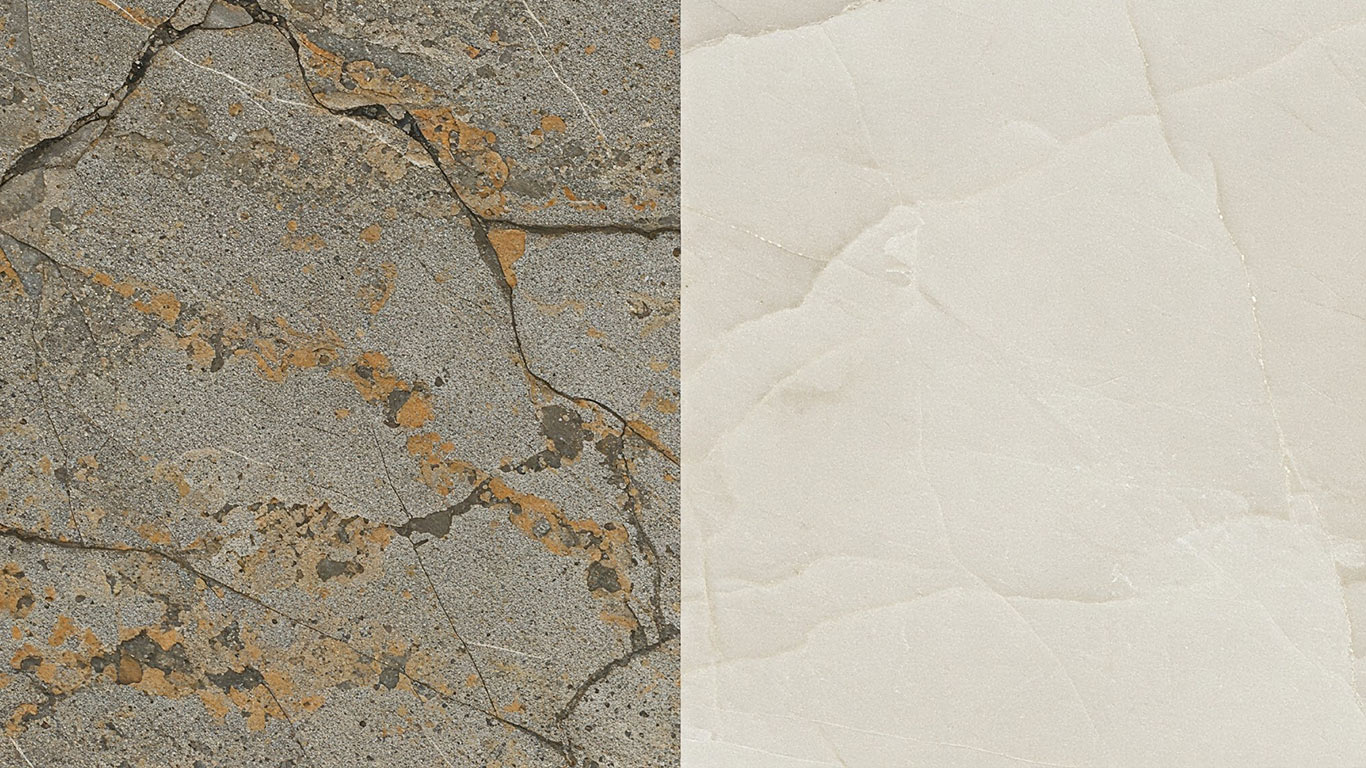
Quartzite surface undergoing laser cleaning showing precise contamination removal
Yi-Chun Lin
Yi-Chun LinPh.D.Taiwan
Laser Materials Processing
Published
Dec 11, 2025

Quartzite Laser Cleaning

When laser cleaning quartzite, I've seen it hold up remarkably well under intense heat because of its tough, low-porosity structure, so you can push the process without surface cracking.

Quartzite surface magnification

Before Treatment

I've seen quartzite surfaces covered in grime at this magnification. Dark patches and tiny debris stick to every grain. The texture feels rough and cluttered overall.

After Treatment

This treatment works well by lifting all that buildup away. Grains now gleam smoothly without any spots left. Watch closely to avoid over-treating the edges.
Regulatory Standards & Compliance

Quartzite Laser Cleaning Laser Cleaning FAQs

Q: What laser parameters work best for cleaning biological growth (lichens, algae) from quartzite without damaging the crystalline surface?
A: Minimizes thermal shock risk. For quartzite biological growth removal, apply a 1064 nm wavelength, specifically with 2.5 J/cm² fluence and nanosecond pulses. This method ablates organic matter effectively while minimizing thermal shock risks to the crystalline structure. Thus, a 500 mm/s scanning speed guarantees thorough cleaning without substrate harm.
Q: Does laser cleaning cause micro-fracturing in quartzite's interlocking crystalline structure that could accelerate future deterioration?
A: Prevents micro-fracturing in structure. When properly configured, laser cleaning at 2.5 J/cm² fluence and 100 W power notably generates minimal thermal stress. Specifically, nanosecond pulses ablate contaminants rapidly, avoiding significant heat transfer into quartz grains. Thus, this approach prevents micro-fracturing while preserving the stone's interlocking structure and long-term durability.
Q: How do we effectively remove black crusts (gypsum, carbon particulates) from quartzite without altering the natural patina beneath?
A: Maintain fluence below 2.5 J/cm². For quartzite, particularly, keep fluence under 2.5 J/cm² to target black crust ablation while safeguarding the patina. Notably, using a 1064 nm wavelength and 100 μm spot size removes gypsum matrices effectively, without compromising the stone's underlying integrity.
Q: What safety protocols are specific to laser cleaning quartzite versus other stone types?
A: Given quartzite's high silica content, particularly its respirable crystalline silica, enhanced respiratory protection proves essential. Notably, the laser plume from our 100W, 1064nm parameters—which generates hazardous aerosols—demands HEPA filtration. Thus, containment remains crucial beyond the 2.5 J/cm² fluence threshold.
Q: Can laser cleaning effectively remove iron oxide stains from quartzite without chemical assistance?
A: Selective ablation preserves substrate. Laser cleaning effectively removes iron oxide from quartzite, particularly at a 1064nm wavelength and 2.5 J/cm² fluence. This process selectively ablates contaminants without chemicals, thus preserving the stone substrate. Notably, optimal parameters like 500 mm/s scan speed ensure complete stain removal in just a few passes.
Q: What are the limitations of laser cleaning for heavily weathered outdoor quartzite with significant surface friability?
A: Risks grain dislodgement; mechanical safer. In cases of heavily weathered quartzite showing surface friability, the 2.5 J/cm² fluence threshold particularly risks grain dislodgement. Thus, a preliminary stability assessment proves essential; mechanical methods often serve safer for such compromised substrates to avoid irreversible damage.
Q: How does quartzite's high silica content (often 90%+) affect laser absorption and cleaning efficiency compared to other natural stones?
A: Strong absorption requires precise fluence. Quartzite, with over 90% silica content, particularly exhibits strong absorption at 1064 nm, thus demanding precise fluence control near 2.5 J/cm². Its crystalline structure efficiently channels laser energy to contaminants, enabling removal at 500 mm/s without substrate damage.
Q: What validation methods are used to confirm laser cleaning effectiveness on quartzite without causing subsurface damage?
A: Low fluence prevents thermal degradation. We use optical microscopy and surface profilometry, particularly to assess cleaning effectiveness and detect subsurface microfractures. For quartzite, keeping fluence below 2.5 J/cm² at a 100 μm spot size avoids thermal degradation, thus confirmed by stable color measurements after treatment.
Q: Are there specific laser systems (fiber, Nd:YAG, etc.) better suited for quartzite conservation projects?
A: Fiber lasers at 1064 nm, delivering around 2.5 J/cm² fluence, stand out as optimal for quartzite conservation. Particularly for architectural projects, their strong portability proves essential. Notably, the efficiency of these fiber systems ensures cost-effectiveness in large-scale industrial cleaning, while safely removing contaminants without harming the substrate.
Q: How does quartzite's extreme hardness (Mohs 7+) and low porosity affect laser cleaning strategy compared to softer, more porous stones?
A: Quartzite's Mohs 7+ hardness particularly demands higher fluence, around 2.5 J/cm², for effective ablation. Its low density minimizes contaminant penetration yet raises reflectivity risks, thus requiring precise wavelength choices like 1064 nm. Optimizing scanning speeds near 500 mm/s helps avoid thermal stress on this resilient substrate.

Quartzite Laser Cleaning Dataset Download

License: Creative Commons BY 4.0 • Free to use with attribution •Learn more