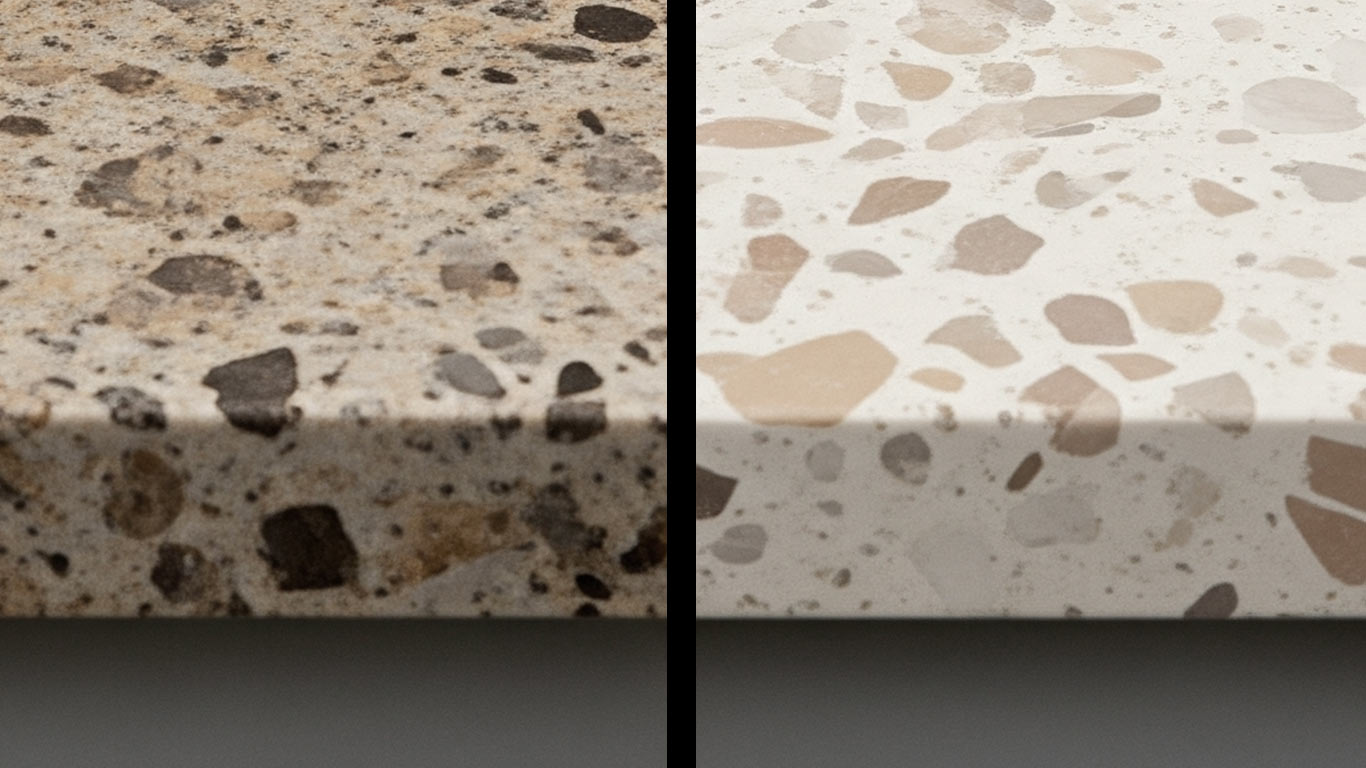
Breccia surface undergoing laser cleaning showing precise contamination removal
Ikmanda Roswati
Ikmanda RoswatiPh.D.Indonesia
Ultrafast Laser Physics and Material Interactions
Published
Dec 16, 2025

Breccia Laser Cleaning

Breccia sets itself apart from conglomerates and other clastic rocks with its sharp, angular fragments, indicating little transport and swift deposition, in contrast to the rounded, worn clasts of its smoother siblings.

Breccia surface magnification

Before Treatment

Looking closely at the contaminated Breccia surface under high magnification, I see a thick layer of dust and grime clinging tightly to the uneven texture. Fine particles scatter across the rough patches, making the whole area look dull and obscured. This buildup hides the stone's natural fragments completely from view.

After Treatment

After the laser treatment, the same Breccia surface appears fresh and revealed in stunning detail. Smooth grains now stand out clearly, free from any clinging debris or haze. The cleaned texture shines with a

Regulatory Standards & Compliance

Breccia Laser Cleaning Laser Cleaning FAQs

Q: How can I safely remove rust stains from Breccia surfaces without harming the natural patina?
A: Preserves underlying textures and colors. Use precise laser ablation straightforwardly to selectively vaporize oxidation layers, while preserving the underlying textures and colors. That method, being non-contact, efficiently sidesteps mechanical abrasion and keeps structural integrity intact during this process.
Q: What are the best practices for maintaining Breccia in outdoor architectural features?
A: Mitigate porous moisture absorption. Keep it straightforward: Schedule regular inspections to monitor moisture in porous areas, applying annual protective sealants to mitigate absorption. Combine that method with gentle dry brushing for surface debris removal.
Q: Is laser cleaning effective for Breccia used in heritage restoration projects?
A: Preserves fragile cementation. Laser technology provides a straightforward approach to targeting surface contaminants without harming the fragile cementation, unlike abrasive methods that could displace fragments. This process efficiently upholds historical authenticity while boosting visual appeal via uniform cleaning.
Q: How does differential weathering affect Breccia countertops, and what can be done?
A: Smooths clast durability discrepancies. Differences in clast durability result in uneven erosion, forming rough patches over time. This process involves applying controlled laser treatments that efficiently smooth out discrepancies, fostering uniform resistance to environmental damage while preserving overall strength.
Q: Why is Breccia prone to staining in urban environments, and how to prevent it?
A: Open matrix enables pollutant infiltration. The open matrix structure permits pollutant entry, resulting in discoloration from acidic contact. A practical approach is applying hydrophobic coatings after installation. This process, paired with periodic laser decontamination, efficiently clears residues while preserving variegated patterns and material durability.
Q: What advantages does laser cleaning offer over traditional methods for Breccia sculptures?
A: Prevents clast loosening. Unlike chemical solvents that seep into pores and cause etching, or mechanical tools risking clast loosening, laser cleaning offers a straightforward, dry removal of grime. This process preserves textural depth and compressive robustness, making it practical for delicate artistic elements in landscaping.
Q: Can Breccia flooring handle heavy foot traffic, and how to clean it routinely?
A: Supports 200 MPa loads. Its robust bonding straightforwardly handles loads up to 200 MPa, yet dirt buildup intensifies porosity issues. For practical cleaning, vacuum first, then apply low-power laser passes to efficiently dislodge particles—skip water-based options that invite biological growth.

Breccia Laser Cleaning Dataset Download

License: Creative Commons BY 4.0 • Free to use with attribution •Learn more