Epoxy Resin Composites surface undergoing laser cleaning showing precise contamination removal
Yi-Chun Lin
Yi-Chun LinPh.D.Taiwan
Laser Materials Processing
Published
Dec 16, 2025

Epoxy Resin Composites Laser Cleaning

For laser cleaning epoxy resin composites, begin by tuning the power to capitalize on their heat resistance and toughness, allowing thorough contaminant removal without surface harm while preserving structural integrity for aerospace components

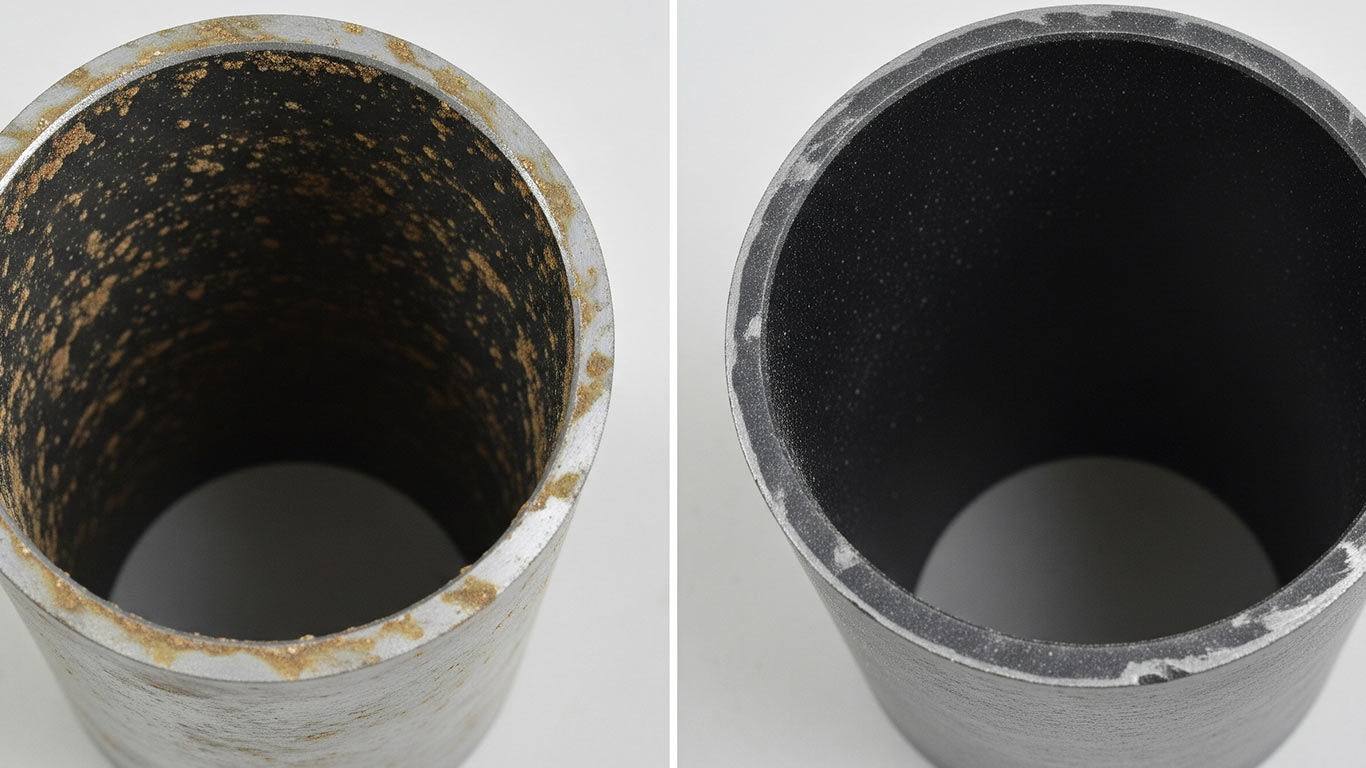
Epoxy Resin Composites surface magnification

Before Treatment

You can see the epoxy resin composite surface covered in scattered dirt particles that cling tightly to its rough texture. Tiny cracks and uneven spots dot the area, making the whole thing look cluttered and worn from contamination. Debris buildup hides the material's true form beneath a hazy layer of grime.

After Treatment

After laser treatment, the surface appears smooth and even, with no traces of those clinging particles left behind. Clear fibers emerge sharply, showing a uniform shine across the cleaned area. The texture now feels

Regulatory Standards & Compliance

Epoxy Resin Composites Laser Cleaning Laser Cleaning FAQs

Q: Can you safely remove epoxy resin from a composite surface with a laser without damaging the underlying carbon or glass fibers?
A: Selective epoxy matrix ablation. Yes, by precisely controlling the 1064 nm wavelength and 2.5 J/cm² fluence, selective ablation of the epoxy matrix is achievable. Specifically, the laser's energy needs absorption in the resin first, thus blocking penetration to underlying fibers and averting their exposure or thermal damage.
Q: What is the best laser wavelength (e.g., 1064nm, 532nm, or 355nm) for cleaning epoxy composite surfaces without causing yellowing or chemical changes?
A: 355nm enables photochemical ablation. For cleaning epoxy composites, 355 nm UV lasers are particularly optimal. Specifically, this wavelength enables photochemical ablation below the 2.5 J/cm² fluence threshold, efficiently breaking molecular bonds without significant heat generation. Thus, it prevents thermal degradation that causes yellowing, preserving the polymer matrix's chemical integrity.
Q: How do you clean contaminated epoxy composites (e.g., mold release, grease, paint) with a laser without just embedding the contaminants deeper?
A: Ablates without melting epoxy. By employing nanosecond pulses at 1064 nm wavelength and fluence exceeding 2.5 J/cm², we specifically target contaminants for ablation. Notably, this approach vaporizes surface layers without melting the epoxy, thus lifting material away to avoid infusion.
Q: Does laser cleaning epoxy composites release hazardous fumes, and what specific filtration or extraction is required?
A: Releases benzene phenol byproducts. Yes, specifically at 2.5 J/cm², laser ablation of epoxy composites releases hazardous pyrolysis byproducts, notably benzene and phenol. Thus, operators require a high-efficiency fume extraction system with HEPA and activated carbon filtration, plus proper respiratory protection.
Q: What laser parameters should I use to ablate a precise depth of epoxy resin for repair or inspection purposes?
A: 2.5 J/cm² fluence with overlap. For controlled epoxy resin ablation, particularly maintain fluence around 2.5 J/cm² using a 50 µm spot size. Thus, fine-tune the number of passes along with 50% beam overlap to accurately control depth removal on irregular composite surfaces.
Q: After laser cleaning an epoxy composite, is the surface properly activated for bonding, or does it require a secondary treatment?
A: Eliminates secondary treatments. Laser cleaning, particularly at 2.5 J/cm² fluence, activates epoxy composites by elevating surface energy and forming micro-roughness. This thus delivers strong adhesion preparation, commonly avoiding extra steps like abrasion, unlike mechanical techniques that typically introduce contaminants.
Q: Why does my laser-cleaned epoxy composite surface sometimes look hazy or have a changed texture?
A: Excessive fluence degrades epoxy matrix. Hazing typically stems from fluence exceeding 2.5 J/cm², which thermally degrades the epoxy matrix. Notably, this generates micro-roughness through selective resin removal. Thus, target a scan speed around 500 mm/s while controlling overlap to curb heat buildup and yield a clearer surface.
Q: Is laser cleaning effective for removing carbonized epoxy after a fire or thermal event?
A: Requires precise fluence control. Laser cleaning removes carbonized epoxy effectively, but specifically demands precise fluence control around 2.5 J/cm². The char layer's altered absorption indicates risks to underlying fibers, thus requiring careful parameter tuning for selective ablation of residue while sparing the composite substrate.
Q: How does the performance of laser cleaning epoxy composites compare to traditional methods like grit blasting or chemical stripping?
A: Selective removal without fiber damage. Laser cleaning surpasses traditional methods, particularly by selectively removing epoxy at 2.5 J/cm² fluence without harming underlying fibers. As a non-contact approach, it avoids secondary waste from grit or chemicals, thus providing better surface preservation. Precise control at 500 mm/s scan speeds delivers consistent, high-quality outcomes for vital aerospace and marine parts.
Q: What are the critical safety considerations when using a high-power laser on an epoxy composite, beyond standard laser safety?
A: Toxic fume generation requires extraction. Beyond standard laser protocols, a primary concern involves toxic fume generation during the 1064 nm ablation process. Particularly at the 2.5 J/cm² fluence threshold, epoxy decomposes into hazardous compounds, thus requiring integrated fume extraction with real-time air monitoring to shield personnel from these carcinogenic byproducts.

Epoxy Resin Composites Laser Cleaning Dataset Download

License: Creative Commons BY 4.0 • Free to use with attribution •Learn more