Limestone surface undergoing laser cleaning showing precise contamination removal
Yi-Chun Lin
Yi-Chun LinPh.D.Taiwan
Laser Materials Processing
Published
Dec 16, 2025

Limestone Laser Cleaning

Compared to denser granites, limestone's porous structure absorbs contaminants more readily during laser cleaning and resists cracking from heat buildup, so you'll preserve surface details without aggressive passes.

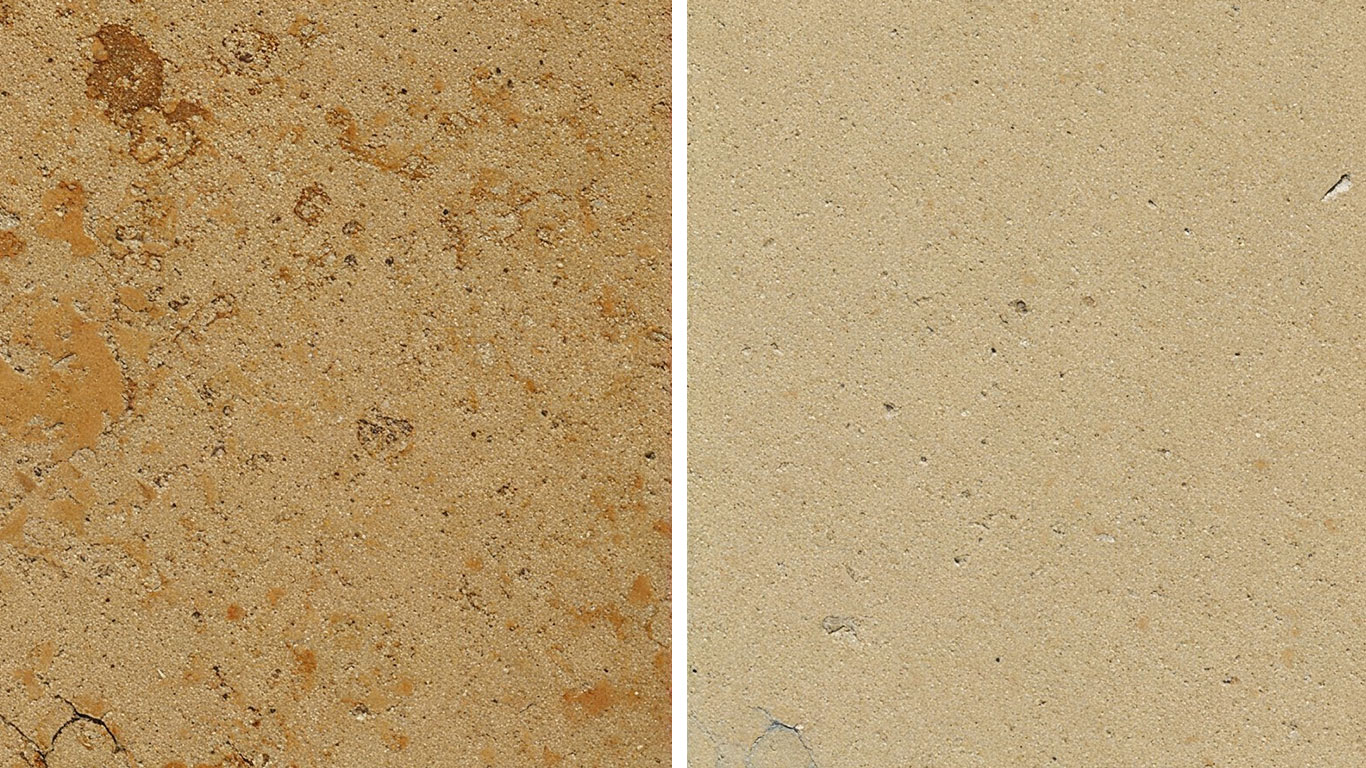
Limestone surface magnification

Before Treatment

I've seen limestone surfaces like this before cleaning, where grime covers everything in a dull layer. Dark specks and uneven bumps scatter across the texture, making it feel heavy and obscured. The whole area appears choked with fine debris that hides the natural grain.

After Treatment

After the laser treatment, that same surface shines with a fresh, even glow. Smooth patches emerge where the dirt once stuck, revealing clean edges and subtle patterns. Now it looks open and vibrant, free from those clinging residues.

Regulatory Standards & Compliance

Limestone Laser Cleaning Laser Cleaning FAQs

Q: What laser settings (wavelength, power, pulse duration) are safe and effective for cleaning biological growth from limestone without causing surface damage?
A: Low fluence prevents yellowing. For limestone cleaning, I recommend a 1064 nm wavelength, specifically paired with 100 W average power and 10 ns pulses. Keep fluence below 12 J/cm², particularly to avoid yellowing, while it removes biological growth effectively. Thus, always run preliminary tests on small areas to confirm the specific limestone's ablation threshold prior to full treatment.
Q: How does laser cleaning compare to traditional methods like chemical poultices or micro-abrasion for removing black gypsum crusts from historic limestone buildings?
A: Preserves original surface patina. Specifically, laser cleaning at 12 J/cm² fluence removes black gypsum crusts with selective precision, outperforming abrasive techniques. Notably, this approach safeguards the stone's original surface and patina, avoiding sub-surface damage typical of micro-sanding. Thus, the non-contact method eradicates chemical residue risks associated with poultices.
Q: Can laser cleaning be used to remove paint or graffiti from porous limestone without driving contaminants deeper into the stone?
A: Ablates surface without penetration. Laser cleaning, particularly suited for porous limestone, removes paint effectively without forcing contaminants deeper. Employing a 1064 nm wavelength and 12 J/cm² fluence, the method ablates surface coatings while safeguarding the substrate. Notably, achieving full ghosting removal thus requires a subsequent poultice treatment.
Q: What are the specific safety hazards when laser cleaning limestone, especially regarding the composition of the resulting dust and fumes?
A: Generates calcium carbonate dust. When using a 1064 nm laser to clean limestone, fine calcium carbonate dust is produced. Though generally less hazardous than silica, proper respiratory protection and industrial fume extraction remain essential, particularly with the 100 W power and 500 mm/s scan speed employed.
Q: Why does laser-cleaned limestone sometimes appear lighter or 'whitened' compared to the surrounding area, and how can this be minimized or avoided?
A: Limit fluence below 12 J/cm². The whitening effect notably emerges when laser fluence surpasses ~12 J/cm², stripping the natural patina and modifying surface micro-roughness. Thus, to secure a harmonious blend, precisely adjust power and scan speed near 500 mm/s for cleaning without excess processing of the underlying stone.
Q: Is laser cleaning suitable for all types of limestone, and how do variations in density, porosity, and mineral composition affect the cleaning process?
A: Laser cleaning handles most limestone types effectively, but high-porosity varieties particularly demand fluence kept below 12 J/cm² to avoid etching. Iron oxide presence can lead to discoloration, thus calling for parameter tweaks such as a 500 mm/s scan speed to ensure even outcomes.
Q: What is the maximum safe operating power density (fluence) for limestone to prevent etching, melting, or other irreversible surface damage?
A: For calcite, limestone's main mineral, the ablation threshold typically starts at around 12 J/cm². Notably, surpassing this fluence can cause vitrification and discoloration; thus, testing an inconspicuous spot is crucial to fine-tune your laser settings for safe, effective cleaning.
Q: How effective is laser cleaning at removing salt efflorescence from within the pore structure of limestone, compared to just surface contamination?
A: Limited penetration into microstructure. Particularly effective at removing surface salts at 12 J/cm², laser cleaning struggles with deep pore contamination. The 1064 nm wavelength shows limited penetration into limestone's microstructure. Thus, for crystalline salts in pores, combining laser treatment with desalination poultices offers a more comprehensive solution.
Q: For architectural restoration, what documentation or testing is required before laser cleaning a historically significant limestone facade or sculpture?
A: Requires XRD/SEM and test patch. Prior to laser cleaning historic limestone, a comprehensive analysis—particularly with XRD and SEM—is essential. To verify effectiveness, initiate a test patch at 12 J/cm² fluence and 500 mm/s scan speed. Continuous spectroscopic monitoring throughout the process thus ensures the 1064 nm wavelength treatment preserves the substrate without thermal alteration.
Q: What is the typical operational cost and cleaning rate (e.g., m²/hour) for laser cleaning limestone on a large-scale restoration project?
A: 1-2 m²/hour cleaning rate. In large-scale limestone restoration projects, cleaning rates typically reach 1-2 m²/hour with a 100 W laser operating at 12 J/cm². Notably, initial operational costs exceed those of traditional methods, yet lifecycle expenses prove lower, particularly from minimized waste, water use, and avoidance of chemical or abrasive media.

Limestone Laser Cleaning Dataset Download

License: Creative Commons BY 4.0 • Free to use with attribution •Learn more