


Steel Laser Cleaning
Laser cleaning removes rust, mill scale, and weld discoloration from steel without media, holding fluence near a 1.5 J/cm² cleaning floor and stopping short of the 4.5 J/cm² mark t...


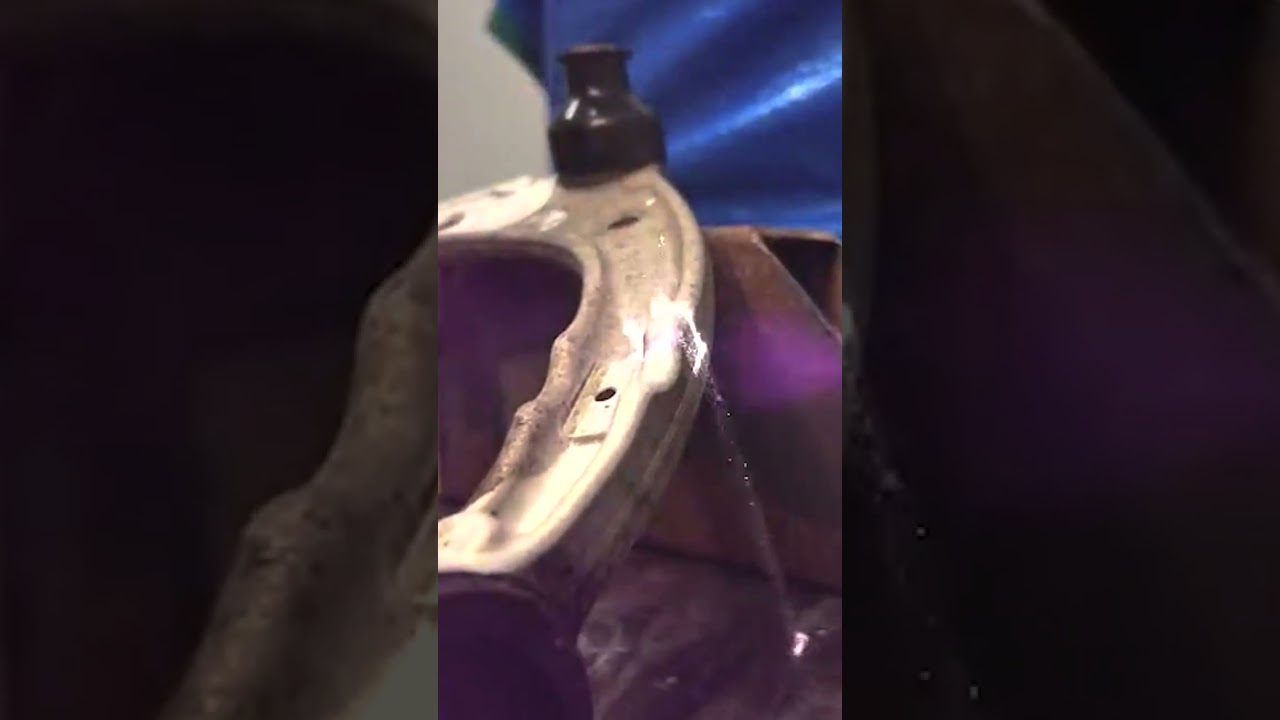
A Porsche 911 upper suspension arm is typically an aluminum forging or stamping, and the beam removes surface rust, brake dust, old grease and flaking coating from the pivot pockets, bushing eyes and welds without touching the base metal underneath. Bushing eyes and weld toes clean at lower power so the bore and heat-affected area stay intact, while open faces run faster. The process will not restore a corroded or cracked arm. Lost wall section, pitting through the load path, or heat-damaged thin webs near the automotive mounting ears still require replacement, not more cleaning. Coating in blind corners near the ball joint may need a second light pass or hand tool follow-up before paint.
Short bGLki9u3Jbc shows pulsed laser clearing rust, grease, and old coatings from a Porsche 911 upper suspension arm in 24 seconds without grit.
Laser cleaning removes rust, mill scale, and weld discoloration from steel without media, holding fluence near a 1.5 J/cm² cleaning floor and stopping short of the 4.5 J/cm² mark t...

A nanosecond fiber laser removes aluminum oxide film starting at 0.33 J/cm2 fluence, with the full removal range extending through 1.09 J/cm2. Within that band the mechanism shifts...

Gray and ductile cast iron keep graphite in the matrix. That graphite is supposed to stay there. Rust and foundry scale can come off with a dry laser pass when a copied steel setti...

Across stainless grades, the chromium oxide film starts to leave near 0.41 J/cm² at 1064 nanometers, well below the 5 to 12 J/cm² range where the parent alloy takes thermal damage....

Ti-6Al-4V is the common aerospace and implant titanium alloy. A pulsed laser can take oxide and heat tint off Grade 5 stock when energy stays high enough to work the film and low e...

Removing release film and oxide from tool steel works when a pulsed laser stays below the point that draws temper or marks the working face. Hot-work and cold-work grades do not sh...
Laser cleaning removes iron oxide rust from steel down to bare metal without grinding wheels, abrasive blasting, or chemical strippers. The beam ablates the oxide layer while leaving sound steel underneath intact, so a part keeps its original dimension and surface finish through the pass. It will not reverse pitting the rust already caused, repair corrosion damage done to the substrate, or clear a part in one blanket setting; rust depth and iron oxide type both change how many passes a shop needs before the surface is ready for inspection.
Requires reading the deposit-substrate pair before setting energy, because a [built-up edge](/materials/aluminum-laser-cleaning) on a carbide insert and the same cold-welded smear on a [tool-steel](/materials/tool-steel-laser-cleaning) die do not clear at the same fluence. The deposit got there by mechanical transfer, pressure welding during machining, adhesive wear between sliding parts, or hot workpiece pickup on a die, not by a chemical reaction with the base metal, so a matching offcut decides the setting rather than a rust or oxide default. Built-up edge on cutting tools forms when chip material pressure-welds to the rake face, work-hardens, and seizes the tip, the same transfer path that shows up as galling on dies and as hot pickup on a [tungsten-carbide](/materials/tungsten-carbide-laser-cleaning) cutting edge.
Laser cleaning fractures the bluish-black magnetite laminate off carbon steel in repeated passes, because mill scale runs roughly four times harder than the plate underneath it. A hot-rolled plate carrying this scale typically needs four or more passes to reach bare metal, while a lighter rust bloom on the same yard stock can clear in one or two. It will not strip in a single rust-grade pass, will not raise the surface to a deep abrasive-blast anchor profile some coating specs still call for, and will not reverse pitting that was already hiding under the scale.
Requires reading the anodize class before setting energy, because thin dyed [Type II anodize](/materials/aluminum-laser-cleaning) clears near a few joules per square centimeter in the near infrared while thick Type III hardcoat pushes energy close to where the [aluminum alloy](/materials/aluminum-laser-cleaning) itself starts to melt before the last film is gone. The film is grown [alumina](/materials/alumina-laser-cleaning), not a corrosion product, so a matching offcut decides which side of that line a given part sits on rather than a fleet-wide default setting. Laser surface work on 7075 aluminum shows how alloy-specific energy bands matter once the oxide land has to clear without melting the metal under it (Shao et al. 2022).
Requires matching the paint system and substrate pairing before setting energy, because a thin single topcoat on [steel](/materials/steel-laser-cleaning) clears at a fraction of the fluence a multilayer primer stack on [aluminum](/materials/aluminum-laser-cleaning) needs, and the substrate sets its own ceiling once the coating is gone. Paint sits as an applied, cross-linked polymer film bonded by mechanical keying and resin adhesion, not a corrosion product, so pigment load and binder chemistry decide more of the setting than the substrate alone. A surface-integrity study on laser-cleaned aluminum alloy carrying a paint layer documents that a visually bare finish does not by itself confirm the metal underneath escaped the pass undamaged (Applied Optics, 2024).
A fiber laser removes galvanized zinc from structural steel without media blast, acid pickling, or a chemical rinse step. Galvanization removal by laser does not restore a reusable zinc layer, so once the gray coating disappears from a section, that section needs a fresh coat or a weld pass before moisture reaches the exposed steel.

Laser cleaning removes carbon buildup, mold release residue, and light rust from cavity surfaces without abrasive media or chemical solvents that can etch [tool steel](/materials/t...

Automotive and EV production lines use pulsed fiber lasers to strip mill scale from stamped [steel](/materials/steel-laser-cleaning) body panels, clear weld-seam oxide ahead of res...

Laser cleaning removes oxide film and surface soil from copper and aluminum battery busbars before welding, laser bonding, or conductive coating, restoring the bare metal contact t...

Salt air, not the hourly rate, decides a Bay Area rust job. Laser cleaning takes field [rust](/contaminants/iron-oxide-rust-laser-cleaning) off [steel](/materials/steel-laser-clean...


