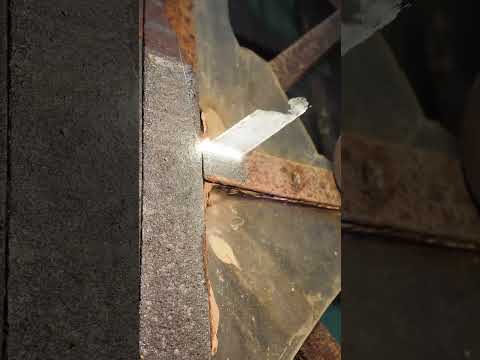

Video


Automotive and EV production lines use pulsed fiber lasers to strip mill scale from stamped steel body panels, clear weld-seam oxide ahead of resistance spot welding, and remove mold-release residue from cast aluminum housings before adhesive bonding. On battery packs, the same process cleans busbar and terminal surfaces, as covered on the EV battery busbar cleaning page, so welds meet conductivity specs without media contamination. It does not replace chemical passivation baths for corrosion-resistant fastener coatings, deep paint stripping on multi-layer OEM finishes where undercoating risk is high, or bulk descaling of thick castings that still need mechanical grinding first. Weld-seam preparation covers pre-weld oxide removal, while post-weld heat-tint removal on stainless steel exhaust components runs on a separate parameter set.
Automotive and EV assembly lines run aluminum battery trays, copper busbars, and steel brackets through the same laser cleaning station before each part moves on to welding, bonding, or coating. Laser cleaning strips the oxide, mold release, or drawing oil sitting between the metal and that next step without touching the base material, so a parameter set validated on one lot has to survive the same contamination on every lot that follows.
Removing surface oxide and hydrocarbon film from aluminum battery-tray alloy before welding cuts porosity from a 10-80% range down to under 0.5% on fillet-edge joints, and from 0.7-4.3% to 0.23-0.8% on flange-couch joints, in nanosecond Nd:YAG cleaning tests on AC-170PX. Trapped moisture and oil vaporize inside the weld pool and form the gas pockets that cause porosity, so clearing that film ahead of the arc is what moves the number.
Oil and water films on 6005A aluminum sheet push MIG weld porosity up to 28.672% and 2.702%, but a nanosecond laser pre-clean brings both cases down to about 0.091%, with the best welds in the test set reaching 0.021% porosity. The laser strips film and native oxide together in one pass, removing the need for a separate solvent-wipe step before the torch runs.
Bulk copper exposed to ambient air grows only about 1-8 nm of Cu2O oxide, and reaching even that thin a layer takes several months, not the minutes or hours between a laser cleaning pass and the next weld or bond step. Copper busbars and battery tabs stay weld-ready well past a single shift, since a gap that long between cleaning a tab and joining it will not reintroduce a measurable oxide barrier.
Hot-press-formed steel panels can carry laser welds with some Al-Si coating still in place: joint tensile strength and cupping-test pass rate climbed as residual coating thickness fell, and welds made at a 5 µm residual layer reached 1435.05 MPa with a 100% cupping pass rate, matching fully stripped coupons. Below that thickness the coating had no further effect on the joint, so the practical target is getting under 5 µm, not a full strip.
Two regulatory tracks govern laser cleaning on an automotive or EV line. A shop cannot treat them as one checklist. The laser itself is a Class 4 product governed by FDA performance rules and the ANSI safe-use standard, while the particulate the beam throws off, mostly iron oxide from body-in-white steel, aluminum oxide from EV pack enclosures, and copper fume from busbar and motor-winding prep, falls under the same air-contaminant PELs OSHA applies to any metalworking floor. A plant running both a steel stamping line and a battery assembly cell ends up substantiating fume limits for at least two different metals under the same table, not one blanket "laser safety" citation. California plants add a third layer: Title 8 Section 1801 sets its own nonionizing-radiation exposure and signage duty that runs alongside, not instead of, the federal laser rules.

21 CFR 1040.10 sets the performance standard that classifies the pulsed fiber and CO2 systems used on automotive and EV lines, most as Class 4, and requires labeling and interlocks before the unit ships to a body shop or battery plant.[1]

ANSI Z136.1 governs safe use of the Class 4 laser once it is installed on the floor: beam enclosures, nominal hazard zone calculations, and trained operator sign-off for automotive body-panel and EV enclosure cleaning cells.[5]

29 CFR 1910.1000 Table Z-1 sets the 8-hour TWA limits for the iron oxide, aluminum, and copper particulate that laser cleaning generates from steel body panels, aluminum EV enclosures, and copper busbars, requiring extraction or monitoring above threshold.[2]
29 CFR 1910.1200 requires the plant to communicate the hazard of ablated coating residue and metal fume, e-coat, adhesive, and weld scale on the same SDS and labeling basis as any other chemical hazard on the assembly floor.[3]

Title 8 Section 1801 adds a state-level nonionizing-radiation duty for California automotive and EV plants: eye protection above 5 mW and warning signage keyed to the same ANSI Z136.1 hazard classes the laser already carries.[4]
On automotive weld-prep and EV battery-tray lines, the real cost gap between methods shows up in what happens between cleaning cycles. Abrasive blasting and dry-ice systems carry ongoing consumables, media disposal, and containment costs that scale with every shift, and both need cleanup time before a precision part like a busbar or battery tray can move to the next station. A fiber laser system costs more upfront and runs a higher shop rate, but consumables are near zero and there is no media residue to inspect for on parts that cannot tolerate contamination. For high-volume production, the method that costs less per hour is not always the one that costs less per finished part.
| Method | Cost per 100 sq ft | Hourly Rate | Consumables/hr | Setup Cost |
|---|---|---|---|---|
| Sandblasting / Abrasive Blast | 425 USD | 145 USD/hr | 55 USD/hr | 200 USD |
| Soda Blasting | 329 USD | 155 USD/hr | 90 USD/hr | 175 USD |
| Dry Ice Blasting | 750 USD | 350 USD/hr[3] | 150 USD/hr[3] | 550 USD |
| Dustless Blasting | 641 USD | 375 USD/hr | 80 USD/hr | 250 USD |
| Laser Cleaning | 500 USD | 400 USD/hr[1] | 0 USD/hr | 0 USD |
Surface damage risk is what separates laser cleaning from abrasive blasting and chemical stripping on automotive and EV production lines, where thin aluminum body panels, high-strength steel structural members, and copper battery busbars all carry tight dimensional and conductivity tolerances. Abrasive media can pit soft aluminum, embed grit in the surface, and build up enough residual stress to warp a body panel under about 1.5 mm thick, while chemical strippers that soak into welded seams or box sections risk etching the metal and leaving residue that later interferes with structural adhesive bonds. Laser cleaning removes mill scale, mold-release film, and oxide layers with short pulses that clear the contaminant before heat has time to spread, so a plant can prep an aluminum panel for welding or a copper busbar for a battery-pack weld without pushing the surface past its damage threshold. That margin matters most on parts that get inspected after cleaning, since a warped panel or an embedded grit particle is rework, while a laser-cleaned joint that stayed within the heat range the metal can take without warping goes straight to the next station.
| Method | Surface Damage |
|---|---|
| Sandblasting / Abrasive Blast | High: Abrasive action creates measurable surface profile (1.5–4 mils anchor pattern on steel). Causes pitting, warping, or erosion on softer or delicate materials. |
| Soda Blasting | Low to moderate: Softer than sand or grit at Mohs 2.5. Does not create significant surface profile on steel. Can etch soft metals (aluminum, copper) or sensitize wood grain. |
| Dry Ice Blasting | Low to minimal: Non-abrasive thermal shock mechanism; dry ice sublimates on impact with no surface profile or residue. Some thermal stress risk on heat-sensitive substrates. |
| Dustless Blasting | Moderate: Water suppression reduces abrasion heat and dust, but abrasive media still creates surface profile. |
| Laser Cleaning | Minimal to none: Non-contact ablation vaporizes contaminants without abrading or mechanically stressing the substrate. Parameter-controlled at 300W (Netalux Kamino class). |
Automotive and EV production cleaning fails when a technician reads "looks bright" as "job done" or asks the laser to fix a defect it physically cannot touch. Residual Al-Si above about 5 micrometers on a hot-stamp face still feeds Fe-Al growth even after the pass looks clean, a sealed zero-gap galvanized lap still traps zinc vapor at the weld, and a spotless aluminum section above about 6 millimeters can still ship porous because keyhole fluid dynamics, not surface contamination, is driving that defect.
| Condition | Consequence |
|---|---|
| Pulsed cleaning runs on aluminum components behind standard fume extraction instead of a combustible-dust-rated system[1],[2],[3],[4] | Fines under 10 µm fall into the same explosible dust class as grain-silo dust, so an underrated collection system turns a routine cleaning cell into an explosion hazard. |
| A shop expects laser cleaning alone to fix weld porosity on aluminum sections thicker than about 6 millimeters[1],[2],[3],[4] | Keyhole fluid dynamics dominate the porosity mechanism at that thickness, so a perfectly clean pre-weld surface can still ship a porous structural joint. |
| A zero-gap galvanized lap goes to the welding laser with no zinc clearance and no vent path[1],[2],[3],[4] | Zinc boils near 906°C, well under steel's melt point above roughly 1500°C, so the trapped vapor punches the pool and leaves blowholes, spatter, and porosity in the joint. |
| Residual Al–Si on a hot-stamp weld face measures more than about 5 micrometers after the nanosecond cleaning pass[1],[2],[3],[4] | Fe–Al intermetallics keep building in the joint, and tensile strength and cupping pass rate both stall short of the 1435 MPa, 100 percent cupping band that coupons reached only once residual coating dropped near that 5 micrometer floor. |
On an automotive or EV line the cleaning step runs inside a takt time budget, not a standalone job order. A laser system clears an EV battery module, including load, vision check, cleaning, and unload, in about 25 seconds, so it can sit on the same conveyor as welding and marking without becoming the pacing station. Media blasting a battery connection to bare metal before welding runs roughly 15 times slower than that, and an aqueous parts washer processing a battery tray needs close to 100 seconds per part before drying even starts. That gap is what decides whether cleaning stays inline on the body or battery line or gets pushed off to a buffer station with its own floor space and material handling.