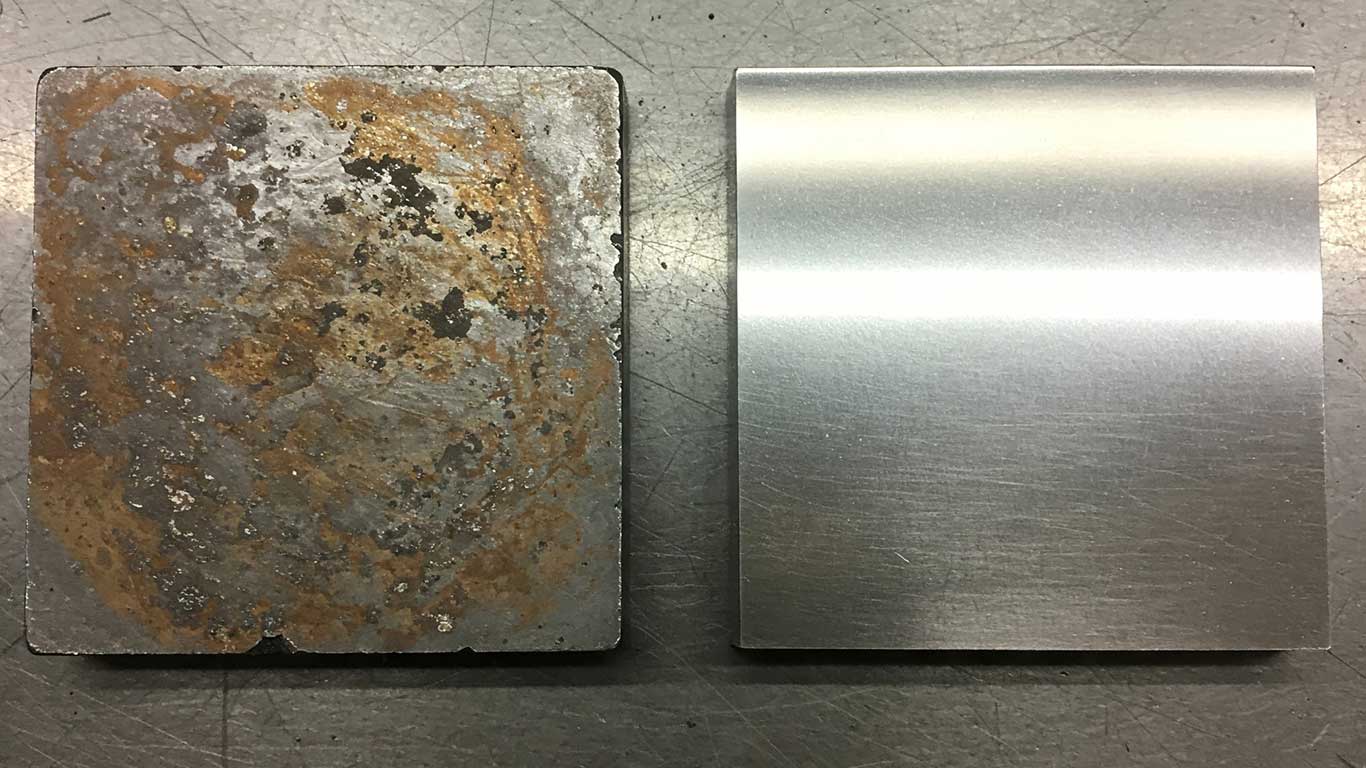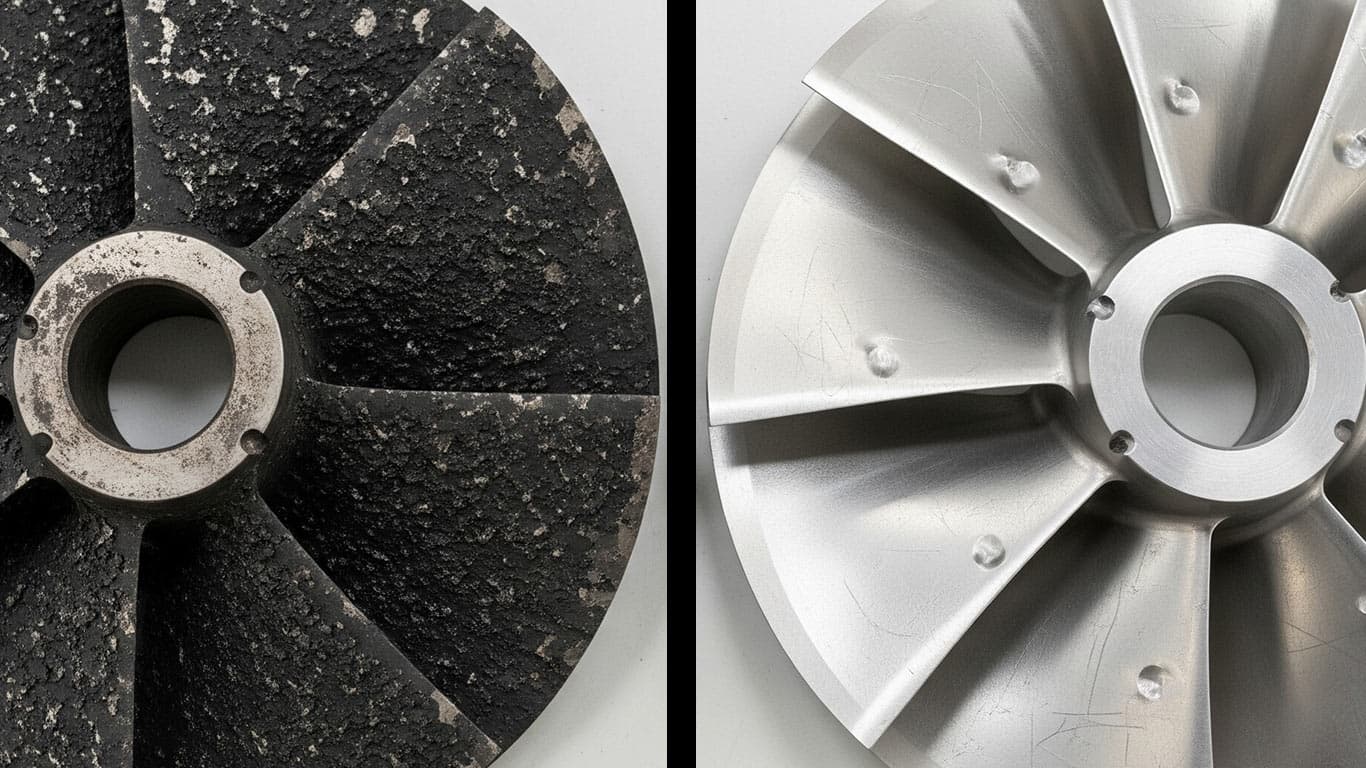
Beryllium surface undergoing laser cleaning showing precise contamination removal
Yi-Chun Lin
Yi-Chun LinPh.D.Taiwan
Laser Materials Processing
Published
Dec 16, 2025

Beryllium Laser Cleaning

When laser cleaning Beryllium parts for aerospace use, we've found the biggest hurdle is its slick surface that resists absorption of the beam, so we dial in steady pulses to strip away grime effectively while keeping heat spread even to dodge any warping in those lightweight frames.

Beryllium surface magnification

Before Treatment

I've seen beryllium surfaces like this before cleaning, covered in dark spots and uneven patches that scatter light oddly. The contamination clings tightly, making the metal look dull and rough under magnification. Tiny particles stick everywhere, hiding the true shine beneath.

After Treatment

After laser treatment, the surface turns smooth and even, reflecting light cleanly without those spots. I've noticed how the metal now appears bright and uniform, free from any clinging dirt. The treatment reveals a polished look that stays consistent across the whole area

Regulatory Standards & Compliance

Beryllium Laser Cleaning Laser Cleaning FAQs

Q: How does laser cleaning effectively remove contaminants from beryllium surfaces without damaging its structure?
A: Vaporizes contaminants with pulsed lasers. Laser cleaning employs precise pulsed lasers, specifically to vaporize oxides, oils, and residues from beryllium surfaces. Leveraging its high thermal conductivity avoids heat-affected zones. Notably, this non-abrasive technique preserves the metal's integrity and low density.
Q: What makes beryllium challenging to clean using traditional methods?
A: Brittleness and toxicity. Specifically, beryllium's brittleness in traditional abrasive or chemical cleaning can cause surface pitting, thus generating toxic dust due to its toxicity.
Q: Why is laser cleaning preferred for beryllium in aerospace applications?
A: Maintains structural integrity. Notably, in aerospace, beryllium's lightweight and fatigue-resistant properties remain crucial. Laser cleaning specifically delivers contaminant-free surfaces without added stresses that could undermine structural performance, thus extending component lifespan considerably.
Q: Can laser cleaning address beryllium's toxicity risks during restoration?
A: Minimizes dust generation. Yes, it notably minimizes dust generation versus mechanical methods, thus lowering inhalation risks. Proper ventilation and PPE remain essential.
Q: Is beryllium suitable for laser cleaning in nuclear reactor maintenance?
A: Yes, suitable for precise removal. Absolutely; laser cleaning particularly enhances its low neutron absorption and corrosion resistance by precisely removing radioactive contaminants, thus avoiding any alteration to thermal properties or introduction of impurities that could impair reactor efficiency.
Q: How does the cost of laser cleaning beryllium compare to its value in high-stakes uses?
A: Long-term savings justify. While the initial laser setup proves costly, it yields long-term savings by averting damage to pricey beryllium components in defense and electronics. Particularly, beryllium's superior conductivity and stiffness thus warrant the investment over cheaper, inferior cleaning methods.

Beryllium Laser Cleaning Dataset Download

License: Creative Commons BY 4.0 • Free to use with attribution •Learn more