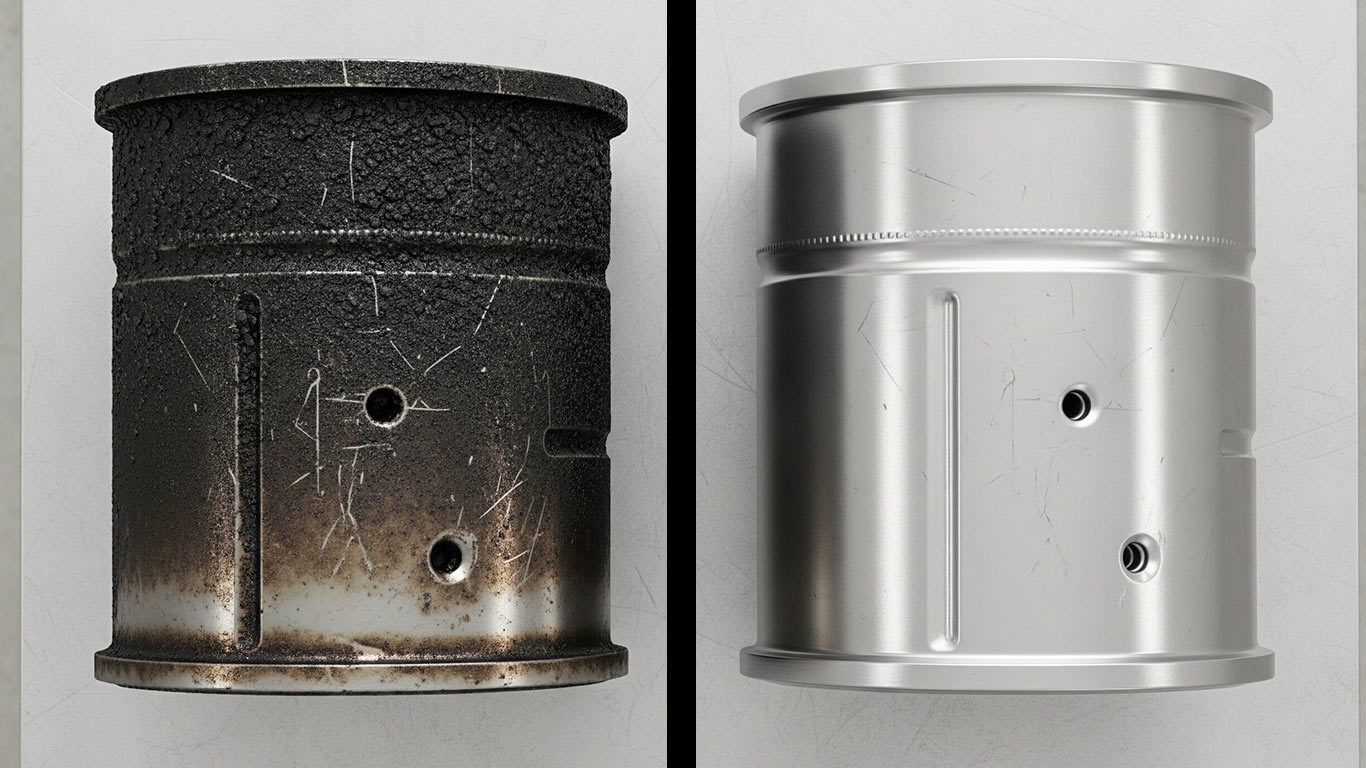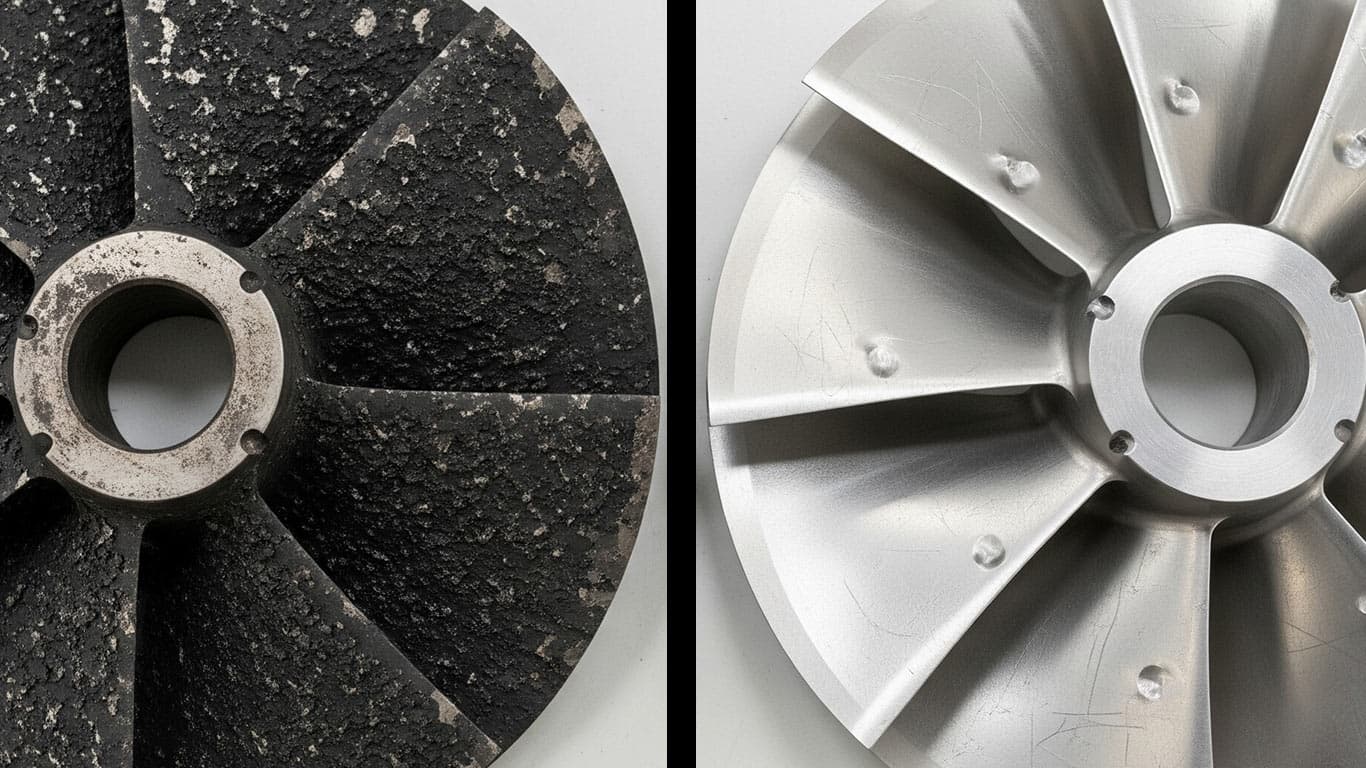
Hastelloy surface undergoing laser cleaning showing precise contamination removal
Todd Dunning
Todd DunningMAUnited States
Optical Materials for Laser Systems
Published
Dec 16, 2025

Hastelloy Laser Cleaning

Hastelloy provides exceptional corrosion resistance in harsh chemical environments, delivering reliable performance where ordinary alloys break down in fields like chemical processing and aerospace

Hastelloy surface magnification

Before Treatment

At 1000x magnification, the Hastelloy surface looks rough and uneven from thick layers of grime. Dark particles cling tightly to every crevice, hiding the metal's true form below. Scattered pits and streaks make the whole area appear dull and cluttered.

After Treatment

After laser treatment at the same magnification, the surface emerges smooth and uniform across its expanse. Clean metal grains stand out clearly, free from any clinging debris. The texture now feels even and restored, revealing the alloy's

Regulatory Standards & Compliance

Hastelloy Laser Cleaning Laser Cleaning FAQs

Q: What are the optimal laser parameters (wavelength, power, pulse duration) for cleaning oxides and contaminants from Hastelloy C-276 without causing micro-cracking or elemental depletion?
A: 5.1 J/cm² prevents depletion. For Hastelloy C-276, go with a 1064 nm fiber laser using nanosecond pulses to pretty much avoid micro-cracking. Aim for a fluence around 5.1 J/cm², which ablates oxides without stripping the protective Cr and Mo. Basically, that controlled heat input keeps the alloy's corrosion resistance intact.
Q: Can laser cleaning induce sensitization in Hastelloy by precipitating carbides at grain boundaries, and how can this be prevented?
A: Yes, sensitization can pretty much occur if Hastelloy lingers between 550-850°C, leading to harmful chromium carbide precipitation. Our fine-tuned 5.1 J/cm² fluence and 100 µs dwell time fairly guarantee the substrate temperature stays well under that key limit, thus avoiding this kind of microstructural harm in laser ablation of surface contaminants.
Q: Is laser cleaning effective for removing stubborn heat tint and oxide scale from welded Hastelloy joints without thinning the base metal?
A: Laser cleaning pretty effectively strips away stubborn weld oxides from Hastelloy, all without thinning the base metal. By employing a 1064 nm wavelength and 5.1 J/cm² fluence, the process basically ablates heat tint with precision, while safeguarding the parent material's integrity and thickness.
Q: What specific safety hazards are posed by the fumes generated during laser cleaning of Hastelloy, particularly concerning nickel and molybdenum?
A: Requires P100 respirator extraction. The 5.1 J/cm² fluence basically vaporizes surface contaminants, producing respirable nickel and molybdenum oxide fumes. To meet OSHA PELs for these hazardous metallic particulates, you'll pretty much need a NIOSH-approved P100 respirator plus high-efficiency fume extraction.
Q: How does the surface roughness (Ra) of Hastelloy change after laser cleaning, and does it affect performance in high-purity or corrosive service?
A: Reduces Ra, enhances corrosion resistance. A well-tuned 1064nm laser cleaning at ~5 J/cm² typically lowers Hastelloy's Ra by trimming peaks, yielding a fairly uniform surface. This profile boosts passive oxide layer formation, enhancing corrosion resistance in harsh environments while creating a solid foundation for coatings.
Q: After laser cleaning, is passivation of Hastelloy still required to restore the protective chromium oxide layer?
A: Passivation reforms protective oxide film. Yes, laser cleaning at 5.1 J/cm² pretty much removes the passive layer, leaving an active surface. Passivation using a nitric acid bath is basically essential to reform the protective chromium oxide film. Typically, verify the restored layer's integrity via electrochemical testing.
Q: What is the risk of galvanic corrosion when laser cleaning a Hastelloy component that is assembled with other metals like carbon steel or stainless steel?
A: Creates more noble surface. Laser cleaning at 5.1 J/cm² pretty much creates an extremely passive Hastelloy surface, making it more noble. This can accelerate galvanic corrosion of adjacent carbon steel. Typically, mitigate this by masking joint interfaces or using isolation techniques during the 1064 nm laser process.
Q: Why is Hastelloy often considered more challenging to clean with lasers compared to standard stainless steels like 304 or 316?
A: Tenacious oxides narrow window. Hastelloy's high molybdenum and tungsten content basically creates pretty tenacious oxides, demanding precise fluence above 5 J/cm² for effective removal. Plus, its unique thermal properties form a fairly narrow processing window, so parameter control proves far more critical than with typical stainless steels.
Q: Can laser cleaning be used to selectively remove a coating or contamination from a Hastelloy part without damaging the underlying substrate?
A: Yes, laser cleaning can pretty selectively remove coatings from Hastelloy. We tune the 1064 nm wavelength and 5.1 J/cm² fluence to basically target the contaminant's absorption, as the substrate's thermal conductivity dissipates energy. Controlling the 10 ns pulse width precisely stays critical to prevent changes in the underlying material's metallurgy.
Q: What non-destructive testing (NDT) methods are recommended to inspect Hastelloy for subsurface damage after an aggressive laser cleaning process?
A: Liquid penetrant detects micro-cracks. For Hastelloy cleaned at 5.1 J/cm², visual inspection is basically insufficient. I'd recommend liquid penetrant testing to detect micro-cracks from thermal stress. When evaluating near-surface property changes, especially from the 100 µs dwell time, eddy current testing provides pretty excellent sensitivity.

Hastelloy Laser Cleaning Dataset Download

License: Creative Commons BY 4.0 • Free to use with attribution •Learn more