
ANSI
ANSI Z136.1 - Safe Use of Lasers

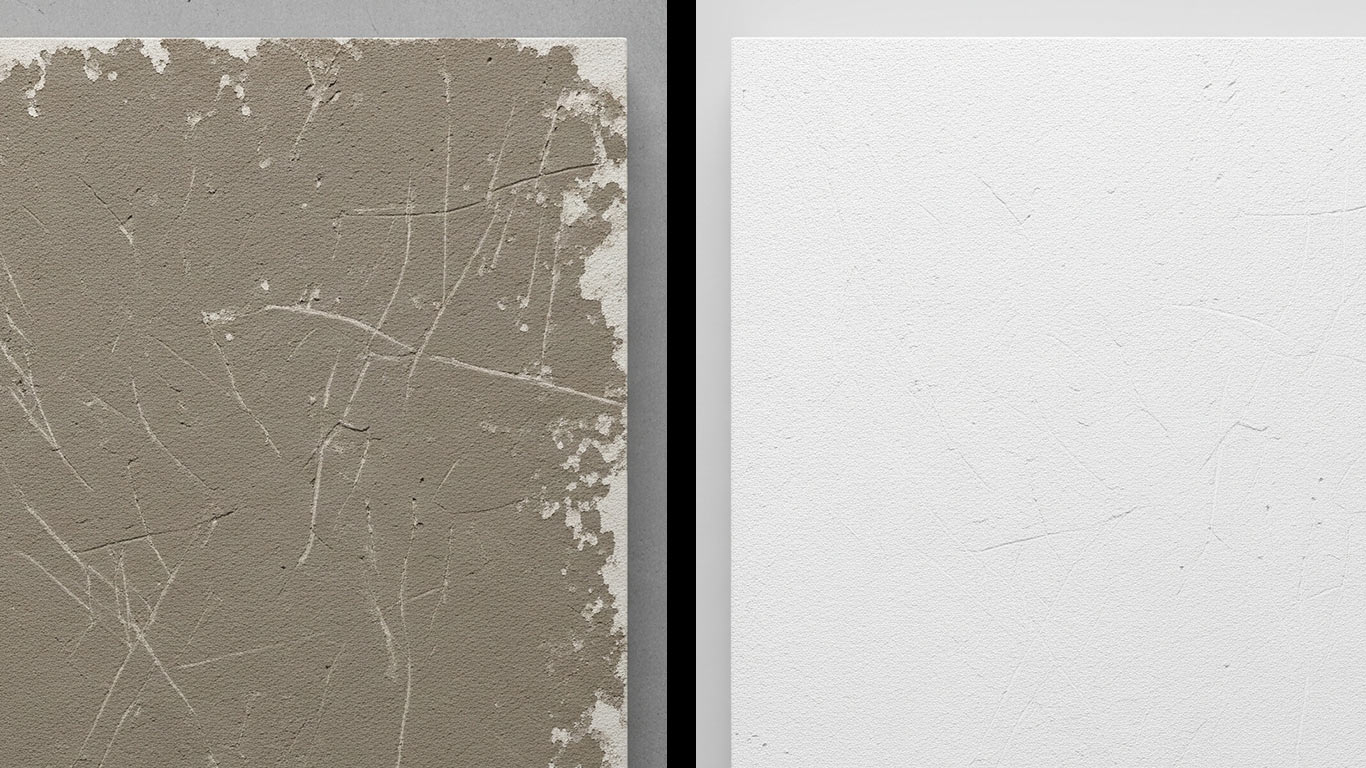

Stucco is one of the more demanding masonry surfaces to clean without causing damage — high porosity (15–25%) means moisture and contaminants penetrate deep, while the 1.2 J/cm² damage threshold is low enough that aggressive passes will spall the lime-cement matrix and expose aggregate. The approach that works is multiple light passes at 0.4–0.9 J/cm², 1064 nm, with 15 ns pulses and 70% overlap — slow and deliberate rather than trying to strip the surface in a single pass. Low thermal conductivity (0.72 W/m·K) keeps heat localized, which is an advantage for selectivity but means the surface heats quickly if dwell time increases. Moisture content must be checked before cleaning: water in the pores converts to steam faster than it can escape, and steam spalling ruins the surface. Bay Area buildings — historic Spanish Colonial stucco, 1920s bungalows, mid-century commercial facades — call Z-Beam for biological growth removal, soot remediation, and graffiti abatement where pressure washing causes water intrusion and wire brushing leaves marks.
Highly recommend this company for difficult, intricate jobs.

Fluence (J/cm²)
Stucco has an inverted threshold relationship. The damage threshold is 1.2–1.8 J/cm². Surface spalling occurs before material removal. Stucco absorbs about 80% of 1064 nm laser energy. Heat spread rate is 4.5×10⁻⁷ m²/s. Heat spreads slowly. High porosity (15-25%) traps moisture. Moisture can cause steam spalling above 1.2 J/cm². Effective cleaning must stay below 1.0 J/cm² for damp stucco. Never exceed 1.2 J/cm². Above 1.2 J/cm², surface spalling and aggregate exposure occur.
Stucco has compressive strength of 10.3 MPa, density of 1760 kg/m³, and Mohs hardness of 2.5 — significantly lower strength than concrete or brick, constraining laser energy level to 0.5–1.2 J/cm² for surface cleaning without aggregate exposure. Traditional three-coat Portland cement stucco (scratch coat, brown coat, finish coat) used in Bay Area Craftsman bungalows and Spanish Colonial Revival buildings contains fine quartz aggregate in the finish coat that requires Cal/OSHA CCR Title 8 Section 5155 crystalline silica PEL compliance (50 μg/m³ respirable quartz, 8-hr TWA). Modern synthetic stucco (EIFS — Exterior Insulation and Finish Systems) has an acrylic polymer surface layer over EPS foam insulation: 1064 nm energy passes through the thin acrylic finish and melts the EPS surface at energy level above 0.3 J/cm². Bay Area seismic-retrofit work frequently exposes original stucco beneath EIFS — these surfaces require pre-cleaning silica hazard assessment. Thermal conductivity is low at 0.72 W/m·K. Porosity is high (typically 15-25%). The damage threshold is 1.8 J/cm², above the damage threshold. Thermal expansion is 10.4×10⁻⁶ K⁻¹. Stucco is a cementitious composite (lime, cement, sand, water). High porosity traps contaminants deeply. Weak tensile strength (0.7 MPa) means spalling is the primary damage mode.
Start with energy level at 0.4-0.9 J/cm², well below the 1.2 J/cm² damage threshold. Use 1064 nm wavelength with 30 ns pulse length. Scan at 1500 mm/s with 60% overlap. Spot size at 300 μm. Stucco has high porosity (15-25%) and low compressive strength (10.3 MPa). Never exceed 1.1 J/cm². Ensure stucco is dry before cleaning. Moisture can cause steam spalling. Two passes at low energy level are safer than one pass near threshold. For historic stucco, reduce energy level to 0.3-0.6 J/cm². Test on a hidden area first. Watch for surface spalling or aggregate exposure.
Laser cleaning stucco produces fine silicate and lime particulates. Use ventilation with HEPA filtration. Ensure stucco is dry before cleaning. Moisture can cause steam spalling. Older stucco may contain asbestos; test before cleaning. Stucco absorbs about 80% of 1064 nm energy, so backscatter is low. Standard laser safety eyewear for 1064 nm is required. The primary hazard is surface spalling above 1.2 J/cm². High porosity means moisture content must be checked before cleaning. For historic stucco, consult a conservation specialist.
Heritage conservation is the primary driver — Bay Area preservation architects specify laser cleaning for historic stucco because pressure washing causes moisture intrusion and power wire brushing erodes the lime-based finish layer. Landmark buildings from San Francisco to San Jose have stucco exteriors that cannot tolerate abrasive methods without SHPO review. Property managers dealing with graffiti on commercial stucco facades call us because chemical removers bleach and pit the surface. Earthquake repair contractors cleaning structural stucco before bonding agents apply also benefit from the non-contact prep that laser provides without leaving solvent residue in the porous matrix.


Use energy level at 0.4-0.9 J/cm² for stucco graffiti removal. Never exceed 1.2 J/cm². 1064 nm, 30 ns pulse length, 1500 mm/s cleaning speed, 60% overlap. Ensure stucco is dry. Moisture causes spalling. Test on hidden area first. Dark paints absorb more strongly.
Inspect for loose aggregate. Remove loose debris by hand. Test moisture content. Ensure stucco is completely dry. Cover adjacent materials. Historic stucco may require lower energy level (0.3-0.6 J/cm²). Test asbestos content before cleaning older stucco.
A 1064 nm fiber laser is strongly preferred over CO₂ at 10600 nm for stucco cleaning because stucco's calcium-based binder absorbs CO₂ wavelengths directly, causing rapid bulk heating and elevated spalling risk above surface temperatures of approximately 150°C. Our team uses 30 ns pulse length at 1064 nm, which limits thermal penetration depth to the surface contaminant layer while leaving the cementitious or lime matrix intact. Historic Environment Scotland's masonry cleaning guidance documents CO₂ lasers as contraindicated for calcium-rich stone and render surfaces for this same reason; verify wavelength suitability against EN 15801 absorption testing on a stucco sample before any cleaning begins.
Stucco's high alkalinity (pH 10–12) does not affect laser cleaning parameters, but it is a critical factor in selecting post-treatment consolidants—film-forming acrylic sealants applied to high-pH stucco can trap moisture and cause delamination within 2–5 years. Our team recommends lime-based or potassium silicate consolidants after laser cleaning of historic stucco, as both are pH-compatible and vapor-permeable, consistent with ASTM C270 mortar compatibility guidelines for historic masonry. Avoid silicone-based film formers on original Portland cement or lime-based stucco; consult the Getty Conservation Institute's stucco preservation guidance for project-specific consolidant selection.
Stucco texture affects beam uniformity — parameters must deliver consistent energy in both surface recesses and on flat areas, not just on high points.
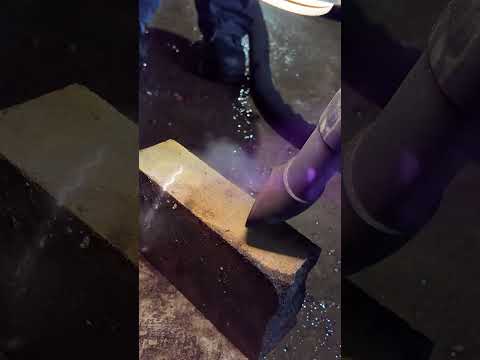
Our stucco cleaning videos demonstrate spalling risk from trapped moisture. One video shows cleaning at 0.8 J/cm² versus 1.3 J/cm² on a stucco panel. The higher energy level exceeds the 1.2 J/cm² damage threshold and causes visible surface spalling. Another clip shows moisture testing protocols for stucco cleaning.