Rhodium surface undergoing laser cleaning showing precise contamination removal
Todd Dunning
Todd DunningMAUnited States
Optical Materials for Laser Systems
Published
Dec 16, 2025

Rhodium Laser Cleaning

Rhodium offers excellent corrosion resistance, preserving surface integrity even during long-term exposure to harsh chemicals and high temperatures in aerospace and chemical processing applications

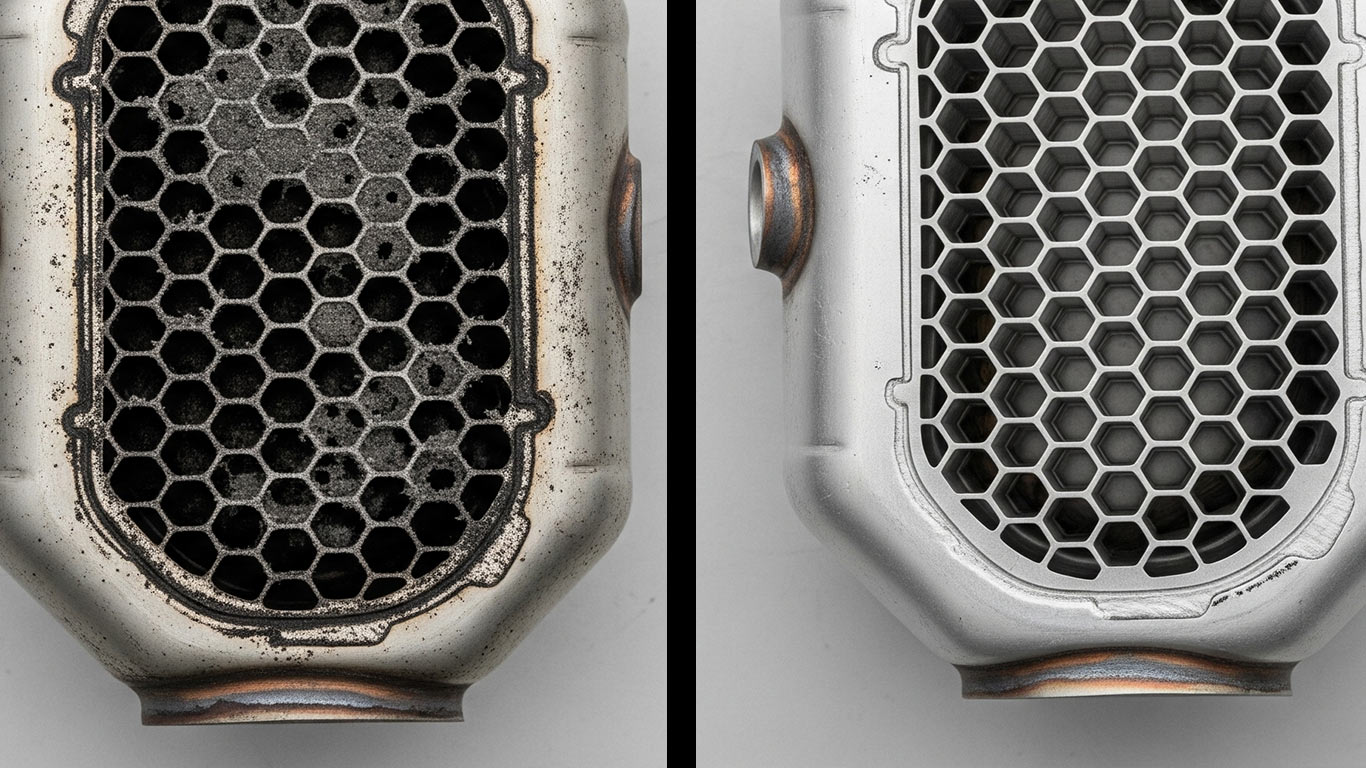
Rhodium surface magnification

Before Treatment

The contaminated surface reveals scattered dark residues across its expanse. Fine particles cling tightly, creating uneven shadows and dull patches. Rough textures dominate, obscuring the base material entirely.

After Treatment

Laser treatment restores a smooth, even gleam to the surface. Clean lines emerge without clinging debris or shadows. Polished features stand out, free from prior roughness.

Regulatory Standards & Compliance

Rhodium Laser Cleaning Laser Cleaning FAQs

Q: What laser wavelengths are most effective for cleaning rhodium-plated surfaces without causing delamination?
A: 1064 nm leverages high reflectivity. For rhodium-plated surfaces in aerospace or jewelry applications, the 1064 nm near-IR wavelength performs pretty well thanks to the metal's high reflectivity, which curbs absorption and protects thin layers from delamination. Basically, this approach allows contaminant ablation at a precise 2.5 J/cm² fluence with 45 W power, yielding uniform, damage-free cleaning without thermal buildup.
Q: How can laser cleaning remove contaminants from rhodium catalysts in automotive applications without affecting catalytic efficiency?
A: Prevents sintering thresholds. Laser cleaning basically targets contaminants on rhodium catalysts in automotive systems with a 1064 nm near-IR beam at 2.5 J/cm² fluence, vaporizing deposits without exceeding sintering thresholds. Pretty effectively, its 15 ns pulses and 45 W power preserve the metal's porous framework and surface area, protecting emissions control efficiency.
Q: What are the safety risks of using pulsed lasers on rhodium jewelry during cleaning, and how to mitigate them?
A: Mitigate toxic particle ejection. Pulsed laser cleaning of rhodium jewelry can cause micro-ablation, aerosolizing fine, toxic particles that are hazardous if inhaled. Basically, counter this by using robust fume extraction ventilation, 1064 nm-rated eye protection, and exposure limits below 0.1 mg/m³. Keep fluence fairly under 2.5 J/cm² to limit particle ejection.
Q: Why does rhodium's high melting point make it challenging for laser cleaning, and what parameters adjust for this?
A: Rhodium's melting point at 1964°C pretty much complicates laser cleaning, since its thermal conductivity dissipates heat rapidly, potentially causing uneven ablation or substrate damage from energy buildup. We basically mitigate this with a fluence of 2.5 J/cm² for contaminant removal and a scan speed of 500 mm/s to avoid localized overheating.
Q: In laser cleaning forums, users ask: Can fiber lasers effectively strip oxides from rhodium electrical contacts?
A: 1064 nm for oxide stripping. Fiber lasers typically excel at stripping sparse oxides from rhodium electrical contacts, thanks to the metal's exceptional corrosion resistance. Go with a 1064 nm wavelength at 2.5 J/cm² fluence for pretty precise removal—much better than 532 nm, which rhodium largely reflects—while holding power to 45 W to prevent substrate damage.
Q: What concerns do manufacturers raise about laser-induced thermal stress on rhodium coatings during surface preparation?
A: Low CTE mismatch causes cracking. Manufacturers get pretty concerned about thermal stress cracking in rhodium coatings, given its low coefficient of thermal expansion—around 8.3 × 10⁻⁶/°C—that mismatches substrates like steel and risks delaminating layers during laser prep. Typically, mitigate this with a 1064 nm wavelength at 45 W power plus rapid air cooling, alongside pre-treatment via uniform heating protocols for stronger adhesion. Keep fluence under 2.
Q: How does rhodium's reflectivity impact the choice of laser power for cleaning in vacuum environments?
A: Demands higher laser power. Rhodium's specular reflectivity is pretty high, exceeding 80% at visible wavelengths, so it requires more laser power—around 45 W at 1064 nm—to offset energy loss during vacuum cleaning. By focusing the beam to an 80 μm spot, we fairly easily hit the 2.5 J/cm² fluence threshold for contaminant ablation, without risking thermal damage to the metal.
Q: What training materials recommend for handling rhodium's chemical inertness in laser cleaning processes?
A: Focus on mechanical ablation precision. Dealing with rhodium's chemical inertness during laser cleaning pretty much cuts down on reactions, so emphasize precision in mechanical ablation to capitalize on its durability. I recommend operator training guides that typically highlight laser alignment at 1064 nm wavelength and 2.5 J/cm² fluence, with 45 W power for safe contaminant removal.
Q: Are there regulatory compliance issues for laser cleaning rhodium in medical device manufacturing?
A: Ensures biocompatibility via residue control. Laser cleaning rhodium for medical device production fairly requires strict FDA oversight and ISO 10993 compliance to ensure biocompatibility, especially in controlling residues on implants. Basically, validate efficacy using 2.5 J/cm² fluence at 1064 nm, which ablates contaminants without compromising the metal's surface integrity while keeping residues below 10 ppm for safety.

Rhodium Laser Cleaning Dataset Download

License: Creative Commons BY 4.0 • Free to use with attribution •Learn more