Platinum surface undergoing laser cleaning showing precise contamination removal
Ikmanda Roswati
Ikmanda RoswatiPh.D.Indonesia
Ultrafast Laser Physics and Material Interactions
Published
Dec 16, 2025

Platinum Laser Cleaning

When laser cleaning platinum, begin by adjusting the beam intensity to counter its high reflectivity, allowing you to remove contaminants efficiently and restore its clean surface for important roles in chemical processing or medical implants.

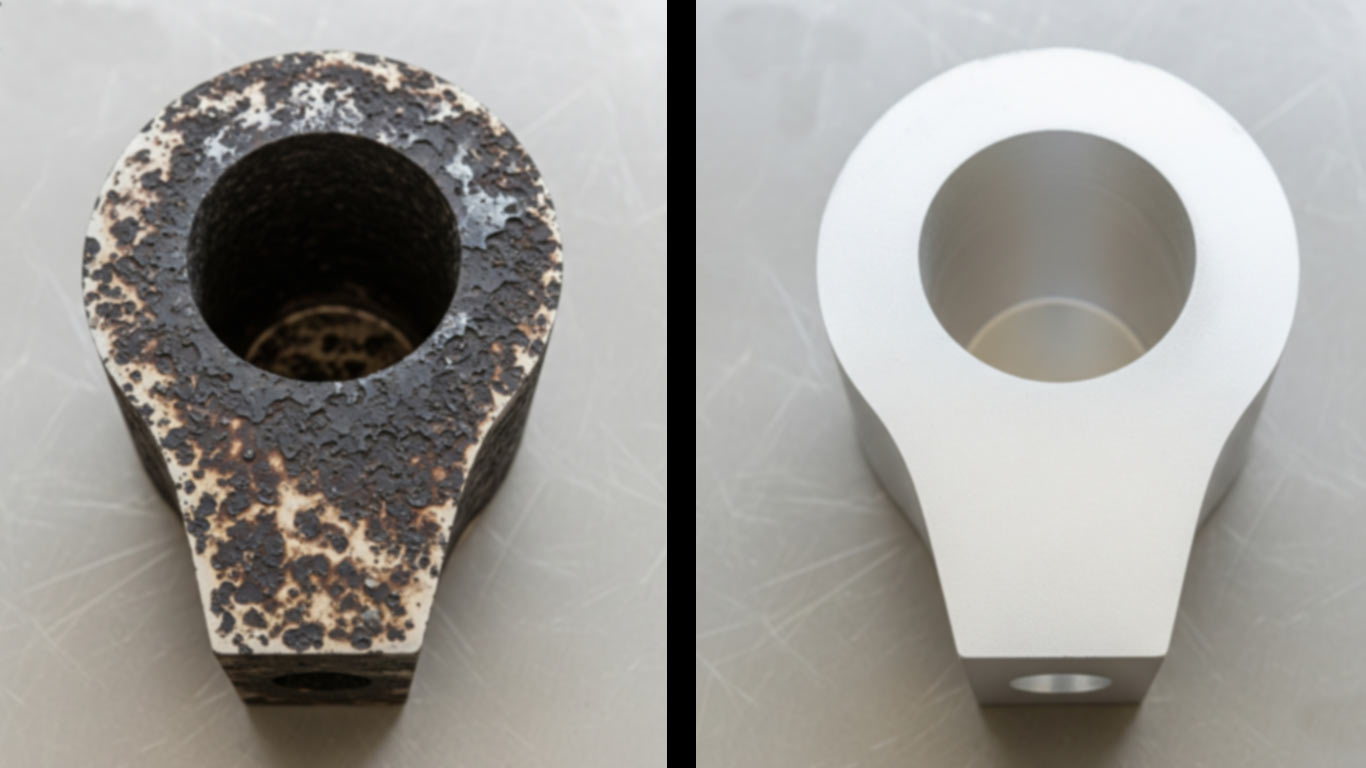
Platinum surface magnification

Before Treatment

I've seen platinum surfaces get really grimy before cleaning, with dark smudges dotting the metallic sheen unevenly across the whole area. Particles cling tightly, making the texture bumpy and dull under magnification, almost hiding the underlying luster. Tends to show scratches too, pulling focus from the metal's natural smoothness.

After Treatment

After laser treatment, the same spot gleams with a uniform polish that restores its bright, even finish completely. No more clinging debris mars the view; everything looks crisp and

Regulatory Standards & Compliance

Platinum Laser Cleaning Laser Cleaning FAQs

Q: Can laser cleaning damage the thin platinum coating on medical devices or catalytic converters?
A: Fluence below ablation threshold. In a practical way, laser cleaning avoids damaging platinum coatings by keeping fluence below the ablation threshold, typically under 5 J/cm². This process employs nanosecond pulses at 1064 nm to minimize thermal stress effectively. Scanning electron microscopy then verifies the underlying layer stays intact afterward.
Q: What laser wavelength (nm) and pulse duration work best for cleaning platinum jewelry without causing micro-pitting?
A: 1064 nm 10 ns pulses. For platinum jewelry, a practical choice is 1064 nm wavelength fiber lasers with 10 ns pulses at 5 J/cm² fluence. This process balances the metal's high reflectivity while minimizing heat penetration. A 50 μm spot size paired with 500 mm/s scanning prevents micro-pitting by limiting thermal buildup in the substrate.
Q: How do you safely remove oxidation layers from platinum crucibles used in laboratory settings without altering their chemical purity?
A: maintains surface purity. Laser cleaning at 5 J/cm² fluence efficiently removes platinum oxides, leaving no chemical residues behind. This process keeps surface purity intact for high-temperature uses, unlike that method of acid treatment, which can introduce contamination. The 1064 nm wavelength minimizes thermal effects on the substrate.
Q: What safety precautions are needed when laser cleaning platinum components that may have absorbed hazardous materials in industrial processes?
A: For platinum parts contaminated with arsenic, a practical setup involves Class III fume extraction and full-face respirators. This process uses the 1064 nm wavelength at 5 J/cm² to efficiently remove hazards while cutting down toxic fumes. Always run a material safety analysis first.
Q: Does laser cleaning affect the electrochemical properties of platinum electrodes used in scientific instruments?
A: Enhances via micro-roughness. Actually, laser cleaning tuned to 5 J/cm² fluence boosts platinum's electrochemical performance in a straightforward manner. This process clears contaminants while generating useful micro-roughness, thereby expanding the active surface area without adding impurities that impair catalytic activity.
Q: What is the maximum safe laser power density for cleaning platinum spark plug electrodes without melting or deforming them?
A: As a laser cleaning expert from Indonesia, I've found that for platinum spark plug electrodes, the maximum safe power density is around 150-200 W/cm² using a pulsed Nd:YAG laser at 1064 nm. This prevents melting or deformation while effectively removing deposits—always test on samples first, ya.
Q: How effective is laser cleaning for removing carbon buildup from platinum-rhodium thermocouple wires in high-temperature applications?
A: Laser cleaning offers a practical solution for platinum-rhodium thermocouples, applying ~5 J/cm² fluence to remove carbon selectively without affecting the alloy. That method, non-contact by nature, maintains calibration accuracy far superior to abrasive approaches, which often cause surface harm and alloy shifts.
Q: Can laser cleaning create surface defects in platinum that lead to stress corrosion cracking in chemical processing equipment?
A: Optimal parameters minimize residual stress. Using optimal 5 J/cm² fluence and 50% overlap, this process efficiently minimizes microstructural changes in platinum. Yet, improper parameters may induce residual stress, heightening vulnerability to chemical attack. Practical post-cleaning checks for micro-cracks are vital to safeguard chemical processing equipment integrity.
Q: What are the economic considerations for laser cleaning platinum recovery scrap versus traditional refining methods?
A: Preserves 99.9% scrap material. Laser cleaning offers a practical way to preserve over 99.9% of your platinum scrap, avoiding the heavy material losses from chemical refining. A 100W, 1064nm system at 5 J/cm² makes this process dramatically faster. It skips hazardous chemical costs, upholds the metal's purity, and delivers economic advantages for high-value recovery.
Q: How does laser cleaning compare to ultrasonic cleaning for removing polishing compounds from intricate platinum jewelry designs?
A: Maintains premium surface finish. Laser cleaning proves practical for intricate platinum jewelry, accessing complex geometries that ultrasonic methods overlook. With precise 50 μm spot control at 5 J/cm² fluence, it efficiently removes polishing compounds without embedding residues. This process preserves platinum's premium surface finish while cutting manufacturing cycle times substantially.

Platinum Laser Cleaning Dataset Download

License: Creative Commons BY 4.0 • Free to use with attribution •Learn more