


On-Site Demo
Free/ 60 mins
- CoversCoverage SF Bay Area
- Test your material
California's AB 1795 brings restore-to-pre-loss framing to smoke claims on Jan 1, 2027, so restorers here need scopes written for state law rather than borrowed from nationwide fire copy. Laser cleaning fits that scope as a specialty step after make-safe, lifting soot from hard surfaces at its source. It is not an odor cure. LaserClean LA states that its laser work removes the source and does not treat smell, and odor by laser alone has not been tested. IICRC S700 still leaves wildfire out of scope today, so laser work should not be sold as S700 wildfire compliance. Odor and HVAC stay with the general contractor. Service starts in the Bay Area and covers California only.
Most adjuster and owner questions come back to AB 1795, whose restore-to-pre-loss framing takes effect Jan 1, 2027, so laser scopes in California should be written against state law. Laser work removes soot at its source. It does not cure odor, and it does not make a wildfire job compliant with IICRC S700.
From Jan 1, 2027, AB 1795 frames smoke claims around restoring the property to its condition before the loss. A laser line item should show which surfaces were cleaned and how that supports a return to pre-loss condition, so the adjuster can match it to the claim.
No. S700 excludes wildfires from its scope today, and its public text does not name any cleaning method. Laser work can be offered as specialty source removal, but citing S700 as proof of wildfire compliance is not accurate.
It should not be promised. LaserClean LA and similar vendors state that laser work removes the source of residue and is not an odor cure, and odor removal by laser alone has not been tested. Odor and HVAC work stay with the general contractor.
Laser cleaning is a California-only specialty that starts after make-safe. A cleaning laser at this power is a Class 4 device under ANSI Z136.1, so the laser safety procedure is confirmed with the restoration general contractor before work starts on site.
Steel is one of the hard surfaces laser work is suited to, once make-safe is done and lead and asbestos results are back. A test patch on the burned member sets the approach before the rest is cleaned.
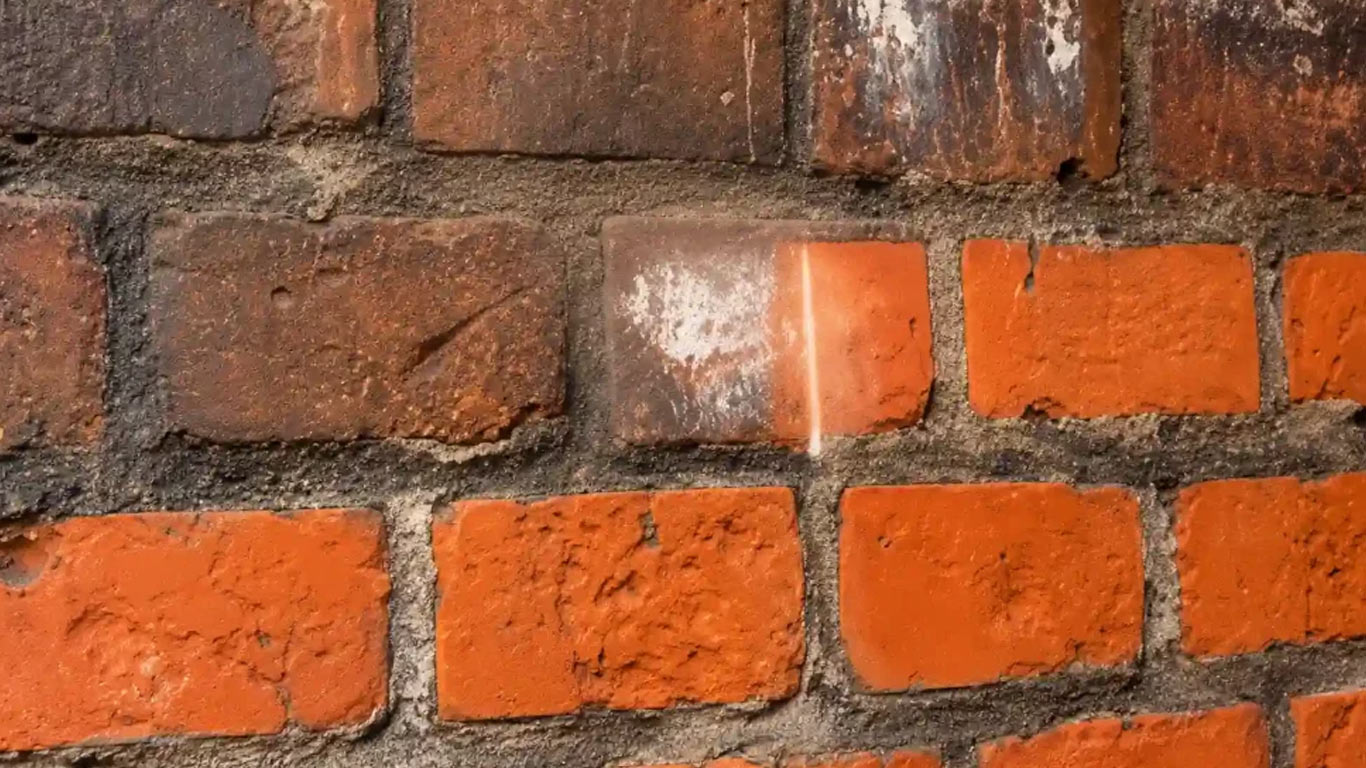
Brick is a hard surface, so laser cleaning can remove soot from the face after a test patch in a hidden spot. Older homes need lead and asbestos testing first, since those materials can sit in the soot film.
No peer-reviewed rate exists for laser removal of fire soot from masonry, so a claim that laser work is faster than other methods on a California fire loss has nothing published behind it. Schedules should not rest on that claim. Timing each candidate method on the same test patch gives a restorer a real number for the job at hand.
On a California fire loss, laser work belongs after make-safe and lead and asbestos testing, and before the general contractor takes over odor and HVAC, so a scope that sells the laser as the whole job is the wrong scope. A test patch comes before any hard surface is cleaned. Whole-home laser scopes should be turned down.
Cooper's work on limestone found about 0.75-1.26 J/cm2[1] removed pollution crust selectively, which shows why historic faces call for a method that can stop at the dirt instead of the default of blasting and then coating over. Blasting takes surface along with residue. That band is an upper reference from crust cleaning, not a setting for fire soot, so the level for a California fire job still comes from a test patch on the burned stone.
Starting laser work before lead and asbestos testing is the costliest mistake, because on pre-1979 buildings those hazards can travel with the soot film and be disturbed along with it. Laser work waits until testing passes. The second mistake is commercial. It means telling an owner or adjuster that laser cleaning satisfies IICRC S700 for wildfire, when S700 still excludes wildfire today.
| Condition |
|---|
| Laser work started before lead and asbestos testing on pre-1979 stock |
| Laser cleaning sold as IICRC S700 wildfire compliance |
Dry ice blasting vendors publish a commercial pace for fire work, but no peer-reviewed rate exists for laser removal of fire soot, so any laser price per area quoted to a California restorer is an estimate. Treat published laser rates with caution. The honest basis for a bid is a timed test patch on the actual burned surface, priced against the other methods under consideration.
| Method | Cost per 100 sq ft | Hourly Rate | Consumables/hr | Setup Cost | Cleaning rate |
|---|---|---|---|---|---|
| Sandblasting / Abrasive Blast | 425 USD | 145 USD/hr[1] | 55 USD/hr[2] | 200 USD[3],[4] | 150 sq ft/hr[2] |
| Soda Blasting | 329 USD | 155 USD/hr | 90 USD/hr | 175 USD | 200 sq ft/hr |
| Dry Ice Blasting | 750 USD | 350 USD/hr[1],[5] | 150 USD/hr[5],[6],[7] | 550 USD | 200 sq ft/hr |
| Dustless Blasting | 641 USD | 375 USD/hr | 80 USD/hr | 250 USD[3] | 130 sq ft/hr |
| Laser Cleaning | 500 USD | 400 USD/hr[8],[9] | 0 USD/hr | 0 USD | 80 sq ft/hr[9] |