
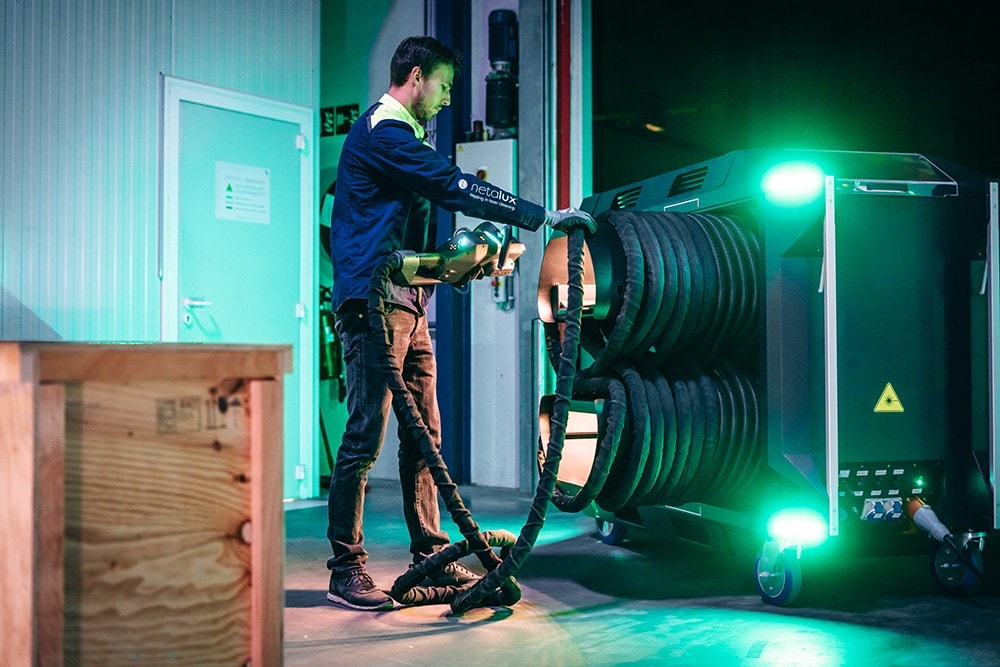
Operator using the Netalux Dagger 4000 laser cleaning system

Netalux Dagger 4000 Dual Core Laser Cleaning System

Strictly industrial and commercial. Thick rust, marine coatings, tanks and vessels, turbines, large molds, and structural steel, including work in place on installed equipment. The only residential job is heavy-duty automotive. It is a 4,000 W dual-mode continuous-wave laser, water-cooled, about 1,880 lb, with about 50 ft of fiber. It needs three-phase power or a generator. A detailed part or a home project belongs on the Kamino 300.

Z-Beam service van

Extreme Duty

$260/ HR
  • ✓Easy for anyone to use
  • ✓Strips paint, rust, coatings
Extreme Duty rates for Rent the Dagger for the day, but use it all you want until pickup the next day

Rent the Dagger for the day, but use it all you want until pickup the next day

You pay for the reserved slot, not for each hour you run the laser. Machine use inside that window is unlimited, so you can take the time the job needs. Getting the project done right matters more to us than packing up early, and the extra hours are there so you can finish that way.
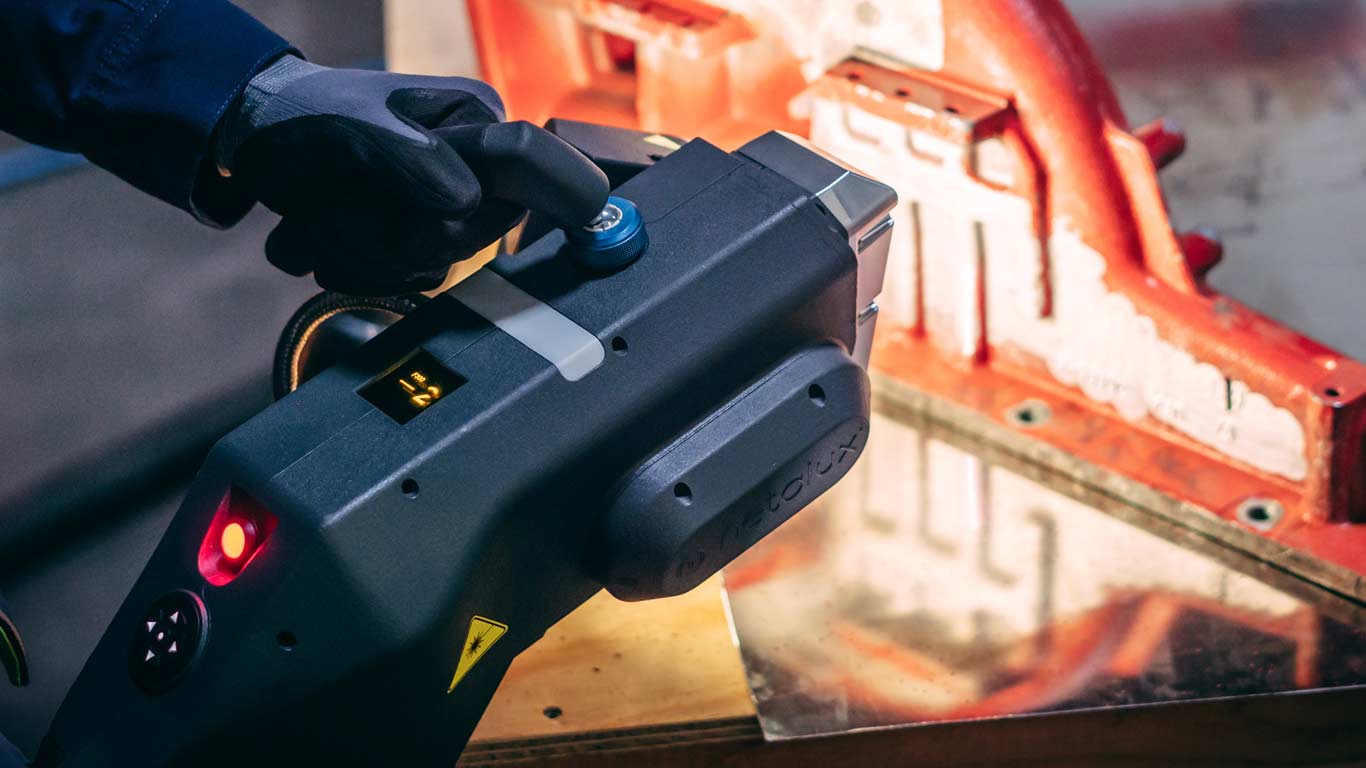
Easy to use. Unrivaled power.

For industrial and commercial work, and for heavy-duty automotive, the Netalux Dagger 4000 removes paint and rust like no other tool. 3 phase powerr ejuired (below). The largest and most sophisticated Continuous Wave laser in the US, the Dagger prepares surfaces in shipping, heavy construction, oil and gas, and industrial applications. Same delivery, setup, and training as the Kamino. Pair with a technician daily add-on when you want operator support on site.

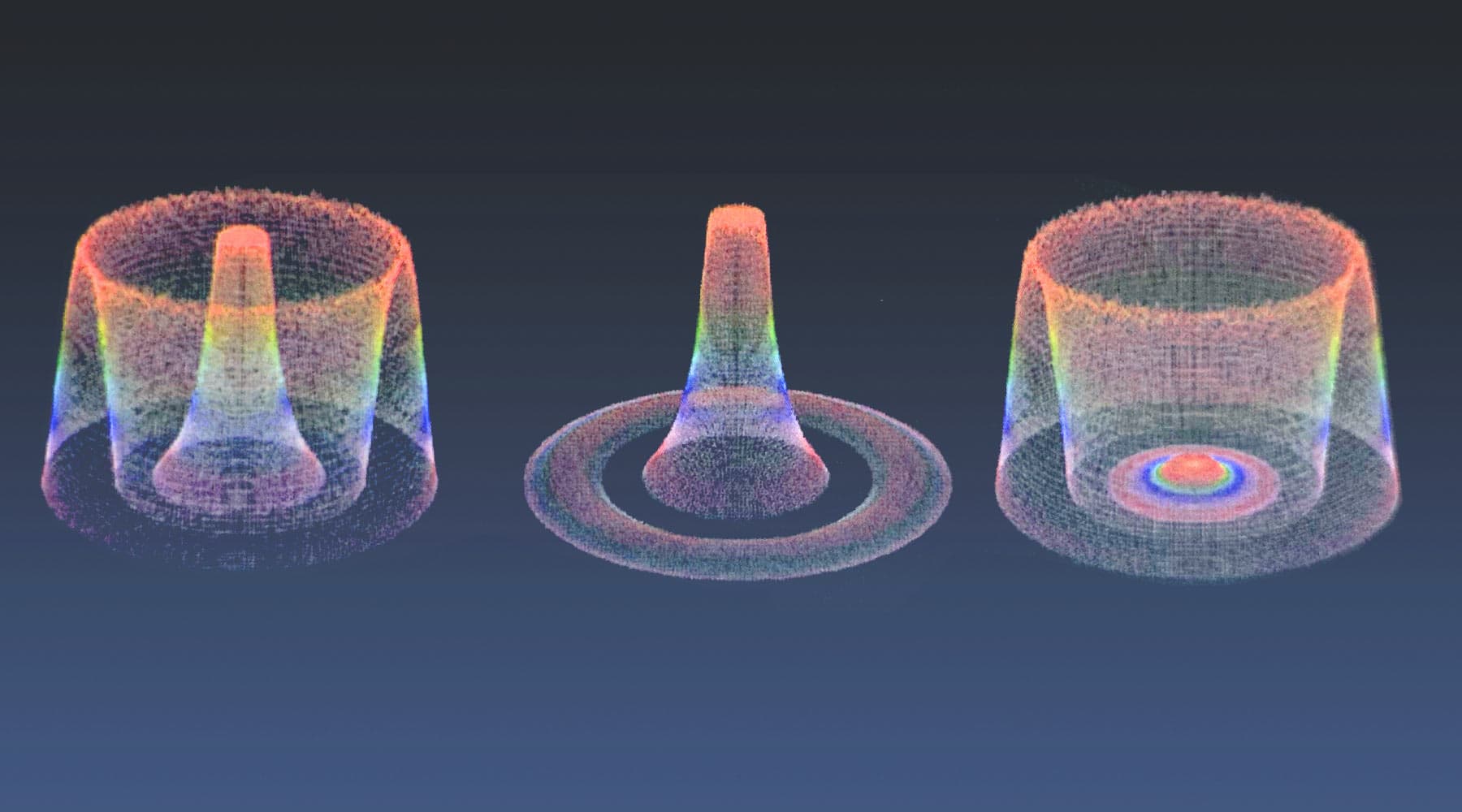
Two beams, one machine.

Standard high-power CW lasers can produce excessive heat that warps or shifts structural steel. By blending multi-mode and single-mode delivery into a ring-plus-core profile, the technology sustains massive continuous average power (up to 4,000 Watts on models like the Dagger). This makes it highly efficient for industrial operations -
  • Deep, rapid stripping of thick large-area rust, process-contamination, and marine coatings.
  • Consistent energy distribution that limits hot spots, ensuring stable surface cleaning where traditional pulsed systems (like the smaller Netalux Needle) might be capped by per-pulse limitations.

Electrical supply

Your 3-phase power options are 208V/240V or 440V/480V. Run off your own shore power or a generator.
Electrical supply
Input Grid ProfileRequired Inlet PlugTransformer Topology
208V/240V 3-phaseNEMA L21-30P (or L15-30P Delta)Delta-to-Wye Step-Up Isolation
440V/480V 3-phaseNEMA L16-30P or L16-50P Twist-LockDelta-to-Wye Step-Down Isolation

Laser source

Laser source
Laser type4000 W dual-mode continuous wave (ytterbium DCL)
Wavelength1064 nm
Pulse frequency2–50 kHz
Pulse shapedual-mode, ring + high-density core
Maximum pulse energy100 mJ
Laser class4
Average laser power4000 W
Average power of the machine17 kW
Coolingwater cooled
Displayhardened glass

Dimensions and fiber

Dimensions and fiber
Total weightabout 850 kg / 1,880 lb
Handset weightabout 4.6 kg / 10 lb
Laser unit220 × 100 × 172.3 cm (7.22 × 3.28 × 5.65 ft)
Handset58.3 × 20.5 × 26.1 cm
Fiber lengthabout 15 m / 50 ft
Protective tube diameter25 mm
Minimum fiber hose bend radius120 mm

Environment

Environment
Humiditynon-condensing
Ingress protectionIP4X (transport note elsewhere: IP53 upright only)
Temperatureabout 4–35 °C / 40–95 °F
—No significant vibration

Before you start

Complete training before use. Keep this documentation available to every operator. Netalux Academy details are at netalux.com/academy.

Rules that apply every shift

  • Wear correct laser safety glasses and hearing protection whenever the laser can emit.
  • Read and understand the operating instructions before powering on.
  • Know the Class 4 hazards for eyes and skin.
  • Netalux assumes no liability for unintended use or skipped safety instructions.

General safety

Netalux is not liable for damage to products or installations caused with the machine, or for injury to persons caused with the product.

Core warnings

  • Use only the controls and procedures in the manual. Other adjustments can cause hazardous radiation exposure.
  • Inspect for damage, unusual noise, or cracked cord or fiber before each use. Do not run a damaged machine.
  • Do not use in ATEX zones or under water. Clear highly flammable materials from the work area.
  • Wear EN207 laser safety glasses matched to machine power and wavelength.
  • Always aim at a surface. Do not fire into open air. Never irradiate people.
  • Do not leave the machine unattended. Power off fully and remove the key when leaving.
  • Complete a risk analysis before service, including door interlocks and safety curtains. Interlocks must be closed to reset and emit.
  • Maintain proper grounding and stable voltage.
  • Do not crush the fiber protective arm. Report damage to Netalux Support.

Personal protection and work zone

Eyelids do not protect against laser light. Collective measures and PPE stay on until the machine is fully off.

PPE and clothing

  • Never remove laser safety glasses during laser work. Bystanders need the correct glasses too.
  • Never look directly into the beam, even with glasses on.
  • Wear safety shoes and clothing that protects skin; avoid reflective jewelry and watches.
  • Gloves can heat and burn; check all PPE for damage before emission.

Demarcation

Under European Directive 2006/25/EC, demarcate the laser cleaning zone so only authorized people enter. Use a laser safety screen, marking tape, and warning signs.

Laser safety

Class 4 laser products require a risk analysis and preventive measures before use (EU Directive 2006/25/EC). Incorrect use can cause permanent blindness, skin burns, short circuits, or uncontrolled emission.

Immediate stop conditions

  • If the fiber protective arm is cracked or internal cables are visible, stop, power off, and contact Netalux Support.
  • Use the machine only for intended industrial surface cleaning.
  • Glasses must suit 1064 nm and the machine power; welding goggles do not qualify. Confirm EN207 rating with your supplier.

Class 4 label summary

Visible and invisible laser radiation. Avoid eye or skin exposure to direct or scattered radiation. Example label values: 900–1200 nm at 4000 W CW; aiming diode 650 nm <1 mW CW; IEC 60825-1 / BS EN 60825-1.

Extraction, room preparation, and operators

Released particles can harm health and damage optics. Extract promptly and dispose of collected material under local law.

People and contaminants

  • Tell nearby workers you are lasering. Keep the safety zone clear unless authorized.
  • Anyone entering the zone must wear PPE from the task risk analysis.
  • Identify the contaminant before starting and provide respiratory or chemical PPE as required.

Room checklist

  • No mirrors or highly reflective surfaces
  • Protect paintings and glass; treat viewing windows for 1064 nm
  • Use non-combustible or fire-retardant curtains (preferably EN 60825-1)
  • Keep the beam off paper, plastic, and other flammables

Operator requirements

Every operator must be trained on machine use and safety (Directive 2006/25/EC). Never allow untrained people to run the machine. Operators must be fit for the work.

Emergencies

Emergency stops sit above the display and on the back of the machine. Push one immediately in emergency or danger. Emission and laser-source power stop; unit and handset lights turn red; the display shows the e-stop state.

Restart after e-stop

Confirm the area is safe, turn the e-stop a quarter turn to normal, then reset when the reset path is available again (reset green; lights return to green).

Rules

  • Do not use the emergency stop as a normal power-off. Repeated use can damage electronics.
  • The external interlock plug can act as an e-stop for site systems (line e-stop, light curtain, door switch). Close it again before reset.
  • The handset reset button is not an emergency stop. It returns the laser to safe mode for a normal pause. Use the e-stop for a full shutdown.

Product overview

The laser unit houses the source, electronics, and ventilation. The handset is where the beam exits. The fiber connects the two. DCL carries two programmable pulses in one fiber for ablation cleaning.

Protect the fiber

Do not crush or damage the fiber. Fiber damage forces a full safety stop and certified repair.

Intended use

Professional surface treatment only: rust, paint, grease, process contamination and coatings, mould cleaning, and weld cleaning. Mobile multi-site use, not private household use and not a fixed unsupervised install. Trained operators only.

Laser unit

Main chassis features used every shift.

Components

  • HMI: power, reset, jobs, e-stop
  • Four hoisting points and forklift pickup areas
  • Handles with front brake releases
  • Rear emergency stop
  • Built-in water coolers for source and handset
  • Ventilators and filters (keep air inlets clear)
  • Indicator lights synced with the handset

Indicator colors

Indicator colors
Whitestarting up
Greenready to reset
Orange continuousready for emission
Orange flashinglasering
Redalarm (for example e-stop)

Connectors and service access

Service door and switchboard are for Netalux technicians only. Invisible Class 4 radiation can be present when panels are open.

Connector panel

  • I/O, external LED, interlock, MODBUS
  • Service port (technicians only) and software updates
  • Power indicator LED (red when powered)
  • Air outlet and air inlet (ISO 6150-B, 5–8 bar, 120 L/min)
  • Mains switch and 3P+N+PE power inlet
  • Storage compartment for fiber and handset after use

User interface

Touch display on the laser unit for jobs and status.

Controls

Controls
Emergency stopemergency use only
Key switchquarter turn right to start; left and remove to shut down
Displayjobs plus power, geometry, and pulse overlap; temperature and status
Sliderfine parameter changes
Arm/disarm buttongreen armed, red while ready/emitting depending on state
—Alarm symbols on the right of the display

Handset

The handset aims the beam and carries local controls. Never look into the laser head unless the machine is powered off.

Parts

  • Rotatable laser head (about 115°)
  • Secondary ergonomic handle (360°)
  • Lens change buttons, control screen, reset, program selection
  • Fiber, control button with unlock slide, accessory mounts (M4)
  • Indicator light, protective glass, headlight, air knife

Control button

Slide the unlock forward, then press and hold the control button to emit. Release to stop. Change jobs only after releasing the control button.

Incorrect use

Incorrect use risks operator and bystander health and can seriously damage the machine. Netalux is not liable for incorrect use.

Do not

  • Treat textiles, carpets, curtains, or other flammable absorbing surfaces
  • Irradiate any part of the human body or use for medical or cosmetic procedures
  • Use for household cleaning, under water, or in ATEX zones
  • Run without extraction, with covered air inlets, or on an unstable surface
  • Modify or embed the machine without written Netalux consent
  • Allow untrained operators or skip PPE and zone demarcation
  • Use as a heat gun, ignition source, cutter, or welder
  • Fire into thin air or onto translucent surfaces
  • Crush cables or stand on the fiber or power cord

Turning on and using the machine

Fill coolers correctly before first use (check with the machine off). Complete safety training and prepare the room before these steps.

Startup steps

  • 1. Unpack onto a stable surface.
  • 2. Park the handset with the head aimed safely (prefer about 45°); not at ground, people, or flammables.
  • 3–4. Connect power and plug into the three-phase socket; confirm the power LED.
  • 5. Connect compressed air.
  • 6. Key switch quarter turn right to start.
  • 7. Wait for the home page; lights and reset buttons green when ready to reset.
  • 8. Confirm e-stops are in the normal position.
  • 9. Put on laser safety glasses before arming.
  • 10. Arm on the UI (ready-for-emission: orange continuous lights, headlight on, air cooling the handset).
  • 11. Aim at the work at the correct distance, lens, and angle.
  • 12. Unlock and press the control button to emit (lights flash orange).
  • 14. Change jobs only after releasing the control button.
  • 15. Rotate the head only with the latch unlocked and a clear, safe beam path.

Switching off, head angle, and lenses

Shut down in order. Do not yank power while the display is still on.

Shutdown steps

  • 1. Release the control button.
  • 2. Disarm with the red arm button.
  • 3. When lights are green, turn the key left and remove it.
  • 4. Wait until display and lights are fully off, then unplug power.
  • 5. Disconnect power and compressed air (air may release violently).
  • 6. Clean the protective glass if dirty.
  • 7. Store fiber and handset in the compartment.

Rotatable head and lenses

Slide the latch outward, turn the head, release the latch. Three built-in lenses set working distance: shorter focus is more aggressive. Retune job settings after a lens change.

DCL pulse priority

Ring and core pulses can be programmed separately. Prefer the ring for larger-spot coating work; prefer the core when you need more abrasive character.

Lifting

Use the four hoisting points with proper straps, or a forklift only at the marked pickup areas.

Maintenance

An orange maintenance alarm shows on-screen detail. Contact Netalux Support (support@netalux.com, +32 11 661 882) if basic steps do not clear it. Only Netalux or authorized parties may repair or perform major maintenance.

Protective glass

Clean with Netalux wipes as soil builds. Replace scratched or uncleared glass. Do not use other solvents that attack the coating. Do not laser through dirty glass.

Internal optics

Mirrors and lenses need a Netalux or certified check every six months.

Filters

  • Dust mats behind side panels: replace at least every 6 months
  • Compressed-air stack: prefilters yearly; fine filters CON00010 / CON00011 per display; carbon CON000204 yearly
  • Optics cooler filter CON00089 and DI cartridge per conductivity warnings
  • Source cooler uses biocide water (no DI); flush with Nalco CCL2567 before filter change when prompted; refill with Nalco CCL105 / DI

Acceptance, storage, and transport

Inspect the shipment before first use.

Included items

  • User manual
  • Laser unit, handset, and fiber
  • Extra plugs and power cord
  • Key
  • Cleaning set
  • Laser safety glasses

Storage and moves

Power off fully. Store handset and fiber in the compartment. Clean with mild soap; use isopropanol on protective glass only. Store frost-free, condensation-free, max 40 °C. Drain coolers before freeze risk. IP53 applies upright; protect openings if the unit lies down.

Accessories

Extraction, air, and PPE are part of safe operation, not optional extras.

Vacuum and compressor

Vacuum and compressor
Vacuum suggestion (non-binding)more than 3 kW and about 23 kPa underpressure; 50 mm tube to the handset extractor
Compressed aircold and dry; minimum 6 bar and 3 hp / 2.2 kW
—Air cools optics and keeps the protective glass clear

PPE and screens

Wear EN207 glasses for 1064 nm at this machine power, plus hearing protection and any respiratory gear from the risk analysis. Demarcate with a laser safety screen that meets EN 60825-4.

Troubleshooting alarms

Seven symbols sit on the right of the HMI: General, Maintenance, Temperature, Power supply, Cooling, Humidity, and Compressed air. Orange or blue is non-critical; red disables the machine until you clear the display steps.

Common meanings

Common meanings
General orange/redfollow on-screen text or call Netalux Support
Maintenance orangeschedule service with Netalux Support
Temperature blue/orangewait for warm-up or cool-down; red: critical heat, call Support
Power supply reddefective supply, call Support
Cooling blue/orangewait for cooler temperature; red: cooler fault, call Support
Humidity orangestop and move to a drier room
Compressed air orangecheck filters, pressure, and connection
Message on screen with no lit symbolfollow the display or call Support

EC Declaration of Conformity

Manufacturer declaration for the photographed manual copy (serial blank on that page).

Summary

  • Manufacturer: NV Netalux, De Weven 13, 3583 Paal, Belgium
  • Generic name NX2; model Dagger; type Dagger 4 kW; commercial name Dagger
  • Machinery Directive 2006/42/EG and EMC Directive 2014/30/EU
  • Standards include EN ISO 12100, EN 55011, EN 61326-1, EN 60204-1, EN 60825-1
  • Signed Paal, Belgium, 5 January 2026, Emmanuel Flaam, CEO

Related materials

Ranked by evidenced affinity (more stars = stronger fit for this machine).

Related applications

Ranked by evidenced affinity (more stars = stronger fit for this machine).

Pulsed 1064 nm head lifting industrial paint off Bay Area structural steel

Laser Paint Coating Removal in the Bay Area

View details: Laser Paint Coating Removal in the Bay Area. Category: applications. Subcategory: Hazardous-Coatings.

Dock and yard coating prep still pays ventilation and media capital when blast cabinets are the only way off old industrial coatings. Pulsed paint removal leaves parts primer-ready the same shift and skips the blast enclosure. Keep grit only where profile depth is a contract requirement. Confirm the substrate on [steel](/materials/steel-laser-cleaning) and [aluminum](/materials/aluminum-laser-cleaning) parts, and keep the same dry path on [lead paint](/applications/lead-paint-laser-removal-bay-area) jobs when the coating era is unknown.

Pulsed 1064 nm head removing field rust from a Bay Area structural-steel flange

Laser Cleaning for Rust Removal, Bay Area

View details: Laser Cleaning for Rust Removal, Bay Area. Category: applications. Subcategory: Corrosion-Remediation.

Dock and yard coating prep clears field rust from sound steel. A pulsed pass leaves primer-ready metal the same shift without a blast enclosure. Intact mill scale still goes to grinders or blast; only Grades C–D plate that already lost that scale stays on the pulsed path. Deep pits are missing metal, not a film this cleanup restores, so coat soon in salt air before the face reoxidizes. The oxide this job lifts is [iron oxide rust](/contaminants/iron-oxide-rust-laser-cleaning) on [steel](/materials/steel-laser-cleaning). When the next coat is already booked, the same yards also run [paint coating removal](/applications/laser-paint-coating-removal-bay-area).

Pulsed laser cleaning carbon steel weld joint faces to bare-metal cleanliness before butt welding

Weld Preparation Laser Cleaning Applications

View details: Weld Preparation Laser Cleaning Applications. Category: applications. Subcategory: Weld-Prep.

Bay Area steel and sheet-metal fabrication shops still poison the root pass when grinding only clears mill scale where the wheel hits and leftover oil, rust, or scale stays on the rest of the joint. A pulsed joint prep clears the full face the same shift and skips grit blast waste. Size the recipe for loose rust and thick scale apart from tight mill scale under AWS D1.1 §5.15, and match energy on scrap before the arc. Confirm the same path on [metal fabrication](/applications/metal-fabrication-laser-cleaning-applications), [stainless passivation](/applications/stainless-steel-weld-passivation-laser-cleaning), and [sandblasting comparisons](/applications/laser-cleaning-vs-sandblasting) when scale returns between stations.

Laser cleaning automotive and EV manufacturing components and frame surfaces

Automotive and EV Production Laser Cleaning

View details: Automotive and EV Production Laser Cleaning. Category: applications. Subcategory: Automotive-Ev.

Bay Area EV assembly and powertrain lines still lose coatings and welds when oil, rust, or oxide stays on trays, busbars, and brackets. A pulsed clean leaves those parts ready for the next bond or weld the same shift, without standing up a solvent bath. Looking for silver after Al-Si prep is not enough on hot-stamp structures; cupping can still fail. Match energy on scrap before a fleet recipe crosses [steel](/materials/steel-laser-cleaning) and [aluminum](/materials/aluminum-laser-cleaning) housings, then confirm the same clean path on [EV battery busbar](/applications/ev-battery-busbar-laser-cleaning) cells when oxide returns between stations.

Laser cleaning die casting and injection mold surfaces removing release agents and oxides

Mold & Die Laser Cleaning Applications

View details: Mold & Die Laser Cleaning Applications. Category: applications. Subcategory: Mold-Die.

Clear die soil keeps finish only when solvent hand wipes stop stalling inside multi-cavity tools. Pulsed cavity cleaning returns mold tooling the same shift without solvent waste across the bench. Do not polish away the preferred texture; clean cavities on the press when possible. Confirm the metal on [tool steel](/materials/tool-steel-laser-cleaning) and [copper](/materials/copper-laser-cleaning) cavities, and keep the same dry path on [hot-runner tips](/applications/hot-runner-laser-cleaning) and [rubber molds](/applications/rubber-compression-mold-laser-cleaning) when resin returns between shots.

Related contaminants

Ranked by evidenced affinity (more stars = stronger fit for this machine).

Iron Oxide Rust image for contaminants

Iron Oxide Rust

View details: Iron Oxide Rust. Category: contaminants.

Iron oxide rust is removed from [steel](/materials/steel-laser-cleaning) at **0.1–0.5 J/cm²**, well under the **8–15 J/cm²** where the base metal starts to take damage, so a coupon cut from the actual part, not the color of the rust or any [mill scale](/contaminants/mill-scale-magnetite-laser-cleaning) under it, should set the energy.

Paint Coatings image for contaminants

Paint Coatings

View details: Paint Coatings. Category: contaminants.

Paint coatings come off [stucco](/materials/stucco-laser-cleaning) at 0.5–2 J/cm², while the stucco itself is injured at 8–14 J/cm², so a setting that removes paint has to stay near the low end of that range. The same logic runs through [laser paint coating removal](/applications/laser-paint-coating-removal-bay-area) on any host.

Gasket Residue image for contaminants

Gasket Residue

View details: Gasket Residue. Category: contaminants.

Rubber gasket residue on a [steel](/materials/steel-laser-cleaning) pipe flange lifts at **1–3 J/cm²**, while **8–15 J/cm²** begins to injure the steel itself, so the pass stays at the low end of that gap.

Hard Coatings image for contaminants

Hard Coatings

View details: Hard Coatings. Category: contaminants.

Stripping a PVD or CVD hard coating from tool steel is a narrow band, since about 2–4 J/cm² removes the coating while 8–12 J/cm² injures the host steel. Bay Area tool remanufacturers should treat a glossy flank face as a screening test only, because recoating contracts need a chemical strip-complete criterion.

Mill Scale Magnetite image for contaminants

Mill Scale Magnetite

View details: Mill Scale Magnetite. Category: contaminants.

Laser descaling lifts mill scale magnetite from steel at 1–3 J/cm², and 8–15 J/cm² starts to injure the steel host beneath it.

Organic Grease Oil image for contaminants

Organic Grease Oil

View details: Organic Grease Oil. Category: contaminants.

Organic grease oil on steel lifts at **0.05–0.5 J/cm²**, while the steel itself is not injured until **8–15 J/cm²**, so the gap between cleaning and damage is wide.

Oxide Scale image for contaminants

Oxide Scale

View details: Oxide Scale. Category: contaminants.

Stainless steel carrying oxide scale leaves a narrow margin, with scale coming off at 1.5–4 J/cm² and damage to the stainless itself starting at 5–12 J/cm², while on hot-rolled carbon steel AMPP SP21511-1 says pulsed laser ablation will not productively remove intact mill scale, so the metal and the scale condition decide whether laser cleaning is the right tool.

weld-heat-tint image for contaminants

weld-heat-tint

View details: weld-heat-tint. Category: contaminants.

Laser cleaning removes weld heat tint from stainless steel at 0.5–1.5 J/cm², but 5–12 J/cm² injures the metal underneath, and a clean look does not prove corrosion resistance returned.

FAQ

  • What is the Netalux Dagger 4000 laser cleaning system?

    The Netalux Dagger 4000 is a water-cooled Class 4 dual-mode continuous-wave ytterbium DCL cleaner at 4000 W average laser power and up to 100 mJ pulse energy (1064 nm). DCL combines a multi-mode ring and single-mode core in one fiber. Z-Beam includes delivery, setup, and operator training with rental.

  • What are the key specifications of the Netalux Dagger 4000?

    From the Dagger UMHW V1 EN manual: 4000 W average laser power; up to 100 mJ pulse energy; 2–50 kHz; ring plus high-density core pulse shape; 1064 nm; water cooled; about 850 kg total; fiber about 15 m; supply 3P+N+PE 380–400 V 50–60 Hz with a 5P-16A plug.

  • What materials and applications is the Dagger 4000 best suited for?

    The manual lists intended professional uses as rust, paint, grease, process contamination and coatings, mould cleaning, and weld cleaning. Related materials and applications on this page are ranked by evidenced affinity, not as a claim that every substrate is equally easy.

  • What power requirements does the Dagger 4000 need on job sites?

    The Dagger plugs into 400Y/231V three-phase on a 5-pin European outlet (5P-16A). A US rental feeds a transformer from 208V/240V or 440V/480V three-phase. The Electrical supply table lists the inlet plug and transformer for each.

  • How far in advance should I prepare for a Dagger job?

    Clear a path for the unit and the extractor one day before when you can. Confirm the three-phase feed in the electrical table, or ask Z-Beam to arrange a generator. Name stairs, tight rooms, and whether the surface is horizontal or vertical when you book.

  • How do I maintain the Netalux Dagger 4000?

    Keep protective glass clean; use isopropanol on glass only. Keep air inlets clear and follow orange maintenance alarms on the HMI. Drain coolers before freeze risk and store frost-free. Internal service and open panels are for Netalux technicians only.

  • Is the Netalux Dagger 4000 suitable for rentals and new users?

    It is sized for mobile multi-site professional work when three-phase power or a generator is available. Only trained operators may run a Class 4 system. Z-Beam includes hands-on training with rental; untrained operators are prohibited by the manual.

  • What safety features and training are required for the Dagger 4000?

    Class 4 labeling, e-stops on the unit and rear, key switch, arm/disarm, external interlock, and seven HMI alarm symbols. Operators must wear EN207 glasses at 1064 nm, demarcate the zone under Directive 2006/25/EC, use extraction, and complete machine and safety training before emission.