


On-Site Demo
Free/ 60 mins
- CoversCoverage SF Bay Area
- Test your material
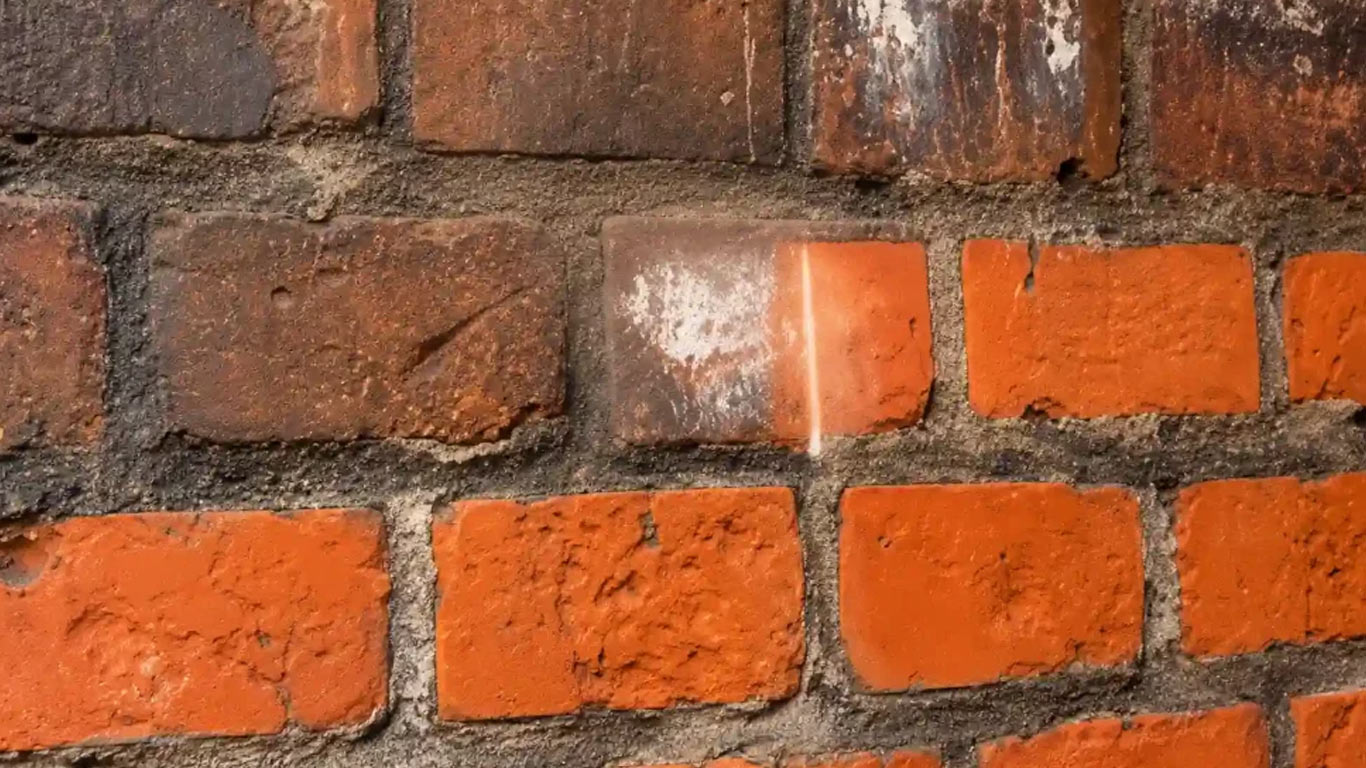
Wildfire soot is near-nanometer carbon bonded with VOCs and PAHs, according to Yang 2025, so water and blast media can drive it deeper or take the face off brick and stone that could otherwise be saved. For California homeowners and contractors, that means the cleaning method decides whether a fireplace, chimney, or stone wall stays or gets torn out. A dry laser pass with fume extraction lifts surface soot without soaking porous masonry. Settings come from a test patch on the actual brick, because heritage crust thresholds do not transfer to combustion soot. Odor, HVAC, and contents stay with the general contractor.
The most damaging mistake is raising the laser past about 1.5 J/cm2 because soot is coming off slowly, since above that level the beam works through plasma and shock and becomes less selective about what it removes. Brick and stone face can leave with the soot. Slow progress calls for more passes at the proven setting. Settings borrowed from heritage black-crust studies cause the second kind of damage, because gypsum crust figures do not transfer to combustion soot.
| Condition |
|---|
| Power turned up because soot is coming off slowly |
| Settings copied from heritage black-crust cleaning studies |
Soda blasting and wet chemical sponges leave moisture and residue inside porous brick, while a laser pass stays dry and pulls loose soot into HEPA capture, so the cost difference often shows up after the first invoice. Residue left in the brick can mean another round of cleaning, and wet masonry has to dry before any sealing or repointing. A dry method keeps that follow-up work off the schedule for fireplace and wall jobs in California homes.
| Method | Cost per 100 sq ft | Hourly Rate | Consumables/hr | Setup Cost | Cleaning rate |
|---|---|---|---|---|---|
| Sandblasting / Abrasive Blast | 425 USD | 145 USD/hr[1] | 55 USD/hr[2] | 200 USD[3],[4] | 150 sq ft/hr[2] |
| Soda Blasting | 329 USD | 155 USD/hr | 90 USD/hr | 175 USD | 200 sq ft/hr |
| Dry Ice Blasting | 750 USD | 350 USD/hr[1],[5] | 150 USD/hr[5],[6],[7] | 550 USD | 200 sq ft/hr |
| Dustless Blasting | 641 USD | 375 USD/hr | 80 USD/hr | 250 USD[3] | 130 sq ft/hr |
| Laser Cleaning | 500 USD | 400 USD/hr[8],[9] | 0 USD/hr | 0 USD | 80 sq ft/hr[9] |
There is no published laser setting for fire soot on brick, so the right level for a California home comes from a test patch on its own masonry, not from a number online. Two other claims deserve the same caution. Public IICRC materials do not name any cleaning method, and laser cleaning does not remove smoke odor.
It takes soot off many bricks and stones, but no peer-reviewed study gives a setting for fire soot on brick. The level is proven on a hidden patch of the actual wall before the rest is touched. Settings from heritage crust cleaning do not carry over, because combustion soot bonds to the surface differently from the gypsum crust in those studies.
Start small, on a spot inside the firebox or under the hearth edge that nobody sees. Fireplace brick is porous, so soaking it or scrubbing with wet chemical sponges can pull soot deeper and leave residue. A dry laser pass with fume extraction removes soot from the face without wetting the brick, and the hidden patch shows how it reacts first.
Ask whether they test a hidden patch first, who handles odor and HVAC, and how they control the beam. A cleaning laser this strong falls under ANSI Z136, so the company should mark off a zone around the work with the general contractor and name a laser safety officer. Be wary of any claim that IICRC S700 requires laser, since public IICRC materials stay neutral on cleaning methods and S700 leaves wildfires out of its.
No, laser cleaning is not an odor treatment. The Hearts and Homes bushfire study lists odor as untested, and LaserClean LA states on its own service page that its laser work is not odor remediation. Smell stays with the general contractor and odor specialists.
Often, when the brick or stone is still sound. Older masonry is where keeping original material matters most, so the work goes slowly, begins on a hidden patch, and stays at the lowest setting that takes soot off without changing color or texture.
No, steel framing first needs its own check for heat damage, so this page stays with brick, stone, and concrete. Ask whoever assesses the loss to list the steel as a separate item.
Laser cleaning belongs late in a California fire job, because IICRC S700 places soot source removal after a full assessment and pre-1979 homes need lead and asbestos results before anyone disturbs a surface. Once both are done, the laser handles only the brick, stone, and concrete the assessment marks for saving. Odor, ducts, and contents stay with the general contractor.
Cooper found a laser band of 0.75-1.26 J/cm2[1] removed crust from limestone with 0% probability of removing clean stone, the kind of control abrasive blasting lacks when it cuts glaze and tooling marks from brick and stone. The margin is narrow. Marczak showed that at 2.5 J/cm2[2] on sandstone the beam stripped patina along with the crust. Both figures come from heritage crust work, not fire soot, so they show what selective cleaning looks like rather than giving a setting for a burned California chimney.
No peer-reviewed square-foot-per-hour rate exists for laser removal of fire soot on brick, so any laser speed quoted for a California fireplace or wall is a contractor's estimate. Dry ice blasting vendors publish commercial rates of 10+ ft2/min, and those figures come from their own materials rather than neutral testing. The fair comparison is a timed test patch on the actual brick, run with each method being considered.