

Ikmanda RoswatiPh.D.Indonesia
Ultrafast photonics and laser-matter interactionPublished
Jun 10, 2026
Laser Paint Coating Removal in the Bay Area
A Bay Area body shop stripping failed epoxy or polyurethane before recoat runs into a VOC cap near 50 grams per liter on solvent surface prep and spray-line cleanup, and older methylene-chloride paint strippers are barred from sale to industrial users after state toxics regulators listed the chemical as a priority product. A pulsed near-infrared laser removes the coating layer through thermal stress rather than solvent action, so shops can strip aluminum panels and steel frames without touching that VOC limit or generating stripped-paint waste. The exception is thick marine-grade epoxy built up over several coats, where repeated passes near rivets and seams can discolor the substrate unless the operator drops pulse energy and adds a cooling pause between rows. Shops already running rust or lead paint removal on the same line can cover all three paint coating jobs from one machine instead of separate chemical-stripping stations.
After laser cleaning Laser Paint and Coating Removal, Bay Area
| Final results | The laser pass removes failed paint and industrial coatings from the part without a methylene-chloride stripper, which EPA has barred for most commercial use after April 28, 2026. |
| Speed and ease | The laser pass clears that paint and coating without the up-to-12-hour stripper dwell or the pressure-rinse that follows it. |
Where Laser Paint and Coating Removal, Bay Area jobs go wrong
| Contaminants | The soil is paint and coatings, including epoxy and polyurethane. |
| Methods | Methylene chloride, the fast stripper, is now barred for most commercial use, and what remains takes a longer dwell. |
| Challenges | A milder stripper that remains legal is sold as unable to lift an epoxy or urethane film. |
Laser removal costs more per hour but less overall
Laser paint removal requires a higher rated hourly charge than abrasive blasting, yet the total bill for a Bay Area job often lands lower once media and disposal enter the math. Service rates for laser cleaning run 250 to 450 dollars an hour, well above typical sandblasting labor, because the equipment cost amortizes into every billed hour instead of a one-time media purchase. Abrasive blasting looks cheaper on the invoice until the media bill arrives. A single production nozzle burns through 1,700 to 2,200 pounds of garnet or slag per hour, and that consumable cost repeats every day the job runs. The comparison flips on site conditions. A cramped equipment room or an occupied building near downtown San Francisco favors laser, since it skips the containment tenting that abrasive media forces on tight sites. A large open structure with heavy, multi-layer coating buildup can still favor blasting, because the laser removal rate stays slower on thick paint, which stretches the billed hours enough to erase its rate advantage.[1][2][3][4][5][6][7][8][9]
| Method | Cost per 100 sq ft | Hourly Rate | Consumables/hr | Setup Cost | Cleaning rate | Surface damage |
|---|---|---|---|---|---|---|
| Sandblasting / Abrasive Blast | 425 USD | 145 USD/hr | 55 USD/hr[3] | 200 USD | 150 sq ft/hr[2],[3],[4] | High: Abrasive action creates measurable surface profile (1.5–4 mils anchor pattern on steel). Causes pitting, warping, or erosion on softer or delicate materials.[8] |
| Soda Blasting | 329 USD | 155 USD/hr | 90 USD/hr | 175 USD | 200 sq ft/hr | Low to moderate: Softer than sand or grit at Mohs 2.5. Does not create significant surface profile on steel. Can etch soft metals (aluminum, copper) or sensitize wood grain. |
| Dry Ice Blasting | 750 USD | 350 USD/hr | 150 USD/hr | 550 USD | 200 sq ft/hr[5] | Low to minimal: Non-abrasive thermal shock mechanism; dry ice sublimates on impact with no surface profile or residue. Some thermal stress risk on heat-sensitive substrates. |
| Dustless Blasting | 641 USD | 375 USD/hr | 80 USD/hr | 250 USD | 130 sq ft/hr | Moderate: Water suppression reduces abrasion heat and dust, but abrasive media still creates surface profile.[8] |
| Laser Cleaning | 500 USD | 400 USD/hr[1],[7] | 0 USD/hr | 0 USD | 80 sq ft/hr[6],[7] | Minimal to none: Non-contact ablation vaporizes contaminants without abrading or mechanically stressing the substrate. Parameter-controlled at 300W (Netalux Kamino class).[9] |
Sources(9 references)
- Laser Cleaning Service Cost Per Square Foot 2026: The Ultimate Guide cklasersz.com (opens in new tab) — Laser cleaning service rates in 2026 run 250 to 450 dollars per hour, well above typical sandblasting labor charges.
- How to Bid on an Abrasive Blasting Project and Profit — Graco Contractor Guide graco.com (opens in new tab)
- Abrasive Blast Consumption, Production and Cleaning Rates — Technical Bulletin kleenblast.com (opens in new tab)
- AP42 Section 13.2.6: Abrasive Blasting — EPA Emissions Factor Documentation gaftp.epa.gov (opens in new tab)
- Mold, Smoke & Fire Remediation with Dry Ice Blasting — Cold Jet Production Rates coldjet.com (opens in new tab)
- Top 5 Industrial Laser Cleaning Machines for Rust Removal in 2026 arcuscnc.com (opens in new tab)
- Cost of Laser Rust Removal in 2026: $80-$300/hr Service | $0.50/hr to Operate fiberlaserclean.com (opens in new tab)
- SSPC-SP10 / ISO 8501-1 Sa 2.5 — Near-White Blast Cleaning surface-preparation standard sspc.org (opens in new tab)
- ANSI Z136.1 — Safe Use of Lasers webstore.ansi.org (opens in new tab)
Related equipment

Test a scrap panel before scaling up the removal job
Laser paint and coating removal removes primer, topcoat, and multi-layer finishes from steel and aluminum without media blasting or chemical strippers. A Bay Area shop still needs a documented sequence: confirm the substrate and coating stack, run a test panel, set up containment, then scale up only after the settings hold. Skipping the test panel is the most common reason a first job fails inspection.
1Do not skip the test panel on a scrap piece
- Do not move to the full part until a test panel on a scrap piece of the same substrate and coating stack confirms the settings actually work.
- Fluence for organic paint on carbon steel runs about 0.5 to 2 J/cm²[1], well under the 8 to 15 J/cm² range where the steel itself starts to scorch.
- A test panel shows exactly where a specific job sits inside that range before the laser reaches a client's part.

2Confirm the substrate and coating stack
- Identify the base metal, steel, aluminum, or stainless, and count how many layers of paint or primer sit on top of it.
- Note any zinc-rich primer under the topcoat, since it needs a different energy density than the paint layer above it.
- Pull the coating data sheet when the client has one instead of guessing the layer count from a visual check.
3Set up containment before the first pass
- Route the plume through a fume extractor filtered for the specific coating chemistry being removed.
- Isolate the work area so paint fragments and dust do not reach nearby equipment or foot traffic.
- Bag or drum the collected residue for disposal according to the coating's safety data sheet.
4Apply the confirmed settings to the actual part
- Carry the energy density and pass count validated on the test panel to the real part, starting on a small area first.
- Watch for discoloration or pitting on the substrate, a sign the energy density climbed past the paint's removal point.
- Check the surface after each pass instead of running every pass back to back and inspecting once at the end.
5Record the job before signing off
- Write down the substrate, coating type, and layer count this job confirmed, so the next similar job does not restart from zero.
- Log the energy density, pass count, and dwell time actually used, alongside the test panel result that qualified them.
- Hand off the disposal record for the collected residue along with the rest of the job file.
Sources(1 reference)
- Laser effects based optimal laser parameter identifications for paint removal from metal substrate at 1064 nm: a multi-pulse model, Journal of Modern Optics, 2017 doi:10.1080/09500340.2017.1330433 (opens in new tab) — Fluence for organic paint removal from carbon steel substrates at 1064 nm runs about 0.5 to 2 J/cm², well under the 8 to 15 J/cm² range where substrate damage begins.
Panels and frames stripped of Bay Area coatings
Steel
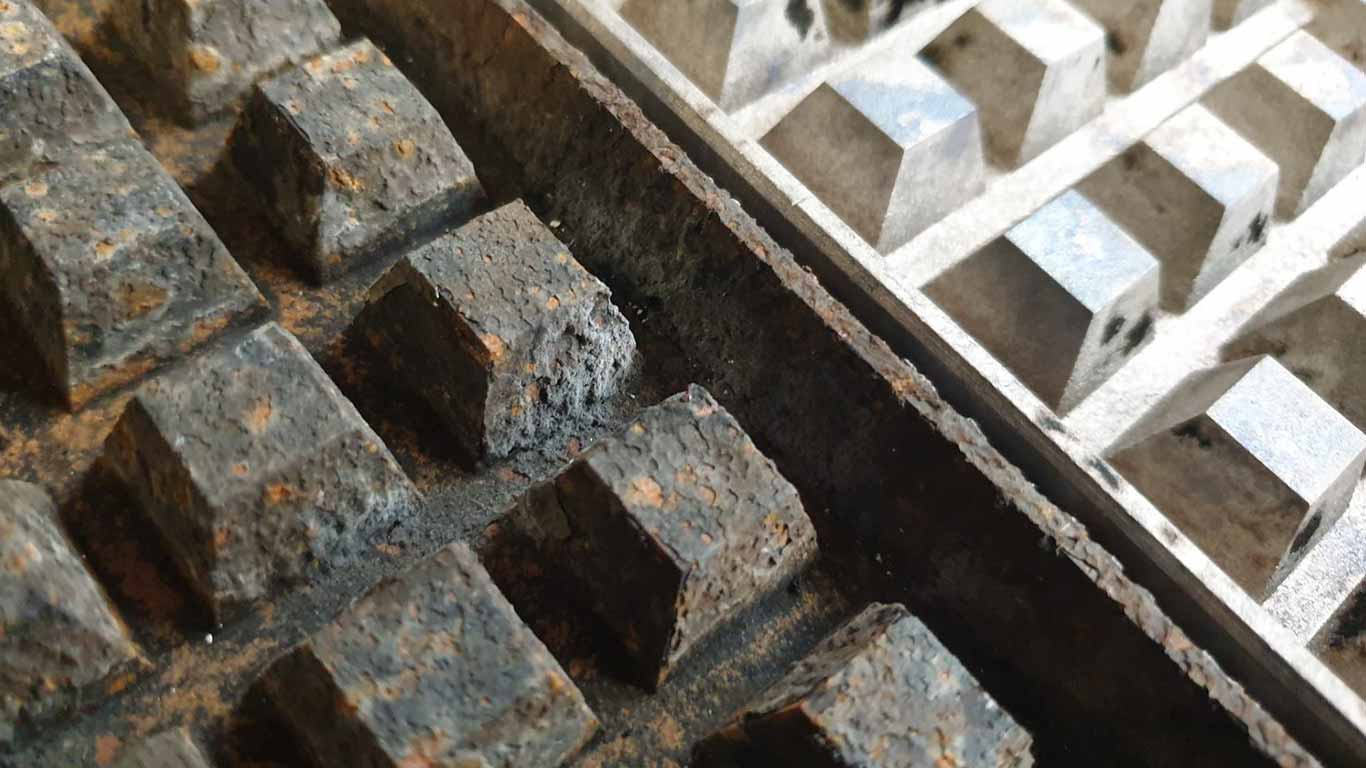
View details: Steel. Category: metal. Subcategory: Ferrous.Laser cleaning removes rust, mill scale, and weld discoloration from steel without media, holding fluence near a 1.5 J/cm² cleaning floor and stopping short of the 4.5 J/cm² mark that scars bare metal. Intact mill scale still needs mechanical pre-treatment under AMPP SP21511-1 first. Compare with [stainless steel](/materials/stainless-steel-laser-cleaning) or [cast iron](/materials/cast-iron-laser-cleaning) laser cleaning when the substrate is mixed, and see [weld prep](/applications/weld-prep-laser-cleaning-applications) for the fabrication step this feeds.
Aluminum
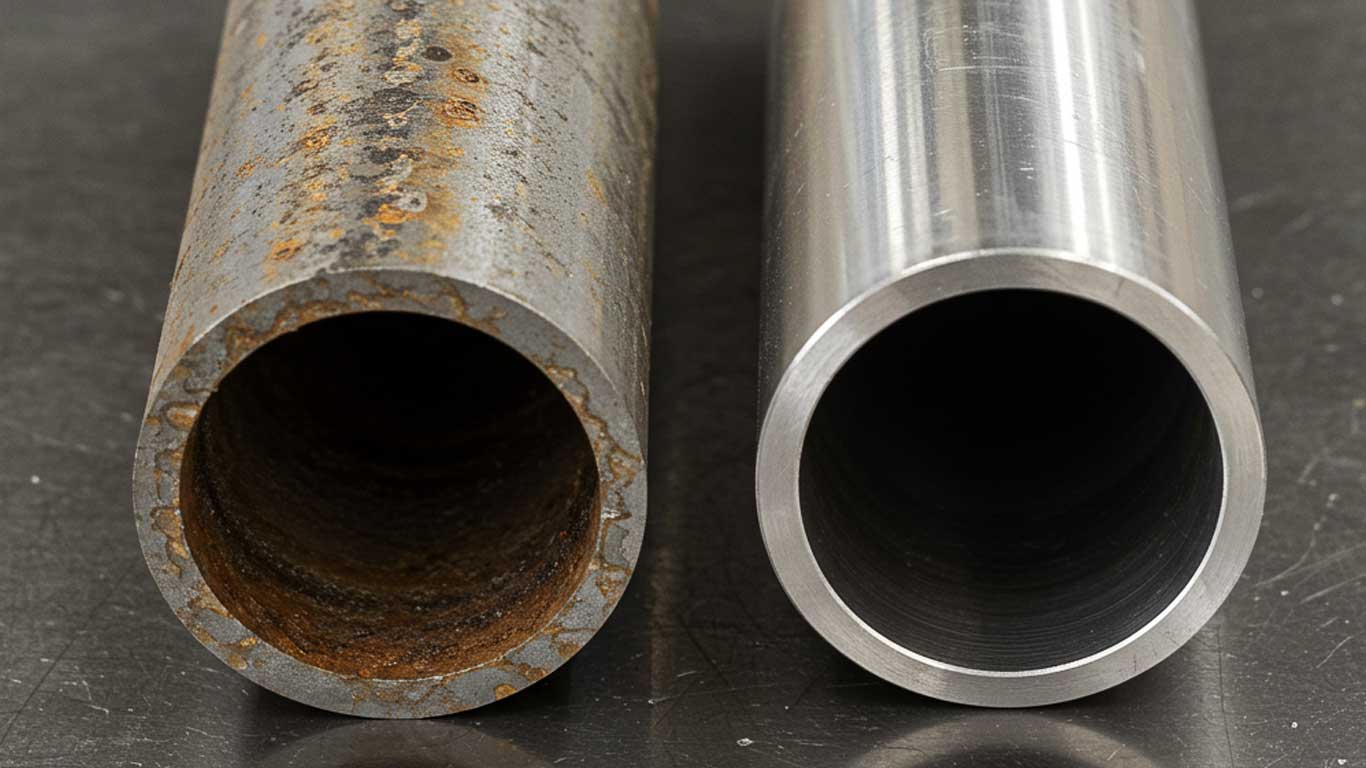
View details: Aluminum. Category: metal. Subcategory: Non-Ferrous.A nanosecond fiber laser removes aluminum oxide film starting at 0.33 J/cm2 fluence, with the full removal range extending through 1.09 J/cm2. Within that band the mechanism shifts from spallation to sublimation, so the correct setting depends on alloy and film thickness rather than one fixed number. The same physics shows up in [weld prep](/applications/weld-prep-laser-cleaning-applications), on [anodized aluminum](/contaminants/anodized-aluminum-laser-cleaning), and in [suspension-arm cleaning](/videos/porsche-911-upper-suspension-arm-laser-cleaned-bGLki9u3). Aluminum's high thermal conductivity and low melting point near 660 C narrow the margin between stripping the oxide and marking the base metal, and ANSI Z136 beam safety practices apply at every fluence in that range.
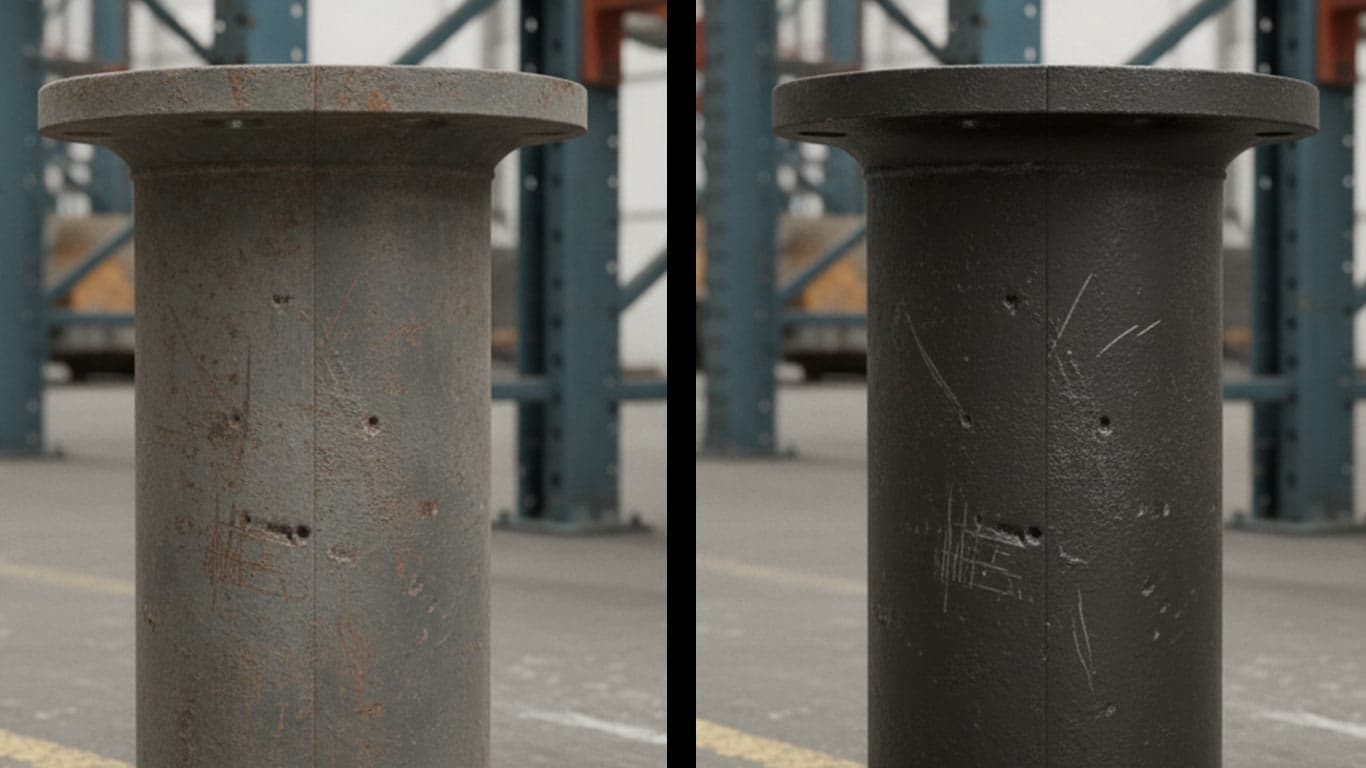
Cast Iron
View details: Cast Iron. Category: metal. Subcategory: Ferrous.Gray and ductile cast iron keep graphite in the matrix. That graphite is supposed to stay there. Rust and foundry scale can come off with a dry laser pass when a copied steel setting is not used on a thin section or a porous face. Overheated porosity rusts faster once the job is done. Grade, a trial piece, and dust capture come before production on columns, brake parts, and fittings. Scrap of the same casting sets working energy because the usable range is tighter than on most other ferrous stock.
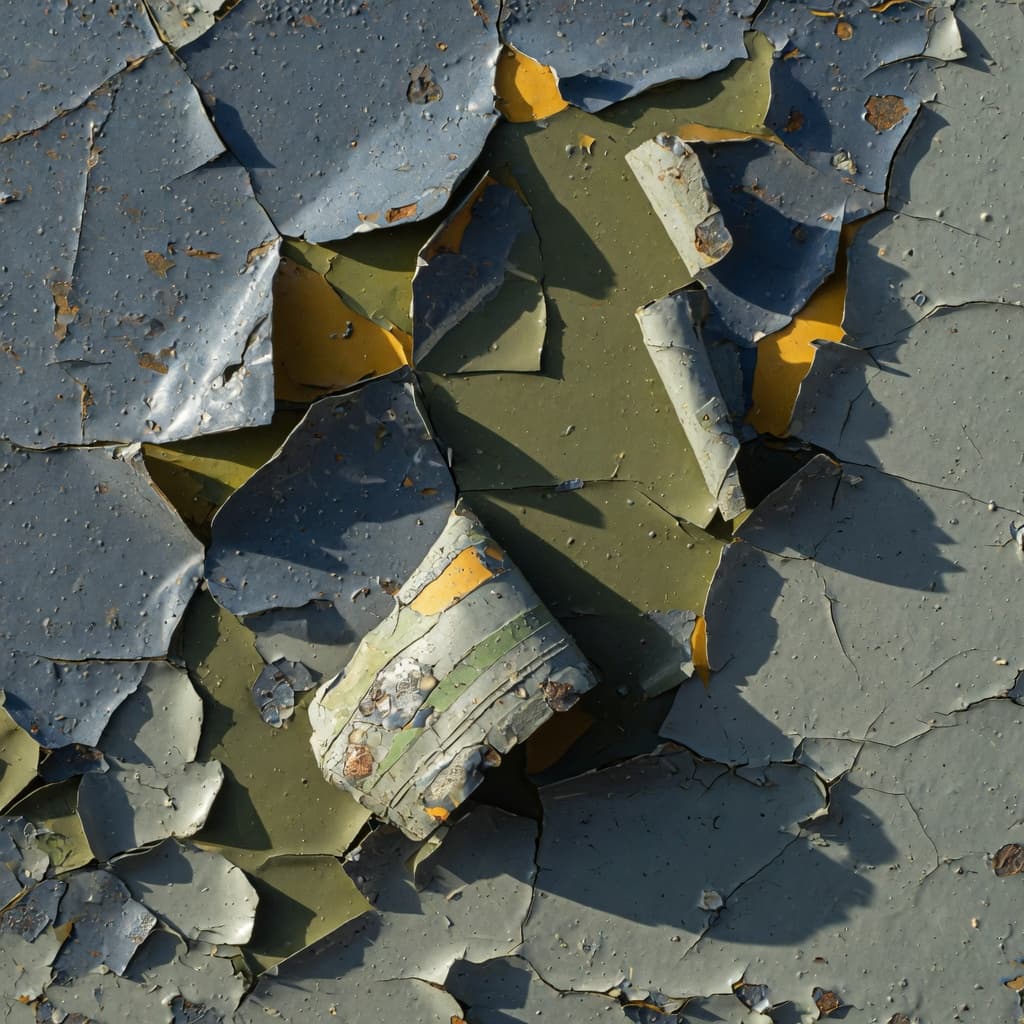
Paint and coatings on Bay Area parts
Other Bay Area jobs that start with coating removal

Laser Lead Paint Removal Bay Area
View details: Laser Lead Paint Removal Bay Area. Category: applications. Subcategory: Hazardous-Coatings.Laser lead paint removal in the Bay Area removes old lead-based coatings from painted wood, stucco, and masonry surfaces using a pulsed fiber beam instead of chemical strippers or dry sanding. The process targets [paint coatings](/contaminants/paint-coatings-laser-cleaning) layer by layer on [historic masonry](/applications/historic-masonry-restoration-laser-cleaning) and older wood trim without grinding into the substrate, so [redwood](/materials/redwood-laser-cleaning) siding and [brick](/materials/brick-laser-cleaning) veneer keep their original profile. It does not replace certified lead-abatement containment, air monitoring, or waste disposal rules that a licensed contractor still manages on site. The beam also does not clear thick intact coatings in a single pass; multiple lower-fluence passes control dust compared with abrasive blasting. Property owners choose this approach for selective work on ornamental trim, fireplace mantels, or window casings where sanding would gouge the wood grain.
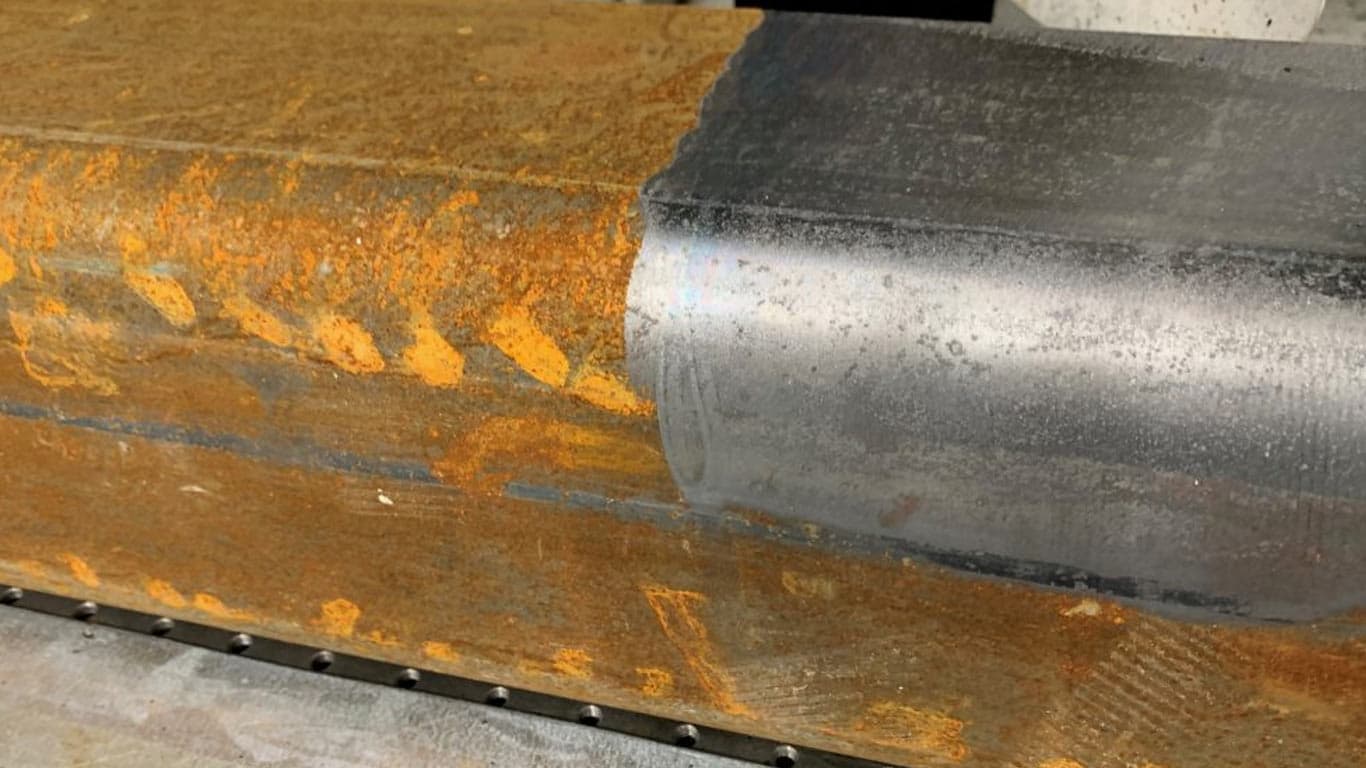
Laser Cleaning for Rust Removal, Bay Area
View details: Laser Cleaning for Rust Removal, Bay Area. Category: applications. Subcategory: Corrosion-Remediation.Laser cleaning removes field [rust](/contaminants/iron-oxide-rust-laser-cleaning) from sound [steel](/materials/steel-laser-cleaning) on Bay Area yards, docks, and marine sites when the oxide sits on intact metal. It does not productively clear intact mill scale, which still needs mechanical abrasion. Deep pits are missing metal, not a film a beam can restore. Oxide hidden under lagging needs access before cleaning can reach it. Coating specifications that call for a blast profile still require blasting after oxide removal. When old coatings sit under the oxide, [paint removal](/applications/laser-paint-coating-removal-bay-area) is a different pass. In marine air, lockout, dust capture, and same-shift priming matter because bare steel reoxidizes fast near the bay.
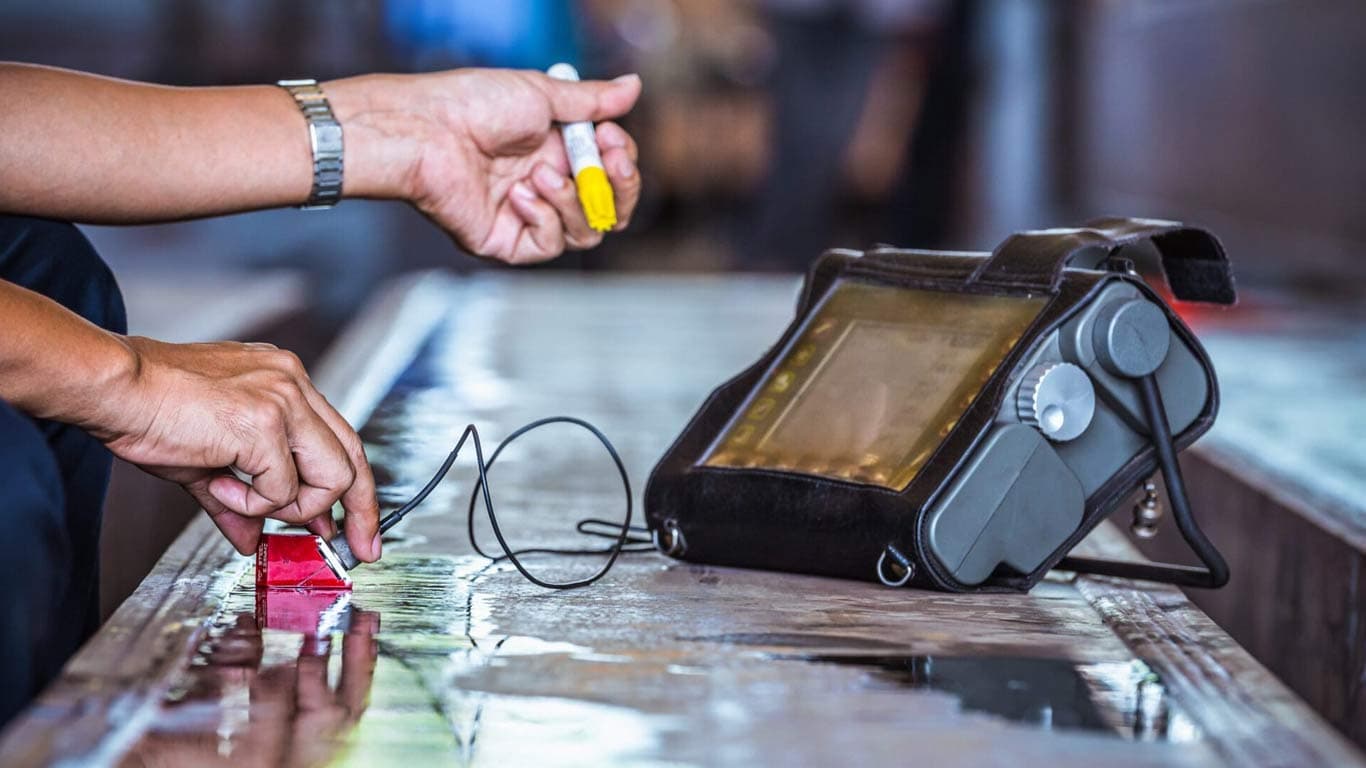
Weld Preparation Laser Cleaning Applications
View details: Weld Preparation Laser Cleaning Applications. Category: applications. Subcategory: Weld-Prep.Weld preparation laser cleaning removes rust, mill scale, oil, and drawing compound from a joint face right before the arc or beam strikes, so the fitter is not grinding or wire-brushing the same edge on a tight schedule. The laser step targets a thin surface layer only and leaves the base metal dimensions alone, which fits both carbon [steel](/materials/steel-laser-cleaning) and [stainless steel](/materials/stainless-steel-laser-cleaning) joints across [metal fabrication](/applications/metal-fabrication-laser-cleaning-applications) shops. It clears [iron oxide rust](/contaminants/iron-oxide-rust-laser-cleaning) and light mill scale from an edge in a pass or two, but it will not strip heavy, multi-layer scale in one shot, and it is not a substitute for the post-weld passivation steps covered on the [stainless steel weld passivation](/applications/stainless-steel-weld-passivation-laser-cleaning) page. A cleaned joint face still needs a qualified welder to check fit-up, gap, and preheat against the governing welding code; the laser only preps the surface, it does not certify the weld.
Chemical Paint Stripping vs. Laser Cleaning
View details: Chemical Paint Stripping vs. Laser Cleaning. Category: applications. Subcategory: Blasting.Chemical stripping still reaches into recessed carving and tight assembly gaps that a line-of-sight laser beam cannot trace, pulling a coating off [redwood](/materials/redwood-laser-cleaning) millwork, [steel](/materials/steel-laser-cleaning) panels, and [fiberglass](/materials/fiberglass-laser-cleaning) hulls alike. The methylene chloride formulas that once dominated that chemical stripping tank carry a toxicity profile serious enough that EPA and California regulators restricted the consumer paint strippers built on it, and the spent solvent leaves a shop with hazardous waste to document and dispose of correctly. Laser cleaning clears the same finish from those three substrates without a liquid waste stream, and it holds up on resin and open grain where a solvent could soften or stain the material underneath. Deep carved redwood detail a beam cannot trace still keeps the chemical step in the job.
Rules That Govern Bay Area Paint Coating Removal
Cal/OSHA's lead-in-construction rule governs paint coating removal on Bay Area jobs, since many older buildings carry lead-based paint. BAAQMD's solvent-cleaning rule and the ANSI laser-safety standard apply too, but the dry ablation process removes the coating without the volatile solvents that trigger BAAQMD permitting.[1][2][3][4]
Cal/OSHA
View official documentation (opens in new tab)8 CCR Section 1532.2 sets lead-in-construction protections that apply when the coating being removed contains lead.[1]

BAAQMD
View official documentation (opens in new tab)Regulation 8, Rule 16 limits VOC emissions from solvent-cleaning operations, the chemical-stripping alternative laser ablation avoids.[2]

ANSI
View official documentation (opens in new tab)Z136.1 sets the safe-use practices operators follow when running the laser equipment that performs the removal.[3]
Sources(4 references)
- 8 CCR §1532.2 (related lead-in-construction provision) dir.ca.gov (opens in new tab) — 8 CCR Section 1532.2 governs lead exposure controls for construction work that disturbs lead-based coatings.
- BAAQMD Regulation 8, Rule 16 — Solvent Cleaning Operations baaqmd.gov (opens in new tab) — BAAQMD Regulation 8, Rule 16 regulates VOC emissions from solvent-based cleaning operations.
- ANSI Z136.1 — Safe Use of Lasers webstore.ansi.org (opens in new tab) — Source data for Laser Cleaning — description
- SSPC-SP10 / ISO 8501-1 Sa 2.5 — Near-White Blast Cleaning surface-preparation standard sspc.org (opens in new tab) — Source data for Sandblasting — description
Coating and Paint Removal on Camera


Failure Modes in Bay Area Laser Paint Removal
Laser paint removal on Bay Area jobs runs into more than one failure point, because no single setting works on every coating stack. Waterfront tanks, historic masonry, and older industrial buildings carry primer-basecoat-clearcoat systems, painted zinc coatings, or porous concrete, and each one comes off at a different setting. Push too hard and the primer under a topcoat scorches, the zinc under the paint burns away, or soft masonry pits before the coating is fully gone. Coastal fog adds a second failure: bare steel left exposed partway through the job starts to rust within hours.[1][2]
| Condition | Consequence |
|---|---|
| A primer, basecoat, and clearcoat paint system on steel or aluminum panels, which is common on Bay Area tanks and equipment[1],[2] | A setting strong enough to remove the topcoat in one pass scorches the primer layer underneath, leaving a discolored patch that fails inspection |
| Painted galvanized steel ductwork or fencing found in older Bay Area industrial buildings[1],[2] | A setting strong enough to remove the paint also strips away the zinc coating underneath, exposing bare steel that starts to rust within hours in coastal fog |
| Glossy marine-grade or gel-coat finishes found on boat hulls and waterfront equipment[1],[2] | The glossy surface bounces the beam back toward the optics at first, before the coating roughens enough to absorb the energy |
| Elastomeric or rubber-based coatings found on concrete piers, seawalls, and historic masonry[1],[2] | A setting strong enough to remove a rubber-based coating from concrete in one pass also pits the porous surface underneath before the coating is fully gone |
Sources(2 references)
- Kuang Z. et al., "Effect of Defocused Nanosecond Laser Paint Removal on Mild Steel Substrate in Ambient Atmosphere", Materials (PMC), 2021 pmc.ncbi.nlm.nih.gov (opens in new tab) — Defocused nanosecond laser paint removal on a mild steel substrate in ambient atmosphere shows the metal underneath responds differently once the coating layer above it is gone
- Mustafa, H. et al., "Effect of surface roughness on the ultrashort pulsed laser ablation of zinc, galvanized steel, and forming steel," Applied Surface Science, 2019 ris.utwente.nl (opens in new tab) — An ultrashort pulsed laser ablation study comparing zinc, galvanized steel, and forming steel shows the zinc coating responds to surface roughness differently than the bare steel underneath it
Passes, substrates, and containment for Bay Area coating removal
How does a fiber laser remove paint without sand or chemicals?
A pulsed fiber laser tuned near 1064 nm[10][5] heats each coating layer faster than it can conduct that heat into the metal underneath, so the finish vaporizes in a thin pass while the steel or aluminum substrate stays close to room temperature. No sand, no glass bead, and no chemical stripper touches the part under this approach. This selective heating shows up most on auto panels, structural steel, and marine hardware around the Bay Area.
How many passes does a typical coating job need?
A single-coat job usually clears in one to three passes at a matched pulse energy. A marine coating with a primer and topcoat still needs a separate pass for each layer, since the two layers respond to the beam at different rates.
Which substrates come up most in Bay Area coating removal?
Bay Area coating removal work mostly comes down to three substrates, steel, aluminum, and marine-grade fiberglass, since each one absorbs laser energy at a different rate. A continuous wave fiber laser removes epoxy resin paint film from 6061 aluminum panels without the heat buildup that grinding leaves behind, while the same laser removes coating from mild steel body panels at a lower pulse energy because steel absorbs the beam differently than aluminum does. Fiberglass hulls.
How does laser removal compare to sandblasting on Bay Area steel?
Sandblasting clears coating quickly on flat, open steel, but it leaves spent abrasive media that needs sweeping, containment, and hauling off as waste, while a laser leaves only fine particulate that a vacuum with a HEPA filter captures at the source. A 120 W[6] diode laser study published in Surface and Coatings Technology removed chlorinated rubber coating from a concrete surface at a controlled depth, a result that carries over to Bay Area pier decking.
What containment does a mobile paint removal job need?
A mobile job needs local fume extraction at the point of work rather than a sealed spray booth, since the beam itself produces no spray mist to contain. That same extractor stays close to the beam path so particulate leaves the panel or dockside surface in the moving air stream instead of settling back onto a wet finish nearby. Recoating with a two-component polyurethane primer afterward brings Cal/OSHA Title 8 isocyanate exposure limits into that.
Sources(5 references)
- Continuous wave fiber laser removal of epoxy resin paint film from 6061 aluminum alloy surfaces mdpi.com (opens in new tab) — a 1064 nm fiber laser removes epoxy paint from 6061 aluminum
- High-power diode laser removal of chlorinated rubber coatings, Surface and Coatings Technology, 2002 doi:10.1016/S0257-8972(01)01161-6 (opens in new tab) — a 120 W diode laser removed chlorinated rubber coating from concrete
- Technical and Economical Comparison of Waterjet and Abrasive Blast Methods wjta.org (opens in new tab) — waterjet and abrasive blast differ in operating cost and throughput
- Nanosecond pulsed laser cleaning of thick multilayer paint coatings on shipbuilding steel pmc.ncbi.nlm.nih.gov (opens in new tab) — nanosecond pulsed laser strips multilayer paint near 1 mm thick
- Femtosecond laser removal of antifouling paint from glass fiber reinforced plastic doi:10.1016/j.optlastec.2024.110937 (opens in new tab) — femtosecond lasers remove antifouling paint from fiberglass hulls

