A nanosecond fiber laser removes aluminum oxide film starting at 0.33 J/cm2 fluence, with the full removal range extending through 1.09 J/cm2. Within that band the mechanism shifts from spallation to sublimation, so the correct setting depends on alloy and film thickness rather than one fixed number. The same physics shows up in weld prep, on anodized aluminum, and in suspension-arm cleaning. Aluminum's high thermal conductivity and low melting point near 660 C narrow the margin between stripping the oxide and marking the base metal, and ANSI Z136 beam safety practices apply at every fluence in that range.
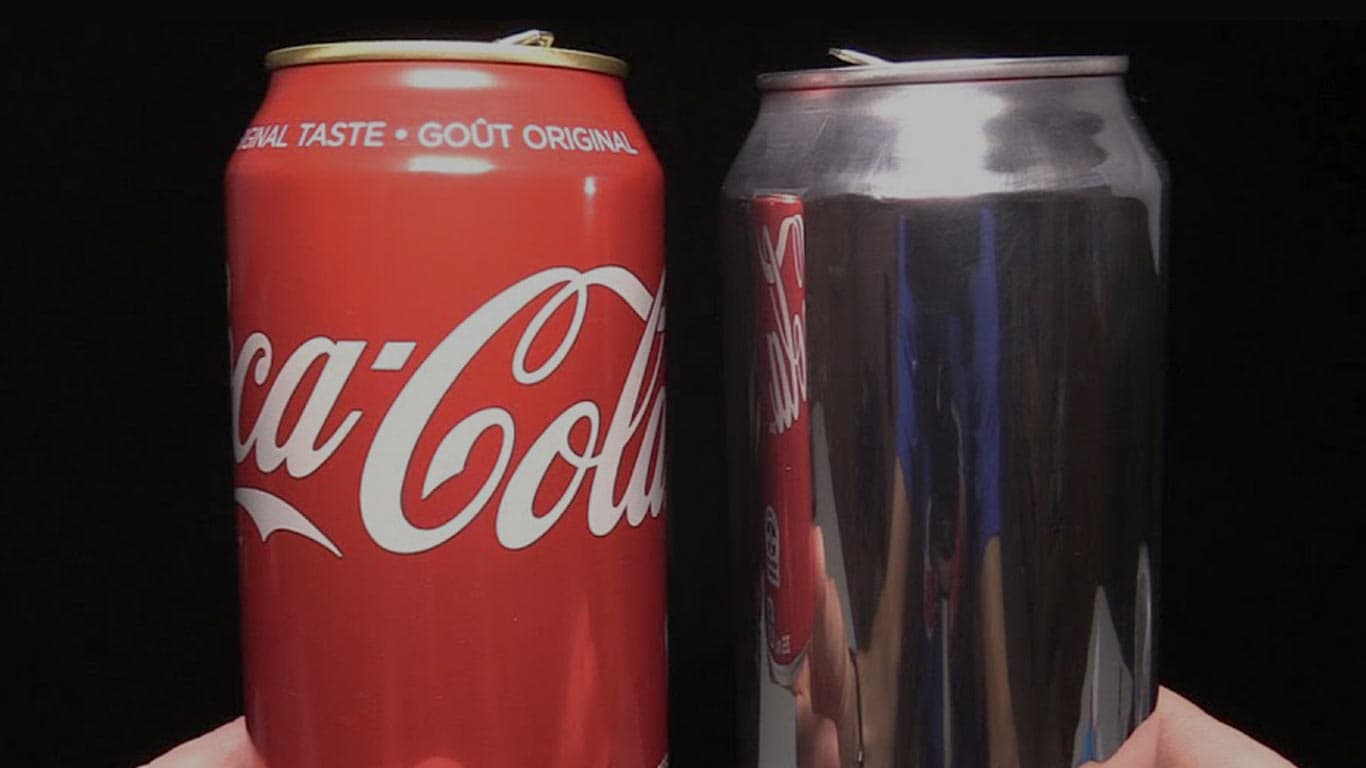
After laser cleaning Aluminum
After laser cleaning Aluminum
Final results
The anodized finish, oil and grease, oxide scale, and metallic surface deposits come off the aluminum, and the substrate stays sound.
Speed and ease
The laser clears the oxide and deposits, without the legacy 15-to-30-minute chemical soak-and-rinse or its waste-liquid cleanup.
Where Aluminum jobs go wrong
Where Aluminum jobs go wrong
Contaminants
Anodize, grease and oil, oxide scale, and metallic deposits.
Methods
Chemical removal is slow, and the waste liquid is hard to control.
Challenges
Mechanical grinding and chemical cleaning often damage the aluminum substrate removing that oxide.
Dust, emission, and beam safety rules for cleaning aluminum
Dry aluminum laser cleaning still requires dust and fume capture, because OSHA Aluminum metal dust / fume governs that exposure path whenever capture runs incomplete. California shops layer Cal/OSHA Title 8 section 5155 airborne contaminant tables on top of the federal entry, so a Bay Area shop answers to both the moment ablation debris leaves the nozzle. Any plume that reaches a stack still falls under BAAQMD Regulation 6, independent of how little material the beam actually removes. Aluminum high reflectivity also pulls ANSI Z136.1 into the same scope, since specular reflection off bare metal can send stray beam past the work envelope if fixturing shifts mid pass. None of these four set a laser-specific PEL; they govern the dust, fume, and beam path that aluminum cleaning already produces.
OSHA's chemical data entry for aluminum metal dust and fume sets the federal exposure framing for dry aluminum laser cleaning, covering the fine particulate and fume plume that ablation throws free whenever local capture falls short.[1]
Title 8 section 5155's airborne contaminant Table AC-1 still applies inside a California shop, because aluminum particulate from laser ablation counts as a general air contaminant the moment it leaves the capture hood.[2]
Regulation 6 limits visible emissions to Ringelmann No. 1 for no more than three minutes an hour on industrial plumes, so a Bay Area aluminum job still needs a stack check even after the capture hood runs clean.[3]
ANSI Z136.1 governs laser beam hazard controls on every job, and the metal-cleaning category guidance names it specifically for aluminum because high-reflectivity surfaces create specular reflection risk at cleaning fluence that duller substrates do not.[4]
Sources(4 references)
OSHA Aluminum metal dust / fume osha.gov (opens in new tab) — OSHA aluminum metal dust and fume chemical data entry
Cal/OSHA Title 8 §5155 — Airborne Contaminants (Table AC-1) dir.ca.gov (opens in new tab) — Title 8 section 5155 airborne contaminant Table AC-1
BAAQMD Regulation 6 — Particulate Matter, Common Definitions and Test Methods baaqmd.gov (opens in new tab) — BAAQMD Regulation 6 visible emissions Ringelmann No. 1
Natural oxide on aluminum comes off below the alloy injury range
Laser cleaning removes the natural oxide layer from aluminum by raising fluence past the published removal onset, where the oxide separates through light spallation at the low end of that range and shifts toward sublimation as the dose climbs. Pre-weld cleaning on aluminum alloys cuts the porosity that oxide and hydrocarbons otherwise trap in the pool (Haboudou 2003). Anodized sheets, cast parts, and mirror-polished stock do not qualify for this step, because the visible layer on those surfaces is functional or decorative rather than contamination.
1Know which aluminum surfaces to leave alone
Do not run the laser until you confirm the dull or discolored patch is oxide or process residue, not a cast texture, an anodized layer, or a polished mirror finish.
Check the surface under strong light first: a uniform anodized sheen, as-cast grain, or a buffed mirror surface means the part fails this step and needs a different method entirely.
Send a part with any of those three finishes back to the requester instead of staging it for a laser pass, since the fix there is a different process, not more energy.
2Set the starting fluence from the published range
Start near the low end of the oxide removal range, reported around the published energy range for nanosecond pulses at the common fiber wavelength, rather than guessing high.
Keep the working dose under the reported damage range of the published injury range at the same wavelength and pulse regime, since the base aluminum begins to take damage above that band.
Raise the setting only after the low end fails to clear the oxide, moving toward the upper part of the removal range instead of jumping straight to the top.
3Run a sample pass and inspect it before the rest
Clean a small test area first and look at it under magnification or strong light before moving to the full surface.
Match the treated patch to the surrounding metal in color and texture; a bright or pitted spot means the dose ran too high for that spot.
Keep the fluence and pulse settings that produced a clean, matched result so the same aluminum stock does not need re-testing from scratch next time.
4Watch for the signs that the dose went too far
Watch for a change in the spark pattern or sound partway through a pass; that usually means the beam reached bare metal and the operator should move on rather than linger.
Stop that area and re-check settings if any spot shows discoloration or surface melting, since that signals the dose crossed into the damage range.
Log the fluence and pulse settings tied to each clean result so later passes on the same alloy start from a known point instead of retesting.
Sources(1 reference)
Haboudou, A., et al., 'Reduction of porosity content generated during Nd:YAG laser welding of A356 and AA5083 aluminium alloys,' Materials Science and Engineering A, 363, 40–52, 2003. doi:10.1016/S0921-5093(03)00637-3 (opens in new tab) — pre-weld cleaning cuts trapped porosity on aluminum alloys
Aluminum oxide comes off long before the metal is hurt
Oxide removal on aluminum requires far less fluence than the parent metal needs to take damage, so a setting chosen for stubborn oxide can drift into base-metal range once the film is gone. A2024 oxide cleaning 2024 covers the same oxide-versus-parent split on alloy coupons. Anodized aluminum adds a second layer to that judgment. The anodize coating is an intentional oxide, not contamination, and treating it like a bare oxide film strips the color and the protection with it. Aluminum also pulls heat away from the beam spot faster than most metals, so thin extrusions and heat sink fins can warp if power climbs to make up for that cooling. High reflectivity at common fiber wavelengths means a real share of the beam bounces off bare aluminum once the surface is clean, which can leave a faint residue behind and send a stray reflection back toward the operator.
Condition
Consequence
Mitigation / Limit
Anodized aluminum carries a thick, hard oxide layer that was put there on purpose for protection and color, not a contamination layer left by storage or handling.[1]
Running the same fluence used to clear a thin natural oxide film treats the anodize layer as if it needs to come off, which strips the finish and the color along with it.
Confirm whether the part is anodized before setting fluence, and treat anodize removal, if that is actually the goal, as its own deliberate pass with its own test rather than a default outcome of oxide-film parameters.
Oxide removal on 6061/7075 aluminum starts around the published energy range and extends through the published energy range, while the parent metal's own damage threshold runs from about 2 to the published energy range at the same the common fiber wavelength nanosecond pulse regime.[1]
A setting picked at the high end of that oxide range, or raised further to clear a stubborn patch, moves close enough to the parent metal's threshold that pitting or localized melting of the bare aluminum becomes possible.
Step fluence down once the oxide is visibly gone instead of holding one fixed setting through the whole job, and confirm the margin to the base-metal range with a scrap test on the same alloy.
Aluminum conducts heat away from the irradiated spot faster than most metals laser cleaning targets, especially on thin-wall extrusions and finned heat sink geometry.[1]
That conduction lowers the surface temperature reached at a given setting, so an operator who raises power to compensate pushes more heat into the bulk part and risks warping thin sections or distorting fins.
Add passes or raise repetition rate rather than peak fluence on thin-section or finned aluminum parts, and check part temperature between passes on sensitive geometry.
Aluminum reflects a large share of incident light at the the common fiber wavelength wavelength common to fiber lasers, and that reflectivity goes up once the absorbing oxide or contamination layer is gone and bare metal is exposed.[1]
Once the surface clears, coupling drops, so a late pass meant to finish a stubborn patch can underdeliver energy to the target while the reflected light becomes a stray beam hazard for anyone nearby.
Contain the beam path for reflected light once bare aluminum is exposed, and raise repetition rate rather than fluence for any final finishing pass on bare metal.
Sources(1 reference)
Laser cleaning of oxide layers on A2024 aluminum alloy, Journal of Materials Research and Technology, 2024 sciencedirect.com (opens in new tab) — oxide layers on A2024 aluminum alloy come off under a nanosecond cleaning beam while the parent alloy remains the limit
Aluminum work shows up across suspension, chassis, and shop-floor videos
Aluminum stays strong enough for structural load at 276 MPa[1] tensile strength. That same aluminum stays light at 2700 kg per cubic meter, so the strength does not come with extra mass.
Parameter
Value
Conditions / Source
Tensile Strength
276 MPa
Density
2700 kg/m³
Pulsed fleet in-window
52 of 52
Working fluence at a modeled spot vs cited ablation/damage band · Parity basis: datasheet max pulse energy (mJ) only · pulsed · ~1064 nm · shared contaminant thresholds · modeled spot (not a certified cross-OEM test).
Sources(1 reference)
MatWeb Material Property Data — Online Materials Information Resource matweb.com (opens in new tab) — 276 MPa tensile strength and 2700 kg/m³ density for aluminum
Oxide Comes Off Well Before Aluminum Risks Damage
Aluminum oxide film requires only 0.33 J/cm² before the beam starts removing it. On published coupons that onset then climbs through 1.09 J/cm² as the mechanism shifts from spallation toward sublimation under a nanosecond pulsed fiber laser at 1064 nm. On those coupons, damage risk on the base metal does not begin until around 2 J/cm², and documented injury extends up to 5 J/cm² depending on alloy condition and surface finish. That gap between removal onset and the first sign of metal injury gives real room to tune power and speed without crossing into substrate harm. Aluminum conducts heat fast, so energy that lingers near the upper end of that gap can still blister or discolor the surface even though the number sits under the documented injury floor, which is why a coupon check between energy steps still matters on heat-treatable alloys. Staying below that injury floor keeps the oxide coming off clean while the metal underneath stays intact. 52 of 52 pulsed machines in-window. Parity basis: datasheet max pulse energy (mJ) only · pulsed · ~1064 nm · shared contaminant thresholds · modeled spot (not a certified cross-OEM test).
This material (highlighted)
Other materials in this group
Sources(2 references)
Nanosecond Laser Cleaning of Aluminum Alloy Oxide Film coppjournal.org (opens in new tab) — Nanosecond pulsed testing on aluminum alloy at 1064 nm found oxide film removal onset at 0.33 J/cm², climbing through 1.09 J/cm² as the mechanism shifts toward sublimation
Investigation on mechanism of oxide removal and plasma behavior during laser cleaning on aluminum alloy, Applied Surface Science, 2020 doi:10.1016/j.apsusc.2019.144428 (opens in new tab) — Aluminum metal injury is documented starting around 2 J/cm² and extending up to 5 J/cm² depending on alloy condition and surface finish
Oil on aluminum comes off with less fluence than anodize
Oil on aluminum comes off at 0.05-0.5 J/cm2. Anodize on that same metal needs 1.5-4 J/cm2. An oil pass leaves oxide; an anodize pass on oil scorches residue.[2][3][4][5]
Oil on aluminum comes off with less fluence than anodize
Film
Removes at
Hurts metal at
Al₂O₃ (anodized layer, surface oxide)
1.5-4 J/cm2
2-5 J/cm2
Organic grease / oil contamination
0.05-0.5 J/cm2
2-5 J/cm2
Sources(5 references)
Investigation on mechanism of oxide removal and plasma behavior during laser cleaning on aluminum alloy, Applied Surface Science, 2020 doi:10.1016/j.apsusc.2019.144428 (opens in new tab) — Aluminum has high thermal conductivity and low melting point (660°C). At ns pulse widths, the process window between removing the oxide and damaging the aluminum substrate is <2×. Ultrashort pulses (ps/fs) strongly preferred. Test on samples before production use.
Effect of single pulsed picosecond and 100 nanosecond laser cleaning on surface morphology and welding quality of aluminium alloy, Optics & Laser Technology, 2020 sciencedirect.com (opens in new tab)
The oxide comes off long before aluminum itself is at risk.
Oxide removal on aluminum requires far less fluence than alloy damage does. The film starts letting go at the published onset and finishes clearing near the upper end of that band, while the bare 6061 and 7075 alloy underneath holds up until fluence reaches the published injury range. That spread gives real working room between the two thresholds. Near the low end of the oxide band the film comes off mostly through brief melting and ejection, and as fluence climbs toward the top of that band removal shifts toward vapor instead of flakes. Once fluence pushes past the low end of the alloy's own injury range, the parent metal starts absorbing enough energy to pit or discolor.
Common Questions About Laser Cleaning Aluminum
Does laser cleaning reduce porosity in aluminum welds?
Yes. Cleaning the joint before welding dropped porosity from 9.68% to 2.91% in air, and to 1.59% in argon (Zhou 2021). Trapped oxide and surface hydrocarbons seed that porosity, so clearing them ahead of the arc gives the molten pool less to react with.
Does the aluminum oxide film actually absorb a 1064 nm cleaning beam?
The alumina bandgap sits above 8 eV (Dong 2023), so a 1064 nm[11] photon does not couple into the film the way it couples into many other oxides. Removal still happens once fluence crosses the published onset, but the window stays narrow.
Can laser cleaning replace abrasive blasting for aluminum oxide?
Yes, laser cleaning removes aluminum oxide film without abrasive media or embedded grit. The beam clears the film while leaving the parent metal in place, which blasting cannot promise once grit embeds.
What limits the energy range for cleaning aluminum oxide?
The energy range is the gap between oxide removal and bulk aluminum injury under ANSI Z136 and OSHA exposure rules. Those rules govern operator exposure during that work, but neither one sets the cleaning parameters themselves, and extra dwell past the gap starts marking the metal underneath.
Sources(2 references)
Zhou, X., et al., 'Research Progress in Laser-Controlled Cleaning of Aluminum Alloy Surfaces,' Materials, 2021. Laser cleaning in air reduced weld porosity from 9.68% (untreated) to 2.91%; in argon further reduced to 1.59%. pmc.ncbi.nlm.nih.gov (opens in new tab) — porosity from 9.68% to 2.91% in air
Dong, H. et al., 'Thermal stress analysis of laser cleaning of aluminum alloy oxide film,' Applied Physics A, 2023. pubmed.ncbi.nlm.nih.gov (opens in new tab) — alumina bandgap sits above 8 eV
Aluminum cleaning shares ground with weld prep, paint removal, and metal fabrication