


On-Site Demo
Free/ 60 mins
- CoversCoverage SF Bay Area
- Test your material
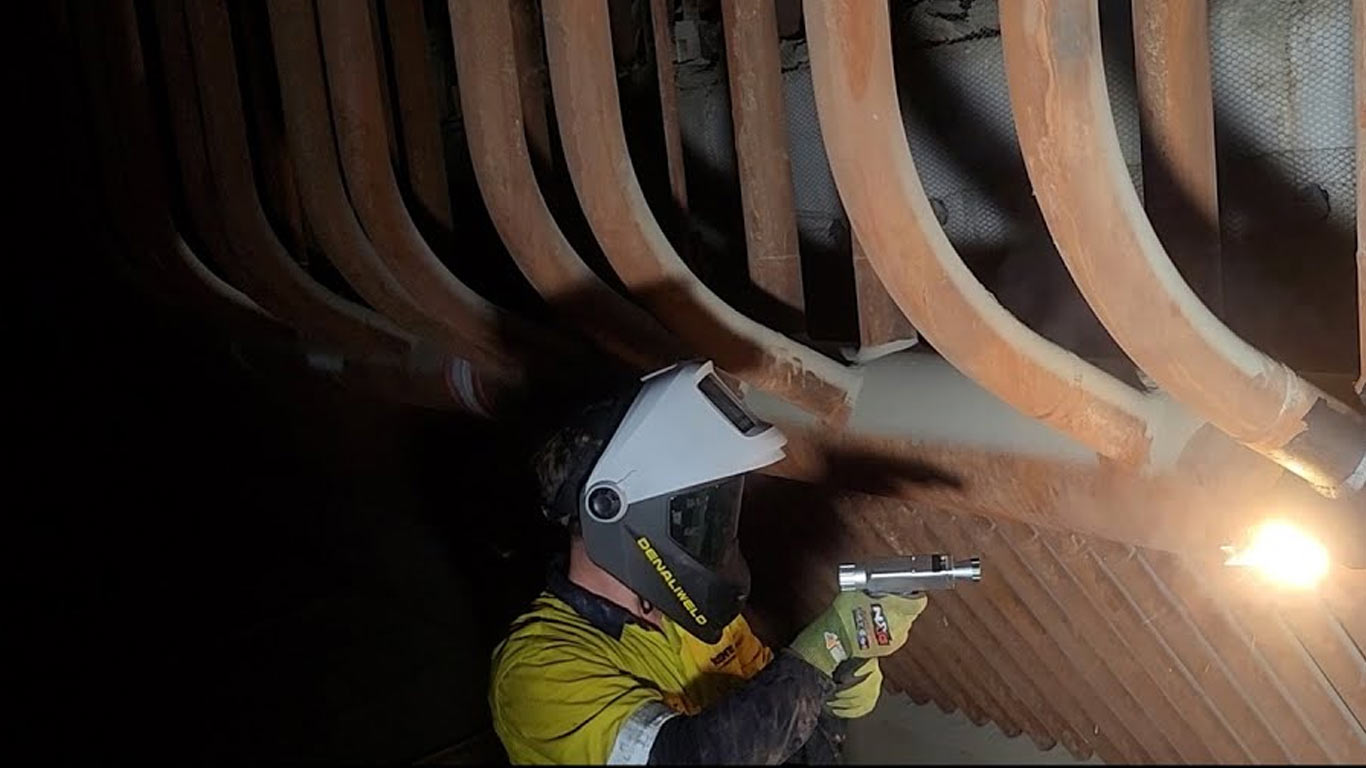
Epoxy and decon paint can be stripped dry with a laser under capture, which takes chemical wet waste out of the step before inspection. Once the coating is off, NDT starts on bare metal. The flakes and filters still go to the plant's waste handling.
Laser decoating works well on nuclear parts headed for NDT or recycle, because contaminated epoxy paint on stainless comes off at 9.4 J/cm2[1] far more readily than oxide. A selective dry strip can leave bare metal for the inspector, while the coating waste stays under plant rules.
Yes. At 9.4 J/cm2[2] over two passes, epoxy paint over SS304 reached decontamination factors of 1339 and 1729 for Co-60 and Cs-137, against 121 and 143 on bare SS304. Paint comes off far more readily at the same setting. Test both surfaces on coupons, because a rate set on paint will not hold on oxide.
Yes, when the setting is chosen so the beam removes epoxy or decon paint and stops at bare metal. That leaves no wet strip bath to dispose of before NDT. Confirm the stopping point on coupons of the same paint and metal first.
A laser strips epoxy and decon paint dry and selectively, stopping at bare metal, so no strip bath or blast media joins the coating waste. The stripped flakes and capture filters still go to the plant's waste handling.
No. Avoiding a wet strip bath removes one waste stream, but the flakes and filters still follow the plant's hazardous material and radiation protection rules. Drum them to the plant waste acceptance criteria.
Yes. Lead and PCB coatings remain regulated waste streams after a dry strip, so the hazardous material paperwork travels with the collected flakes and filters.
Too much energy can leave a recast zone on the metal under the coating, and it can form even while some coating is still in place. That altered layer is then what the inspector reads instead of the original surface. The second mistake is treating the flakes as the whole waste stream. Paints and epoxies evaporate at lower temperatures than metals, so some contamination can leave as vapor.
| Condition |
|---|
| Energy set high enough to reach the metal under the coating |
| Capture planned only for falling flakes |
Paint is quicker to strip than oxide, with epoxy paint already reaching decontamination factors of 450.8 and 650.4 after a single pass at 9.4 J/cm2. A second pass raised those to 1339 and 1729. Schedule paint removal ahead of oxide work on that basis, and still plan the survey before any part moves on.
Laser ablation is projected to leave waste at about 25% of the original hydrocarbon paint volume, which is the main cost difference from a wet strip bath. With chemicals, the spent bath becomes waste on top of the paint. Laser strip still leaves flakes and filters to drum, so compare that drum count against bath disposal. The figure is a projection, not a measured result.
| Method | Cost per 100 sq ft | Hourly Rate | Consumables/hr | Setup Cost | Cleaning rate |
|---|---|---|---|---|---|
| Sandblasting / Abrasive Blast | 425 USD | 145 USD/hr[1] | 55 USD/hr[2] | 200 USD[3],[4] | 150 sq ft/hr[2] |
| Soda Blasting | 329 USD | 155 USD/hr | 90 USD/hr | 175 USD | 200 sq ft/hr |
| Dry Ice Blasting | 750 USD | 350 USD/hr[1],[5] | 150 USD/hr[5],[6],[7] | 550 USD | 200 sq ft/hr |
| Dustless Blasting | 641 USD | 375 USD/hr | 80 USD/hr | 250 USD[3] | 130 sq ft/hr |
| Laser Cleaning | 500 USD | 400 USD/hr[8],[9] | 0 USD/hr | 0 USD | 80 sq ft/hr[9] |
Coating strip on nuclear parts goes best with cooled capture running before the laser fires, because paint ablation can carry contamination into the off-gas and Cs-137 volatilizes near 700-705 C. Flakes are only part of what leaves the surface. The other half of the plan is selectivity, so the beam removes paint and lacquer and stops at bare metal that the inspector still needs intact.