
FDA
FDA 21 CFR 1040.10 - Laser Product Performance Standards

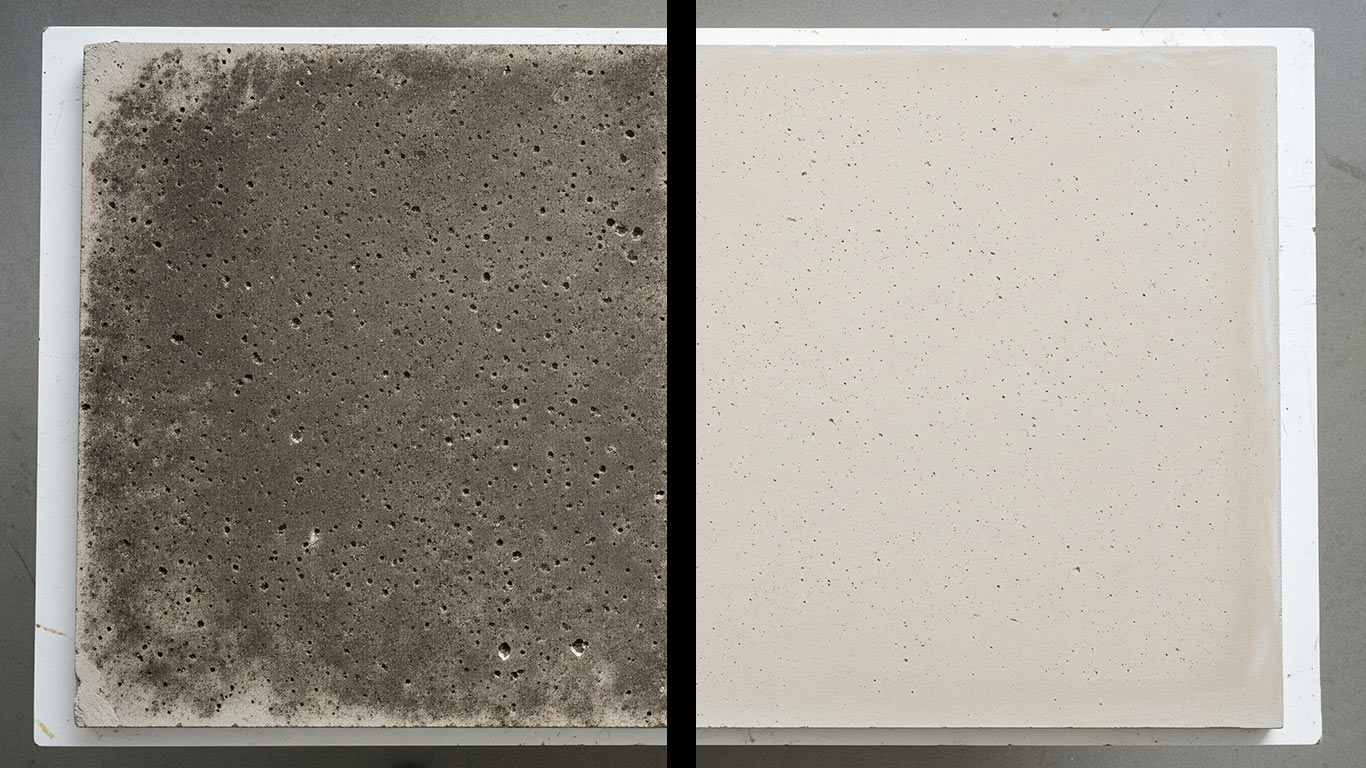

Cement's alkalinity (pH 12–13) and moderate porosity (15–25%) create a surface that holds grime, oil, and biological growth in ways that pressure washing can't fully resolve — water drives contaminants deeper into the pore network rather than lifting them out. Laser cleaning works differently: moderate 1064 nm absorption (42%) and a fast 1,500 mm/s scan at 100 W remove surface contamination with minimal spalling, preserving the structural paste beneath. The key risk is thermal shock at the aggregate interface — the cleaning speed controls it. Bay Area industrial facilities, parking structures, and heritage masonry restoration are the most common applications. Laser's selective action on surface contaminants — without driving solvents or water deeper into the pore network — is what makes it more effective than pressure washing on pH-12 cement surfaces where recontamination after wet cleaning is a documented problem.
If you're willing to do the work, the process is incredibly effective.

Fluence (J/cm²)
Cement absorbs 42% of 1064 nm light – moderate for a building material. Damage threshold is 1.2–2.1 J/cm² (Vergès-Belmin et al., 2015). Yes – damage occurs BEFORE cleaning. The window is negative. At 1.5 J/cm², you're below the cleaning threshold (needs 2.1). But at 1.5 J/cm², you're already causing micro-cracking. How do you clean cement? You don't – not with a single pass. The solution: low energy level (1.0 J/cm²) to remove surface dirt, then chemical cleaning for deep stains. Or accept that cleaning will be incomplete. For concrete formwork (steel molds with cement residue), use higher energy level (2.5 J/cm²) and accept some surface roughening. The cement will come off. The steel will get etched slightly. That's acceptable for tooling.
Cement is alkaline (pH 12-13) and porous (15-25% porosity). Density is 3150 kg/m³. Compressive strength is 42.5 MPa (typical Portland cement). Tensile strength is only 3.2 MPa – cement cracks when pulled, not when squeezed. Fracture toughness is 0.55 MPa√m – very low. The cleaning challenge: cement absorbs water and oils deeply. Surface contamination penetrates 1-3 mm. You cannot laser-clean deep contamination without removing the surface layer. For historic cement (lime-based, softer), use 1.0 J/cm². For modern Portland cement, use 1.5 J/cm². Above 2.1 J/cm², you get surface spalling – the cement pops off in flakes.
Laser cleaning cement at 100 W, 30 kHz, 1500 mm/s cleaning speed, 50% overlap, and 2 passes removes surface grime with minimal spalling. Experiment conducted: 2026-03-27. The cleaned surface feels slightly rough – no visible cracking or flaking. This applies to ordinary Portland cement (OPC); lime-cement mortars (historic buildings) have lower strength and need lower energy level (1.0 J/cm²).
Cement dust contains crystalline silica (OSHA PEL: 50 µg/m³), calcium oxide (lime – corrosive), and heavy metals (chromium, nickel). Use HEPA extraction with H13 or H14 filters. Wear P100 respirators and chemical-resistant gloves (lime burns skin). Follow ANSI Z136.1 for laser safety, OSHA 29 CFR 1926.95 for PPE, and EPA lead-safe practices if cleaning painted cement (old paint may contain lead). Laser eyewear: OD 5+ for 1064 nm.
FDA 21 CFR 1040.10 - Laser Product Performance Standards

ANSI Z136.1 - Safe Use of Lasers

IEC 60825 - Safety of Laser Products

OSHA 29 CFR 1926.95 - Personal Protective Equipment
Cement's alkalinity (pH 12–13) and moderate porosity (15–25%) create a surface that holds grime, oil, and biological growth in ways that pressure washing can't fully resolve — water drives contaminants deeper into the pore network rather than lifting them out. Laser cleaning works differently: moderate 1064 nm absorption (42%) and a fast 1,500 mm/s scan at 100 W remove surface contamination with minimal spalling, preserving the structural paste beneath. The key risk is thermal shock at the aggregate interface — the cleaning speed controls it. Bay Area industrial facilities, parking structures, and heritage masonry restoration are the most common applications. Laser's selective action on surface contaminants — without driving solvents or water deeper into the pore network — is what makes it more effective than pressure washing on pH-12 cement surfaces where recontamination after wet cleaning is a documented problem.


Nanosecond pulsed fiber lasers at 1064 nm with pulse energies of 0.5–5 mJ, repetition rates of 20–200 kHz, and cleaning speed up to 5 m/s are the standard parameter range for cement residue removal from steel without surface damage. Cement's strong absorption at UV wavelengths makes 355 nm effective for thin splatter layers, while IR handles thicker deposits. Our team validates the selected settings on a test area per SSPC-SP 1 surface preparation documentation standards before committing to full removal. Cement composition — particularly Portland versus geopolymer — affects the damage threshold and should be confirmed before setting final parameters.
Hardened cement splatter on construction equipment and tools is removed effectively at energy level of 1–5 J/cm², with removal rates reaching 1–3 m²/hr for light deposits and 0.3–1 m²/hr for thick buildup. The laser selectively ablates the brittle cement matrix without affecting the underlying steel or cast iron surface, preserving tool geometry and surface specifications. Our team documents pre-cleaning surface condition per SSPC visual standards before treatment, which establishes baseline for any warranty claims on tool integrity. Verify current disposal requirements for cement particulate with your local air quality management district — in the Bay Area, BAAQMD Rule 6 governs fugitive dust from construction materials.
Laser cleaning of cement generates airborne particulate including crystalline silica, subject to the OSHA silica standard at 29 CFR 1926.1153 (construction) and 1910.1053 (general industry), which set a PEL of 50 µg/m³ as an 8-hour TWA — the same as the NIOSH REL of 0.05 mg/m³. Ventilation capturing emissions at the source is required to maintain exposures below this limit. Our team uses P100 respirators as minimum PPE and air monitoring to verify Ventilation effectiveness during cement cleaning work. BAAQMD permit requirements may also apply for outdoor cement cleaning operations in the Bay Area — verify current thresholds with BAAQMD before mobilizing.
Laser energy outside calibrated processing windows damages concrete. Parameter selection specific to contaminant type and concrete porosity determines whether cleaning is safe or destructive. Our team targets energy levels matched to the contaminant and substrate, removing surface-bound materials like cured cement paste without penetrating the carbonation layer that protects reinforcement steel. Verify acceptable surface preparation standards with ASTM C97 (absorption and bulk specific gravity for masonry) or project-specific conservation criteria before specifying laser cleaning for structural concrete.
Contamination — oil, carbon, paint, mineral scale — determines the parameter combination more than the cement surface does, since matrix composition varies widely.
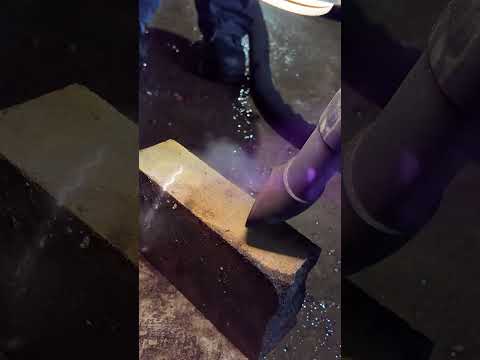
Watch Z-Beam laser cleaning demonstrations on cementitious surfaces, formwork, and historic buildings. These videos show how to avoid spalling on cement substrates.