
FDA
FDA 21 CFR 1040.10 - Laser Product Performance Standards

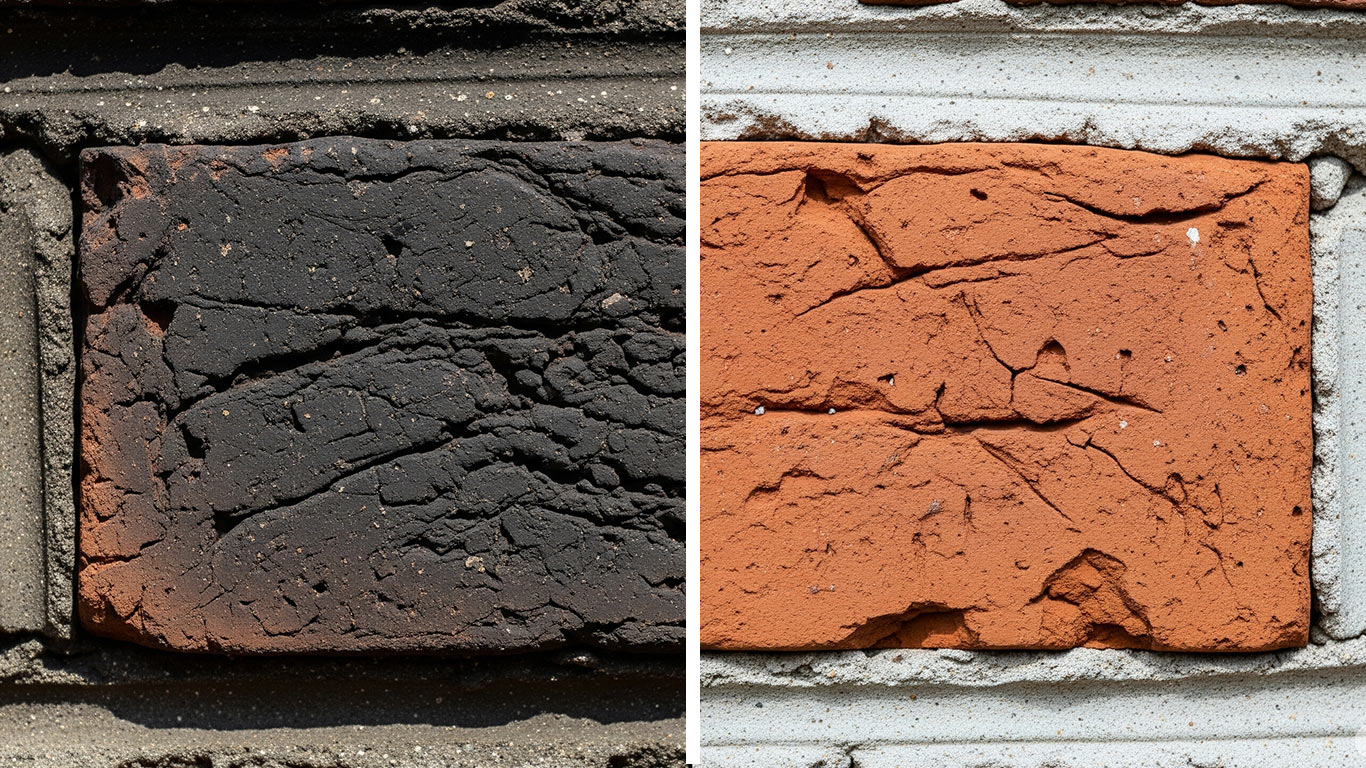

Mortar is the most chemically variable material in masonry cleaning — lime mortars from pre-1920 Bay Area construction behave very differently than Portland cement joints added during 20th-century repointing, and getting the parameters wrong on either one risks spalling the joint or etching the binder out from between the aggregate. At 28% absorption of 1064 nm energy, mortar is relatively low-absorption, which means the laser relies on the contaminant layer absorbing preferentially rather than bulk heating the surface. Soot and biological growth typically clear at 100 W, 50 kHz, 1,500 mm/s with 50% overlap and two passes without pulling sand grains loose. The silica in the sand aggregate is the primary health concern — respirable crystalline silica exposure during mortar cleaning requires H13/H14 HEPA extraction and P100 respirators as non-negotiable baseline controls. The chemistry difference between pre-1920 lime mortars and Portland cement repointing is large enough that parameters verified on one joint type will not transfer to the other — sample-by-sample validation is standard practice on any historic masonry where joint history is unknown.
Z-Beam took the time to demo the machine for us, answer all our questions, and made sure we were comfortable.

Fluence (J/cm²)
Mortar absorbs about 28% of 1064 nm light. Damage threshold is 1.05 J/cm² (published research). The window is 0.2 J/cm² – very narrow. At 1.1 J/cm², soot and biological growth are removed. At 1.2 J/cm², the surface is clean. At 1.3 J/cm², the binder breaks down – sand grains become loose. The mortar turns back into sand (spalling). Based on its narrow window, mortar is difficult to clean without damage. For historic lime mortar (softer, lower strength), use 0.7 J/cm², 3 passes. For Portland cement mortar (harder), use 0.9 J/cm², 2 passes. For mortar on brick buildings (cleaning brick and mortar together), use 0.8 J/cm² – the brick has higher damage threshold (2.5 J/cm²), so the mortar will limit the process.
Lime mortar and Portland cement mortar clean at different energy levels — treating both identically risks spalling the joint or leaving contamination behind. Density is 2.16 g/cm³. Compressive strength is 5.2 MPa – much lower than concrete (25 MPa). Tensile strength is only 2.1 MPa – mortar cracks easily. Porosity is 15-25% – very high. Thermal conductivity is 0.72 W/m·K – low. Damage threshold is 1.05 J/cm² (published research). The window is 0.2 J/cm² – very narrow. At 1.1 J/cm², you clean. At 1.3 J/cm², the surface spalls. For lime mortar (historic buildings), use 0.8 J/cm², 3 passes. For Portland cement mortar (modern), use 1.0 J/cm², 2 passes.
Laser cleaning mortar at 100 W, 50 kHz, 1500 mm/s cleaning speed, 50% overlap, and 2 passes removes biological growth, carbonation crust, and atmospheric soiling from Portland cement and lime-based mortars. Mortar composition varies significantly by era: pre-1920 Bay Area lime-based mortars (compressive strength 2–5 MPa) require energy level below 0.5 J/cm² to avoid joint gouging; post-1950 Portland cement mortars (15–25 MPa) tolerate up to 2.0 J/cm² without surface damage. The sand aggregate in mortar is crystalline silica — Cal/OSHA CCR Title 8 Section 5155 applies the 50 μg/m³ PEL to mortar joint laser cleaning at all energy level levels. HEPA extraction is mandatory for indoor structural cleaning; Bay Area historic brick pointing in unreinforced masonry buildings under seismic remediation frequently requires mortar joint cleaning before new mortar placement, combining dust control with structural access constraints. This applies to Portland cement mortar (modern). Lime mortar (historic) has lower strength and needs lower energy level (0.7 J/cm²). For mortar in damp conditions (bridges, basements), dry the surface first – moisture reduces cleaning efficiency by 30%.
Mortar dust contains crystalline silica (from sand) – a known carcinogen (OSHA PEL: 50 µg/m³). Use HEPA extraction (H13 or H14) and P100 respirators. Wear nitrile gloves and long sleeves. Follow ANSI Z136.1 for laser safety and OSHA 29 CFR 1926.95 for PPE. Laser eyewear requires OD 5+ for 1064 nm. For lime mortar, the dust is alkaline – can cause skin burns. Use chemical-resistant gloves.
FDA 21 CFR 1040.10 - Laser Product Performance Standards

ANSI Z136.1 - Safe Use of Lasers

IEC 60825 - Safety of Laser Products

OSHA 29 CFR 1926.95 - Personal Protective Equipment
Mortar is the most chemically variable material in masonry cleaning — lime mortars from pre-1920 Bay Area construction behave very differently than Portland cement joints added during 20th-century repointing, and getting the parameters wrong on either one risks spalling the joint or etching the binder out from between the aggregate. At 28% absorption of 1064 nm energy, mortar is relatively low-absorption, which means the laser relies on the contaminant layer absorbing preferentially rather than bulk heating the surface. Soot and biological growth typically clear at 100 W, 50 kHz, 1,500 mm/s with 50% overlap and two passes without pulling sand grains loose. The silica in the sand aggregate is the primary health concern — respirable crystalline silica exposure during mortar cleaning requires H13/H14 HEPA extraction and P100 respirators as non-negotiable baseline controls. The chemistry difference between pre-1920 lime mortars and Portland cement repointing is large enough that parameters verified on one joint type will not transfer to the other — sample-by-sample validation is standard practice on any historic masonry where joint history is unknown.


Mortar laser cleaning in confined spaces triggers OSHA 29 CFR 1910.146 permit-required confined space protocols, including continuous atmospheric monitoring for oxygen levels (maintained between 19.5% and 23.5%), combustible vapors, and silica dust below the NIOSH REL of 0.05 mg/m³ as an 8-hour TWA. Our team supplements standard confined space procedures with laser-specific controls: OD 7+ eye protection for Nd:YAG 1064 nm, beam termination barriers, and positive-pressure extraction to prevent fume accumulation. A documented rescue plan and attendant stationed outside the space are mandatory before any laser equipment is energized indoors.
Historical mortar cleaning from delicate stone requires nanosecond pulse durations at 1064 nm or 532 nm, with energy level calibrated well below the surface's damage threshold—often 0.5–1.5 J/cm² depending on stone porosity measured per EN 15801. Our team conducts test patches on inconspicuous areas first, stepping energy upward until mortar ablates cleanly while the stone surface passes EN 15801 water absorption checks before and after. The Getty Conservation Institute's cleaning protocols for historic masonry specify these pre-treatment tests as a condition of project approval, and our documentation packages meet those requirements.
Laser cleaning removes mortar contaminants by cleaning rather than chemical reaction, producing no ionic species or solvent residues that could alter the mortar's original mineralogical structure—a key distinction from acid washing or solvent-based chemical cleaning methods. Chemical cleaning with hydrochloric or phosphoric acid can etch calcium silicate phases and introduce chloride or phosphate ions that accelerate carbonation and efflorescence over time, a concern documented in ASTM C94 mix design guidance. Our process generates only particulate debris that is captured by extraction; no liquid waste requires disposal and no post-treatment neutralization is needed.
Laser cleaning effectively removes mortar layers up to several millimeters thick, with throughput and maximum depth determined by pulse energy, repetition rate, and mortar composition—Portland cement mortars clean faster than lime-based historical mortars due to differences in thermal conductivity. Our team uses ASTM C97 absorption measurements on reference samples to assess mortar porosity before selecting parameters; highly porous historical mortars require gentler, multi-pass cleaning to avoid spalling at grain boundaries. Layers thicker than 5 mm typically require multiple passes at incrementally increased energy level rather than single-pass high-energy treatment, which risks sub-surface thermal damage.
Mortar parameters must work for both the masonry unit and the joint material — lime and Portland cement mortars respond differently to laser irradiation.
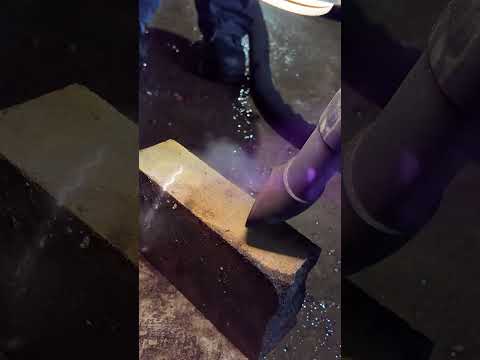
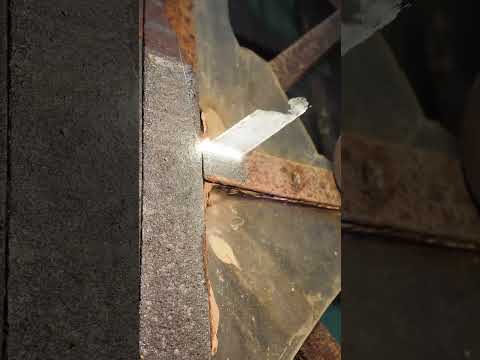
Watch Z-Beam laser cleaning demonstrations on historic mortar joints, bridge expansion joints, and masonry walls. These videos show the spalling risk at excessive energy level.