


Brass Laser Cleaning
Brass hardware and fixtures can shed tarnish and old lacquer with a dry laser pass when energy stays on the soil and zinc is not driven out of the surface. Acid dips are the usual...


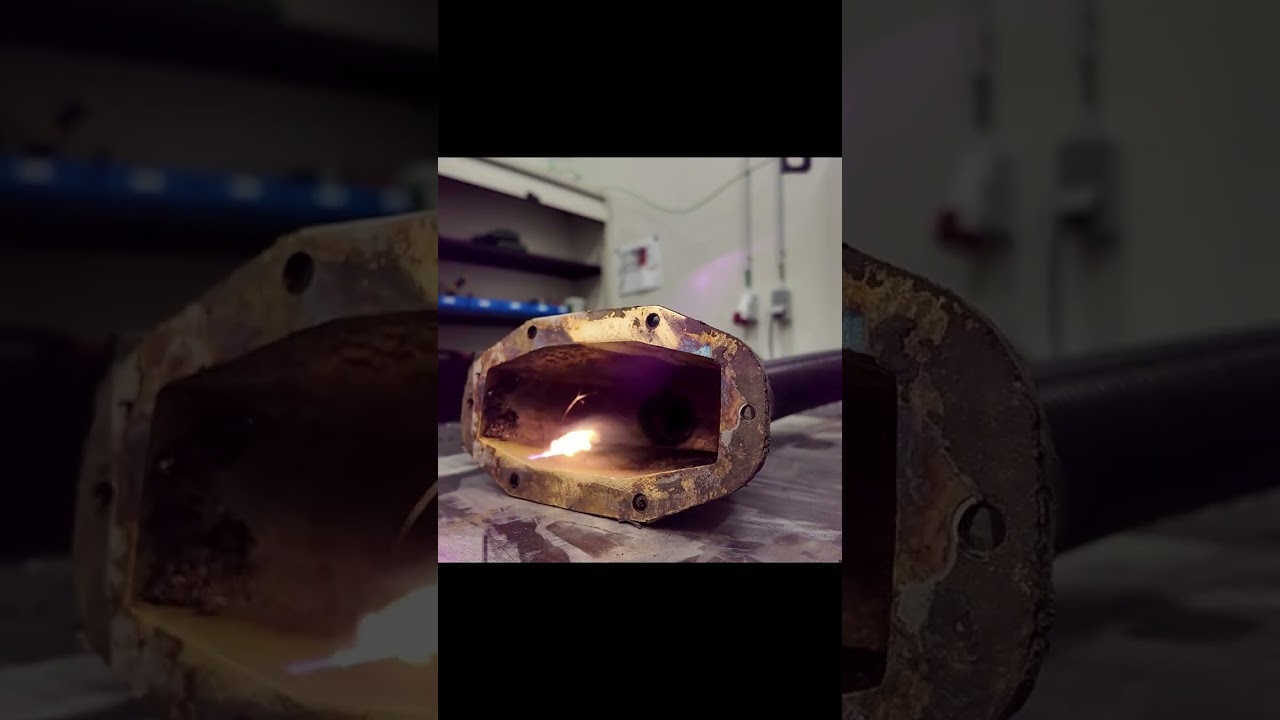
A thin cast or spun brass wall governs how much laser power a vintage ventilation bell can take before it warps or discolors. Old lacquer, soot, and oxide sit on top of a patina many owners want to keep, so the safe pass lowers fluence on rims, threaded collars, and any spot where wall thickness drops below a few thousandths of an inch. Brass alloy response varies across the same bell: a heavy cast base absorbs energy differently than a spun skirt, so a setting that clears grime from the base can scorch the thin section without warning. Fastener threads and solder seams stay outside the beam path entirely; those need hand cleaning, not laser passes, or the joint fails. On pieces headed for heritage architectural restoration, the target is usually an even exposed brass tone rather than a bare-metal strip, since uniform patina reads as original condition to an inspector. Laser cleaning will not repair dents, re-solder loose seams, or save a bell where corrosion has already perforated the wall.
Short dMJF0nqZ4Xc shows pulsed laser clearing lacquer and tarnish from a vintage brass ventilation bell in 51 seconds without grit.
Laser cleaning strips copper patina, the greenish or brown corrosion film copper and bronze build over years outdoors, without the wire brushing or acid dips that scratch or stain the metal underneath. The beam ablates the oxide and carbonate layers in place, so a roof panel, statue, or busbar keeps its original surface profile through the pass. It will not reverse a deep pit already etched into the metal, match a patina shade a conservator wants kept, or clear a large surface in one blanket setting; patina thickness and age both change how many passes a job needs before the copper is ready for inspection.
Requires reading the deposit-substrate pair before setting energy, because a [built-up edge](/materials/aluminum-laser-cleaning) on a carbide insert and the same cold-welded smear on a [tool-steel](/materials/tool-steel-laser-cleaning) die do not clear at the same fluence. The deposit got there by mechanical transfer, pressure welding during machining, adhesive wear between sliding parts, or hot workpiece pickup on a die, not by a chemical reaction with the base metal, so a matching offcut decides the setting rather than a rust or oxide default. Built-up edge on cutting tools forms when chip material pressure-welds to the rake face, work-hardens, and seizes the tip, the same transfer path that shows up as galling on dies and as hot pickup on a [tungsten-carbide](/materials/tungsten-carbide-laser-cleaning) cutting edge.
Requires matching the paint system and substrate pairing before setting energy, because a thin single topcoat on [steel](/materials/steel-laser-cleaning) clears at a fraction of the fluence a multilayer primer stack on [aluminum](/materials/aluminum-laser-cleaning) needs, and the substrate sets its own ceiling once the coating is gone. Paint sits as an applied, cross-linked polymer film bonded by mechanical keying and resin adhesion, not a corrosion product, so pigment load and binder chemistry decide more of the setting than the substrate alone. A surface-integrity study on laser-cleaned aluminum alloy carrying a paint layer documents that a visually bare finish does not by itself confirm the metal underneath escaped the pass undamaged (Applied Optics, 2024).
Laser cleaning decomposes mineral oil, synthetic lubricant, and machine grease off steel, aluminum, and stainless steel through fast thermal breakdown of the hydrocarbon film, the same damage-threshold logic that broader laser-cleaning threshold research has documented across very different host materials (Journal of Cultural Heritage, 2000). It is not a substitute for a wet alkaline line degreasing a full rack of parts at once, and it will not clear a bonded hard coating or a thick paint stack sitting on top of the oil.

Landmark facade work requires a hidden test patch before pulsed laser cleaning touches any visible elevation. The pass removes soot, pollution crust, and graffiti from [brick](/mat...

Precision surface work requires contact-free cleaning because gauge faces, optical flats, and polished tooling scratch under abrasive pads or chemical baths. Pulsed fiber sources r...


