


Video
I work as a laser processing engineer, focusing on oxide removal from substrates and coatings. This method lets me clean surfaces precisely while avoiding damage to the base material.
In developing applied workflows for laser oxide removal, I match pulse settings to specific coatings and substrates. The payoff is consistent cleaning results without damaging the base material.
Featured watch-page videos authored by this contributor.


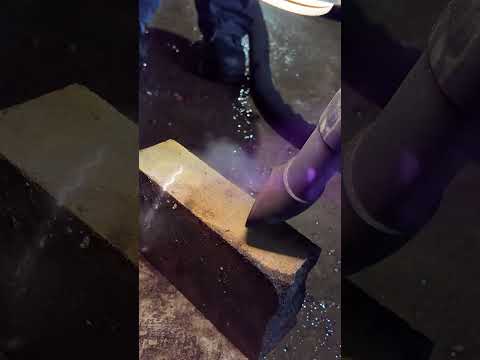


Marine hardware and pumps in aluminum bronze are a copper-aluminum alloy, not a tin bronze and not a structural aluminum. A dry laser pass can take off biofouling and handling soil when the grade is confirmed and copper-bearing dust is captured at the head. The thin oxide film that helps the alloy resist seawater should stay on the metal. Strip that film and the face is brighter and less protected. Trials on the actual casting come before any production schedule.

Culm and engineered board sold as bamboo are a grass, not a timber hardwood, and nodes, glue lines, and silica pockets each hold heat differently. Coatings and handling soil can come off with a dry laser pass when scrap of the same layup sets working energy. Fibers darken and glue can soften if heat pools. Wood-dust and silica capture stay on for the dry job. An [oak](/materials/oak-laser-cleaning) setting does not transfer, and neither does a [maple](/materials/maple-laser-cleaning) lumber recipe.

Paving and monuments in basalt are dark volcanic stone, and that darkness means the face absorbs heat quickly. Crust and later coatings can come off with a dry laser pass when the stone type is identified and silica-bearing dust is captured at the head. A copied limestone or sandstone setting can fracture a vein or glaze a polished face. A trial on the actual quarry product comes before any full-area pass.

Labware and optics in borosilicate glass often look clear to near-infrared light, so the beam can pass the wall and couple into the soil instead of the glass. A dry laser pass can still remove that soil when a trial proves the film is what heats. Thin annealed stock can crack from a sudden heat step even though this family is known for thermal shock resistance. Dust capture stays on. Architectural sheet is a different job from labware, and a soda-lime setting stays off the bench until the glass family is confirmed.

Brass hardware and fixtures can shed tarnish and old lacquer with a dry laser pass when energy stays on the soil and zinc is not driven out of the surface. Acid dips are the usual shop alternative. The laser job still needs a trial because the alloy couples unevenly. A hot pass can leave a pink zinc-poor face. Copper-bearing dust capture stays on for the dry job.

Heritage marble and limestone take a calcite face that decides the job more than the trade name of the stone. Crust and later coatings can come off with a dry laser pass when crystal habit is identified and dust is captured at the head. Heat can convert the face toward lime and open cleavage planes. A sandstone or granite setting stays off the bench. A trial on the actual stone comes before any full-area pass.

Automotive and EV production lines use pulsed fiber lasers to strip mill scale from stamped [steel](/materials/steel-laser-cleaning) body panels, clear weld-seam oxide ahead of resistance spot welding, and remove mold-release residue from cast [aluminum](/materials/aluminum-laser-cleaning) housings before adhesive bonding. On battery packs, the same process cleans busbar and terminal surfaces, as covered on the [EV battery busbar cleaning](/applications/ev-battery-busbar-laser-cleaning) page, so welds meet conductivity specs without media contamination. It does not replace chemical passivation baths for corrosion-resistant fastener coatings, deep paint stripping on multi-layer OEM finishes where undercoating risk is high, or bulk descaling of thick castings that still need mechanical grinding first. [Weld-seam preparation](/applications/weld-prep-laser-cleaning-applications) covers pre-weld oxide removal, while post-weld heat-tint removal on [stainless steel](/materials/stainless-steel-laser-cleaning) exhaust components runs on a separate parameter set.

Fouled boiler tubes, heat exchangers, and turbine casings often cannot leave the aisle for a shop. Online laser cleaning brings a fiber-delivered head to those surfaces so oxide, rust, and coatings come off [carbon steel](/materials/steel-laser-cleaning) where the hardware sits, without circulating chemicals or throwing abrasive through a live plant. The rest of the unit can stay on its outage calendar while the beam works the metal that is actually in view, including [Inconel hot-section parts](/materials/inconel-laser-cleaning) during [turbine and boiler maintenance](/applications/laser-cleaning-turbine-boiler-maintenance). Line of sight, heat into thin walls, and the length of the window set the real limits. Shadowed tube interiors and thick mill-scale stacks are poor fits, and a test patch on the alloy still comes first. The comparison that matters is total outage cost and waste, not the hourly rate of blasting or a chemical fill.

Laser cleaning removes polymer residue, release-agent film, and light oxidation from injection mold cavities and cores without abrasive blasting or solvent soak that can round vent edges or scar a polished finish. The method suits [tool steel](/materials/tool-steel-laser-cleaning) cavities and cores where mold release and carbon buildup need to come off between runs, and it fits the broader class of [mold and die cleaning](/applications/mold-die-laser-cleaning-applications) work where dimensional tolerances matter more than speed. It does not replace deep hot-runner tip service, which lives on the separate [hot-runner cleaning](/applications/hot-runner-laser-cleaning) page, and it does not treat die-cast aluminum tooling, since that metal responds differently to the same fluence. Downtime gains from switching to laser cleaning depend on mold complexity, residue type, and current cleaning method, so any comparison against manual teardown needs mold-specific timing rather than a blanket figure.

Laser cleaning removes carbon buildup, mold release residue, and light rust from cavity surfaces without abrasive media or chemical solvents that can etch [tool steel](/materials/tool-steel-laser-cleaning) tooling. It does not replace mechanical deflashing on parting lines with deep flash lock, and it does not correct worn cavity geometry or dimensional wear. On [injection mold tooling](/applications/injection-mold-tooling-laser-cleaning), the beam clears vent and gate residue between shot cycles without full disassembly. [Rubber compression molds](/applications/rubber-compression-mold-laser-cleaning) and [hot runners](/applications/hot-runner-laser-cleaning) both accumulate carbonized release agent that laser cleaning removes from textured surfaces without flattening the texture pattern, though heavily pitted or corroded steel still needs regrinding before the mold returns to production.

Laser cleaning removes oxide scale, soot deposits, and weld heat discoloration from turbine blades, boiler tubes, and combustor housings without abrasive media or chemical strippers. The beam works on the nickel superalloys and [stainless steel](/materials/stainless-steel-laser-cleaning) common in turbine hardware, including [Inconel](/materials/inconel-laser-cleaning) and plain [steel](/materials/steel-laser-cleaning) boiler tubing, and it lets parts stay in place instead of moving to a blast booth during an outage. It pairs with [weld prep cleaning](/applications/weld-prep-laser-cleaning-applications) before welds and with [weld passivation](/applications/stainless-steel-weld-passivation-laser-cleaning) after, and it extends into broader [power plant upkeep](/applications/in-situ-laser-cleaning-power-plants) beyond a single turbine train. It does not repair cracked blades, replace nondestructive inspection, or substitute for the code checks that ASME and OSHA require on pressure equipment. Operators still schedule metallurgical review before returning a cleaned component to service.
Dustless blasting cuts the airborne silica a dry abrasive job throws into the air, but the water in the stream still leaves flash rust on bare steel and a runoff stream that has to go somewhere. Laser cleaning strips the same rust and coating from [steel](/materials/steel-laser-cleaning) and [stainless steel](/materials/stainless-steel-laser-cleaning) hulls and brackets without introducing water or consuming abrasive media, and it holds dimension on [aluminum](/materials/aluminum-laser-cleaning) fittings where a wet nozzle would still cut into the base metal. Yards that need a fresh anchor profile before paint keep the wet abrasive step, since that mechanical roughening is still the point of the pass.
