
Steel Laser Cleaning
Laser cleaning removes rust, mill scale, and weld discoloration from steel without media, holding fluence near a 1.5 J/cm² cleaning floor and stopping short of the 4.5 J/cm² mark t...

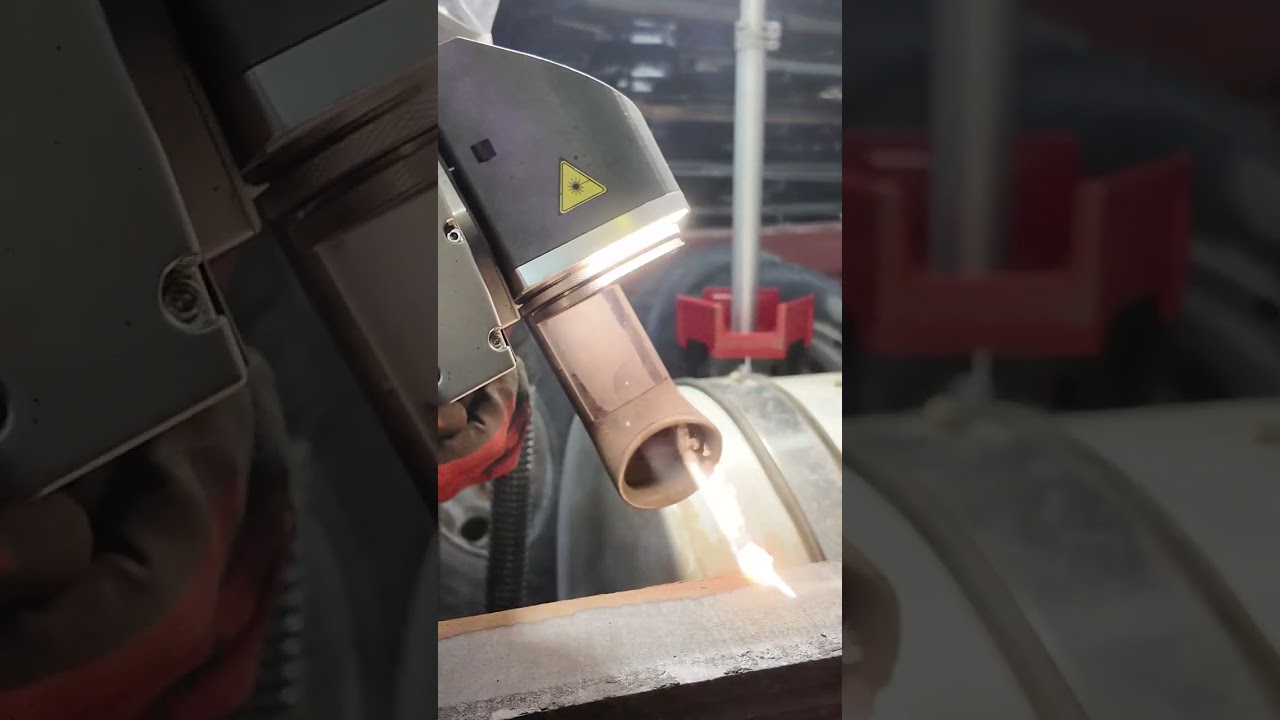
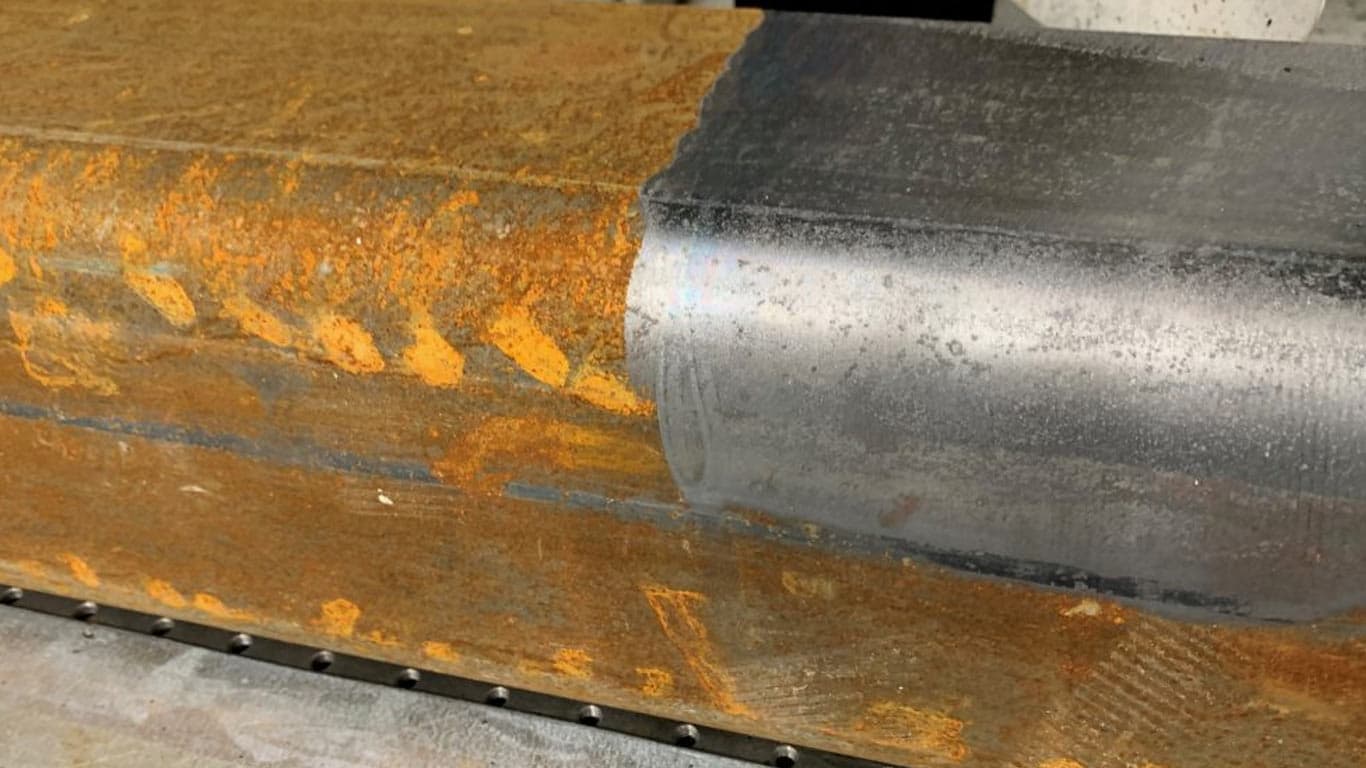
Laser cleaning removes rust, old paint, and undercoating from a vintage heavy truck frame without media blasting or chemical strippers, so the rail steel keeps its temper and bolt holes stay true to spec. The same steel laser cleaning parameters that strip mill scale from structural rail also lift decades of surface corrosion from frame webs and crossmembers, and shops doing laser rust removal on truck frames typically run lower fluence than automotive body panels to avoid heat distortion in load-bearing sections. It will not clear deep pitting corrosion that has already thinned the rail wall, restore a frame with cracked welds, or finish a heavily undercoated frame in a single fast pass, since thick asphalt-based coatings need a slower multi-pass approach. Shops that also handle cast iron brackets or automotive EV laser cleaning work often add frame restoration as a natural fit, since the equipment and safety setup carry over directly.
Short 5SK5gOwfgy4 shows pulsed laser vaporizing decades of rust from a vintage heavy truck frame in 41 seconds without grit.
Laser cleaning removes rust, mill scale, and weld discoloration from steel without media, holding fluence near a 1.5 J/cm² cleaning floor and stopping short of the 4.5 J/cm² mark t...

Nickel in the shop is either solid stock or bar, or a thin plated layer bonded to steel for corrosion resistance. Laser cleaning removes oxide, tarnish, and surface contamination f...
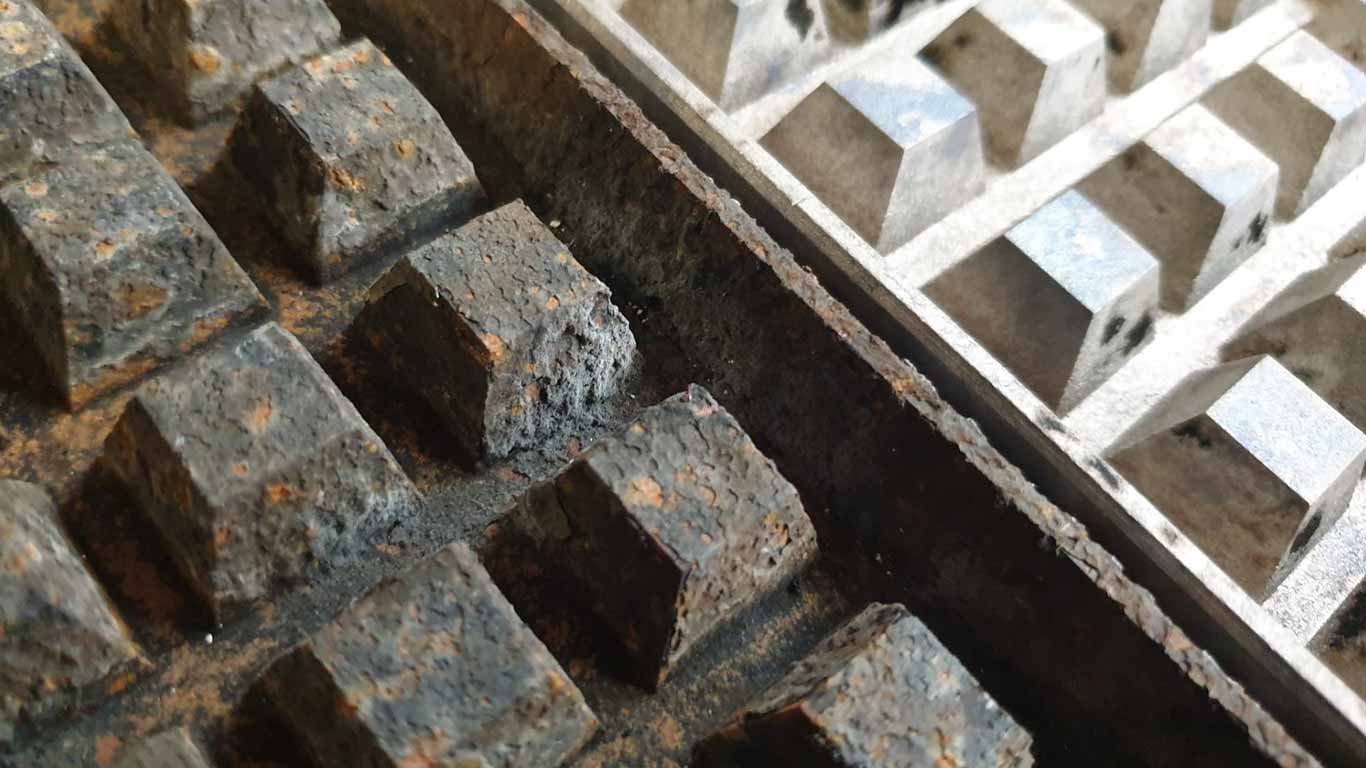
Laser cleaning removes iron oxide rust from steel down to bare metal without grinding wheels, abrasive blasting, or chemical strippers. The beam ablates the oxide layer while leaving sound steel underneath intact, so a part keeps its original dimension and surface finish through cleaning. It will not reverse pitting the rust already caused, repair corrosion damage done to the substrate, or clear a part in one blanket setting; rust depth and iron oxide type both change how many passes the surface needs before it is ready for inspection.
Laser cleaning fractures the bluish-black magnetite laminate off carbon steel in repeated passes, because mill scale runs roughly four times harder than the plate underneath it. A hot-rolled plate carrying this scale typically needs four or more passes to reach bare metal, while a lighter rust bloom on the same yard stock can clear in one or two. It will not strip in a single rust-grade pass, will not raise the surface to a deep abrasive-blast anchor profile some coating specs still call for, and will not reverse pitting that was already hiding under the scale.
Requires matching the paint system and substrate pairing before setting energy, because a thin single topcoat on [steel](/materials/steel-laser-cleaning) clears at a fraction of the fluence a multilayer primer stack on [aluminum](/materials/aluminum-laser-cleaning) needs, and the substrate sets its own ceiling once the coating is gone. Paint sits as an applied, cross-linked polymer film bonded by mechanical keying and resin adhesion, not a corrosion product, so pigment load and binder chemistry decide more of the setting than the substrate alone. A surface-integrity study on laser-cleaned aluminum alloy carrying a paint layer documents that a visually bare finish does not by itself confirm the metal underneath escaped the pass undamaged (Applied Optics, 2024).
Laser cleaning removes the chromium-oxide and titanium-oxide scale that post-weld and post-anneal heat treatment grows on stainless steel, titanium, and Inconel, clearing the film without a chemical pickling bath. It will not rebuild the chromium that heat already pulled out of the grain boundaries beneath a dark heat-treated color, will not fix titanium alpha case that has already let oxygen diffuse deep into the metal, and will not stop the bare surface from re-oxidizing once it goes back into service heat.
Requires a material call before a setting, since carbon-filled EPDM and nitrile gasket residue absorb a 1064 nanometer beam efficiently while Viton and other FKM compounds carry the same dark filler but decompose above roughly 200°C into hydrogen fluoride gas. [Carbon steel](/materials/steel-laser-cleaning) flange faces clear this residue between about 1 and 3 J/cm2, well under the 8 to 15 J/cm2 point where the metal itself starts to take damage, so the margin stays wide once the gasket type is confirmed on a coupon. Peer-reviewed laser surface-prep work on bonding faces shows the same selective-lift pattern a flange land needs when the rubber film must leave and the metal underneath must stay ready for the next gasket.
A fiber laser removes galvanized zinc from structural steel without media blast, acid pickling, or a chemical rinse step. Galvanization removal by laser does not restore a reusable zinc layer, so once the gray coating disappears from a section, that section needs a fresh coat or a weld pass before moisture reaches the exposed steel.

Laser cleaning removes mill scale, oxide layers, and weld residue from fabricated metal parts without abrasive media or chemical strippers. Shops handling [steel](/materials/steel-...
Weld preparation laser cleaning removes rust, mill scale, oil, and drawing compound from a joint face right before the arc or beam strikes, so the fitter is not grinding or wire-br...
Laser rust removal in the Bay Area is a technician on the job. The day rate is $800/day on [services](/services). Laser cleaning removes field [rust](/contaminants/iron-oxide-rust-...