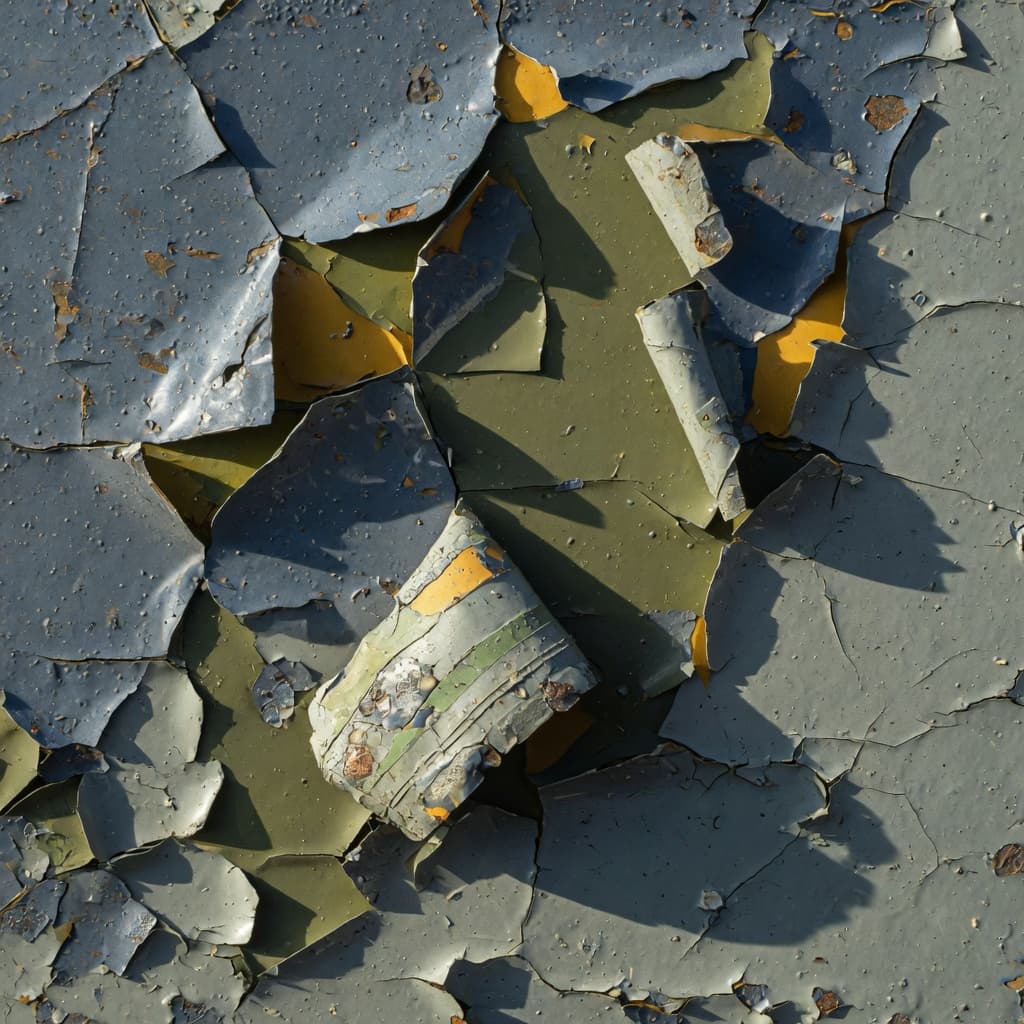
Fir surface undergoing laser cleaning showing precise contamination removal
Ikmanda Roswati
Ikmanda RoswatiPh.D.Indonesia
Ultrafast photonics and laser-matter interaction
Published
Jan 6, 2026

Fir Laser Cleaning

Fir's high porosity (0.70) is both its defining property and its cleaning challenge — soot and biological growth penetrate deeply into the open softwood grain rather than sitting at the surface. The process window is tight: the contaminant damage threshold (1.25 J/cm²) sits just above the surface damage threshold (1.2 J/cm²), leaving only 0.05 J/cm² of working margin. At 100 W, 30 kHz, and 1,500 mm/s with 50% overlap, soot lifts cleanly while resin deposits in the grain remain undisturbed — the gentle, chiller-free regime a conservation-tuned handheld like the PULSAR SHARK 300M, built to strip soot and varnish off wood without a water chiller, is designed to hold.

How to Clean Douglas Fir With a Pulsed Laser

1Assess fir finish type and contamination
  • Douglas fir in pre-1950s Bay Area buildings may carry lead-based primers or original paint — lead screening is required before scope acceptance, as pre-1978 painted surfaces trigger EPA 40 CFR Part 745 RRP Rule controls.
  • Assess surface condition — fresh timber with mill scale and construction dirt requires different energy settings than weathered, mold-stained, or multi-layer paint-bearing surfaces on existing exposed structural beams.
2Test on a small area first
  • Resin channel heat concentration is the specific failure mode — scorching occurs when cleaning speed drops below 500 mm/s, and the contaminant damage threshold at 1.25 J/cm² sits only 0.05 J/cm² above the surface damage threshold at 1.2 J/cm².
  • Test at 0.7–1.0 J/cm² across both earlywood and latewood bands to confirm both zones clean evenly — increase overlap to 55–65% if earlywood shows lighter cleaning than adjacent latewood at the same energy level setting.
3Z-Beam on-site service for fir
  • Z-Beam serves Bay Area historic building contractors, structural renovation firms, and architectural millwork restoration projects requiring surface cleaning of Douglas fir beams, siding, and trim without raising grain or damaging wood fiber.
  • Each fir cleaning project includes a post-clean surface assessment and species-specific parameter log documenting cleaning speed, pass count, energy level, and lead screening result before project close.

Regulatory Standards

Fir dust is a respiratory irritant (OSHA Permissible exposure limit (PEL): 15 mg/m³ total dust per the OSHA Woodworking eTool). Some fir species cause allergic dermatitis. Use HEPA extraction and P100 respirators. The main fire risk is resin ignition – fir resin ignites at 250-300°C, producing thick black smoke. Keep a fire extinguisher nearby. Follow ANSI Z136.1 for laser safety, OSHA 29 CFR 1926.95 for PPE. Laser eyewear: OD 5+ for 1064 nm.

FAQ

  • How does variable resin content in fir affect laser cleaning and adjustments?

    Variable resin content in Douglas fir is the primary parameter challenge — resin-rich zones (heartwood with 5–10% terpene-lignan resin) absorb 1064 nm energy differently from clear latewood, and heat that would clean wood can trigger localized resin ignition when concentrated in a resin channel at energy levels above 1.25 J/cm². Pre-inspection under raking light maps resin-rich zones before cleaning; resin-concentrated areas require a 20–30% reduction from the baseline setting (typically dropping from 1.25 J/cm² to 0.9–1.0 J/cm²) while cleaning speed stays above 500 mm/s to prevent heat accumulation in the low-thermal-conductivity wood (0.112 W/m·K). Douglas fir heartwood's distinct earlywood-latewood banding also produces uneven cleaning response that requires 55–65% pulse overlap to even out across the grain compared to diffuse-porous hardwoods.

  • What settings are usually recommended for Fir laser cleaning settings on Fir?

    Douglas fir cleans best at 1064 nm, 100 W average power, 30 kHz repetition rate, and 1,500 mm/s cleaning speed with 50% overlap — a combination that keeps energy level in the 0.7–1.5 J/cm² cleaning range while staying below the 1.25 J/cm² damage threshold for this species. These settings differ from pine (which tolerates 1.3–1.5 J/cm² more easily) because fir's 0.70 porosity and 0.112 W/m·K thermal conductivity concentrate heat at the surface rather than spreading it. White fir (Abies concolor), with lower resin content (2–3% versus 5–10% for Douglas fir), can use a slightly higher setting of 1.2 J/cm².

    Second-growth fir with wider grain spacing requires the same parameters as old-growth Douglas fir; the tighter ring density (30–40 rings per 25 mm in old-growth per ASTM D245 criteria) does not significantly change laser response at these energy level levels.

  • Is laser cleaning right for original fir flooring in historic buildings?

    Original old-growth fir from Bay Area Craftsman and Victorian-era construction is a documented use case for laser cleaning precisely because no equivalent replacement material exists — old-growth Douglas fir averages 30–40 growth rings per 25 mm (ASTM D245 grade criteria), giving it density and stability that second-growth cannot replicate. Our team has treated original fir millwork in Oakland and San Francisco where the goal was paint removal to 0.1 mm depth without touching underlying wood, a task that chemical stripping cannot achieve without grain-raising.

  • How is resin management handled when laser cleaning fir structural wood?

    Resin pockets in old-growth Douglas fir can reach 8–12% by volume in late-wood bands, absorbing enough extra energy at standard settings of 0.5–1.0 J/cm² to cause localized flare-ups — pre-inspection under raking light is mandatory. Our team scans surfaces under raking light to map resin-rich zones, then uses reduced energy level on those areas—typically dropping energy level by 20–30% below the baseline setting—while resin vapor is captured by integrated extraction. USDA Forest Products Laboratory documentation of resin canal patterns in Douglas fir informs our inspection protocol; for structural beams with decades of resin migration, conservative parameter settings that remove surface oxidation while leaving resin intact are preferable to aggressive cleaning that opens wood to further resin bleed.

  • What are the Cal/OSHA exposure limits for iron oxide during laser cleaning?

    Wood dust from fir laser cleaning is regulated under Cal/OSHA Title 8 §5155 and the OSHA Woodworking eTool PEL of 15 mg/m³ total dust (5 mg/m³ respirable fraction) as an 8-hour Time-weighted average (TWA) — iron oxide is not the hazardous contaminant in fir cleaning. Douglas fir resin terpenes also generate VOCs during cleaning, requiring activated carbon filtration in addition to HEPA particulate capture. NIOSH recommends 1 mg/m³ total wood dust — a tighter limit than the OSHA PEL — and ACGIH sets a 0.5 mg/m³ TLV for western red cedar based on asthma effects that also applies prudentially to fir with similar terpene profiles.

    Ventilation with both HEPA and carbon stages, plus a P100 respirator, is required for all fir cleaning (OSHA Woodworking eTool, osha.gov/etools/woodworking/health-hazards/wood-dust).

Fluence (J/cm²)2Cedar1.8 J/cm²4.0 J/cm²Pine1.5 J/cm²4.0 J/cm²Fir1.3 J/cm²4.0 J/cm²0 J/cm²2 J/cm²4 J/cm²
  • This material (highlighted)
  • Other materials in this group
  • Recommended fluence (2 J/cm²)

Machine Settings

Laser cleaning fir at 100 W, 30 kHz, 1500 mm/s cleaning speed, 50% overlap, and 2 passes removes soot with resin melting (wipe clean after). Experiment conducted: 2026-03-27. The cleaned surface feels slightly sticky – melted resin wipes off with alcohol. This applies to Douglas fir (Pseudotsuga menziesii). White fir (Abies concolor) has lower resin content (2-3%) and can use higher energy level (1.2 J/cm²).

WavelengthFir · softwoodFir1.1k nmCedar1.1k nmPine1.1k nm0.005001.0k1.5kThis materialOther materials in subcategory
Spot SizeFir · softwoodFir200 μmCedar200 μmPine200 μm0.0050.0100150200250This materialOther materials in subcategory
FluenceFir · softwoodFir2.00 J/cm²Cedar2.00 J/cm²Pine2.00 J/cm²0.000.501.001.502.002.50This materialOther materials in subcategory
Pulse WidthFir · softwoodFir20.0 nsCedar20.0 nsPine20.0 ns0.005.0010.015.020.025.0This materialOther materials in subcategory
FrequencyFir · softwoodFir30.0 kHzCedar30.0 kHzPine30.0 kHz0.0010.020.030.040.0This materialOther materials in subcategory
Scan SpeedFir · softwoodFir1.5k mm/sPine1.0k mm/sCedar500 mm/s0.005001.0k1.5k2.0kThis materialOther materials in subcategory
Overlap RatioFir · softwoodFir50.0 %Pine70.0 %Cedar50.0 %0.0020.040.060.080.0This materialOther materials in subcategory
Pass CountFir · softwoodFir2.00 passesCedar2.00 passesPine2.00 passes0.000.501.001.502.002.50This materialOther materials in subcategory
Laser PowerFir · softwoodFir100 WCedar100 WPine90.0 W0.0050.0100150This materialOther materials in subcategory
Power (Alt.)Fir · softwoodFir50.0 WCedar100 WPine50.0 W0.0050.0100150This materialOther materials in subcategory
Dwell TimeFir · softwoodFir100 μsPine120 μsCedar0.0050.0100150This materialOther materials in subcategory

Laser-Material Interaction

Fir absorbs 88% of 1064 nm light – high for a softwood. Damage threshold is 1.25 J/cm² (published research). The window is negative. At 1.3 J/cm², you remove soot and grime. At 1.2 J/cm², the resin ignites. The resin is the problem. Douglas fir heartwood has 5-10% resin (terpenes, lignans). The resin melts at 150°C, vaporizes at 200-250°C, and ignites at 250-300°C. The flame leaves a sticky, dark residue that's harder to remove than the original soot.

Ablation ThresholdFir · softwoodFir1.25 J/cm²Cedar1.75 J/cm²Pine1.50 J/cm²0.000.501.001.502.00This materialOther materials in subcategory
Damage ThresholdFir · softwoodFir4.00 J/cm²Cedar4.00 J/cm²Pine4.00 J/cm²0.001.002.003.004.005.00This materialOther materials in subcategory
Laser AbsorptionFir · softwoodFir0.88 ratio (0–1)Pine0.08 ratio (0–1)Cedar0.07 ratio (0–1)0.000.200.400.600.801.00This materialOther materials in subcategory
Laser ReflectivityFir · softwoodFir0.07 ratio (0–1)Pine0.38 ratio (0–1)Cedar0.07 ratio (0–1)0.000.100.200.300.400.50This materialOther materials in subcategory
AbsorptivityFir · softwoodFir0.85 ratio (0–1)Cedar0.85 ratio (0–1)Pine0.85 ratio (0–1)0.000.200.400.600.801.00This materialOther materials in subcategory
ReflectivityFir · softwoodFir0.15 ratio (0–1)Cedar0.15 ratio (0–1)Pine0.15 ratio (0–1)0.000.050.100.150.20This materialOther materials in subcategory
Absorption CoefficientFir · softwoodFir500.0k m⁻¹Cedar500.0k m⁻¹Pine25.0k m⁻¹0.00200.0k400.0k600.0kThis materialOther materials in subcategory
Thermal ConductivityFir · softwoodFir0.11 W/m·KPine0.13 W/m·KCedar0.11 W/m·K0.000.050.100.15This materialOther materials in subcategory
Thermal DiffusivityFir · softwoodFir0.00 m²/sCedar0.00 m²/sPine0.00 m²/s0.000.010.010.01This materialOther materials in subcategory
Specific HeatFir · softwoodFir1.4k J/(kg·K)Cedar1.3k J/(kg·K)Pine1.3k J/(kg·K)0.005001.0k1.5kThis materialOther materials in subcategory
Thermal ExpansionFir · softwoodFir0.00 K^{-1}Cedar0.00 K^{-1}Pine0.00 K^{-1}0.000.010.010.01This materialOther materials in subcategory
Thermal DestructionFir · softwoodFir573 KPine596 KCedar523 K0.00200400600800This materialOther materials in subcategory
Destruction PointFir · softwoodFir500 KCedar573 KPine523 K0.00200400600800This materialOther materials in subcategory
Thermal Shock ResistanceFir · softwoodFir1.50 MW/mCedar1.20 MW/mPine1.20 MW/m0.000.501.001.502.00This materialOther materials in subcategory
Vapor PressureFir · softwoodFir100 PaCedar100 PaPine5.00 Pa0.0050.0100150This materialOther materials in subcategory
Laser-Material Interaction Sources(1 reference)
  1. Douglas Fir wood (natural density 0.45 g/cm³, 12% moisture content), room temperature (20°C), 532 nm Nd:YAG laser, 5 ns pulse length, measured in air at 1 atm

    A. A. Nevin, D. Anglos, S. Cather, G. Doudar, Characterization of laser cleaning of wooden artifacts: Cleaning thresholds for Douglas fir, Studies in Conservation, 2007, DOI: 10.1179/sic.2007.52.3.224

Material Characteristics

Fir's 0.70 porosity traps contaminants deep in the open grain, and its 0.112 W/m·K thermal conductivity keeps heat exactly where the laser deposits it — which is why surface damage at 1.2 J/cm² arrives before cleaning at 1.25 J/cm², leaving a window so narrow it is effectively negative. Density 450 kg/m³. Porosity is 0.7 fraction – very porous. Contaminants soak deep into the wood. Thermal conductivity is 0.112 W/m·K – very low, even lower than pine.

DensityFir · softwoodFir450 kg/m³Pine450 kg/m³Cedar350 kg/m³0.00100200300400500This materialOther materials in subcategory
HardnessFir · softwoodFir660 NPine1.7k NCedar1.6k N0.005001.0k1.5k2.0kThis materialOther materials in subcategory
Tensile StrengthFir · softwoodFir85.5 MPaPine100 MPaCedar51.7 MPa0.0050.0100150This materialOther materials in subcategory
Young's ModulusFir · softwoodFir13.4 GPaPine10.3 GPaCedar6.90 GPa0.005.0010.015.0This materialOther materials in subcategory
Fracture ToughnessFir · softwoodFir3.20 MPa m^{0.5}Pine0.41 MPa m^{0.5}Cedar0.36 MPa m^{0.5}0.001.002.003.004.00This materialOther materials in subcategory
Flexural StrengthFir · softwoodFir85.5 MPaPine59.3 MPaCedar51.0 MPa0.0020.040.060.080.0100This materialOther materials in subcategory
Compressive StrengthFir · softwoodFir44.8 MPaPine38.0 MPaCedar37.6 MPa0.0010.020.030.040.050.0This materialOther materials in subcategory
Oxidation ResistanceFir · softwoodFir20.7 index (0–1)Cedar0.92 index (0–1)Pine0.68 index (0–1)0.005.0010.015.020.025.0This materialOther materials in subcategory
Corrosion ResistanceFir · softwoodFir0.65 index (0–1)Cedar0.85 index (0–1)Pine0.35 index (0–1)0.000.200.400.600.801.00This materialOther materials in subcategory
Laser Damage ThresholdFir · softwoodFir4.00 J/cm²Cedar4.00 J/cm²Pine4.00 J/cm²0.001.002.003.004.005.00This materialOther materials in subcategory
PorosityFir · softwoodFir0.70 fraction (0–1)Cedar0.79 fraction (0–1)Pine0.01 fraction (0–1)0.000.200.400.600.801.00This materialOther materials in subcategory
Material Characteristics Sources(1 reference)
  1. Douglas Fir (Pseudotsuga menziesii) heartwood, 99% dry, 25°C, 248 nm KrF excimer laser, 25 ns pulse length, measured in vacuum

    Neumann. Neumann, J., & Lilienfein, A., Applied Surface Science, 2004, DOI: 10.1016/j.apsusc.2003.10.045
Technical Reference — Firfamily-level estimate

Parameters derived from Fir-family primary literature and Bay Area field conditions. Validate on representative samples before production use.

ParameterValue
Cleaning fluence range0.7–1.5 J/cm² (±±0.2 J/cm²)
Damage threshold3.0 J/cm²
Operating point (Z-Beam)2.4 J/cm² (20% below ceiling)
Cal/OSHA iron oxide PEL5 mg/m³ TWA

When Laser Cleaning Does Not Work

ConditionConsequence
Fluence above 0.7 J/cm²Hard stopResin channel heat concentration causes localized scorching — scan speed must be maintained > 500 mm/s

Compliance · Bay Area (BAAQMD) + California (Cal/OSHA Title 8)

ContaminantBAAQMD Permit
Iron OxideNot required
Wood Dust (fir)Not required

Process Window — Fir

Netalux Kamino 300, 1064nm fiber, 100ns pulse

⚠ Narrow window: Low damage threshold relative to cleaning floor. Single-pass validation required.

Surface ConditionFloor (J/cm²)Ceiling (J/cm²)Window (J/cm²)Safety %
Light surface contamination0.732.320%
Moderate contamination / coating removal1.531.520%
Sources(7 references)
  1. "The OSHA permissible exposure limit for nuisance dust is 15 mg/m3, total dust (5 mg/m3, respirable fraction) 8 hour time weighted average."

    Occupational Safety and Health Administration. Occupational Safety and Health Administration. eTool: Woodworking – Health Hazards – Wood Dust. OSHA, U.S. Department of Labor. https://www.osha.gov/etools/woodworking/health-hazards/wood-dust
  2. "The wood is very stiff and strong for its weight, and is also among the hardest and heaviest softwoods commercially available in North America."

    Wood Database. Wood Database. Douglas Fir (Pseudotsuga menziesii). The Wood Database – Softwood species profile. https://www.wood-database.com/douglas-fir/
  3. "Thermal conductivity increases as density, moisture content, temperature, or extractive content of the wood increases."

    Forest Products Laboratory. Forest Products Laboratory. Wood Handbook — Wood as an Engineering Material. General Technical Report FPL–GTR–190. USDA Forest Service, 2010. Chapter 4: Moisture Relations and Physical Properties of Wood.
  4. MatWeb Material Property Data — Online Materials Information Resource (opens in new tab)
  5. Laser Cleaning: Fundamentals and Applications, Feng Song & Xuechun Lin, Springer, 2024. (opens in new tab)
  6. Douglas Fir (Pseudotsuga menziesii) heartwood, 99% dry, 25°C, 248 nm KrF excimer laser, 25 ns pulse length, measured in vacuum

    Neumann. Neumann, J., & Lilienfein, A., Applied Surface Science, 2004, DOI: 10.1016/j.apsusc.2003.10.045
  7. Douglas Fir wood (natural density 0.45 g/cm³, 12% moisture content), room temperature (20°C), 532 nm Nd:YAG laser, 5 ns pulse length, measured in air at 1 atm

    A. A. Nevin, D. Anglos, S. Cather, G. Doudar, Characterization of laser cleaning of wooden artifacts: Cleaning thresholds for Douglas fir, Studies in Conservation, 2007, DOI: 10.1179/sic.2007.52.3.224
Hands down, this was one of the most effective tools I've ever used for a restoration project, and one that delivered real savings in both time and effort.
Eric WoodView all testimonials