

ANSI
ANSI Z136.1 - Safe Use of Lasers


Stucco is one of the more demanding masonry surfaces to clean without causing damage — high porosity (15–25%) means moisture and contaminants penetrate deep, while the 1.2 J/cm² damage threshold is low enough that aggressive passes will spall the lime-cement matrix and expose aggregate. The approach that works is multiple light passes at 0.4–0.9 J/cm², 1064 nm, with 15 ns pulses and 70% overlap — slow and deliberate rather than trying to strip the surface in a single pass.
Laser cleaning stucco produces fine silicate and lime particulates. OSHA confirms respirable crystalline silica is created when grinding or crushing stone, concrete, brick, and mortar (OSHA 2024). Use ventilation with HEPA filtration. NIOSH notes cutting and grinding of materials including stone and mortar generates silica dust (NIOSH 2024). Ensure stucco is dry before cleaning. Moisture can cause steam spalling.
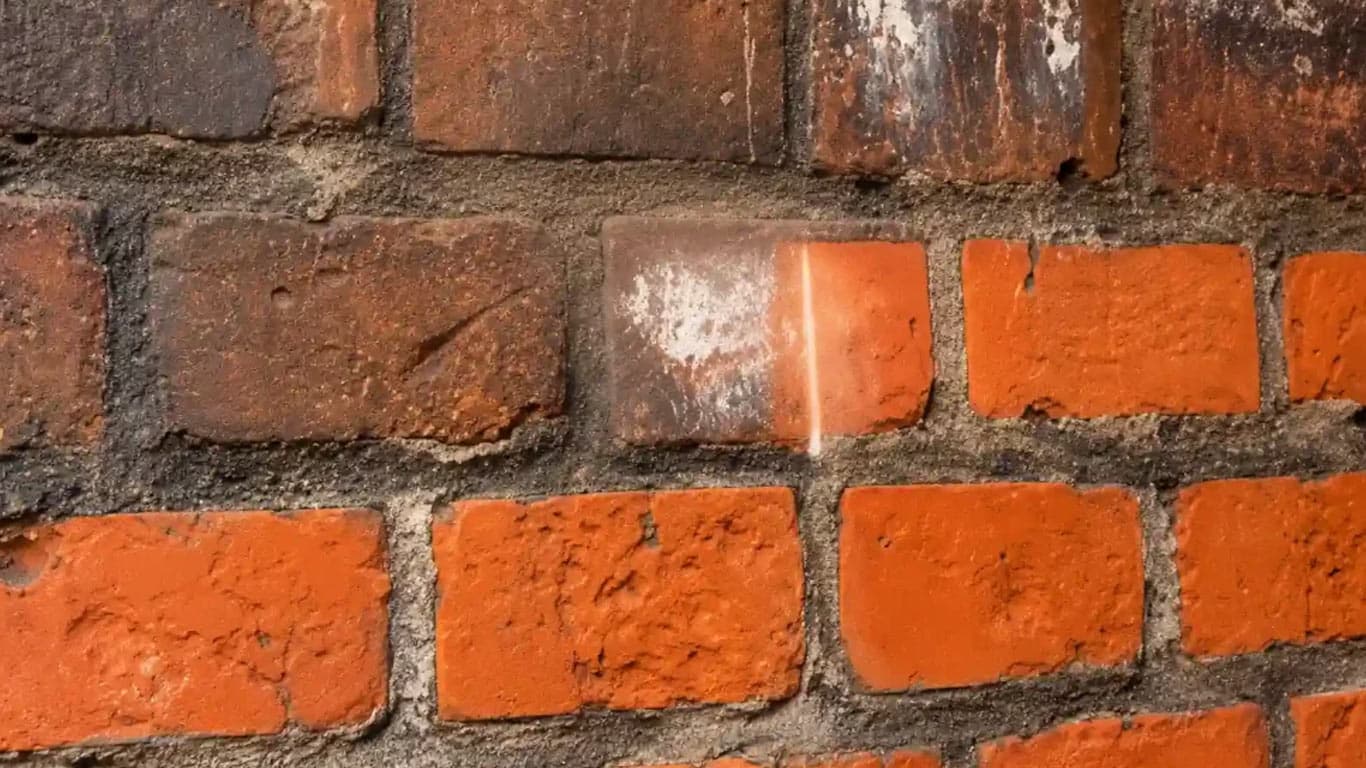
Graffiti removal from stucco runs at 0.4–0.9 J/cm² at 1064 nm with 30 ns pulses and 70% beam overlap — two to three passes at these parameters removes spray paint and atmospheric carbon without exceeding the 1.2 J/cm² damage threshold. Single high-energy passes above 1.2 J/cm² spall the lime-cement matrix; the multi-pass low-energy level approach avoids this entirely. Always test on a concealed area first — stucco porosity (15–25%) varies by mix and affects how quickly moisture-driven spalling begins.
Moisture is the critical pre-treatment concern — stucco with trapped pore water can spall from steam pressure at energy levels well below the 1.2 J/cm² dry-surface damage threshold. Check surface moisture with a pin-type meter before cleaning; allow drying time if pore moisture is elevated. For textured stucco, set beam overlap at 60–70% to ensure coverage in surface recesses, and run a test patch on a concealed area before treating the full facade. No chemical pre-treatment is required — the laser removes contamination in-place.
A pulsed 1064 nm fiber laser is safer for stucco than a CO2 laser. CO2 operates at 10,600 nm where calcium carbonate absorbs strongly, pushing the risk of calcination damage well below the already-narrow 0.7 J/cm² process window. Fiber lasers deliver energy in nanosecond pulses that limit peak thermal load per pulse, keeping the lime-cement matrix intact down to the 1.2 J/cm² damage threshold. The fiber system also allows tighter spot control at 300 µm, which is needed to clean textured stucco surfaces uniformly without surface erosion on high points.
Stucco's high alkalinity (pH 10–12) does not affect laser cleaning parameters, but it is a critical factor in selecting post-treatment consolidants—film-forming acrylic sealants applied to high-pH stucco can trap moisture and cause delamination within 2–5 years. Our team recommends lime-based or potassium silicate consolidants after laser cleaning of historic stucco, as both are pH-compatible and vapor-permeable, consistent with ASTM C270 mortar compatibility guidelines for historic masonry. Avoid silicone-based film formers on original Portland cement or lime-based stucco; consult the Getty Conservation Institute's stucco preservation guidance for project-specific consolidant selection.
Respirable crystalline silica from Portland cement-sand stucco (10–25% free silica content) is regulated under Cal/OSHA §1532.1 at a Permissible exposure limit (PEL) of 0.025 mg/m³ Time-weighted average (TWA) — far stricter than the general particulate limit. The §1532.1 program requires exposure monitoring, HEPA-filtered ventilation, and P100 respiratory protection during active cleaning. The Bay Area Air Quality Management District (BAAQMD) permit threshold for particulate emissions is not triggered by laser cleaning operations, which generate no VOC emissions.
Start with energy level at 0.4-0.9 J/cm², well below the 1.2 J/cm² damage threshold. Use 1064 nm wavelength with 30 ns pulse length. Scan at 1500 mm/s with 60% overlap. Spot size at 300 μm. Stucco has high porosity (15-25%) and low compressive strength (10.3 MPa). Never exceed 1.1 J/cm². Ensure stucco is dry before cleaning. Moisture can cause steam spalling. Two passes at low energy level are safer than one pass near threshold. For historic stucco, reduce energy level to 0.3-0.6 J/cm². Test on a hidden area first. Watch for surface spalling or aggregate exposure.
Stucco absorbs about 80% of 1064 nm laser energy, placing it in the heat-based regime where most energy converts to heat at the surface — which is both the mechanism for cleaning and the hazard for spalling. Surface spalling from lime-cement matrix failure occurs at 1.8 J/cm²; moisture-driven steam spalling can occur below 1.2 J/cm² if pore water is present. Effective cleaning operates at 0.4–0.9 J/cm² using multiple light passes rather than single high-energy level passes.
Traditional lime-based stucco (calcium carbonate matrix with sand aggregates, 80% CaCO3 purity equivalent), 20°C, 1064 nm Nd:YAG laser, pulse length 10 ns
Stucco's primary laser cleaning constraint is its 15–25% porosity combined with weak tensile strength (0.7 MPa) — not the 1.8 J/cm² damage threshold, which is more permissive than either of those structural limits. High porosity means moisture penetrates deep; water trapped in pores converts to steam under laser irradiation faster than it can escape, causing spalling at energy levels well below the dry-surface damage threshold.
Traditional lime-based stucco (Portland cement-lime-sand mix, 85% CaCO3 content), 20°C, Nd:YAG laser at 1064 nm wavelength, pulse length 10 ns
| Parameter | Value |
|---|---|
| Cleaning fluence range | 1.5–6.0 J/cm² (±±0.2 J/cm²) |
| Damage threshold | 6.0 J/cm² |
| Operating point (Z-Beam) | 4.8 J/cm² (20% below ceiling) |
| Cal/OSHA particulate PEL | 5 mg/m³ TWA |
| Condition | Consequence |
|---|---|
| Post-cleaning exposure to humidityHard stop | Efflorescence (calcium carbonate salts) may re-deposit |
| Ablation of Portland cement matrix or silica aggregateHard stop | Respirable crystalline silica generated — OSHA §1910.1053 applies |
| Contaminant | BAAQMD Permit |
|---|---|
| Mineral Particulate (laser Ablation Dust) | Not required |
Netalux Kamino 300, 1064nm fiber, 100ns pulse
| Surface Condition | Floor (J/cm²) | Ceiling (J/cm²) | Window (J/cm²) | Safety % |
|---|---|---|---|---|
| Light surface contamination (soot, biological) | 1.5 | 6 | 4.5 | 20% |
| Moderate contamination (paint, heavy biological) | 2.3 | 6 | 3.7 | 20% |
"Respirable crystalline silica...is created when cutting, sawing, grinding, drilling, and crushing stone, rock, concrete, brick, block, and mortar."
"Materials can include sand, concrete, brick, block, stone, and mortar."
"Even in well-maintained homes, lead dust can form when lead-based paint is scraped, sanded or heated during home repair activities."
Traditional lime-based stucco (Portland cement-lime-sand mix, 85% CaCO3 content), 20°C, Nd:YAG laser at 1064 nm wavelength, pulse length 10 ns
Traditional lime-based stucco (calcium carbonate matrix with sand aggregates, 80% CaCO3 purity equivalent), 20°C, 1064 nm Nd:YAG laser, pulse length 10 ns
Heritage conservation is the primary driver — Bay Area preservation architects specify laser cleaning for historic stucco because pressure washing causes moisture intrusion and power wire brushing erodes the lime-based finish layer. Landmark buildings from San Francisco to San Jose have stucco exteriors that cannot tolerate abrasive methods without SHPO review. Property managers dealing with graffiti on commercial stucco facades call us because chemical removers bleach and pit the surface, where a conservator-tuned MOPA unit like the Allied Scientific Pro LaserBlast 100W lifts masonry graffiti and soiling without thermally scarring the lime finish beneath. Earthquake repair contractors cleaning structural stucco before bonding agents apply also benefit from the non-contact prep that laser provides without leaving solvent residue in the porous matrix.


…I would highly recommend Z-Beam to anyone facing a difficult restoration project.