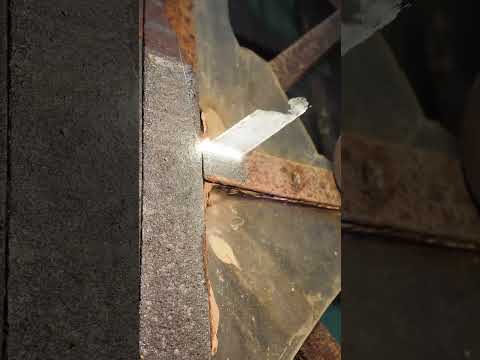

Video


Taking mold release and oil off thermoplastic elastomer with a pulsed laser works when energy stays low enough that the rubbery face does not glaze or lose grip. Grade name and a scrap coupon beside other soft polymers decide the live map. Dust capture stays on. Metal settings are the wrong starting point on this stock.
Before the first pulse on thermoplastic elastomer, name the grade family because SEBS soft-touch, TPU, TPV, and TPO parts do not share one energy map. Soft elastomer stock melts near a quarter joule per square centimeter, so treat metal-class recipes as off-limits until a scrap coupon proves soil lift inside roughly 0.10 to 0.20 joules per square centimeter. Stage dust capture for polymer particulate before production overlap runs (Micro-texturing of polymer surfaces using lasers (Bratasz 2022)).
Thermoplastic elastomer sits between rubbery soft phases and polypropylene hard phases on the same polymer chart. Rubber often needs a wider ablation band on carbon-filled stock, while polypropylene is more transparent at 1064 nanometers and cleans through thermal decomposition rather than strong absorption. TPE usually absorbs more near-infrared energy than clear polypropylene, so copied polypropylene maps can melt a soft grip face. See rubber laser cleaning and polypropylene laser cleaning for the peer routes (IR.
Dry thermoplastic elastomer cleaning can throw polymer particulate and decomposition fume that need source capture at the beam head. Federal particulate tables and regional visible-emission rules still apply to booth exhaust on Bay Area jobs, so hood placement belongs in setup rather than after production overlap starts. Treat capture as part of the cell design before continuous soft-touch cleaning.
Usually no. Mold release and oil often need a lighter first pass than bare soft-touch cleanup, and one shared metal-class setting tends to glaze the elastomer before the film is gone. Strip the foreign layer first inside the low cleaning band, then finish the face only if the grade still accepts texture. Polymer ablation notes already warn that heated polymer surfaces can release volatiles once thermal decomposition starts (IR and UV laser ablation of polymers.
Among polymer peers on this chart, thermoplastic elastomer carries one of the tightest margins between film removal and melt onset. Useful cleaning often sits near 0.10 to 0.20 joules per square centimeter while gloss change and melt risk rise near 0.25 to 0.28 joules per square centimeter. That band is narrower than common rubber and polypropylene ablation ranges on the same group chart, so coupon proof matters before continuous overlap (Tavily research: Thermoplastic Elastomer (TPE)) (Z-Beam entity — thermoplastic-elastomer).
Cleaning parameters for thermoplastic elastomer split foreign-layer removal from bare soft-touch finish work. Run mold release or oil first near 0.10 to 0.20 joules per square centimeter, then stop before the 0.25 to 0.28 joule melt band. One shared setting meant for rubber grit or polypropylene sheet usually leaves glaze on SEBS grips before the film is gone (Tavily research: Thermoplastic Elastomer (TPE)).
Thermoplastic elastomer facts on this chart cover melt-processable soft grades used for grips, seals, and overmolded faces where tensile strength runs about 2 to 20 megapascals and thermal conductivity sits near 0.2 watts per meter-kelvin. Near-infrared absorption often runs about 60 to 87 percent at 1064 nanometers. That absorption pattern helps explain melt onset before bulk ablation on many filled grades (Tavily research: Thermoplastic Elastomer (TPE)) (MatWeb material property data).
| Parameter | Value |
|---|---|
| Canonical substrate | Thermoplastic elastomer (TPE) |
| Tensile strength | 2–20 MPa |
| Thermal conductivity | 0.2 W/m·K |
| Damage onset (1064 nm) | 0.25–0.28 J/cm² |
| Typical wavelength | 1064 nm, pulsed |
Thermoplastic elastomer cleaning fails when crews copy metal or clear-polypropylene maps onto soft grades. Energy past about 0.25 joules per square centimeter can gloss or melt the face before soil is gone. Missing dust capture adds crew exposure during overlap scans on grips and seals (Sage MST 2025 nanosecond laser review) (Tavily research: Thermoplastic Elastomer (TPE)).
| Condition | Consequence |
|---|---|
| Grade ignored across SEBS, TPU, TPV, or TPO[1] | Wrong absorption and wrong acceptance test for the soft phase |
| Metal-class energy copied onto soft TPE[1] | Gloss change, melt beads, or texture loss on grip and seal faces |
| No source capture for polymer particulate[1] | Crew exposure to dust and decomposition products during overlap scans |
Laser work on thermoplastic elastomer can loft polymer dust and soft-phase decomposition products that need source capture before production coupons run. Federal OSHA Table Z-1 frames air-contaminant limits for shop particulate, ANSI Z136.1 covers laser safe-use controls at the work cell, and BAAQMD Regulation 6 still limits visible emissions from booth exhaust on Bay Area jobs (OSHA Table Z-1) (ANSI Z136.1 Safe Use of Lasers) (BAAQMD Regulation 6 particulate matter).

OSHA Table Z-1 frames particulate and air-contaminant limits that apply when laser heating thermoplastic elastomer throws polymer dust into the breathing zone.[1]

ANSI Z136.1 sets safe-use controls for Class 4 laser cleaning cells, including eyewear, interlocks, and beam-path management around soft polymer parts.[2]

Regulation 6 limits visible emissions from industrial plumes, so outdoor elastomer restoration or booth exhaust must stay inside Ringelmann No. 1 opacity during continuous cleaning.[3]

Pulsed fiber laser cleaning removes cured rubber flash, mold release residue, and sulfur bloom from [rubber](/materials/rubber-laser-cleaning) compression mold cavities without abrasive media contacting the [chrome-plated tool steel](/materials/tool-steel-laser-cleaning) surface. Fluence stays inside a narrow band, roughly 8.5-15.3 J/cm² for sulfur contaminants, because pushing past the clean threshold thins chrome plating and drifts cavity dimensions outside RMA A2 tolerance. The beam only reaches line-of-sight surfaces, so closed spring-vent channels and sealed micro-vents in the 0.03-0.10 mm range stay outside its reach and still need mechanical vent-pin service. Shops pair laser passes with [mold and die maintenance](/applications/mold-die-laser-cleaning-applications) schedules to catch sulfur dioxide and hydrogen sulfide off-gassing at the source rather than after cure-residue buildup fails inspection.

Laser cleaning removes polymer residue, release-agent film, and light oxidation from injection mold cavities and cores without abrasive blasting or solvent soak that can round vent edges or scar a polished finish. The method suits [tool steel](/materials/tool-steel-laser-cleaning) cavities and cores where mold release and carbon buildup need to come off between runs, and it fits the broader class of [mold and die cleaning](/applications/mold-die-laser-cleaning-applications) work where dimensional tolerances matter more than speed. It does not replace deep hot-runner tip service, which lives on the separate [hot-runner cleaning](/applications/hot-runner-laser-cleaning) page, and it does not treat die-cast aluminum tooling, since that metal responds differently to the same fluence. Downtime gains from switching to laser cleaning depend on mold complexity, residue type, and current cleaning method, so any comparison against manual teardown needs mold-specific timing rather than a blanket figure.

Laser cleaning strips mold release residue, surface rust, and carbonized flash from mold and die tooling without the media blasting that rounds vent edges or drives abrasive grit into a cavity. OSHA Table Z-1 caps total dust at 15 milligrams per cubic meter, and Cal/OSHA Title 8 CCR Section 5155 sets the same airborne limit for California shops, so a low-dust process matters on enclosed tooling where a vacuum extractor cannot reach every corner. Most of this work lands on [tool steel](/materials/tool-steel-laser-cleaning) cavities and cores, the alloy behind most [injection mold tooling](/applications/injection-mold-tooling-laser-cleaning) and [rubber compression molds](/applications/rubber-compression-mold-laser-cleaning), where a single mold commonly costs more than $100,000 and is expected to shape over a million parts before it retires. A cleaning pass restores a vent, a cooling channel, or a parting line to bare metal so the mold keeps running to that count. Laser cleaning does not re-cut a worn cavity, restore a chipped parting line, or replace scheduled repolishing on a Class A finish, and it does not fix vent clogging caused by mechanical wear rather than residue buildup.

Automotive and EV production lines use pulsed fiber lasers to strip mill scale from stamped [steel](/materials/steel-laser-cleaning) body panels, clear weld-seam oxide ahead of resistance spot welding, and remove mold-release residue from cast [aluminum](/materials/aluminum-laser-cleaning) housings before adhesive bonding. On battery packs, the same process cleans busbar and terminal surfaces, as covered on the [EV battery busbar cleaning](/applications/ev-battery-busbar-laser-cleaning) page, so welds meet conductivity specs without media contamination. It does not replace chemical passivation baths for corrosion-resistant fastener coatings, deep paint stripping on multi-layer OEM finishes where undercoating risk is high, or bulk descaling of thick castings that still need mechanical grinding first. [Weld-seam preparation](/applications/weld-prep-laser-cleaning-applications) covers pre-weld oxide removal, while post-weld heat-tint removal on [stainless steel](/materials/stainless-steel-laser-cleaning) exhaust components runs on a separate parameter set.

Shop grease and oil sit on [steel](/materials/steel-laser-cleaning) and [aluminum](/materials/aluminum-laser-cleaning) as films that soak into surface roughness, then come off under pulsed light as heat breaks the hydrocarbon apart at the metal. What matters is leftover film that blocks a weld or a coat, smoke from the burned oil, and proving a water-break land on scrap before the production part. A wet degrease line is the other path this job replaces.

Cured paint and powder films leave [steel](/materials/steel-laser-cleaning) and [aluminum](/materials/aluminum-laser-cleaning) hosts once a pulsed beam reaches the pigment's own breakdown point instead of chasing the metal or wood underneath. What matters is naming the pigment chemistry before the pass, capturing lead- or chromate-bearing dust the moment it forms, and proving the exact setting on a labeled coupon rather than trusting one universal recipe. A shop that skips either the chemistry check or the coupon walk risks leftover binder on one host or a scorched surface on the next.

Release-agent film, mold residue, and thin resin skin come off [CFRP tools and parts](/materials/carbon-fiber-reinforced-polymer-laser-cleaning) under a pulsed pass so an adhesive bond land can wet properly. The job only works when energy stays below the point that frays fiber or cuts into the laminate, so a bond land proven on scrap first, extraction on the resin fume, and stopping once the film is gone matter more than chasing a bare-fiber look.

Vulcanized gasket film left on a bolted [steel](/materials/steel-laser-cleaning) or [stainless steel](/materials/stainless-steel-laser-cleaning) flange chars under a pulsed beam instead of melting back into a liquid, and the leftover film sits thickest in the serration roots a scraper never reaches. What decides the job is identifying whether the gasket is a fluoroelastomer before energy goes on, since FKM and Viton release hydrogen fluoride once heated past a threshold temperature, and proving the setting on a spare coupon before the production flange sees the beam. A face left too rough or too smooth for the replacement gasket style still leaks at the next hydrotest even after the old rubber is gone.