



OSHA
View official documentation (opens in new tab)Table Z-1 frames permissible exposure limits for air contaminants when mahogany laser cleaning lifts respirable hardwood dust into the booth air.[1]
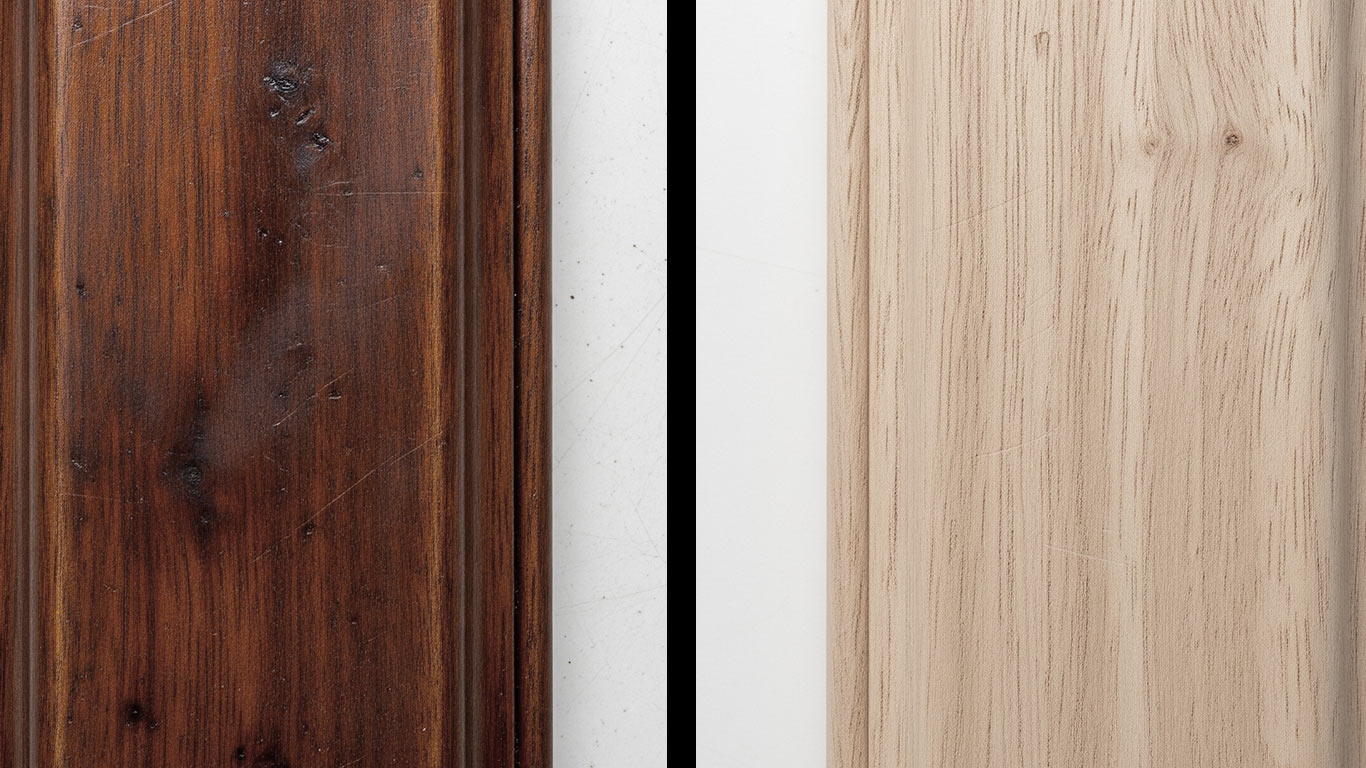

Old varnish removes cleanly from this hardwood species without bleaching the finish the way thinner settings do on cherry's furniture-grade boards. Mahogany's tight, resin-rich grain governs how cleaning sequences on a scrap coupon first, since interlocked pores char if pulses stack too fast on a full panel. The work reliably strips marine growth, old lacquer, and surface grime, but it cannot restore the deep reddish tone that bleaching removes. See oak, cherry, and maple for how fellow hardwoods take the same settings differently.
| Final results | Paint, grease and oil, fire char, and hard coatings are off the face or the veneer, and the veneer stays full thickness. |
| Speed and ease | The laser clears the coating without the 15-to-20-minute stripper dwell the legacy clean needs. |
| Contaminants | Paint, grease and oil, soot, and a hard coating. |
| Methods | A chemical stripper here normally has to be reapplied and scraped more than once before the old film is fully off. |
| Challenges | The same grain-raising, residue-leaving risk applies on this porous wood, hurting the new finish's adhesion and look. |
Charted mahogany production work sits between about 1.5 and 4.0 joules per square centimeter on 1064 nm nanosecond fiber gear. Scrap coupons must stay inside that band before furniture stock sees a production pass (Laser Cleaning: Fundamentals and Applications, Feng Song & Xuechun Lin). Heritage wood programs still treat that same band as scrap-proven rather than assumed from metal recipes (Laser cleaning in the conservation of archaeological artifacts: Polychrome wooden objects from ancient Egypt).
Furniture-grade mahogany needs a written species call before any production pass, because Swietenia stock, Khaya substitutes, and stained softwoods do not share one safe energy range. Stage hardwood dust capture at the beam head, then raise joules per square centimeter on scrap until soil or finish comes off without scorch. Compare peers such as maple laser cleaning and oak laser cleaning only after the substrate note matches. Coating-removal reviews still expect that scrap discipline before production (Research Progress and Challenges in Laser-Controlled Coating Removal).
Mahogany absorbs a large share of 1064 nm energy and conducts heat poorly so the irradiated zone stays hot longer than on denser hardwoods. Cleaning onset for shellac-class layers on wood often lands near 1.0 to 1.8 J/cm² on scrap while darker grain hides early scorch (The use of lasers for the removal of shellac from wood). Heritage wood cleaning studies still treat that low-conductivity grain as easy to overheat if the scrap map is skipped (An integrated approach to the conservation of a wooden sculpture representing Saint Joseph by the workshop of Ignaz Günther (1727–1775): Analysis, laser cleaning and 3D documentation).
Mahogany jobs break when crews skip the species call, push metal-grade energy onto a hardwood face, or run without dust capture. Scorch hides in dark grain until the surface powders, and wrong-class settings leave permanent color shift. Coating-strip studies still show substrate damage when energy overshoots the foreign-layer map (Laser stripping of functional coatings on glass fiber reinforced plastic substrate, Applied Optics, 2022).
Hardwood dust from mahogany laser cleaning must stay under federal shop limits and Bay Area particulate rules. Stage source capture before scrap passes, because a room fan does not meet OSHA Table Z-1 air-contaminant framing or BAAQMD Regulation 6 particulate definitions (OSHA Table Z-1) (BAAQMD Regulation 6, Particulate Matter).[2]
Table Z-1 frames permissible exposure limits for air contaminants when mahogany laser cleaning lifts respirable hardwood dust into the booth air.[1]

Regulation 6 particulate definitions apply when captured mahogany dust and smoke leave the booth as a process emission rather than only an indoor hygiene issue.[2]
Hardwood mahogany stock used for laser cleaning carries charted density near 560 kilograms per cubic meter and tensile strength around 96.5 megapascals. Thermal conductivity near 0.15 watts per meter-kelvin and light absorption near 0.62 explain why small energy steps matter on furniture faces that heritage wood projects already treat as dust-sensitive stock (Laser cleaning applied in the restoration of a medieval wooden sculpture) (OSHA Wood Dust Hazards).
| Parameter | Value |
|---|---|
| Canonical substrate | Wood (general — hardwood or softwood) |
| Density | 560 kg/m³ |
| Tensile strength | 96.5 MPa |
| Thermal conductivity | 0.15 W/m·K |
| Absorptivity (charted) | 0.62 |
| Primary damage band | 1.5–4.0 J/cm² |
Furniture and millwork take laser cleaning when the species is confirmed and finishes are proven on scrap first. That scrap map keeps 1064 nm pulsed energy inside a hardwood-safe range so varnish or soil can come off without sanding the carved face.
Trade names hide look-alike hardwoods and stained softwoods that char at different energies. Those look-alikes can share color with Swietenia while needing a different scrap map, so the species note belongs on the traveler before production furniture sees the beam.
Mahogany sits with other hardwoods rather than softwoods on density and heat flow. That hardwood peer class still needs its own scrap proof, because dark grain can hide early scorch that lighter maple faces show sooner.
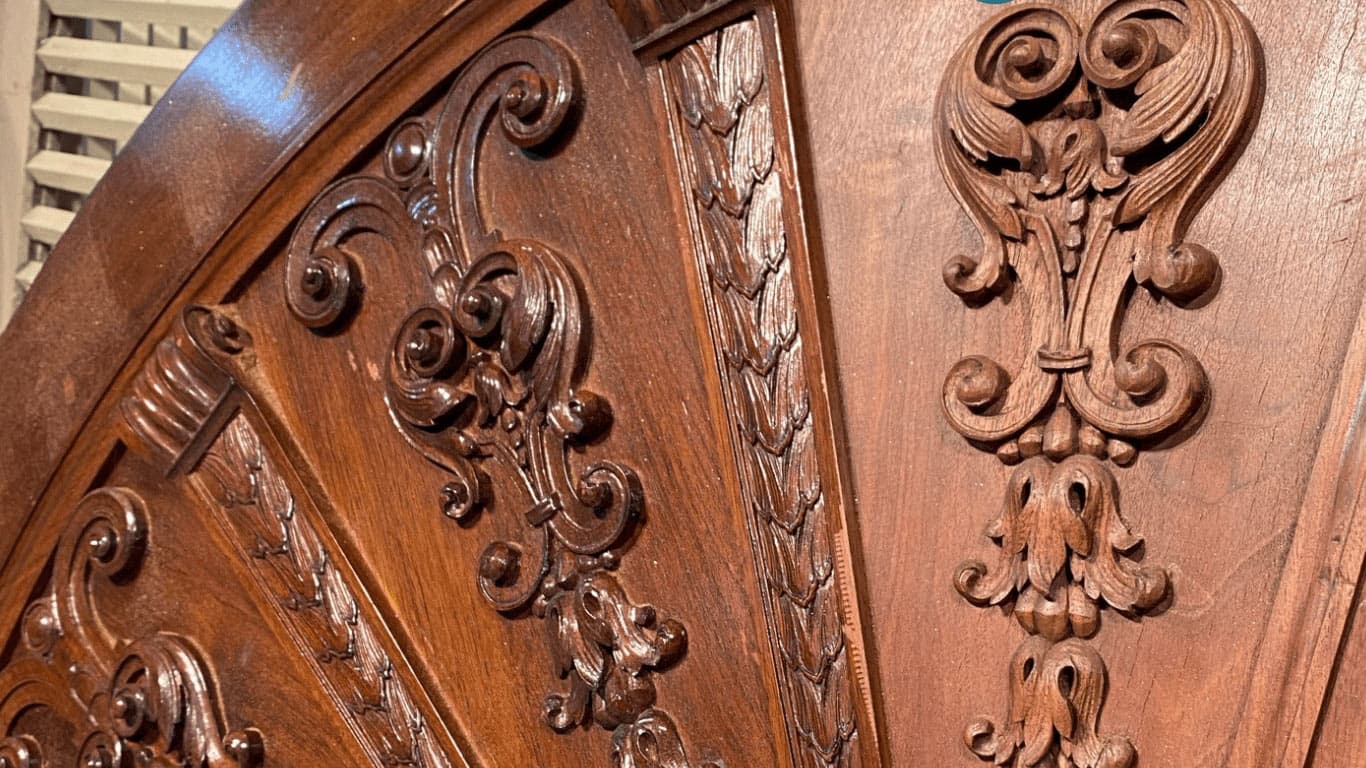
Landmark facade work requires a hidden test patch before pulsed laser cleaning touches any visible elevation. The pass removes soot, pollution crust, and graffiti from [brick](/materials/brick-laser-cleaning) and [limestone](/materials/limestone-laser-cleaning) without the abrasive contact that rounds tooling marks, and it suits [historic masonry](/applications/historic-masonry-restoration-laser-cleaning) jobs that have to stay the gentlest means that still meets the cleaning goal. It will not replace repointing, structural repair, or treatment for deep-rooted growth, and it will not strip [lead paint](/applications/lead-paint-laser-removal-bay-area) from ornamental iron in one pass without a separate low-energy setting and a capture plan. Wet, crumbling, or gilded surfaces stay off the schedule until a conservator says the fabric can take the work.
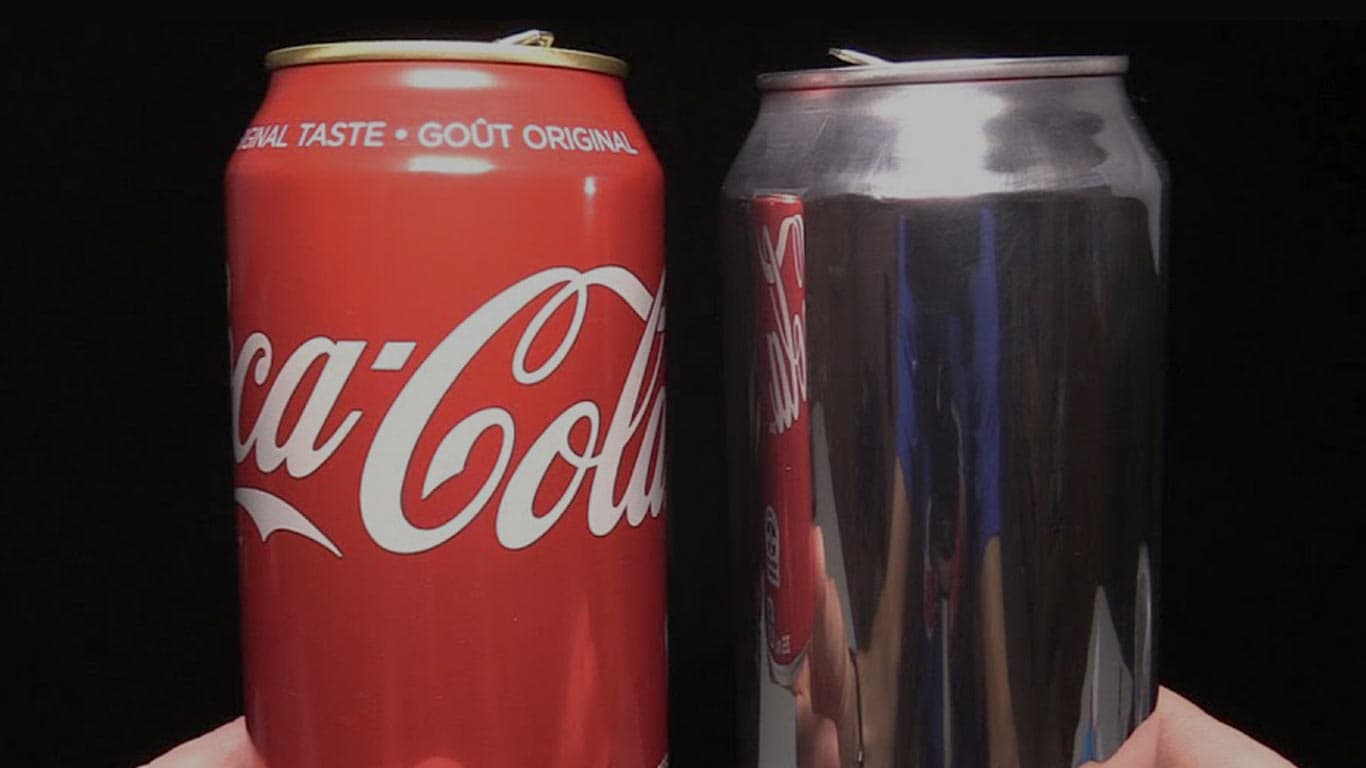
A Bay Area body shop stripping failed epoxy or polyurethane before recoat runs into a VOC cap near 50 grams per liter on solvent surface prep and spray-line cleanup, and older methylene-chloride paint strippers are barred from sale to industrial users after state toxics regulators listed the chemical as a priority product. A pulsed near-infrared laser removes the coating layer through thermal stress rather than solvent action, so shops can strip [aluminum](/materials/aluminum-laser-cleaning) panels and [steel](/materials/steel-laser-cleaning) frames without touching that VOC limit or generating stripped-paint waste. The exception is thick marine-grade epoxy built up over several coats, where repeated passes near rivets and seams can discolor the substrate unless the operator drops pulse energy and adds a cooling pause between rows. Shops already running [rust](/applications/laser-rust-removal-bay-area) or [lead paint](/applications/lead-paint-laser-removal-bay-area) removal on the same line can cover all three [paint coating](/contaminants/paint-coatings-laser-cleaning#substrateMatrix) jobs from one machine instead of separate chemical-stripping stations.
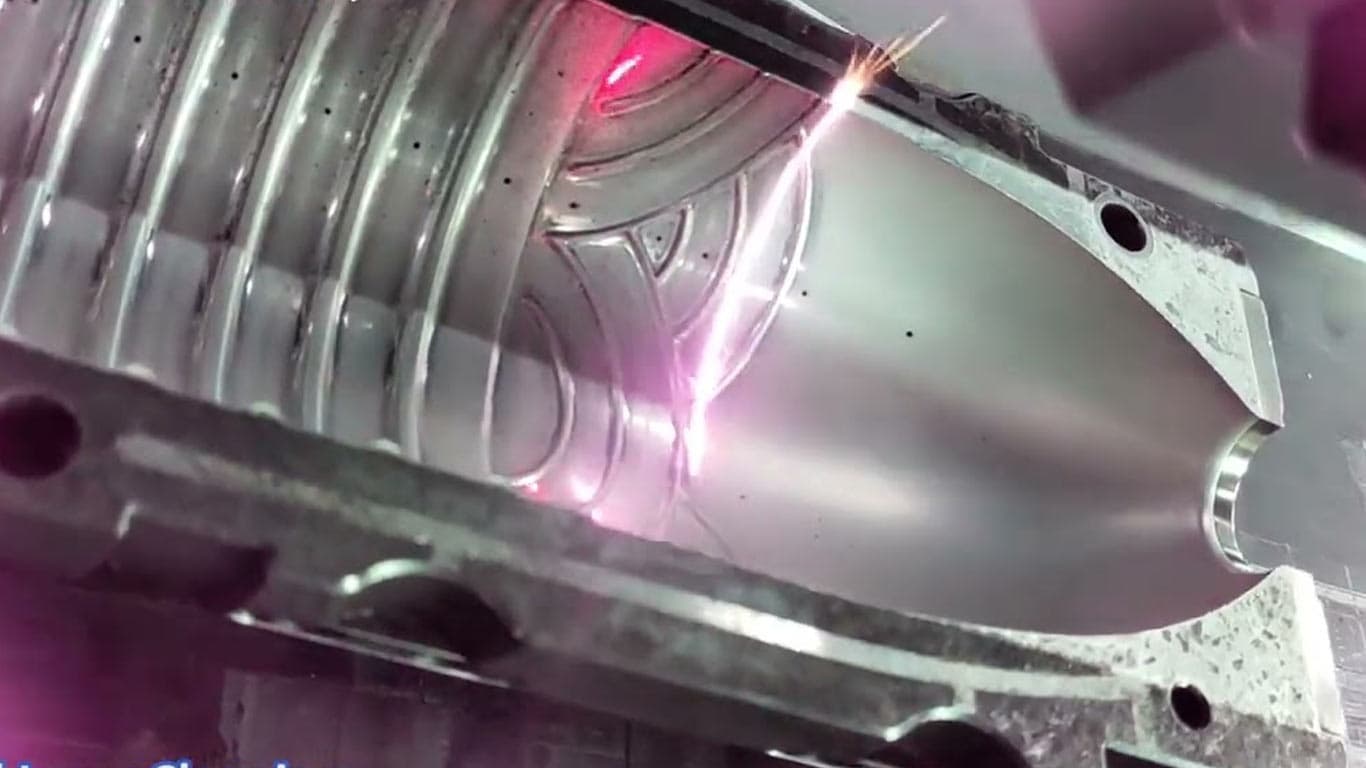
Precision surface work requires contact-free cleaning because gauge faces, optical flats, and polished tooling scratch under abrasive pads or chemical baths. Pulsed fiber sources remove fingerprint films, particulates, and thin oxide from these finishes without touching the substrate, but a continuous-wave fiber laser is not treated as a safe default here until a peer-reviewed study backs that claim. Semiconductor wafer chambers keep their own class-rated rules on [semiconductor cleanroom tooling laser cleaning](/applications/semiconductor-cleanroom-tooling-laser-cleaning), and release-layer mold work belongs on [mold and die laser cleaning](/applications/mold-die-laser-cleaning-applications) rather than here. Titanium implants and [stainless steel](/materials/stainless-steel-laser-cleaning) precision parts each need a shop-tested cleaning limit, since no single particulate count works across every polished substrate.
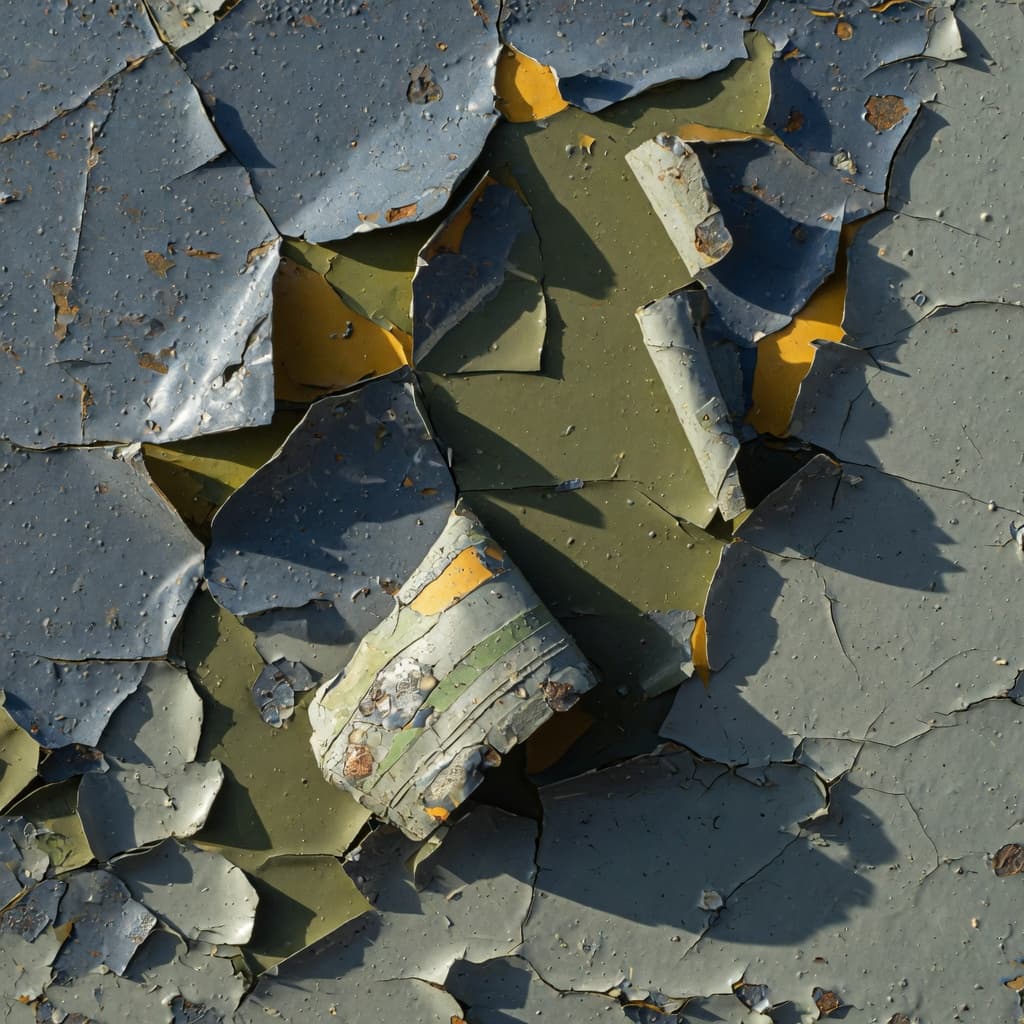
Requires matching the paint system and substrate pairing before setting energy, because a thin single topcoat on [steel](/materials/steel-laser-cleaning) clears at a fraction of the fluence a multilayer primer stack on [aluminum](/materials/aluminum-laser-cleaning) needs, and the substrate sets its own ceiling once the coating is gone. Paint sits as an applied, cross-linked polymer film bonded by mechanical keying and resin adhesion, not a corrosion product, so pigment load and binder chemistry decide more of the setting than the substrate alone. A surface-integrity study on laser-cleaned aluminum alloy carrying a paint layer documents that a visually bare finish does not by itself confirm the metal underneath escaped the pass undamaged (Applied Optics, 2024).
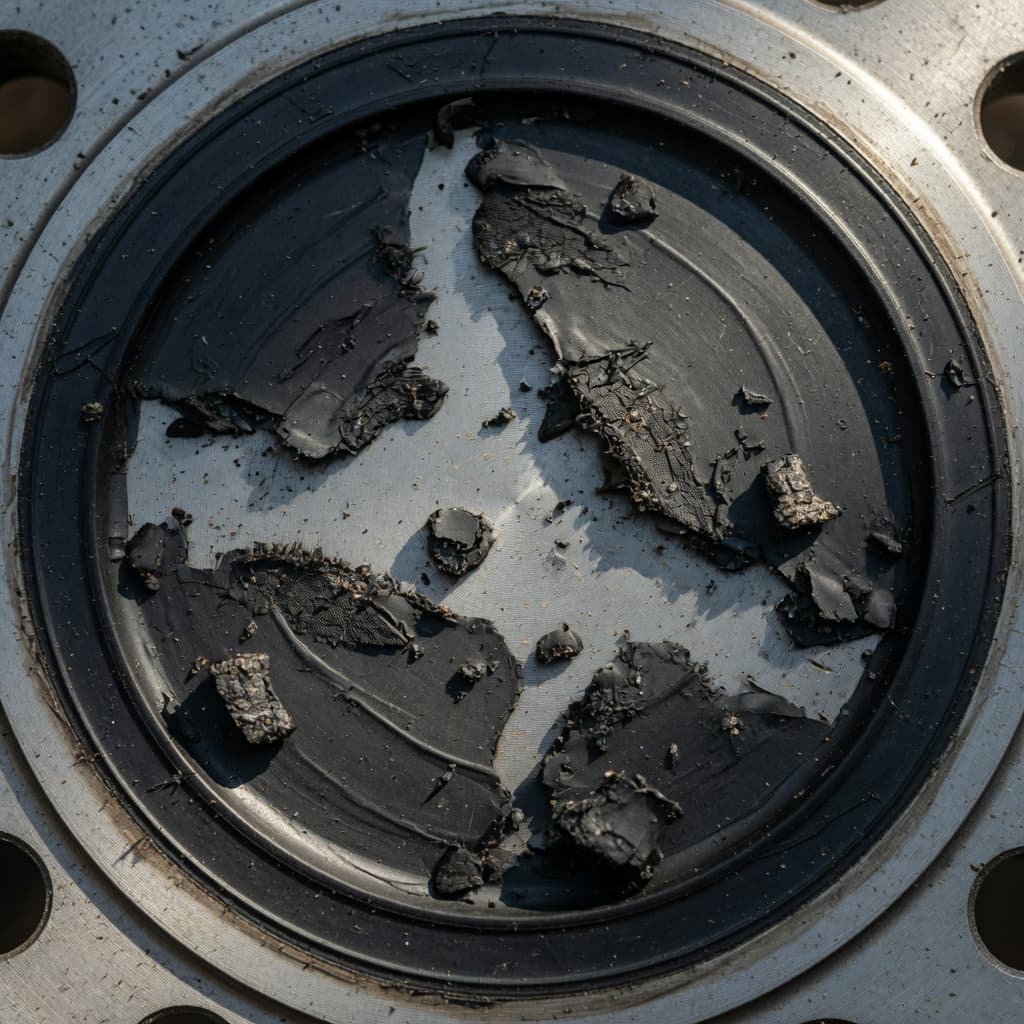
Laser cleaning decomposes mineral oil, synthetic lubricant, and machine grease off steel, aluminum, and stainless steel through fast thermal breakdown of the hydrocarbon film, the same damage-threshold logic that broader laser-cleaning threshold research has documented across very different host materials (Journal of Cultural Heritage, 2000). It is not a substitute for a wet alkaline line degreasing a full rack of parts at once, and it will not clear a bonded hard coating or a thick paint stack sitting on top of the oil.
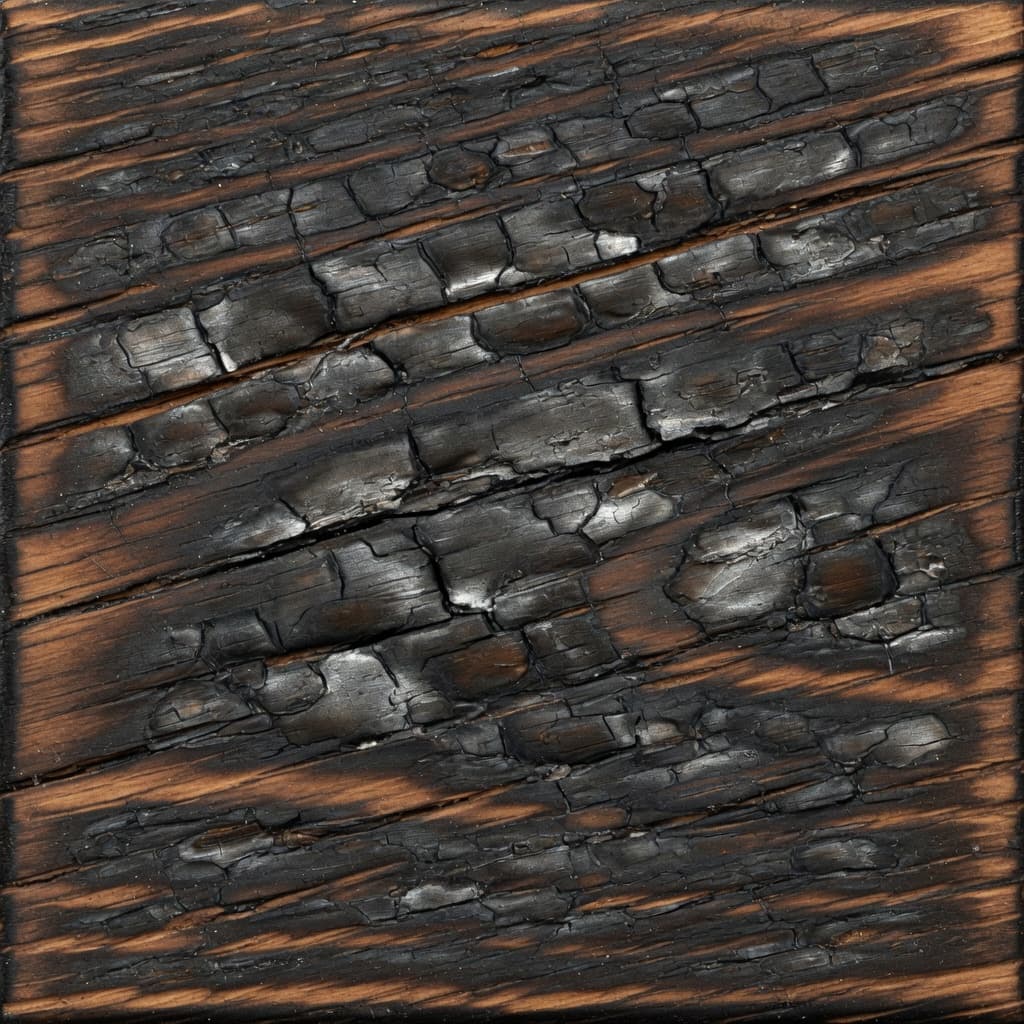
Loose soot and bonded char leave brick, concrete, and painted exterior trim under a dry pulsed near-infrared pass that replaces water, chemical sponges, and grit. Burned drywall paper and timber that already lost structural backing stay outside this page, and any wood still needs a scrap coupon before production settings.
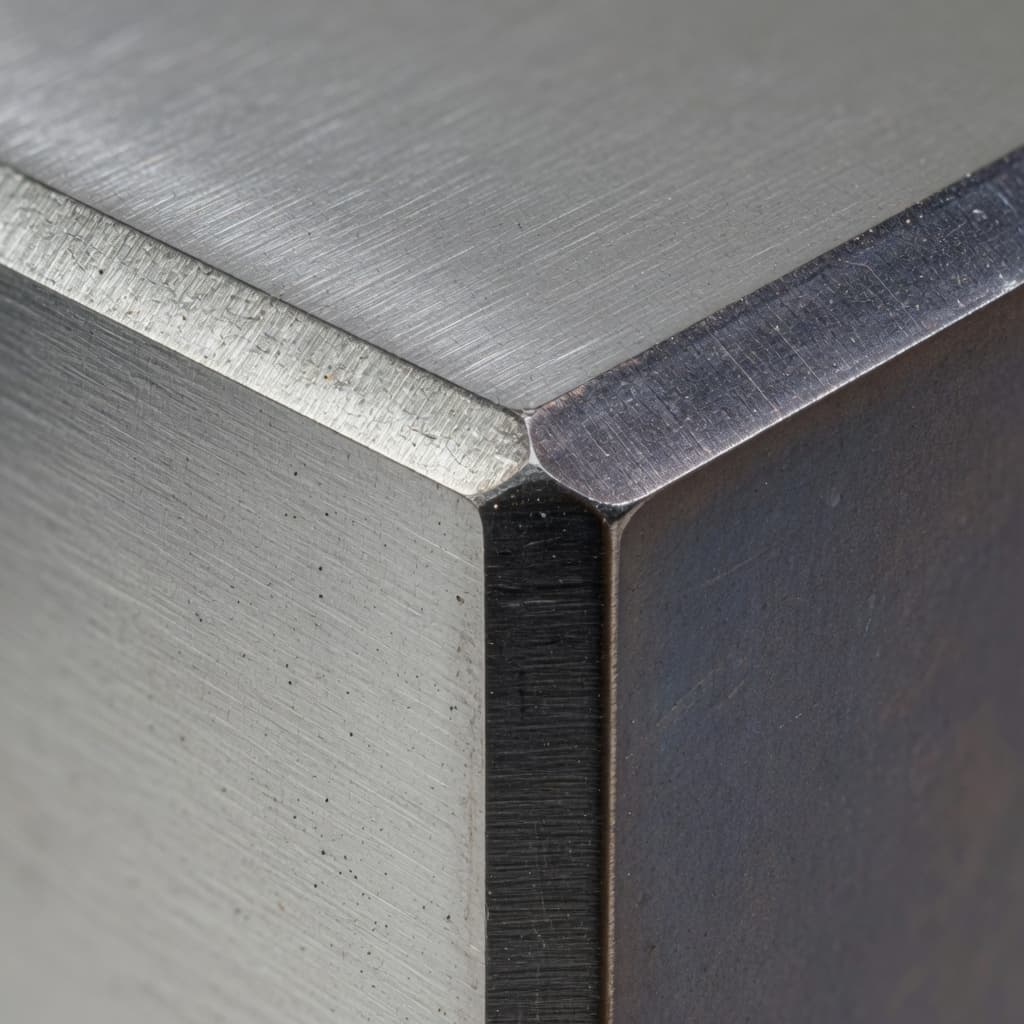
A pulsed fiber laser strips PVD and CVD hard coatings, CrN, TiN, TiAlN, CrTiAlN, and DLC, from tool steel and cemented carbide without a hot alkaline bath or media blast, and the same beam clears Type III hardcoat anodize from aluminum. Removal fluence is coating and substrate specific, not a single fleet number, and a separate study clearing titanium oxide needed its own coupon-proven band near 5 to 7 J/cm², with residue remaining below it and cracking above it, the same chemistry-and-substrate sensitivity a hard-coating strip job has to respect before running a full tool through the cell.

