

FDA
FDA 21 CFR 1040.10 - Laser Product Performance Standards


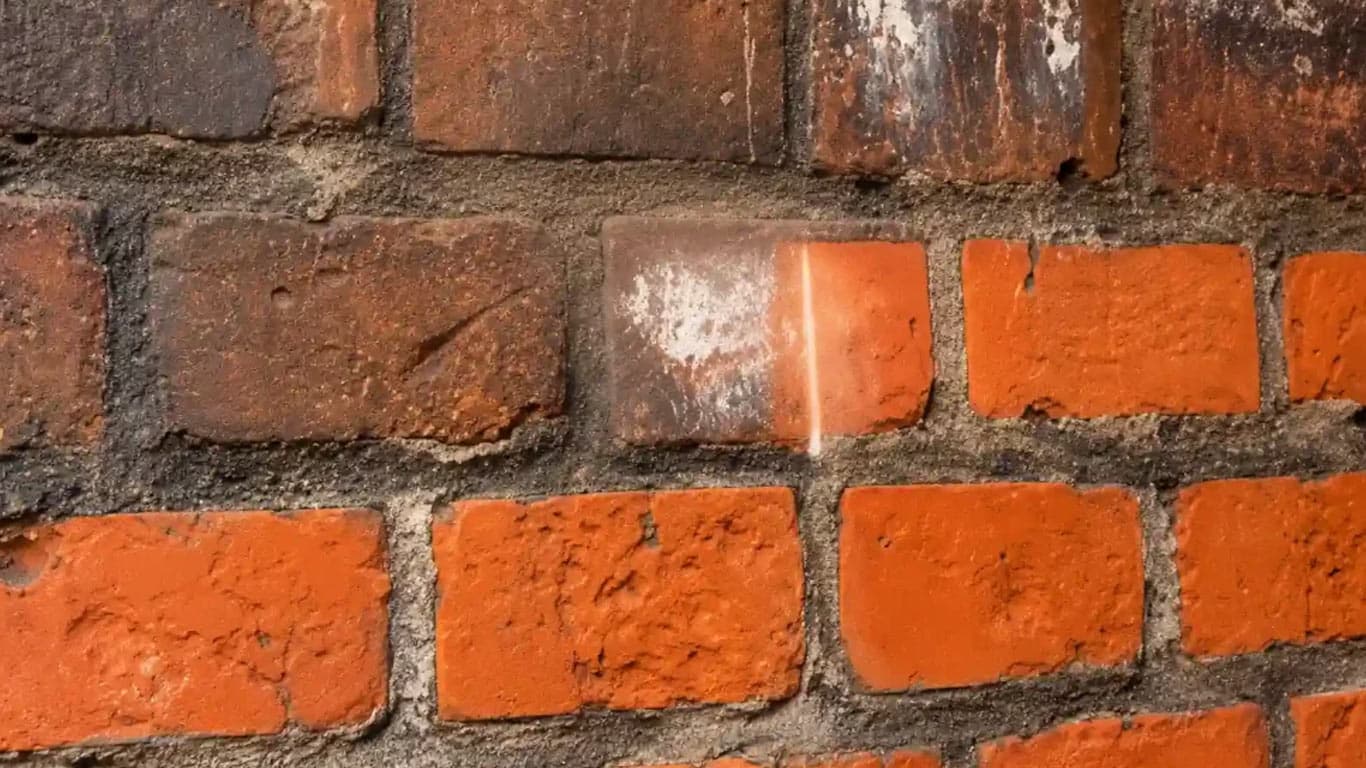
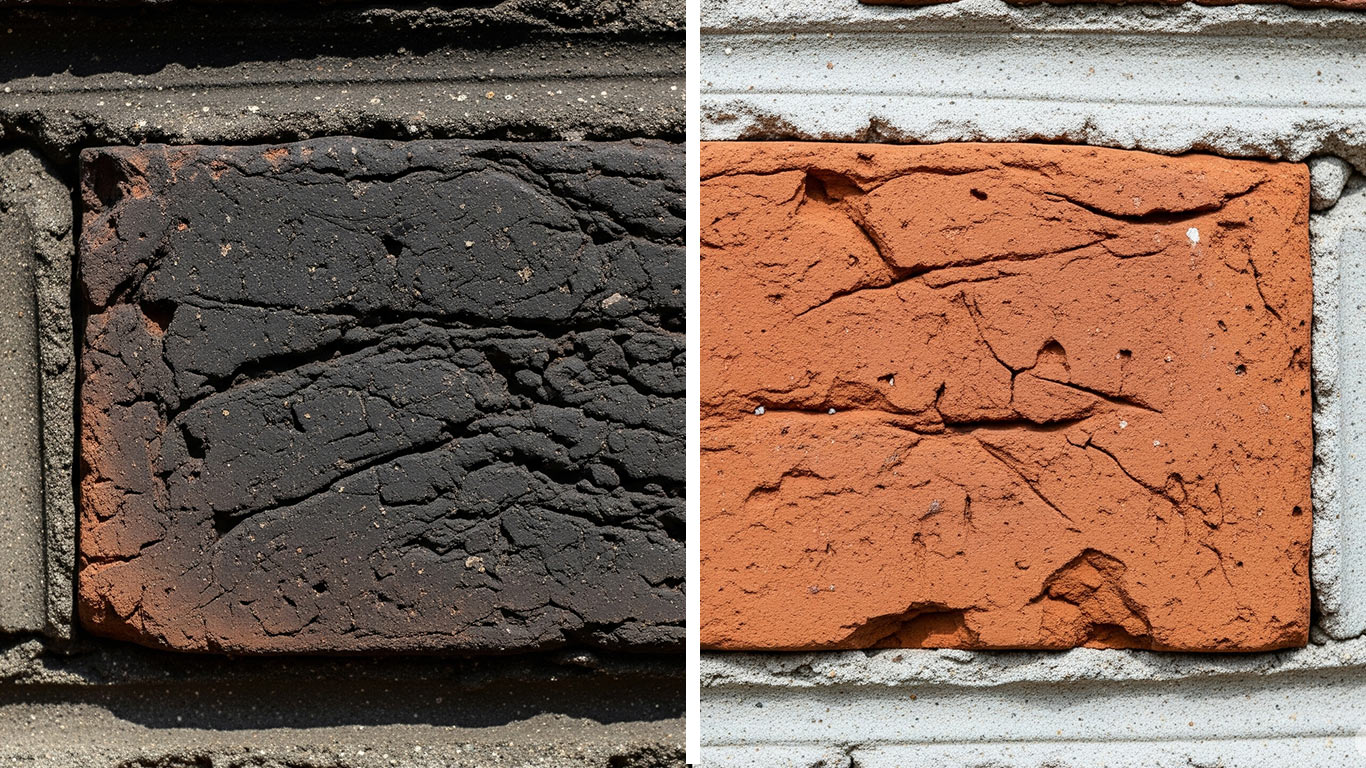
Laser cleaning mortar at 100 W, 50 kHz, 1500 mm/s cleaning speed, 50% overlap, and 2 passes removes biological growth, carbonation crust, and atmospheric soiling from Portland cement and lime-based mortars. Mortar composition varies significantly by era: pre-1920 Bay Area lime-based mortars (compressive strength 2–5 MPa) require energy level below 0.5 J/cm² to avoid joint gouging; post-1950 Portland cement mortars (15–25 MPa) tolerate up to 2.0 J/cm² without surface damage.
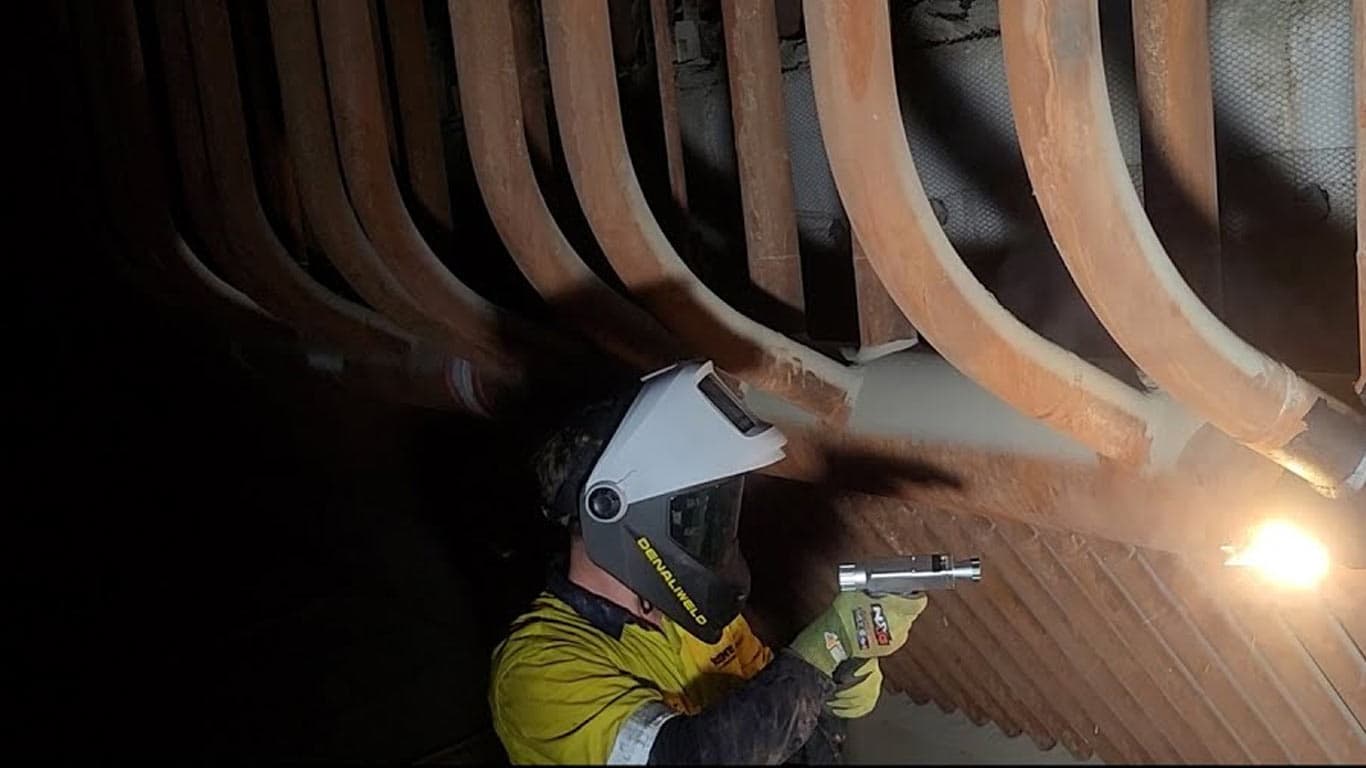
Mortar dust contains crystalline silica (from sand) – a known carcinogen (OSHA Permissible exposure limit (PEL): 50 µg/m³). OSHA confirms respirable crystalline silica is created when crushing or grinding stone, concrete, brick, and mortar (OSHA 2024). Use HEPA extraction (H13 or H14) and P100 respirators. NIOSH confirms materials including mortar generate silica dust during cutting and grinding activities (NIOSH 2024). OSHA notes silicosis from silica exposure can be disabling or fatal (OSHA Health 2024). Wear nitrile gloves and long sleeves. Follow ANSI Z136.1 for laser safety and OSHA 29 CFR 1926.95 for PPE. Laser eyewear requires OD 5+ for 1064 nm. For lime mortar, the dust is alkaline – can cause skin burns. Use chemical-resistant gloves.

FDA 21 CFR 1040.10 - Laser Product Performance Standards

ANSI Z136.1 - Safe Use of Lasers

IEC 60825 - Safety of Laser Products

OSHA 29 CFR 1926.95 - Personal Protective Equipment
Confined-space mortar cleaning requires continuous air monitoring because respirable crystalline silica generated from Portland cement mortar is regulated at a 50 µg/m³ Time-weighted average (TWA) PEL under OSHA 29 CFR 1910.1053 — and in still-air enclosures that limit drops to near zero. A P100 respirator is the minimum; a powered air-purifying respirator (PAPR) is recommended for jobs lasting more than 30 minutes. Ventilation with HEPA filtration must be set up at the work face before cleaning begins, and the confined-space entry permit must document the silica monitoring plan.
Pre-1920 lime-based mortar cleans at 0.8 J/cm² with three passes at 1064 nm — that is the energy ceiling before binder breakdown begins in aged lime joints (Schiavon et al., Applied Surface Science, 2000). Post-1950 Portland cement mortar tolerates up to 1.0 J/cm² for two passes because its compressive strength of 15–25 MPa versus lime mortar's 2–5 MPa gives a wider working range. Cleaning speed stays at 1,500 mm/s with 50% overlap on both types; reducing speed at joint transitions risks exceeding the lime threshold even when the surrounding stone parameters are within range.
Calibrating to 0.8–2.0 J/cm² removes carbon deposits from mortar without marking, pitting, or chemically altering the surface below — unlike acid washing, which lowers mortar pH and can dissolve calcium silicate hydrates. Parts are checked visually and tactilely after cleaning to confirm the surface is undamaged. No abrasive contact and no chemical exposure means dimensional tolerances and surface finish are preserved.
Laser cleaning removes mortar layers up to 3–5 mm thick at 0.5–2 m²/hour, with maximum depth and throughput determined by pulse energy, repetition rate, and mortar composition — Portland cement mortars clean faster than lime-based historical mortars. Our team uses ASTM C97 absorption measurements on reference samples to assess mortar porosity before selecting parameters; highly porous historical mortars require gentler, multi-pass cleaning to avoid spalling at grain boundaries. Layers thicker than 5 mm typically require multiple passes at incrementally increased energy level rather than single-pass high-energy treatment, which risks sub-surface thermal damage.
Respirable crystalline silica from mortar dust is the controlling contaminant — Cal/OSHA Title 8 §1532.1 sets the PEL at 0.025 mg/m³ TWA for the quartz fraction, which is more protective than the federal OSHA standard of 50 µg/m³ under 29 CFR 1910.1053. Portland cement mortar contains 15–30% free crystalline silica; lime mortar contains less but is not silica-free. HEPA extraction rated to H13 or H14 and a P100 respirator are required for all mortar cleaning, with air monitoring records maintained per OSHA 29 CFR 1910.1053 (OSHA 2024).
Ablation windows at 1064 nm that map to Mortar in the laser-parameters reference. Screening values from published literature — validate on coupons before production.
Surface soiling on Mortar / pointing: process-window ratio F_damage/F_th ≈ 2–16 (1064 nm literature).
Mortar is the most chemically variable material in masonry cleaning — lime mortars from pre-1920 Bay Area construction behave very differently than Portland cement joints added during 20th-century repointing, and getting the parameters wrong on either one risks spalling the joint or etching the binder out from between the aggregate. At 28% absorption of 1064 nm energy, mortar is relatively low-absorption, which means the laser relies on the contaminant layer absorbing preferentially rather than bulk heating the surface.
Mortar joint contamination — soot, biological growth, and carbonation crust — clears at 1.1 J/cm² with two passes at 100 W, 50 kHz, and 1,500 mm/s, while the 0.2 J/cm² process window between cleaning onset (1.05 J/cm²) and binder breakdown (1.3 J/cm²) makes parameter discipline the central challenge. At 1.3 J/cm², the binder dissolves and sand grains become loose — the mortar reverts to unconsolidated material. For historic lime mortar, the window tightens further: use 0.7 J/cm² and 3 passes to stay clear of binder failure. For Portland cement mortar on brick buildings, 0.8–0.9 J/cm² accommodates the brick's higher 2.5 J/cm² threshold without stressing the joint. Z-Beam applies the same system to Bluestone surfaces.
Traditional lime-based mortar (calcium hydroxide with sand aggregate, 70/30 ratio), room temperature (25°C), 1064 nm Nd:YAG laser, 10 ns pulse length, atmospheric pressure
Lime mortar and Portland cement mortar clean at different energy levels — treating both identically risks spalling the joint or leaving contamination behind. Density is 2.16 g/cm³. Compressive strength is 5.2 MPa – much lower than concrete (25 MPa). Tensile strength is only 2.1 MPa – mortar cracks easily. Porosity is 15-25% – very high. Thermal conductivity is 0.72 W/m·K – low. Damage threshold is 1.05 J/cm² (published research). The window is 0.2 J/cm² – very narrow. At 1.1 J/cm², you clean. At 1.3 J/cm², the surface spalls. For lime mortar (historic buildings), use 0.8 J/cm², 3 passes. For Portland cement mortar (modern), use 1.0 J/cm², 2 passes.
Portland cement mortar (standard mix: 1:3 cement:sand ratio, aged 28 days), 20°C, 1064 nm Nd:YAG laser, measured via optical microscopy and profilometry
| Parameter | Value |
|---|---|
| Cleaning fluence range | 1.5–6.0 J/cm² (±±0.2 J/cm²) |
| Damage threshold | 6.0 J/cm² |
| Operating point (Z-Beam) | 4.8 J/cm² (20% below ceiling) |
| Cal/OSHA particulate PEL | 5 mg/m³ TWA |
| Condition | Consequence |
|---|---|
| Post-cleaning exposure to humidityHard stop | Efflorescence (calcium carbonate salts) may re-deposit |
| Ablation of Portland [cement](/materials/masonry/general/cement-laser-cleaning) matrix or silica aggregateHard stop | Respirable crystalline silica generated — OSHA §1910.1053 applies |
| Contaminant | BAAQMD Permit |
|---|---|
| Mineral Particulate (laser Ablation Dust) | Not required |
Netalux Kamino 300, 1064nm fiber, 100ns pulse
| Surface Condition | Floor (J/cm²) | Ceiling (J/cm²) | Window (J/cm²) | Safety % |
|---|---|---|---|---|
| Light surface contamination (soot, biological) | 1.5 | 6 | 4.5 | 20% |
| Moderate contamination (paint, heavy biological) | 2.3 | 6 | 3.7 | 20% |
"Respirable crystalline silica...is created when cutting, sawing, grinding, drilling, and crushing stone, rock, concrete, brick, block, and mortar."
"Materials can include sand, concrete, brick, block, stone, and mortar."
"Breathing crystalline silica dust can cause silicosis, which in severe cases can be disabling, or even fatal."
Portland cement mortar (standard mix: 1:3 cement:sand ratio, aged 28 days), 20°C, 1064 nm Nd:YAG laser, measured via optical microscopy and profilometry
Traditional lime-based mortar (calcium hydroxide with sand aggregate, 70/30 ratio), room temperature (25°C), 1064 nm Nd:YAG laser, 10 ns pulse length, atmospheric pressure
…Hands down, this was one of the most effective tools I've ever used for a restoration project, and one that delivered real savings in both time and effort.