


ANSI
ANSI Z136.1 - Safe Use of Lasers
…Owner showed us how to use the laser in about 30 minutes.


Walnut laser cleaning delivers the widest process window of common furniture hardwoods — a 3.68 J/cm² gap between the cleaning threshold (1.12 J/cm²) and the damage ceiling (4.8 J/cm², per Vazquez et al. 2015), which is why walnut tolerates minor parameter variation better than maple or cherry. Density is 610 kg/m³, compressive strength 52.2 MPa, and Janka hardness 4494 N (Wood Database).
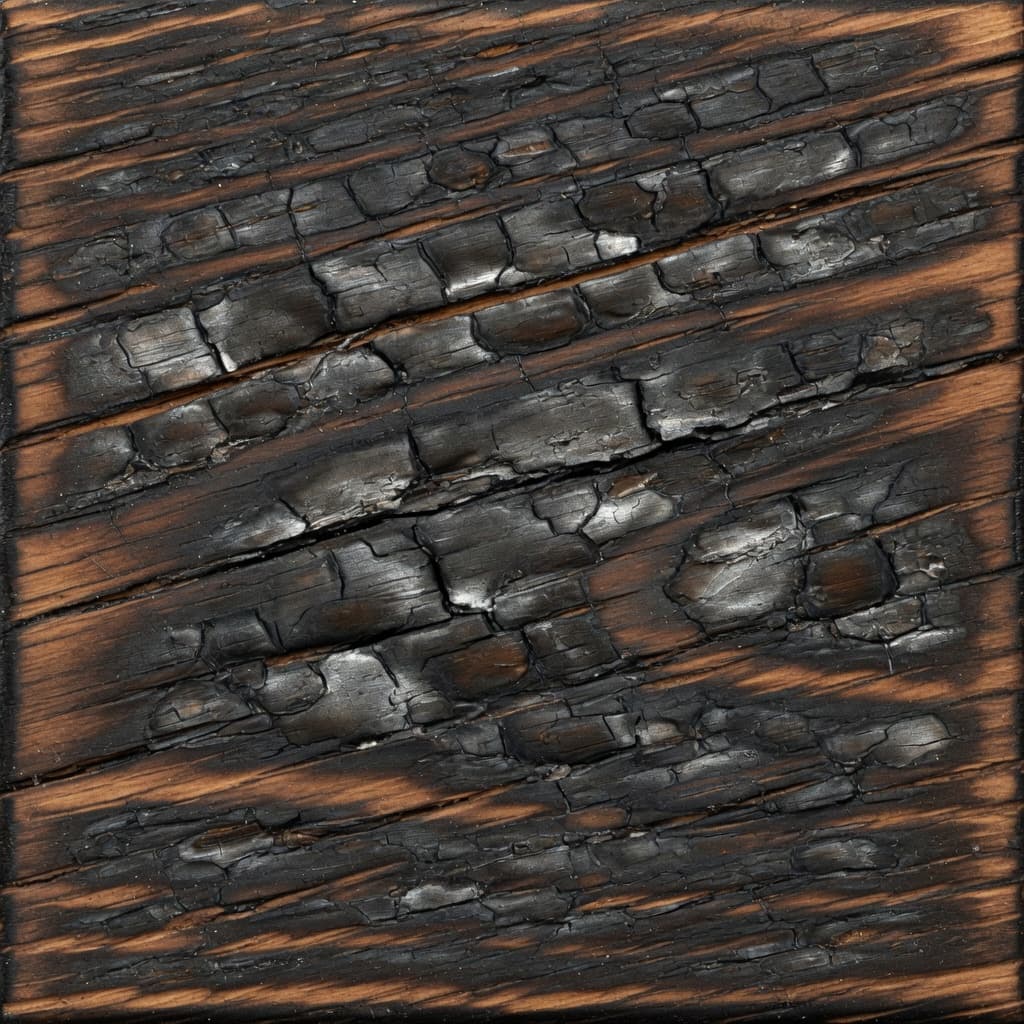
Laser cleaning walnut produces fine wood dust and volatile organic compounds. Use ventilation with HEPA and activated carbon filtration per OSHA Wood Dust guidelines. Walnut absorbs about 85% of 1064 nm energy, so backscatter is low. Standard laser safety eyewear for 1064 nm is required. The primary hazard is surface charring above 1.12 J/cm². Dark color increases absorption. Monitor for any darkening or color lightening. Keep a fire extinguisher nearby. For antique walnut, consult a conservation specialist.
Walnut laser cleaning uses a Class 4 pulsed fiber laser — the class requiring formal operator authorization under ANSI Z136.9 (Safe Use of Lasers in Manufacturing Environments), which OSHA references for industrial laser operations. An employer-designated Laser Safety Officer sets approved operating parameters before any work begins. For walnut specifically, operators must be trained on color-change monitoring: any darkening or lightening during cleaning signals the energy level has crossed the 1.12 J/cm² damage threshold and the run must stop immediately. Charring is irreversible, which is why every walnut job requires a test patch on a hidden area before cleaning visible surfaces.
Walnut above 10% moisture content absorbs 15–25% more laser energy per pass than dry stock at the same energy level setting — pre-drying to below 10% MC is standard practice before laser cleaning. Moisture content should be below 10% before cleaning — pre-drying is standard practice for fresh or recently wetted wood. Dry wood absorbs laser energy more predictably, which means better control and fewer surprises. Walnut shells used as blasting media should be dried to below 5% for best results. Test moisture with a pin meter before starting any walnut job.
Pricing for furniture cleaning runs $20–100 per piece. Gunstock refinishing runs $30–80 per stock. Musical instrument cleaning runs $50–200 per instrument. Walnut's dark color means it absorbs laser energy more readily than light woods like maple, so it cleans faster on comparable jobs. Antique pieces require slower, more conservative passes — expect to add 30–50% to the cost estimate for antique walnut. All pricing confirmed after photo assessment.
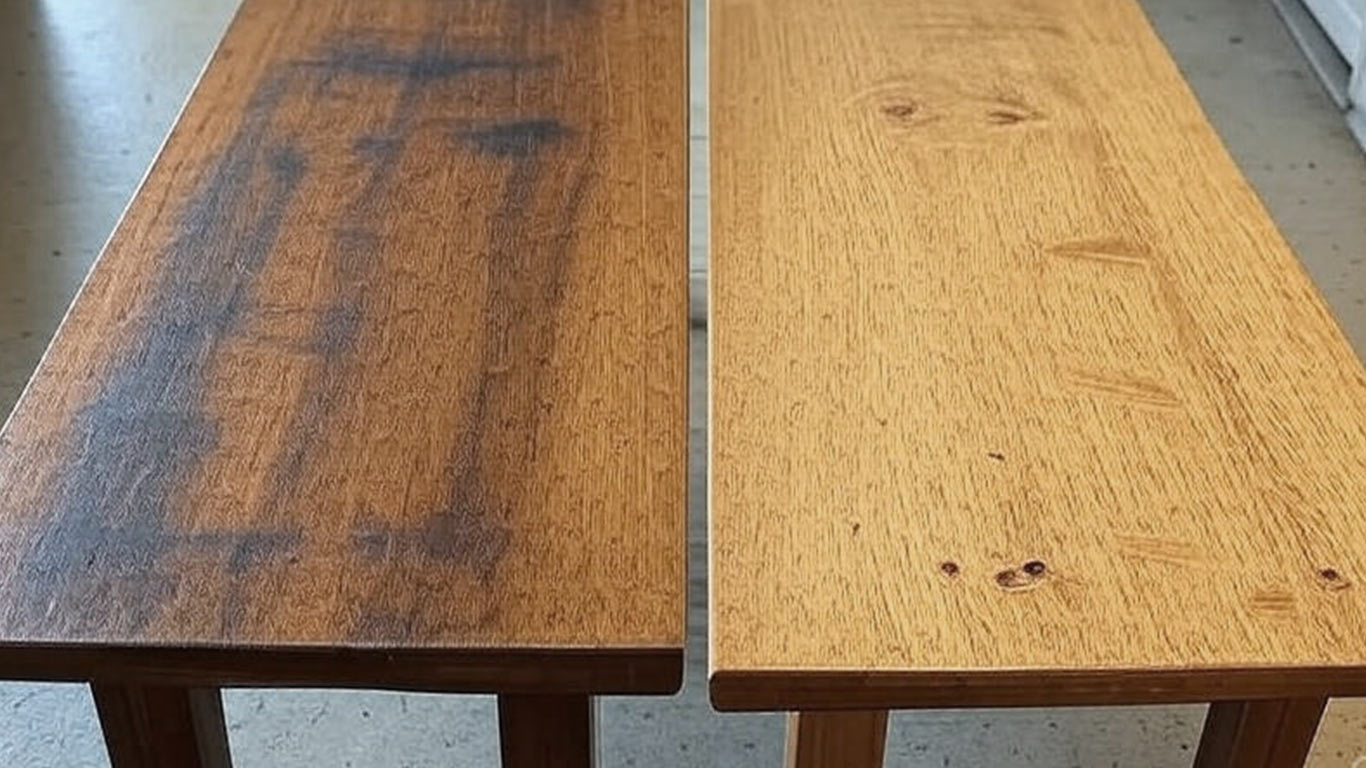
Ask the provider to confirm their operator holds a Laser Safety Officer designation under ANSI Z136.9 and that their equipment is calibrated below the 1.12 J/cm² damage threshold for color-sensitive walnut. Request before-and-after photos from a comparable job on the same species — not generic hardwood samples. A qualified provider starts every walnut job with a test on a hidden area and shows you the result before touching visible surfaces. For antique pieces, ask specifically what energy level they use: anything above 0.8 J/cm² on pre-1950 walnut carries elevated charring risk because historic stock is often drier and more porous than modern kiln-dried walnut.
Iron oxide fume from laser cleaning is regulated at 5 mg/m³ 8-hour TWA under Cal/OSHA Title 8 §5155, but on walnut jobs the stricter limit is wood dust at 1 mg/m³ TWA under the same section — IARC classifies hardwood dust including walnut as a Group 1 carcinogen. Both contaminants require ventilation with P100 filtration. Iron oxide arises on walnut when metal hardware or iron-containing finishes are cleaned alongside the wood surface. Air monitoring is required on initial setup to confirm exposures stay below both limits before production cleaning begins.
Start with energy level at 0.4-0.9 J/cm², below the 1.12 J/cm² damage threshold. Use 1064 nm wavelength with 30 ns pulse length. Scan at 1500 mm/s with 60% overlap. Frequency at 40 kHz. Spot size at 200 μm. Walnut has high porosity (63%) and dark color. Never exceed 1.0 J/cm². Ensure walnut is dry (moisture content <10%). Moisture causes steam spalling. Two passes at low energy level are safer than one pass near threshold. For antique walnut furniture, use 0.3-0.6 J/cm². Test on a hidden area first. Watch for surface charring or color lightening.
Walnut has a wide process window. The damage threshold is 1.12–4.8 J/cm². This 3.68 J/cm² range allows flexible parameter selection. Walnut absorbs about 85% of 1064 nm laser energy. Heat spread rate is 1.3×10⁻⁷ m²/s. Heat spreads very slowly. Dark color increases absorption. High porosity (63%) traps moisture. Moisture can cause steam spalling above 1.5 J/cm². Effective cleaning uses 0.6-1.0 J/cm². Never exceed 1.1 J/cm² for color-sensitive applications. For light contamination, use 0.4-0.7 J/cm². For heavy grime, use 0.7-1.0 J/cm².
Walnut's dark color works against it during laser cleaning — at 85% light absorption for 1064 nm energy, it heats faster than lighter hardwoods, and the damage threshold of 1.12 J/cm² can arrive quickly if parameters drift. The saving grace is a wide process window: the damage ceiling sits at 4.8 J/cm², giving 3.68 J/cm² of room compared to cherry's 1.68 J/cm².
Parameters derived from Walnut-family primary literature and Bay Area field conditions. Validate on representative samples before production use.
| Parameter | Value |
|---|---|
| Cleaning fluence range | 0.8–2.0 J/cm² (±±0.2 J/cm²) |
| Damage threshold | 4.5 J/cm² |
| Operating point (Z-Beam) | 3.6 J/cm² (20% below ceiling) |
| Cal/OSHA iron oxide PEL | 5 mg/m³ TWA |
| Condition | Consequence |
|---|---|
| Fluence above 4.5 J/cm²Hard stop | Charring/ablation of wood fiber — discoloration and surface removal |
| Contaminant | BAAQMD Permit |
|---|---|
| Iron Oxide | Not required |
| Wood Dust (walnut) | Not required |
Netalux Kamino 300, 1064nm fiber, 100ns pulse
| Surface Condition | Floor (J/cm²) | Ceiling (J/cm²) | Window (J/cm²) | Safety % |
|---|---|---|---|---|
| Light surface contamination | 0.8 | 4.5 | 3.7 | 20% |
| Moderate contamination / coating removal | 2 | 4.5 | 2.5 | 20% |
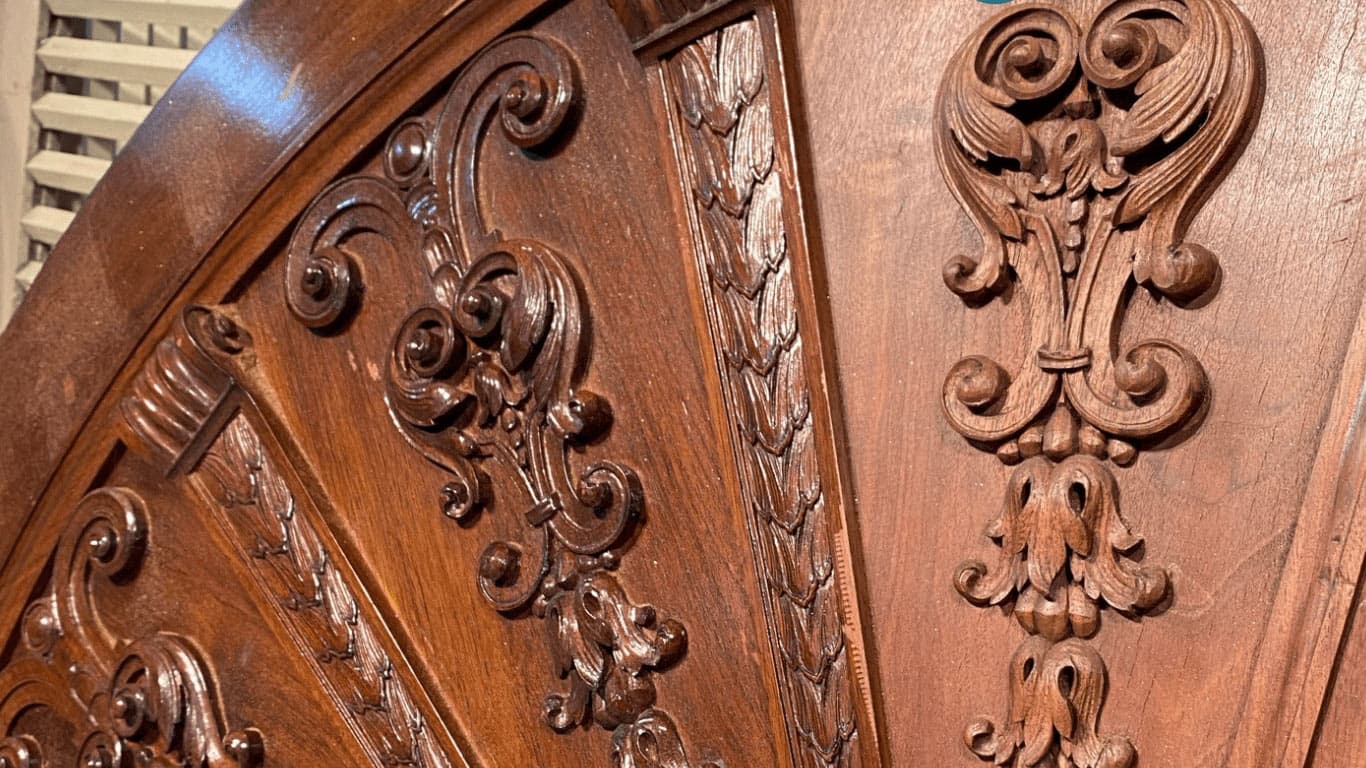
Walnut's combination of premium value and laser-sensitivity makes it a material where the cost of a mistake is high — which is exactly where antique restorers and instrument makers seek professional laser service rather than DIY. Bay Area fine furniture restoration studios working on 19th-century California black walnut pieces choose laser because it won't raise grain, bleach color, or leave chemical residue the way solvents or abrasives do. Gunstock finishers use laser to strip old oil and varnish without altering checkering geometry — the kind of antique-furniture varnish removal the PULSAR SHARK 100M, the gentlest-thermal-load handset in its line, is built for. Architectural millwork contractors cleaning walnut wainscoting and cabinetry in historic Peninsula homes benefit from the zero-contact process that keeps surrounding finishes intact.


…I would highly recommend Z-Beam to anyone facing a difficult restoration project.