



OSHA
View official documentation (opens in new tab)OSHA annotated Table Z-1 frames particulate exposure when dry laser cleaning of fiberglass raises silica and glass-fiber dust into the breathing zone.[1]
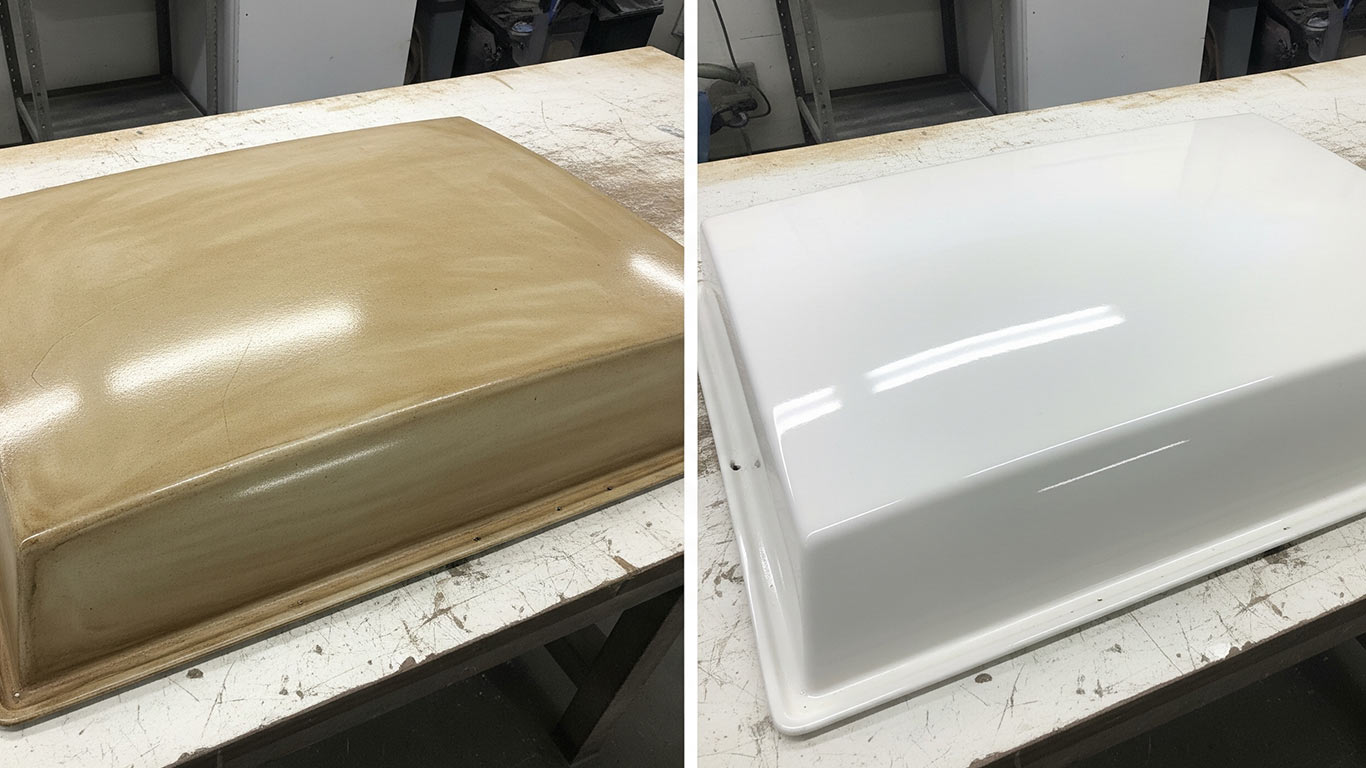

A single pass removes gelcoat from the resin surface without touching the glass fiber laminate underneath, provided power stays low enough to stop at that boundary. Old paint and antifouling residue sit on that same gelcoat skin, and mold release residue left over from layup responds to the same setting. Fiberglass runs a polyester or vinyl ester resin around glass fiber, so it needs different parameters than FRPU, built on a urethane matrix, or Kevlar, woven from aramid fiber. A test coupon on scrap laminate confirms the setting clears gelcoat before it reaches fiber.
| Final results | Paint, manufacturing residue, grease and oil, and hard coatings are off the gelcoat, and the glass cloth stays covered. |
| Speed and ease | The duration is not known, but the laser clears the gelcoat damage without the legacy grinder work. |
| Contaminants | Paint, mold release, grease and oil, and a hard coating. |
| Methods | A grinder removes gelcoat along with the paint rather than lifting just the fouling or paint layer, so it can't selectively stop at the coating. |
| Challenges | Abrasive cleaners slowly wear through the gelcoat, the same way repeated abrasive passes wear through any paint layer. |
Charted fiberglass production work sits between about 2.0 and 5.0 joules per square centimeter on glass-fiber composite stock. That band is wider than the tight peer window on some carbon-fiber laminates, yet matrix damage can still start near 1.8 before fibers ablate near 2.7. Begin in the lower half and raise only after coupons stay clear of whitened fiber (Optics & Laser Technology 2024).
Start fiberglass work by naming the glass-fiber layup, resin class, and gelcoat or paint stack before any energy raise. Near-infrared pulses couple harder into the polymer matrix than into silica fibers, so a metal energy map can brown resin and leave white fiber early. Stage silica and fiber dust capture, coupon matching scrap, then freeze the map only when soil lifts without fiber show-through (Research Progress and Challenges in Laser-Controlled Coating Removal).
Glass-fiber composite jobs fail when metal energy maps land on gelcoat or bare laminate without a layup call. Missing silica and fiber dust capture lets particulate climb into the breathing zone on dry passes. Matrix browning and whitened fibers show the polymer failed before contamination cleared (Laser stripping of functional coatings on glass, Applied Optics 2022).
| Condition | Consequence |
|---|---|
| No local exhaust for silica and fiber dust[1] | Breathing-zone particulate and uncontrolled dry plume on the shop floor |
| Metal-class energy copied onto GFRP gelcoat[1] | Resin burn, whitened E-glass, or gelcoat craze before soil leaves |
| Cosmetic face treated with bonding-prep energy[1] | Permanent fiber show-through on appearance stock |
Dry fiberglass laser cleaning needs capture under named dust and emissions programs. Federal OSHA Table Z-1 frames particulate exposure when silica and glass-fiber dust enter the breathing zone. Bay Area Regulation 6 limits visible plume outside a controlled enclosure on dry composite jobs (OSHA Table Z-1; BAAQMD Regulation 6 particulate matter).[3]
OSHA annotated Table Z-1 frames particulate exposure when dry laser cleaning of fiberglass raises silica and glass-fiber dust into the breathing zone.[1]

Regulation 6 limits visible emissions when dry laser cleaning of fiberglass composite parts creates a plume outside a controlled enclosure.[2]

ANSI Z136.1 safe-use guidance still applies to every fiberglass laser cleaning cell for beam control and operator training even when dust rules sit under OSHA and air-district programs.[3]
Glass fiber reinforced polymer stock used for laser cleaning carries charted density near 1800 kilograms per cubic meter and tensile strength around 620 megapascals. Thermal conductivity near 0.3 watts per meter-kelvin keeps heat in the resin-rich face instead of shedding it like metal. Charted light absorption near 0.85 and a primary damage band of 2.0–5.0 joules per square centimeter set the starting envelope (MatWeb material property data).
| Parameter | Value |
|---|---|
| Canonical substrate | Fiberglass (GFRP — glass fiber reinforced polymer) |
| Density | 1800 kg/m³ |
| Tensile strength | 620 MPa |
| Thermal conductivity | 0.3 W/m·K |
| Absorptivity (charted) | 0.85 |
| Primary damage band | 2.0–5.0 J/cm² |
At 1064 nanometers, silica fibers transmit more of the pass while the epoxy or polyester matrix absorbs and heats. Charted damage sits in a primary 2.0–5.0 joules per square centimeter band, yet matrix injury can arrive near 1.8 before fibers ablate near 2.7. Whitened fiber is the usual signal that energy climbed too fast for the polymer (Optics & Laser Technology 2024).
Silica fibers stay relatively clear at 1064 nanometers while the polymer matrix absorbs more of the pass. Energy meant for steel can cook resin and expose white fiber before soil leaves. Coupon the same layup inside the charted band instead of copying a metal recipe.
It can. When matrix damage starts near about 1.8 joules per square centimeter and fiber cleaning sits near 2.7, resin can burn first and leave exposed E-glass. That may help bonding prep, but it is a fail for cosmetic gelcoat work. Inspect coupons under raking light before you raise energy.
Dry laser work can raise silica and glass-fiber particulate into the breathing zone. California Title 8 section 5155 still covers those airborne contaminants on shop floors. Use source capture and P100-class protection before the first production pass (Cal/OSHA Title 8 §5155 airborne contaminants).
IR nanosecond cleaning on glass-fiber composites can improve wettability and paint adhesion without embedding grit the way abrasive prep does. That helps coating redo on marine and industrial GFRP when you stay inside a validated energy band.
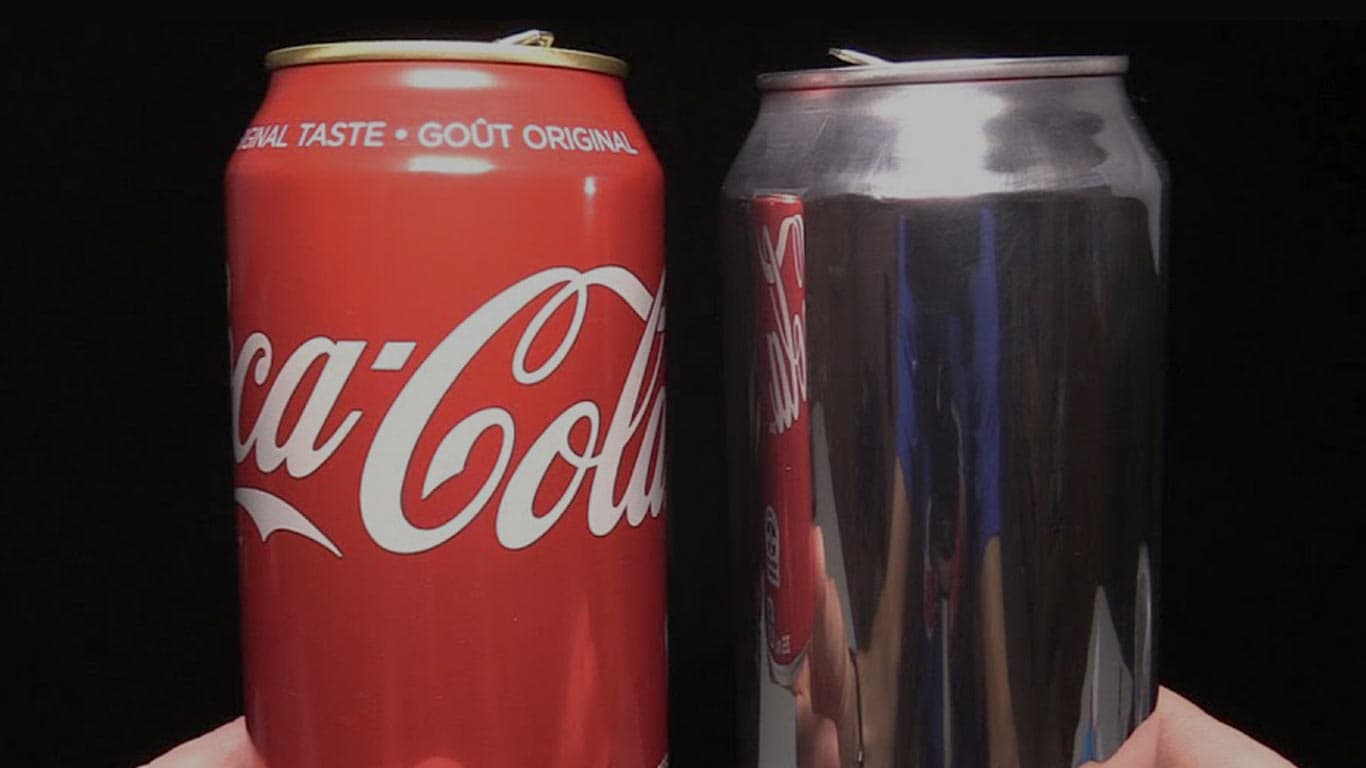
A Bay Area body shop stripping failed epoxy or polyurethane before recoat runs into a VOC cap near 50 grams per liter on solvent surface prep and spray-line cleanup, and older methylene-chloride paint strippers are barred from sale to industrial users after state toxics regulators listed the chemical as a priority product. A pulsed near-infrared laser removes the coating layer through thermal stress rather than solvent action, so shops can strip [aluminum](/materials/aluminum-laser-cleaning) panels and [steel](/materials/steel-laser-cleaning) frames without touching that VOC limit or generating stripped-paint waste. The exception is thick marine-grade epoxy built up over several coats, where repeated passes near rivets and seams can discolor the substrate unless the operator drops pulse energy and adds a cooling pause between rows. Shops already running [rust](/applications/laser-rust-removal-bay-area) or [lead paint](/applications/lead-paint-laser-removal-bay-area) removal on the same line can cover all three [paint coating](/contaminants/paint-coatings-laser-cleaning#substrateMatrix) jobs from one machine instead of separate chemical-stripping stations.
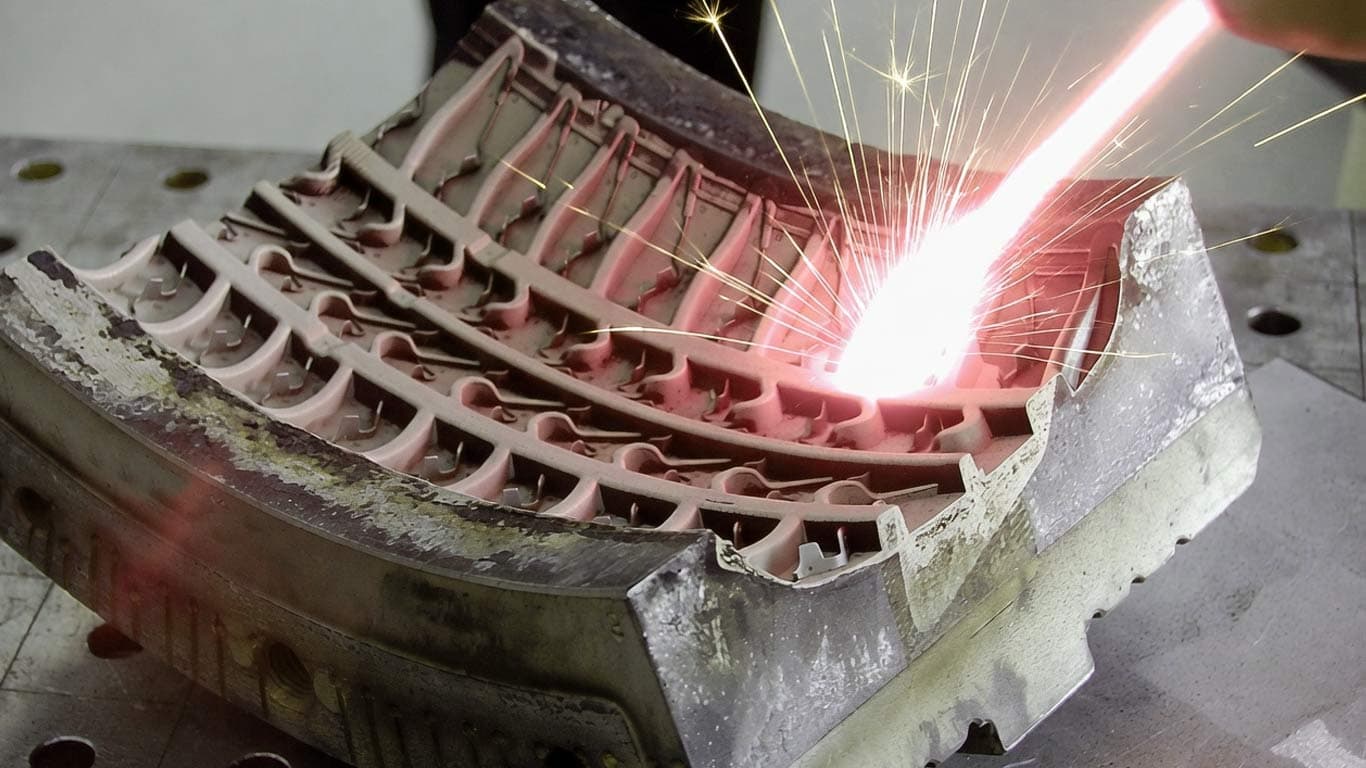
High-pressure die-casting tooling fails for a different reason than an [injection mold](/applications/injection-mold-tooling-laser-cleaning): molten [aluminum](/materials/aluminum-laser-cleaning) reacts with iron in [H13 cavity steel](/materials/tool-steel-laser-cleaning) to form a hard Fe-Al intermetallic layer that raises cavity roughness and locks a shot in place long before surface dirt alone would cause a reject. OSHA Table Z-1 caps total nuisance dust at 15 milligrams per cubic meter in an enclosed die-casting cell, and laser cleaning strips that intermetallic film and the carbonized release residue around it without the abrasive media that would raise roughness further. The process also leaves PVD and nitride anti-soldering coatings intact, where abrasive blasting cuts through them in one pass. It does not recoat a worn insert or re-cut a soldered cavity back to print dimensions.
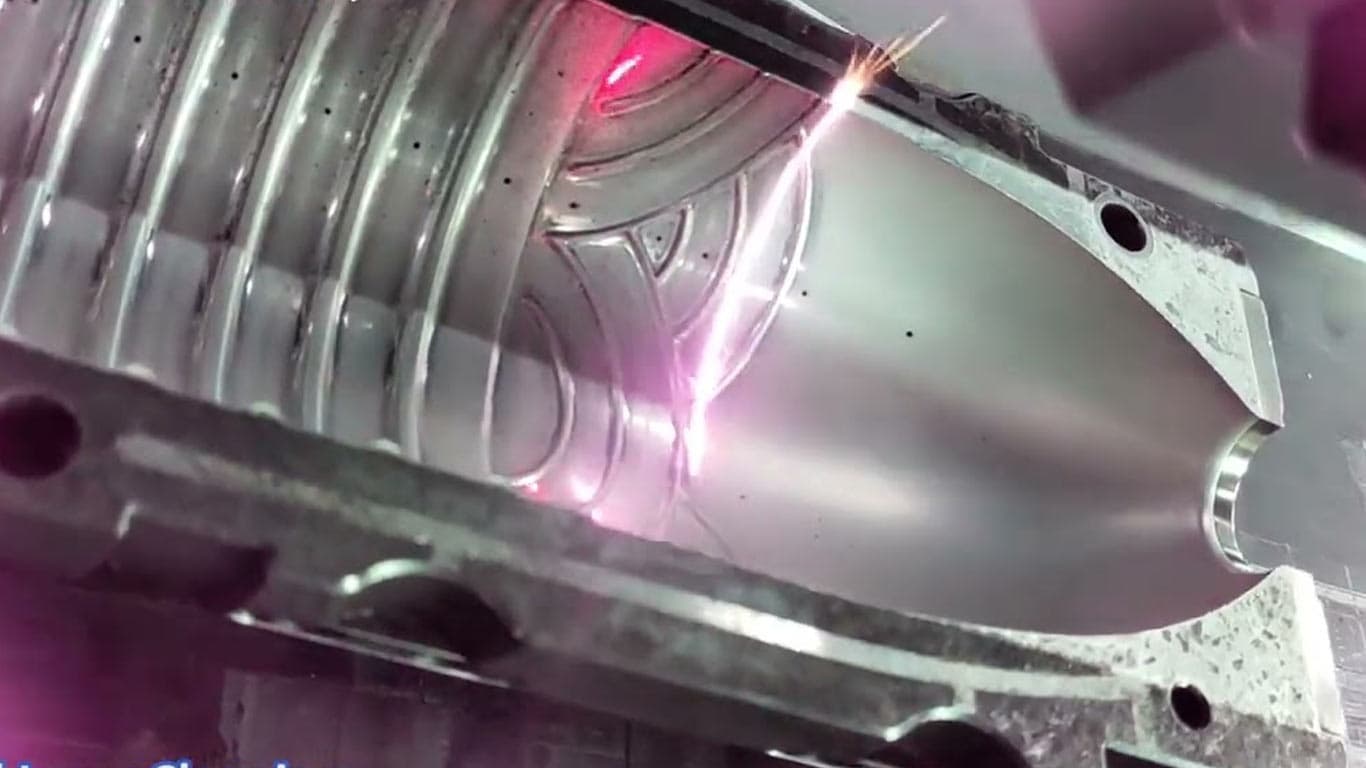
Precision surface work requires contact-free cleaning because gauge faces, optical flats, and polished tooling scratch under abrasive pads or chemical baths. Pulsed fiber sources remove fingerprint films, particulates, and thin oxide from these finishes without touching the substrate, but a continuous-wave fiber laser is not treated as a safe default here until a peer-reviewed study backs that claim. Semiconductor wafer chambers keep their own class-rated rules on [semiconductor cleanroom tooling laser cleaning](/applications/semiconductor-cleanroom-tooling-laser-cleaning), and release-layer mold work belongs on [mold and die laser cleaning](/applications/mold-die-laser-cleaning-applications) rather than here. Titanium implants and [stainless steel](/materials/stainless-steel-laser-cleaning) precision parts each need a shop-tested cleaning limit, since no single particulate count works across every polished substrate.
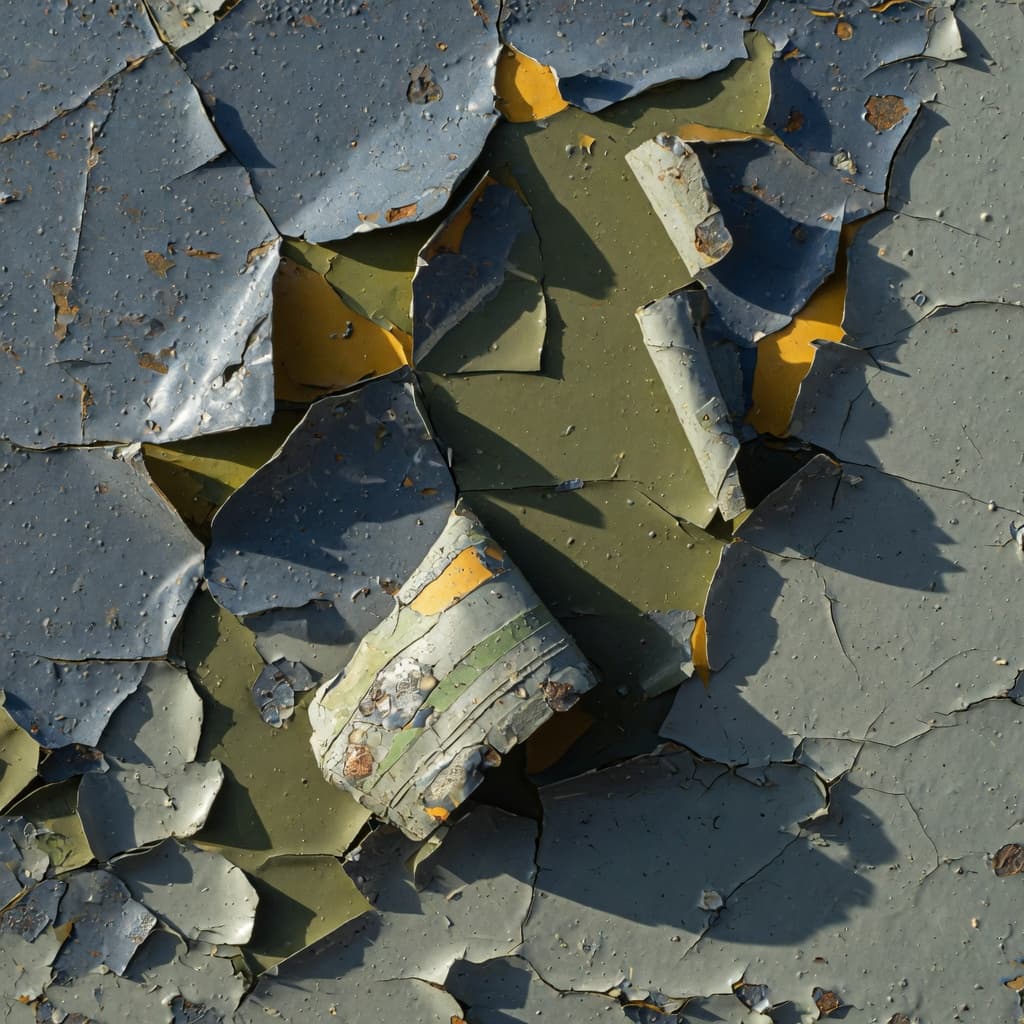
Requires matching the paint system and substrate pairing before setting energy, because a thin single topcoat on [steel](/materials/steel-laser-cleaning) clears at a fraction of the fluence a multilayer primer stack on [aluminum](/materials/aluminum-laser-cleaning) needs, and the substrate sets its own ceiling once the coating is gone. Paint sits as an applied, cross-linked polymer film bonded by mechanical keying and resin adhesion, not a corrosion product, so pigment load and binder chemistry decide more of the setting than the substrate alone. A surface-integrity study on laser-cleaned aluminum alloy carrying a paint layer documents that a visually bare finish does not by itself confirm the metal underneath escaped the pass undamaged (Applied Optics, 2024).

Release agent, cured resin flash, and paint stack come off a composite tool only when the pulsed beam stays inside the film and never opens carbon fiber or scorches the polymer matrix. Coupon work that held ablation inside roughly 0.1 to 20 micrometers on epoxy laminates shows that band is reachable when energy stays on the contaminant land. Without a labeled offcut proof first, the same settings that clear wax open fiber or leave a charred resin face that fails bond or paint adhesion.
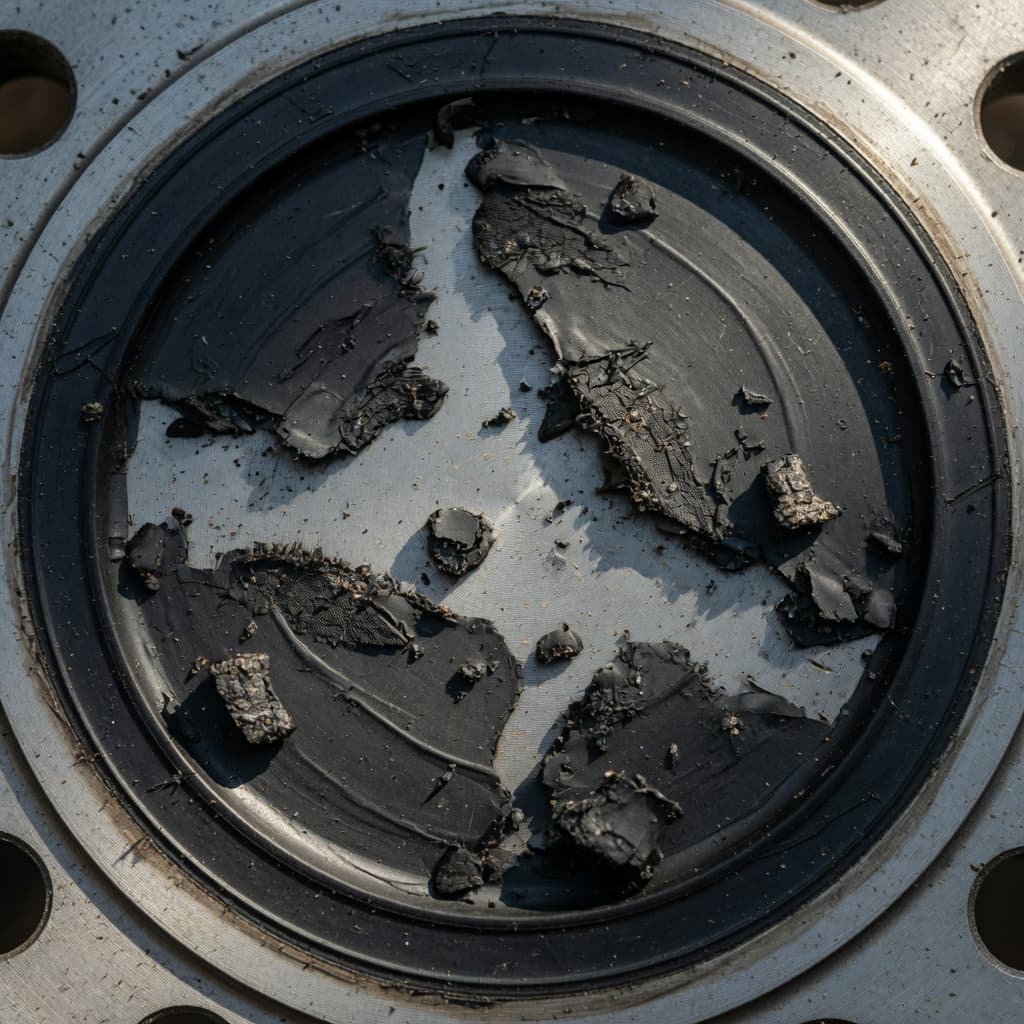
Laser cleaning decomposes mineral oil, synthetic lubricant, and machine grease off steel, aluminum, and stainless steel through fast thermal breakdown of the hydrocarbon film, the same damage-threshold logic that broader laser-cleaning threshold research has documented across very different host materials (Journal of Cultural Heritage, 2000). It is not a substitute for a wet alkaline line degreasing a full rack of parts at once, and it will not clear a bonded hard coating or a thick paint stack sitting on top of the oil.
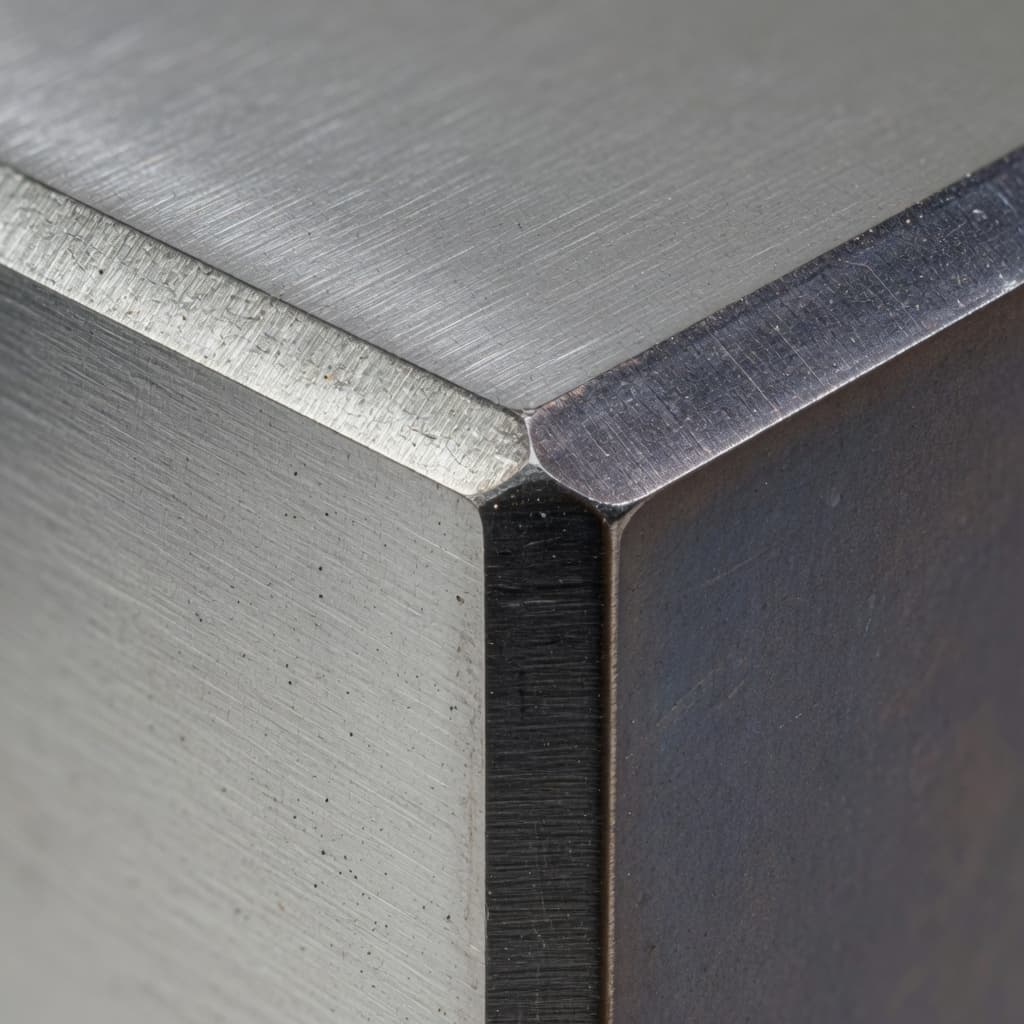
A pulsed fiber laser strips PVD and CVD hard coatings, CrN, TiN, TiAlN, CrTiAlN, and DLC, from tool steel and cemented carbide without a hot alkaline bath or media blast, and the same beam clears Type III hardcoat anodize from aluminum. Removal fluence is coating and substrate specific, not a single fleet number, and a separate study clearing titanium oxide needed its own coupon-proven band near 5 to 7 J/cm², with residue remaining below it and cracking above it, the same chemistry-and-substrate sensitivity a hard-coating strip job has to respect before running a full tool through the cell.