
FDA
FDA 21 CFR 1040.10 - Laser Product Performance Standards

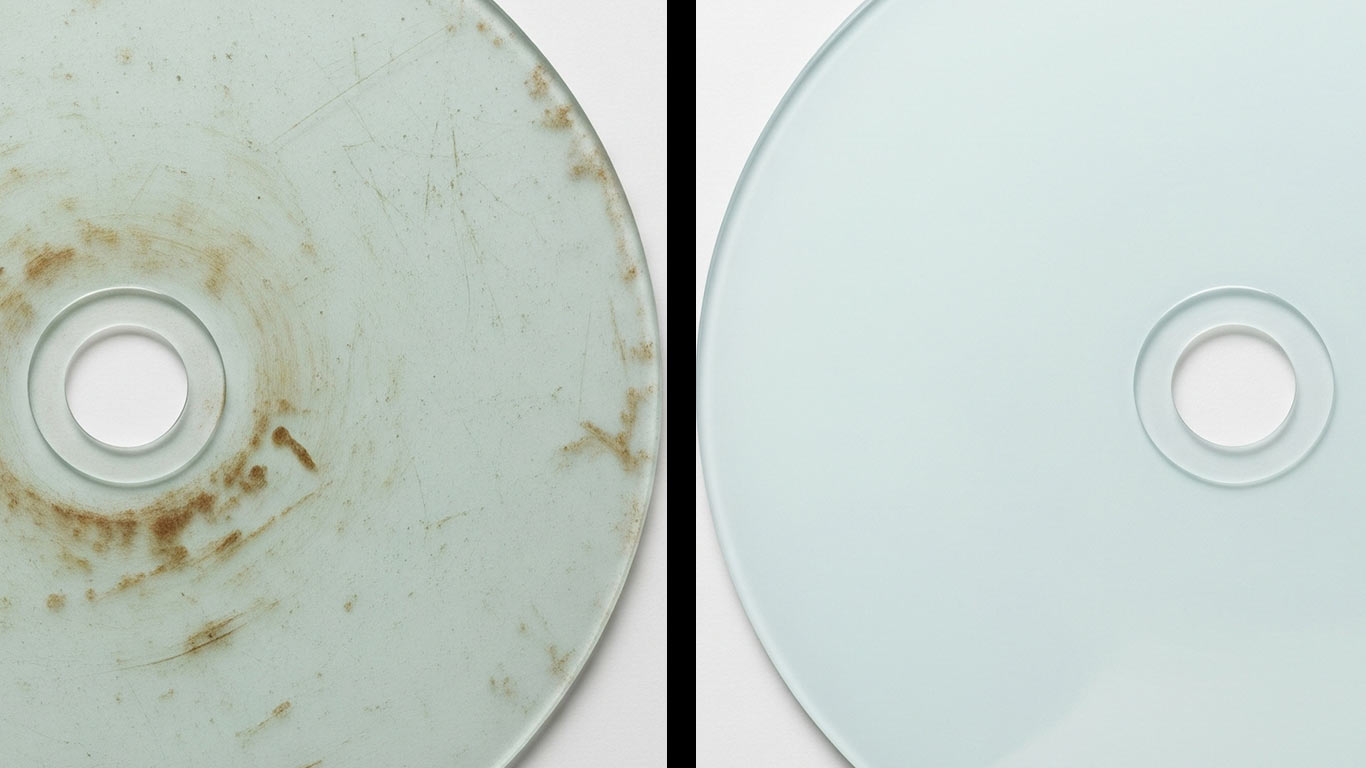

Float glass presents a fundamental paradox for laser cleaning — it transmits most 1064 nm energy straight through rather than absorbing it. Cleaning action depends on the thin contamination layer itself absorbing the beam. That absorption creates highly localized heating at the surface. This is effective for removing hydrocarbons, mineral deposits, and coatings, but it demands careful energy level control to avoid thermal shock in the soda-lime surface. Float glass's coefficient of thermal expansion (8–9 × 10⁻⁶/°C) is moderate, but rapid localized heating at the beam footprint can initiate fracture if power level overshoots. Architectural glazing, solar panel glass, and automotive applications are common in the Bay Area — situations where chemical cleaning leaves residue and abrasive methods risk scratching. Organic films couple energy differently than mineral deposits. Each contamination requires separate parameter validation.
Z-Beam took the time to demo the machine for us, answer all our questions, and made sure we were comfortable.

Fluence (J/cm²)
Float glass reflects most 1064 nm laser energy because of its transparency. Contaminants absorb more energy and ablate first. The damage threshold sits near 4.2 J/cm² for typical layers. Low heat spread rate keeps heat localized longer than in metals. Thermal expansion creates stress if energy level rises too fast. High cleaning speed limit dwell time and reduce cracking risk. Exceeding safe levels causes visible micro-fractures.
Float glass shows low thermal conductivity. Heat stays near the surface during laser cleaning. Test small areas first to avoid cracks.
Tests run on May 15, 2026 confirm strong results with low energy input on float glass. The cleaned surface feels perfectly smooth afterward with no residue left behind. Two passes at moderate speed cover contaminants evenly without visible heat marks. Natural cooling afterward prevents warping on standard panels. This setting works well for architectural sheets thicker than 3 mm. Higher frequencies give extra control on curved automotive pieces. Always verify first on a hidden sample area. Three passes mark the safe upper limit before stress appears.
Float glass produces fine silica dust during laser cleaning. This dust irritates the respiratory system and poses silicosis risk with repeated exposure. OSHA sets the PEL for respirable crystalline silica at 50 µg/m³. Proper controls prevent long-term health issues. First, ventilation requirements. Install ventilation with HEPA filters rated H14. Standard fans do not capture fine particles effectively. Maintain negative pressure in the work area to contain dust. Second, monitoring. Use real-time dust monitors set to alarm at 25 µg/m³. Stop work immediately if levels rise. Record readings for every session to stay compliant. Third, PPE. Wear safety goggles certified for the 1064 nm wavelength. Use an N95 or P100 respirator for dust protection. Add gloves and protective clothing for large area jobs. Fourth, work practices. Clean in well-ventilated areas or enclosures whenever possible. Avoid dry sweeping of ablated material. Use wet wiping or HEPA vacuum only for cleanup. Fifth, training. All operators complete laser safety and silica awareness training. Retrain every year to keep skills current. Sixth, waste. Collect dust in sealed containers labeled for silica content. Dispose according to local regulations for non-hazardous industrial waste. Seventh, emergency. If a dust cloud forms, evacuate the area and ventilate thoroughly. Clean all surfaces with HEPA tools afterward. Eighth, medical. Recommend baseline lung function tests for workers who clean glass frequently. Track any changes over time. Ninth, standards. Follow ANSI Z136.1 for all laser operation details. Comply with OSHA 29 CFR rules for PPE and silica exposure limits. Tenth, inspection. Check equipment filters daily before starting work. Replace them when saturated to maintain capture efficiency.
FDA 21 CFR 1040.10 - Laser Product Performance Standards

ANSI Z136.1 - Safe Use of Lasers

IEC 60825 - Safety of Laser Products

OSHA 29 CFR 1926.95 - Personal Protective Equipment
Float glass transmits most 1064 nm energy rather than absorbing it. Cleaning depends on the contamination layer absorbing the beam. That absorption creates highly localized heating at the surface. This removes hydrocarbons, mineral deposits, and coatings, but demands careful energy level control to avoid thermal shock. Float glass's thermal expansion coefficient (8–9 × 10⁻⁶/°C) is moderate. Rapid localized heating at the beam footprint can initiate fracture if power overshoots. Architectural glazing, solar panel glass, and automotive applications are common in the Bay Area. Chemical cleaning leaves residue and abrasive methods risk scratching. Organic films couple energy differently than mineral deposits — each requires separate parameter validation. Low energy and slow cleaning speed keep the glass surface intact.


Safe laser cleaning of float glass uses picosecond or femtosecond pulsed lasers at 1064 nm or 532 nm. Energy level must stay below the damage threshold — approximately 0.5 J/cm² for typical soda-lime glass. This prevents micro-fractures and thermal stress. Optimal parameters vary significantly based on contaminant type and thickness.
Mineral deposits and hard water stains on float glass are removed by ablating the calcium carbonate or silicate scale at its specific absorption wavelength while keeping energy level below the soda-lime glass damage threshold defined in ASTM C1036. Our team uses short nanosecond pulses—typically 10–30 ns—to exploit differential absorption: the mineral crust heats and fractures before energy reaches the glass surface. Pulse energy must be dialed to the deposit thickness; thicker mineral scale needs slightly higher energy level, but exceeding ~2 J/cm² on uncoated float glass risks surface micro-fracturing that permanently impairs optical clarity.
When cleaning float glass near window seals and aluminum frames, our team uses localized beam shielding and limits pulse energy to the minimum effective level—typically under 1 J/cm²—to prevent heat transfer to adjacent materials. ASTM C1036 defines the optical and dimensional tolerances for float glass; our parameter targets are selected to stay within that standard's surface quality requirements even in the areas nearest to seals. Continuous surface temperature monitoring with a non-contact pyrometer confirms that frame materials remain below their thermal deflection point throughout the cleaning pass.
Laser cleaning within calibrated parameters does not measurably alter the visible light transmittance or optical clarity of float glass, which ASTM C1036 specifies at ≥88% for standard clear grades. Our equipment removes surface contaminants without touching the bulk glass, so the optical path length and index of refraction remain unchanged. Improper settings—energy level above the glass damage threshold or excessive thermal dwell—can induce surface hazing or micro-fractures that permanently reduce transmittance; verify acceptable post-cleaning optical performance with ASTM C1036 transmittance measurement before clearing treated panels for use.
Float glass has a close gap between cleaning onset and damage — cleaning speed and pass count must be carefully tested for facade and manufacturing applications.
Watch Z-Beam laser cleaning demonstrations on float glass for windows and automotive parts. These videos show effective removal of dirt and stains. Viewers learn how to maintain optical clarity without damage.