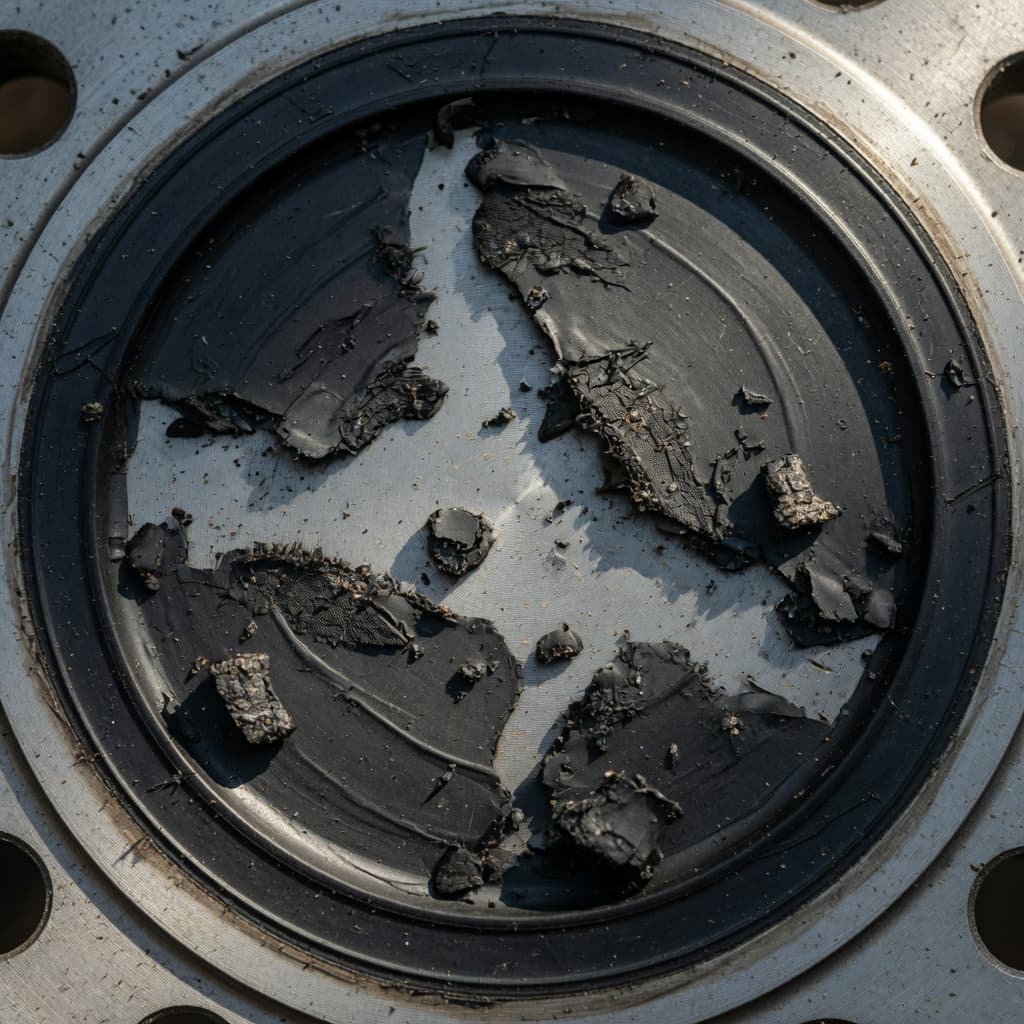
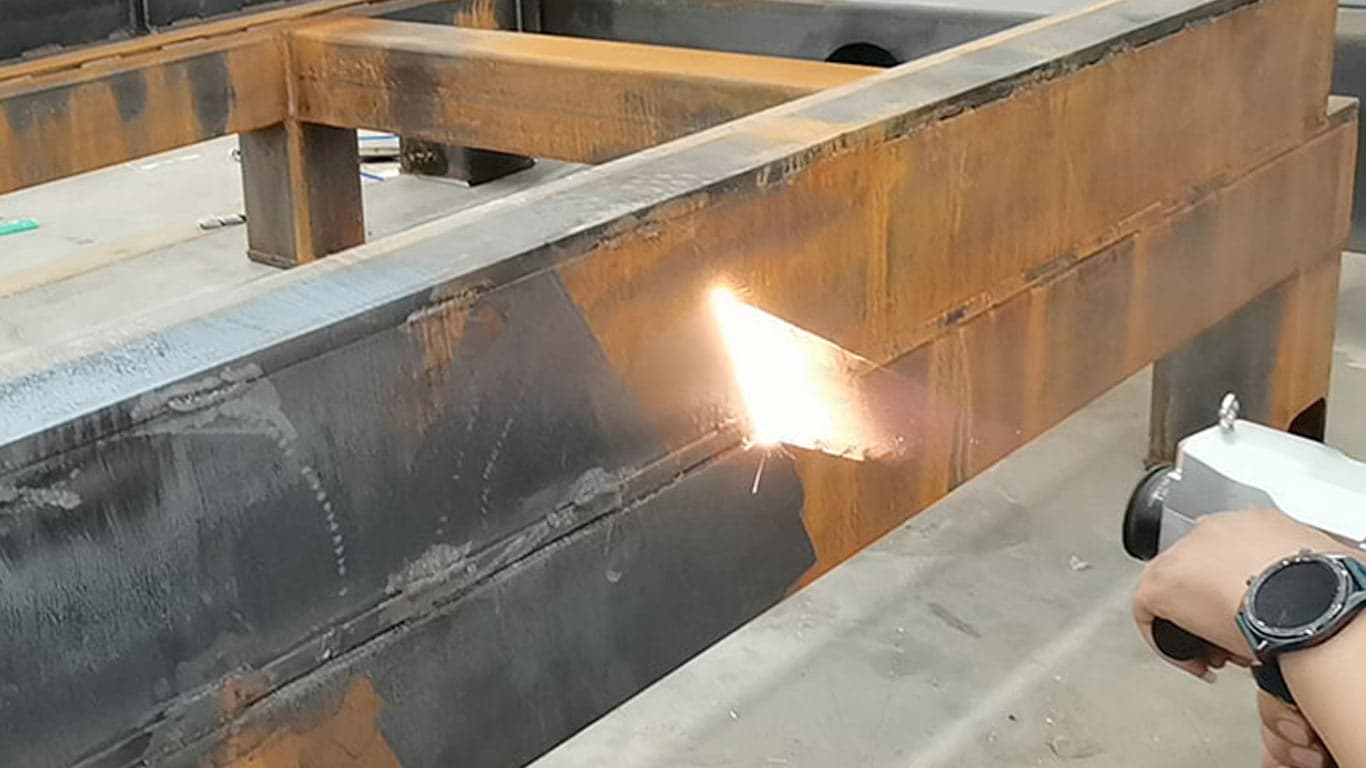
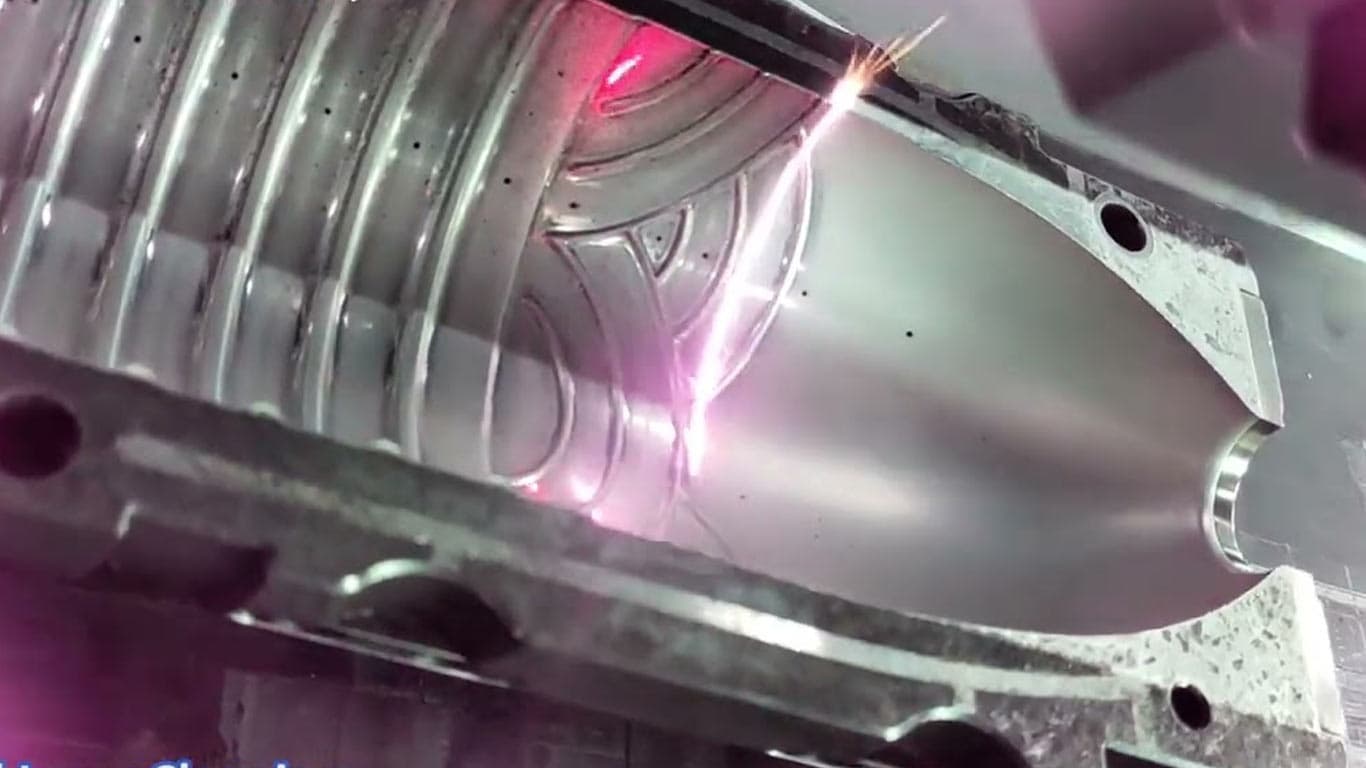
Taking oxide and light films off tin with a pulsed laser works when energy stays inside a gentle range for soft alloys, because this metal melts at a low temperature. Grade and plating thickness decide the map, including tin on copper. Inorganic tin dust needs capture for the whole dry pass. Melt beads or new roughness mean the pass has gone too far.
Results after laser cleaning Tin
Results after laser cleaning Tin
Final results
Oxide scale, metallic surface deposits, paint, and oil and grease come off the tin, and the plating stays intact.
Speed and ease
The laser clears the oxide and deposits, without the legacy 3-to-15-minute heated alkaline-cleaner soak.
Challenges in cleaning Tin
Challenges in cleaning Tin
Contaminants
Oxide scale, metallic deposits, paint, and grease and oil.
Methods
Zinc and tin are soft and melt far below steel, so a steel blast, a steel pickle, or a steel grind takes the coating with the soil.
Challenges
Abrasive scrubbers or acidic cleaners are avoided on tin plating, which limits cleaning to mild soap and water and leaves tougher residue harder to shift. Handling introduces skin oils that accelerate oxidation, and abrasive or acidic cleaners can damage the tin plating itself.
Standards, limits, and permit triggers when laser cleaning tin
Dry tin laser cleaning still produces metal dust that needs capture at the head. Federal OSHA chemical data for tin inorganic compounds except oxides sits at two milligrams per cubic meter as an eight-hour average, California Title 8 section 5155 covers airborne contaminants in the shop, and Bay Area outdoor plumes still sit under BAAQMD Regulation 6 visible-emission limits (OSHA tin inorganic compounds chemical data) (Cal/OSHA Title 8 §5155 airborne contaminants) (BAAQMD Regulation 6 particulate matter).
OSHA chemical data entry 522 frames tin inorganic compounds except oxides at two milligrams per cubic meter as an eight-hour time-weighted average for dry laser cleaning that throws tin dust into shop air.[1]
Title 8 section 5155 airborne contaminant tables still govern exposure when tin laser cleaning throws dust and fume into the breathing zone on Bay Area and statewide California jobs.[2]
Regulation 6 particulate rules still limit visible emissions from outdoor or bay-door tin laser cleaning plumes even when shop capture is running indoors.[3]
Sources(3 references)
OSHA tin inorganic compounds chemical data osha.gov (opens in new tab) — OSHA tin inorganic compounds (except oxides) 2 mg/m³ TWA
Cal/OSHA Title 8 §5155 — Airborne Contaminants (Table AC-1) dir.ca.gov (opens in new tab) — Title 8 section 5155 airborne contaminants
BAAQMD Regulation 6 — Particulate Matter, Common Definitions and Test Methods baaqmd.gov (opens in new tab) — BAAQMD Regulation 6 visible emissions
Confirm whether the job is bulk tin, tin plating on copper or steel, or solder residue before any energy raise, because soft tin melts near 232 degrees Celsius and will bead if a steel rust recipe is copied. Stay inside the shared soft-alloy band near 1.5 to 4 joules per square centimeter for short-pulse near-infrared work on copper-family metals. Size dust capture for inorganic tin before production scans (NIOSH Pocket Guide tin inorganic compounds).
1Name the tin form and reject wrong skins
Confirm bulk tin, tin plating, bronze with high tin, or solder residue before the first pulse. Thick paint or hard coats are not bare-tin film work.
If plating thickness or substrate metal cannot be confirmed, stop and reclassify rather than copying a copper or steel map.
2Strip the film lightly, then finish the metal
Remove oxide or light soil with a low first pass, then finish the bright face only after film is gone and color stays even.
Raise energy in short steps on scrap. If melt beads or roughness appear before film clears, drop energy before another scan.
3Inspect and keep capture running
Check for leftover film, heat tint, or melt before release to the next shop step.
Keep dust capture on for inorganic tin particulate through the whole dry job.
Sources(1 reference)
NIOSH Pocket Guide tin inorganic compounds cdc.gov (opens in new tab) — NIOSH REL and OSHA PEL framing for inorganic tin as Sn
The production window when laser cleaning tin
On the chart, production tin stays in a safe energy band between about 1.5 and 4 joules per square centimeter for common short-pulse near-infrared work on copper-family soft alloys (Laser Cleaning Tests on Archaeological Copper) (LACONA VI soft-alloy conservation envelope). That band is the nearest cited envelope for tin, not a tin-only coupon study, so operators still prove the map on scrap before full-area passes. Tin melts near 232 degrees Celsius, so heat piles up quickly when line overlap is high even inside the band. Treat the upper limit as a metal-injury ceiling for soft stock, not a target to chase leftover tint. Keep dust capture on while energy climbs in short steps.
This material (highlighted)
Other materials in this group
Sources(2 references)
Laser Cleaning Tests on Archaeological Copper Alloys Using an ND:YAG Laser, Laser Chemistry, 2006 doi:10.1155/2006/75831 (opens in new tab) — 1.5–4 J/cm² soft-alloy damage band on copper-family metals
LACONA VI: Lasers in the Conservation of Artworks, Springer, 2007 link.springer.com (opens in new tab) — LACONA soft-alloy laser cleaning envelope
How tin takes a laser pass
Tin absorbs only about eight percent of 1064 nanometer energy on a bright face, so native oxide and darker films often leave before the soft metal underneath starts to melt. Charted metal-injury for the copper-family soft-alloy envelope spans about 1.5 to 4 joules per square centimeter under short-pulse near-infrared work (Laser Cleaning Tests on Archaeological Copper). Tin melts near 232 degrees Celsius, so operators strip film lightly first and finish the bright face only after color stays even. Coupons still need a look between energy steps, because plating thickness and overlap change how soon melt beads appear.
Sources(1 reference)
Laser Cleaning Tests on Archaeological Copper Alloys Using an ND:YAG Laser, Laser Chemistry, 2006 doi:10.1155/2006/75831 (opens in new tab) — 1.5 to 4 joules per square centimeter soft-alloy damage band
Failure modes when laser cleaning tin
Tin cleaning fails when plating is treated as bulk tin. It also fails when energy outruns the low melt point near 232 degrees Celsius or when dust capture is left off during dry passes. Soft tin will bead and roughen long before steel would show heat tint. Copied rust recipes are a common shop failure. Keep work inside the shared soft-alloy band near 1.5 to 4 joules per square centimeter and inspect between energy steps (Siano 2015 Nd:YAG conservation review).
Condition
Consequence
Mitigation / Limit
Steel rust or hard-coat recipe copied onto soft tin[1]
Melt pooling, roughness, and geometry loss before film clears
Start low on scrap, ladder energy only after film leaves cleanly, and stop at the first melt bead
Airborne inorganic tin particulate above shop exposure limits
Run source capture for the whole dry job and treat inorganic tin dust under federal and California tables
Sources(1 reference)
Siano S. et al., "Laser cleaning in conservation of stone, metal, and painted artifacts: state of the art and new insights on the use of the Nd:YAG lasers", Academia.edu, 2015 academia.edu (opens in new tab) — Nd:YAG conservation cleaning requires substrate-aware fluence control on soft metals
Key facts when laser cleaning tin
Tin laser cleaning on this page targets soft alloy and plating stock where oxide or light films must leave without melting the metal. Charted tensile strength sits near 23 megapascals and density near 7,310 kilograms per cubic meter (MatWeb material property data). The shared soft-alloy damage band runs about 1.5 to 4 joules per square centimeter for short-pulse near-infrared copper-family metals (Laser Cleaning Tests on Archaeological Copper).
Parameter
Value
Conditions / Source
Canonical substrate
Copper / bronze soft-alloy envelope
Tensile strength
23 MPa
Density
7,310 kg/m³
Typical wavelength
1064 nm
Sources(1 reference)
MatWeb Material Property Data — Online Materials Information Resource matweb.com (opens in new tab) — 23 MPa tensile and 7,310 kg/m³ density
Common questions when laser cleaning tin
Can laser cleaning melt soft tin?
Soft tin melts near 232 degrees Celsius, so energy that is fine on steel can pool the metal before oxide leaves. Melt beads or roughness mean drop energy and pause before another try on that face.
What exposure limits apply when laser cleaning tin?
Federal OSHA Table Z-1 lists inorganic tin compounds except oxides at two milligrams per cubic meter as an eight-hour average for shop air when dry cleaning throws dust into the breathing zone (OSHA Table Z-1 limits for air contaminants).
Is tin plating the same job as bulk tin cleaning?
Plating on copper or steel has a thin tin budget and a harder substrate underneath, so operators classify plating thickness first and stop if the map starts to attack the base metal. Bulk tin stock follows the soft-alloy band with melt checks between energy steps.
Sources(1 reference)
29 CFR 1910.1000 Table Z-1 — Limits for Air Contaminants osha.gov (opens in new tab) — Tin inorganic compounds (except oxides) 2 mg/m³ TWA in Table Z-1