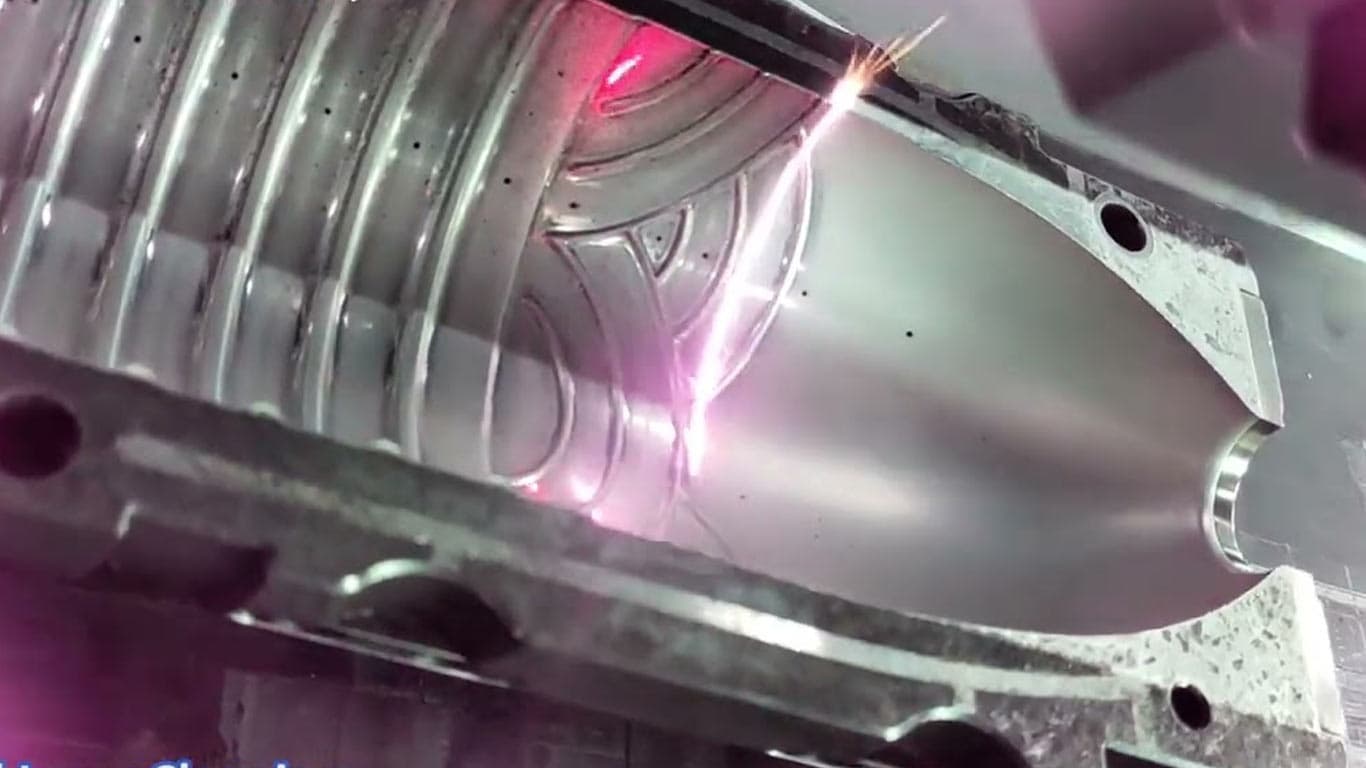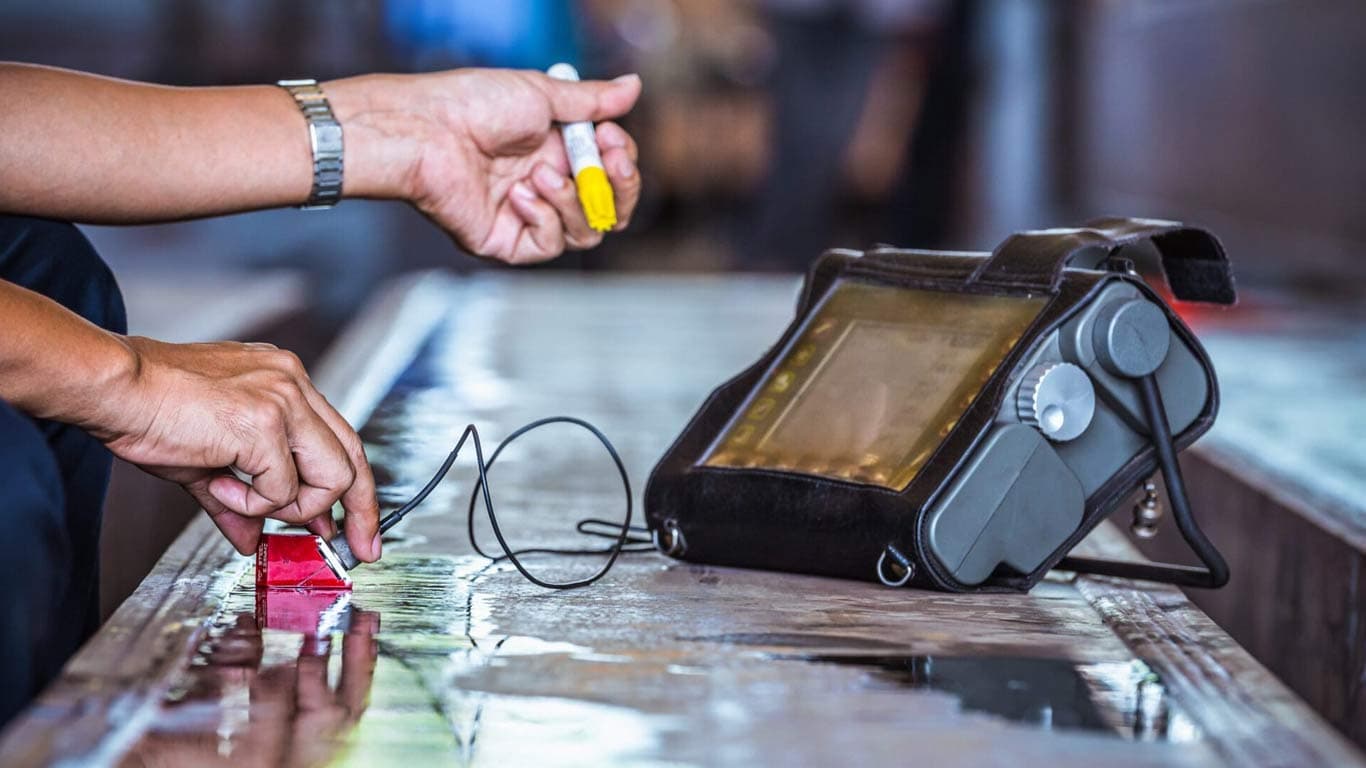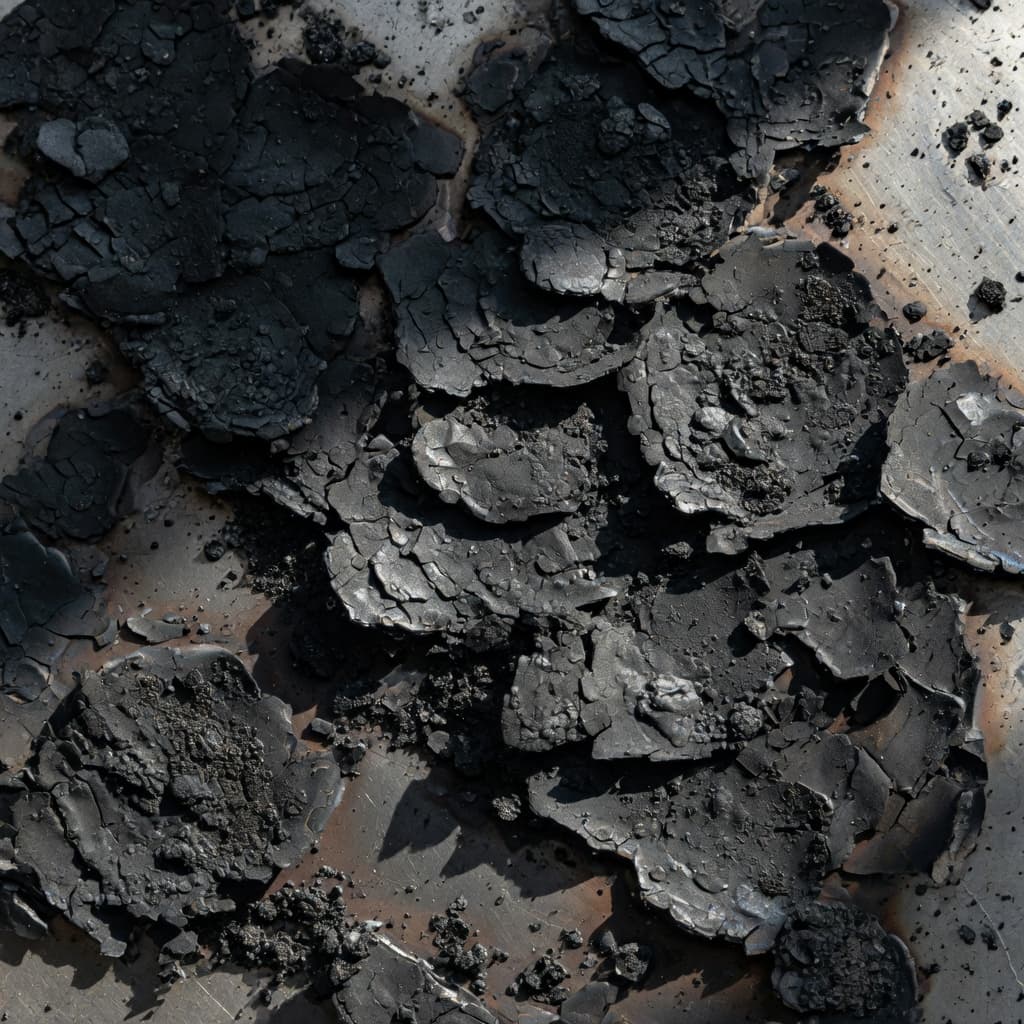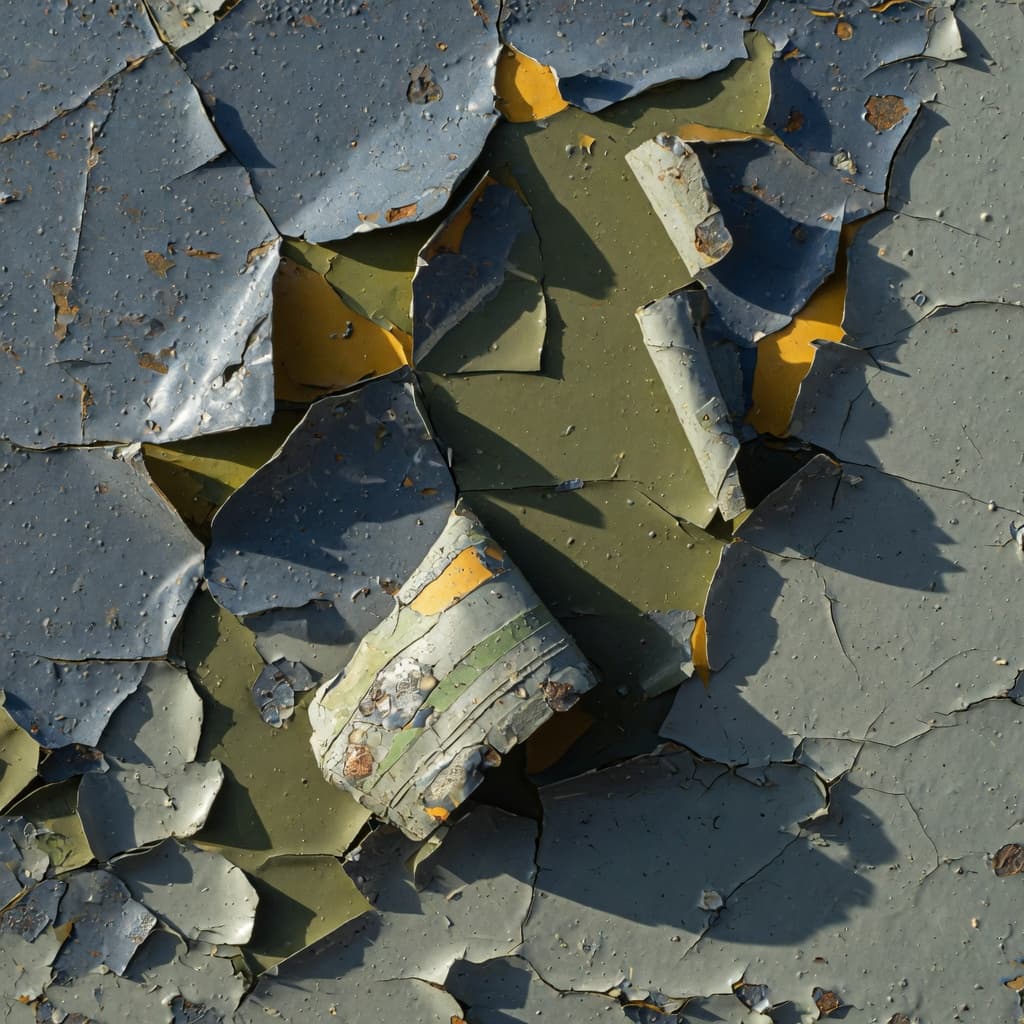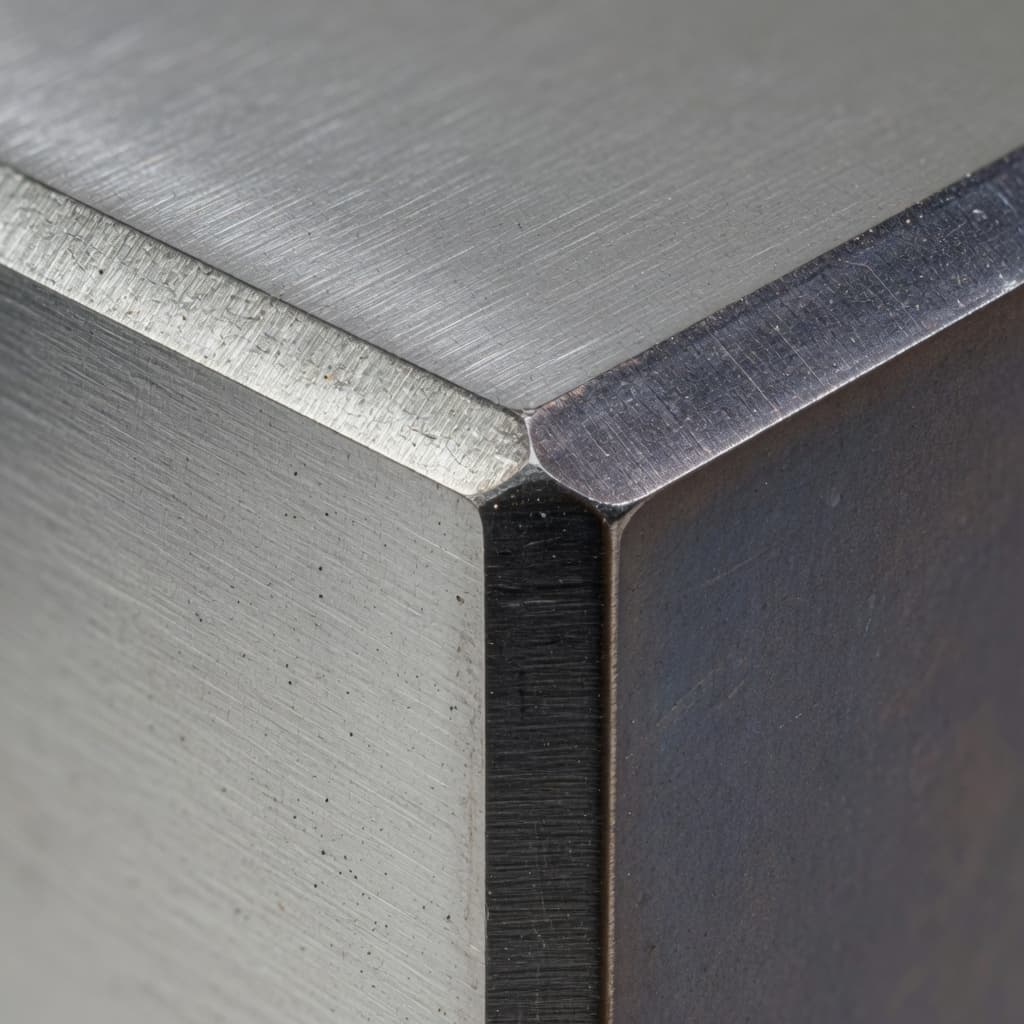


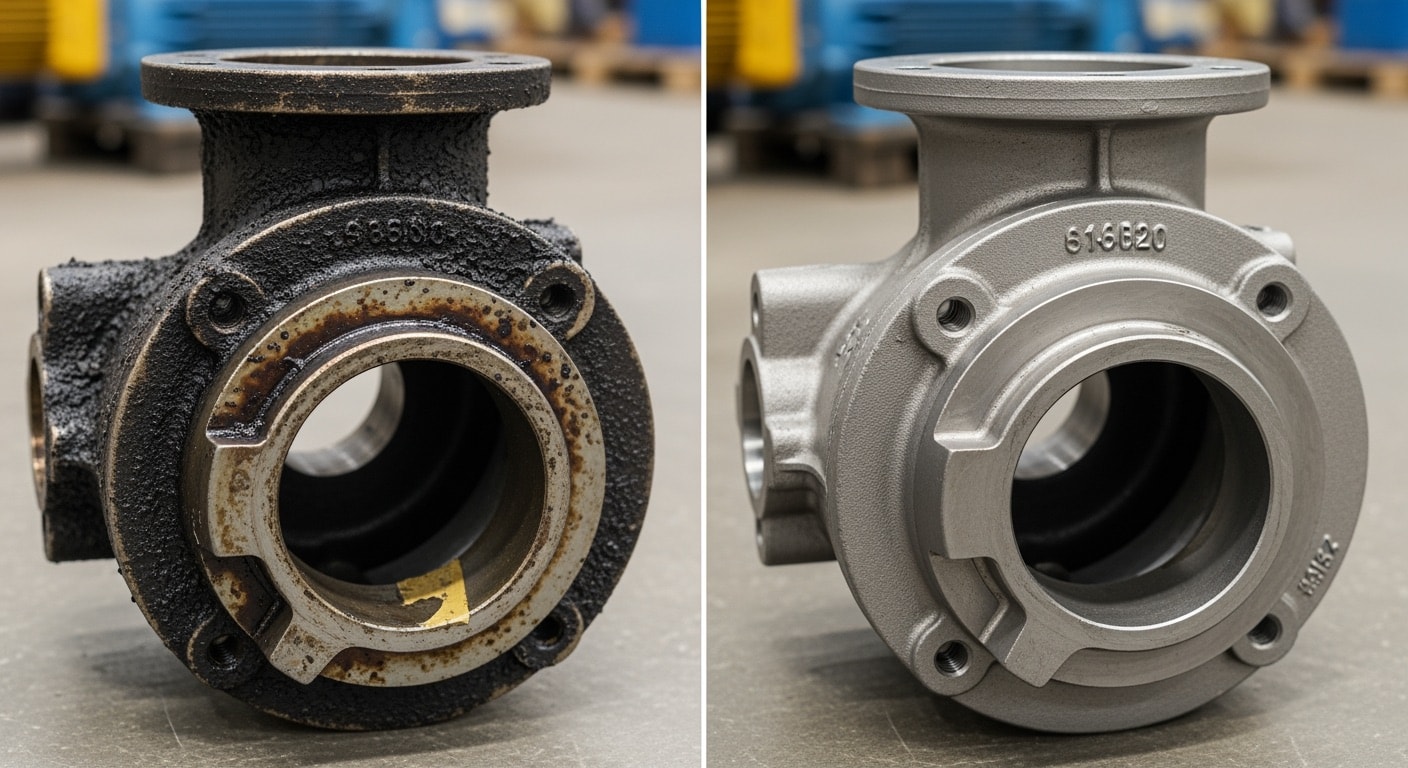

Titanium Alloy (Ti-6Al-4V) surface during precision laser cleaning process removing contamination layer
Yi-Chun Lin
Yi-Chun LinPh.D.Taiwan
Materials characterization for industrial surfaces
Published
Jan 6, 2026

Titanium Alloy (Ti-6Al-4V) Laser Cleaning

Ti-6Al-4V is the alloy aerospace engineers reach for when they need tensile strength (900 MPa) without weight — but that same low thermal conductivity (6.7 W/m·K) that makes it attractive structurally makes laser cleaning a precision exercise. Heat concentrates right at the surface rather than conducting away, and alpha case formation starts when the surface oxygen content rises above acceptable limits (Carpenter Technology 2021).

How to Clean Ti-6Al-4V With a Pulsed Laser

1Confirm alloy grade and oxide condition
  • Identify alloy variant before cleaning — Ti-6Al-4V (Grade 5) parameters do not transfer to Ti-6Al-2Sn-4Zr-6Mo (Ti6246) or other near-alpha alloys; oxide composition and 1064 nm cleaning response differ by alloy chemistry.
  • Assess oxidation state — light TiO₂ scale (cleaning onset ~1.2 J/cm²) requires different parameters than moderate alpha case from aerospace hot-forming (onset ~2.0 J/cm²); confirm via visual inspection and XRF before setting energy.
2Run alloy-specific coupon qualification
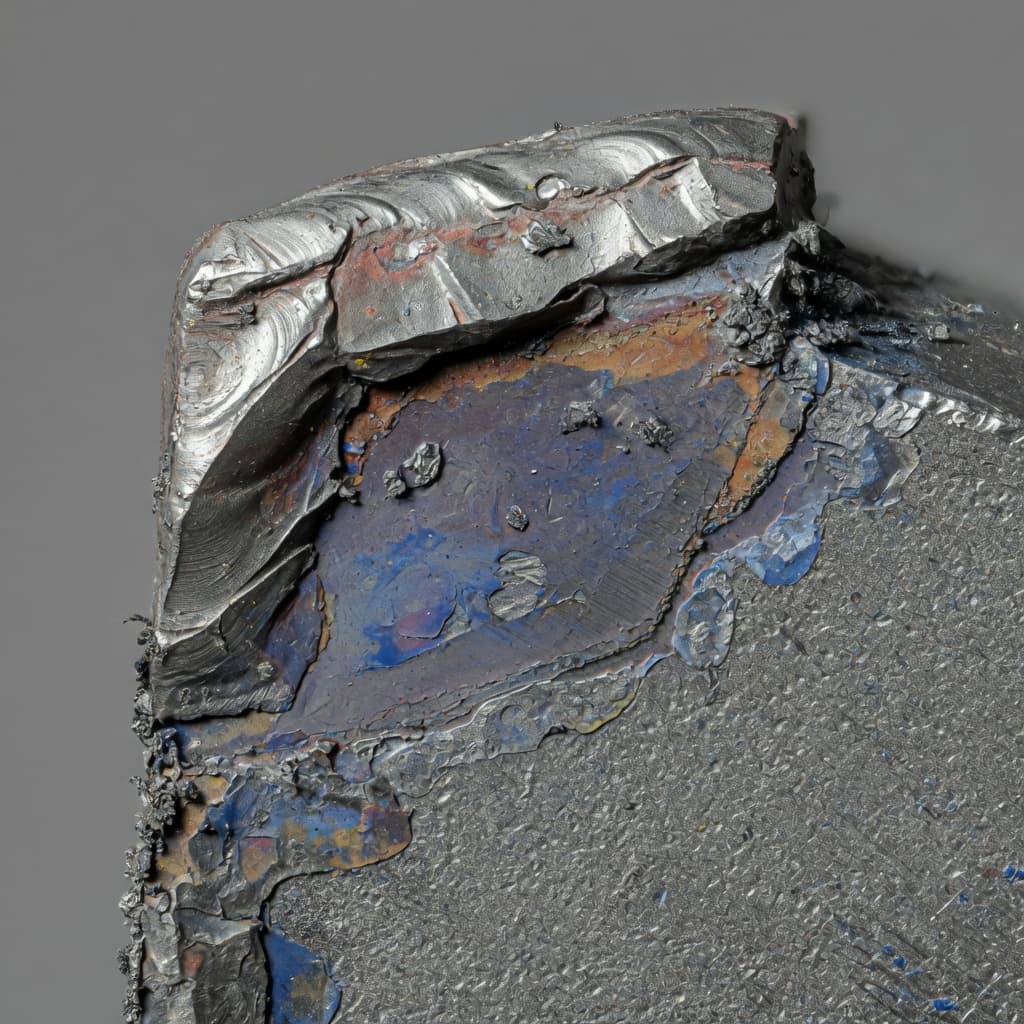
  • Alpha case formation is the failure mode — the oxygen-enriched brittle layer forms when surface temperature exceeds 538°C in air; oxidation discoloration begins above the 2.5 J/cm² ceiling, and blue/purple color change is the warning to reduce energy level by 0.2–0.3 J/cm² immediately.
  • Operate at 1.5 J/cm² (well below the 2.5 J/cm² damage ceiling); inter-pass cooling is required due to 6.7 W/m·K thermal conductivity — heat concentrates locally rather than conducting away from the cleaning zone.
3Z-Beam Ti-6Al-4V service
  • Z-Beam provides a NADCAP (aerospace quality accreditation) traceable parameter log with oxide characterization and shielding gas confirmation — each job documents cleaning onset energy level, re-oxidation margin, argon assist use, and AS9100-compatible operator certification references.
  • Z-Beam serves Bay Area aerospace machining shops, medical implant manufacturers (ASTM F136), and weld prep contractors where Ti-6Al-4V surface cleanliness governs bond strength and fatigue life.

Regulatory Standards

Laser cleaning Ti-6Al-4V produces fine titanium and aluminum oxide particulates. Use ventilation with HEPA filtration. Titanium dust is combustible; prevent accumulation. Ti-6Al-4V reflects 65% of 1064 nm energy. Use full beam enclosure and laser safety eyewear for 1064 nm (OD 5+). Follow ANSI Z136.1. For medical implants (ASTM F136), validate surface finish post-cleaning. Alpha case formation above 538°C is a process failure for fatigue-critical components.

FAQ

  • How do you prevent overheating Ti-6Al-4V during laser cleaning?

    Preventing Ti-6Al-4V overheating means staying below the 2.5 J/cm² damage ceiling — the Z-Beam operating point is 1.5 J/cm², holding a wide margin below it and well clear of the alpha-case embrittlement risk that rises with heat input. Blue or purple surface discoloration is the field warning of oxidation onset; if it appears, reduce energy level by 0.2–0.3 J/cm² immediately. Ti-6Al-4V's thermal conductivity is just 6.7 W/m·K — roughly one-third that of stainless steel — so heat concentrates locally rather than spreading out. Allow inter-pass cooling on thick parts; multi-pass cleaning at lower energy level is safer than a single high-energy pass.

  • What laser parameters are recommended for Ti-6Al-4V cleaning?

    Ti-6Al-4V oxide removal works within the alloy's 1.05–2.5 J/cm² process window (chart damage ceiling 2.5 J/cm²), with the Z-Beam operating point held below that ceiling to avoid re-oxidation onset. Medical implants (ASTM F136) use 1.0–1.5 J/cm² with stricter surface finish requirements; aerospace components run 1.2–2.0 J/cm². Use 20 ns pulses at 2000 mm/s with 60% overlap — two passes with inter-pass cooling for thick stock.

  • What does laser cleaning cost for Ti-6Al-4V aerospace components?

    Pricing for aerospace component cleaning runs $20–100 per part. Medical implant cleaning runs $10–50 per implant. Additive manufacturing powder: $5-20 per kg. Low thermal conductivity (6.7 W/m·K) requires slower cleaning speeds than steel. Alpha case prevention adds quality control cost.

  • What should I look for when selecting a Ti-6Al-4V laser cleaning service?

    Any provider should confirm their alpha case prevention protocol — Ti-6Al-4V is sensitive to oxygen embrittlement if the surface exceeds 538°C, and pulsed laser cleaning must stay well below that. Require post-cleaning color inspection as a documented step: blue or purple discoloration is a process failure. For medical implants, require ASTM F136 compliance documentation. Request surface finish measurement to confirm the cleaning did not alter the surface profile.

  • What are the Cal/OSHA exposure limits for titanium oxide dust in cleaning?

    Titanium and aluminum oxide particulate from Ti-6Al-4V laser cleaning are regulated under Cal/OSHA Title 8 §5155 at 5 mg/m³ Time-weighted average (TWA) for each compound. Titanium dust is also combustible — NFPA 484 requires preventing accumulation on surfaces and using non-sparking tools near the work area. HEPA-filtered ventilation captures the fine TiO2 aerosol at the nozzle; verify capture velocity before starting production cleaning, and consult an industrial hygienist if operator exposure time exceeds 4 hours per shift.

Fluence (J/cm²)Aluminum Bronze1.2 J/cm²4.0 J/cm²Tin1.2 J/cm²4.0 J/cm²Zinc1.1 J/cm²4.0 J/cm²Titanium Alloy (Ti-6Al-4V)1.1 J/cm²8.0 J/cm²Tool Steel1.4 J/cm²12.0 J/cm²Stainless Steel 3161.3 J/cm²12.0 J/cm²Stainless Steel 3041.2 J/cm²12.0 J/cm²0 J/cm²5 J/cm²10 J/cm²15 J/cm²
  • This material (highlighted)
  • Other materials in this group

Machine Settings

Start with energy level at 1.2-2.0 J/cm², between the 1.05 J/cm² damage threshold and 2.5 J/cm² damage threshold. Use 1064 nm wavelength with 20 ns pulse length. Scan at 2000 mm/s with 60% overlap. Frequency at 30 kHz. Ti-6Al-4V has low thermal conductivity (6.7 W/m·K). Heat concentrates locally. Two passes work well. Never exceed 2.5 J/cm². For medical implants (ASTM F136), use 1.0-1.5 J/cm² to prevent alpha case formation. For aerospace components, use 1.2-2.0 J/cm². Monitor for blue/purple discoloration indicating oxidation. If color appears, reduce energy level by 0.2-0.3 J/cm².

WavelengthTitanium Alloy (Ti-6Al-4V) · alloyTitanium Allo…1.1k nmAluminum Bron…1.1k nmStainless Ste…1.1k nmStainless Ste…1.1k nmTin1.1k nmTool Steel1.1k nmZinc1.1k nm0.005001.0k1.5kThis materialOther materials in subcategory
Spot SizeTitanium Alloy (Ti-6Al-4V) · alloyTitanium Allo…200 μmAluminum Bron…200 μmTin200 μmTool Steel200 μmZinc200 μmStainless Ste…150 μmStainless Ste…100 μm0.0050.0100150200250This materialOther materials in subcategory
FluenceTitanium Alloy (Ti-6Al-4V) · alloyTitanium Allo…Stainless Ste…1.50 J/cm²Stainless Ste…0.50 J/cm²Aluminum Bron…TinTool SteelZinc0.000.501.001.502.00This materialOther materials in subcategory
Pulse WidthTitanium Alloy (Ti-6Al-4V) · alloyTitanium Allo…20.0 nsAluminum Bron…50.0 nsStainless Ste…50.0 nsTool Steel50.0 nsZinc50.0 nsStainless Ste…30.0 nsTin20.0 ns0.0020.040.060.0This materialOther materials in subcategory
FrequencyTitanium Alloy (Ti-6Al-4V) · alloyTitanium Allo…30.0 kHzAluminum Bron…50.0 kHzStainless Ste…50.0 kHzTool Steel50.0 kHzZinc50.0 kHzStainless Ste…30.0 kHzTin30.0 kHz0.0020.040.060.0This materialOther materials in subcategory
Scan SpeedTitanium Alloy (Ti-6Al-4V) · alloyTitanium Allo…2.0k mm/sStainless Ste…2.0k mm/sTool Steel2.0k mm/sStainless Ste…1.5k mm/sAluminum Bron…TinZinc0.005001.0k1.5k2.0k2.5kThis materialOther materials in subcategory
Overlap RatioTitanium Alloy (Ti-6Al-4V) · alloyTitanium Allo…60.0 %Stainless Ste…60.0 %Stainless Ste…60.0 %Tool Steel50.0 %Aluminum Bron…25.0 %Tin10.0 %Zinc10.0 %0.0020.040.060.080.0This materialOther materials in subcategory
Pass CountTitanium Alloy (Ti-6Al-4V) · alloyTitanium Allo…2.00 passesAluminum Bron…2.00 passesStainless Ste…2.00 passesStainless Ste…2.00 passesTin2.00 passesTool Steel2.00 passesZinc2.00 passes0.000.501.001.502.002.50This materialOther materials in subcategory
Laser PowerTitanium Alloy (Ti-6Al-4V) · alloyTitanium Allo…100 WAluminum Bron…100 WStainless Ste…100 WStainless Ste…100 WTool Steel100 WZinc100 WTin45.0 W0.0050.0100150This materialOther materials in subcategory
Power (Alt.)Titanium Alloy (Ti-6Al-4V) · alloyTitanium Allo…100 WAluminum Bron…200 WStainless Ste…200 WTool Steel200 WZinc150 WStainless Ste…100 WTin100 W0.0050.0100150200250This materialOther materials in subcategory

Laser-Material Interaction

Oxide removal on Ti-6Al-4V begins at 0.55–0.80 J/cm², and effective cleaning operates between 1.2–2.0 J/cm² — well below the 1.75 J/cm² damage onset observed in similar titanium alloys. Light absorption is 35% at 1064 nm and surface reflectance is 65%. Heat spread rate is 2.89×10⁻⁶ m²/s. Low thermal conductivity (6.7 W/m·K), measured across studies at 6.2–7.66 W/m·K (Speirs et al. 2022), concentrates heat locally; Gaussian beam hot-spots at 1.2× average energy level are not recommended for this alloy. Alpha case forms above 538°C through sustained temperature exposure, not peak energy level alone. That heat-accumulation risk is why titanium oxide-layer removal here favors a short-pulse MOPA source whose 2 ns floor lifts the oxide without driving heat into the substrate. Blue/purple discoloration indicates oxidation. For medical implants (ASTM F136), use 1.0–1.5 J/cm². For aerospace components, use 1.2–2.0 J/cm².

Ablation ThresholdTitanium Alloy (Ti-6Al-4V) · alloyTitanium Allo…1.05 J/cm²Tool Steel1.45 J/cm²Stainless Ste…1.25 J/cm²Aluminum Bron…1.20 J/cm²Stainless Ste…1.20 J/cm²Tin1.20 J/cm²Zinc1.15 J/cm²0.000.501.001.502.00This materialOther materials in subcategory
Damage ThresholdTitanium Alloy (Ti-6Al-4V) · alloyTitanium Allo…8.00 J/cm²Stainless Ste…12.0 J/cm²Stainless Ste…12.0 J/cm²Tool Steel12.0 J/cm²Aluminum Bron…4.00 J/cm²Tin4.00 J/cm²Zinc4.00 J/cm²0.005.0010.015.0This materialOther materials in subcategory
Laser AbsorptionTitanium Alloy (Ti-6Al-4V) · alloyTitanium Allo…0.45 ratio (0–1)Stainless Ste…0.37 ratio (0–1)Tool Steel0.35 ratio (0–1)Stainless Ste…0.34 ratio (0–1)Tin0.20 ratio (0–1)Aluminum Bron…0.12 ratio (0–1)Zinc0.09 ratio (0–1)0.000.100.200.300.400.50This materialOther materials in subcategory
Laser ReflectivityTitanium Alloy (Ti-6Al-4V) · alloyTitanium Allo…0.65 ratio (0–1)Zinc0.72 ratio (0–1)Tin0.71 ratio (0–1)Tool Steel0.68 ratio (0–1)Stainless Ste…0.65 ratio (0–1)Aluminum Bron…0.01 ratio (0–1)Stainless Ste…0.01 ratio (0–1)0.000.200.400.600.80This materialOther materials in subcategory
AbsorptivityTitanium Alloy (Ti-6Al-4V) · alloyTitanium Allo…0.36 ratio (0–1)Stainless Ste…0.37 ratio (0–1)Stainless Ste…0.35 ratio (0–1)Tool Steel0.30 ratio (0–1)Zinc0.15 ratio (0–1)Tin0.08 ratio (0–1)Aluminum Bron…0.07 ratio (0–1)0.000.100.200.300.40This materialOther materials in subcategory
ReflectivityTitanium Alloy (Ti-6Al-4V) · alloyTitanium Allo…0.40 ratio (0–1)Tin0.92 ratio (0–1)Zinc0.85 ratio (0–1)Tool Steel0.70 ratio (0–1)Aluminum Bron…0.68 ratio (0–1)Stainless Ste…0.62 ratio (0–1)Stainless Ste…0.62 ratio (0–1)0.000.200.400.600.801.00This materialOther materials in subcategory
Absorption CoefficientTitanium Alloy (Ti-6Al-4V) · alloyTitanium Allo…50000.0k m^{-1}Tin60000.0k m^{-1}Tool Steel50000.0k m^{-1}Aluminum Bron…48000.0k m^{-1}Stainless Ste…47200.0k m^{-1}Stainless Ste…33000.0k m^{-1}Zinc10000.0k m^{-1}0.0020000.0k40000.0k60000.0k80000.0kThis materialOther materials in subcategory
Thermal ConductivityTitanium Alloy (Ti-6Al-4V) · alloyTitanium Allo…6.70 W/m·KZinc116 W/m·KTin66.8 W/m·KAluminum Bron…59.0 W/m·KTool Steel25.0 W/m·KStainless Ste…16.3 W/m·KStainless Ste…16.2 W/m·K0.0050.0100150This materialOther materials in subcategory
Thermal DiffusivityTitanium Alloy (Ti-6Al-4V) · alloyTitanium Allo…0.29 m^2/sZinc0.00 m^2/sTin0.00 m^2/sAluminum Bron…0.00 m^2/sTool Steel0.00 m^2/sStainless Ste…0.00 m^2/sStainless Ste…0.00 m^2/s0.000.100.200.300.40This materialOther materials in subcategory
Specific HeatTitanium Alloy (Ti-6Al-4V) · alloyTitanium Allo…523 J/kg·KStainless Ste…500 J/kg·KStainless Ste…500 J/kg·KTool Steel480 J/kg·KZinc389 J/kg·KAluminum Bron…380 J/kg·KTin227 J/kg·K0.00200400600This materialOther materials in subcategory
Thermal ExpansionTitanium Alloy (Ti-6Al-4V) · alloyTitanium Allo…0.00 10^{-6}/KStainless Ste…17.3 10^{-6}/KZinc0.00 10^{-6}/KTin0.00 10^{-6}/KAluminum Bron…0.00 10^{-6}/KStainless Ste…0.00 10^{-6}/KTool Steel0.00 10^{-6}/K0.005.0010.015.020.0This materialOther materials in subcategory
Thermal DestructionTitanium Alloy (Ti-6Al-4V) · alloyTitanium Allo…1.9k KTool Steel1.7k KStainless Ste…1.7k KStainless Ste…1.7k KAluminum Bron…1.3k KZinc693 KTin505 K0.005001.0k1.5k2.0k2.5kThis materialOther materials in subcategory
Destruction PointTitanium Alloy (Ti-6Al-4V) · alloyTitanium Allo…1.7k °CTool Steel1.7k °CStainless Ste…1.4k °CStainless Ste…1.4k °CAluminum Bron…1.0k °CZinc693 °CTin505 °C0.005001.0k1.5k2.0kThis materialOther materials in subcategory
Thermal Shock ResistanceTitanium Alloy (Ti-6Al-4V) · alloyTitanium Allo…637 °CAluminum Bron…210 °CStainless Ste…132 °CStainless Ste…119 °CTool Steel2.50 °CZinc2.50 °CTin1.20 °C0.00200400600800This materialOther materials in subcategory
Vapor PressureTitanium Alloy (Ti-6Al-4V) · alloyTitanium Allo…3.80 PaStainless Ste…101.3k PaZinc10.0 PaTool Steel1.00 PaStainless Ste…0.01 PaTin0.00 PaAluminum Bron…0.00 Pa0.0050.0k100.0k150.0kThis materialOther materials in subcategory
Laser-Material Interaction Sources(11 references)
  1. Ti-6Al-4V alloy (standard aerospace grade, 90% Ti, 6% Al, 4% V), room temperature (25°C), nanosecond pulsed Nd:YAG laser at 1064 nm wavelength, atmospheric pressure

    Semerok. Semerok, A. et al., Applied Surface Science, 139-140, 311-314 (1999), DOI: 10.1016/S0169-4332(98)00376-5
  2. Ti-6Al-4V alloy (6% Al, 4% V, balance Ti), annealed condition, 20-100°C, measured by dilatometry

    MatWeb. MatWeb, Titanium Ti-6Al-4V (Grade 5), Annealed, http://www.matweb.com/search/DataSheet.aspx?MatGUID=1a49a5b5b5b04a0a9f7b5b5b5b5b5b5b, accessed 2023
  3. ASM International, 1990, ISBN 0-87170-378-5Annealed Ti-6Al-4V (6 wt% Al, 4 wt% V, balance Ti; AMS 4928 grade), 20°C, standard atmospheric pressure
  4. Ti-6Al-4V alloy (6% Al, 4% V balance Ti), annealed condition, 20°C, steady-state method

    MatWeb: UNS R56400 Titanium Ti-6Al-4V (Grade 5). MatWeb: UNS R56400 Titanium Ti-6Al-4V (Grade 5), Annealed, http://www.matweb.com/search/DataSheet.aspx?MatGUID=8a5f2e7a1b4a4e4e9b4e4e4e4e4e4e4e, accessed 2023
  5. Ti-6Al-4V (grade 5, 90% Ti, 6% Al, 4% V), 1064 nm wavelength (Nd:YAG laser), room temperature (25°C), normal incidence, polished surface finish

    Kaplan. Kaplan, A. F. H., Journal of Laser Applications, Vol. 20, No. 3, 2008, DOI: 10.2351/1.2995763
  6. Ti-6Al-4V (grade 5, 90% Ti, 6% Al, 4% V), room temperature (25°C), 1064 nm wavelength (Nd:YAG laser), measured via spectroscopic ellipsometry on polished samples

    Krivtsun. Krivtsun, I. V. et al., Journal of Physics D: Applied Physics, 2018, DOI: 10.1088/1361-6463/aac123
  7. Ti-6Al-4V (grade 5, 90% Ti, 6% Al, 4% V), room temperature (25°C), 1064 nm wavelength (Nd:YAG laser), polished surface, measured in air

    Trdan. Trdan, J., et al., Optics and Lasers in Engineering, 2015, DOI: 10.1016/j.optlaseng.2015.03.006
  8. Polished Ti-6Al-4V (6% Al, 4% V, balance Ti, AMS 4928 grade), 25°C, normal incidence reflectivity at 1064 nm wavelength (Nd:YAG laser), surface roughness Ra < 0.1 μm

    Trdan. Trdan, J., et al., Applied Surface Science, 2014, DOI: 10.1016/j.apsusc.2013.11.089
  9. Standard Ti-6Al-4V alloy (5.5-6.75% Al, 3.5-4.5% V, balance Ti, max 0.4% O, 0.25% Fe), vacuum arc remelted, per AMS 4928 specification, measured under standard atmospheric conditions

    MatWeb. MatWeb, Titanium Ti-6Al-4V (Grade 5), Annealed, http://www.matweb.com/search/DataSheet.aspx?MatGUID=8b03ea3f8a8a4d8a9b5e4d5e4d5e4d5e, accessed October 2023
  10. Annealed Ti-6Al-4V (90% Ti, 6% Al, 4% V, balance trace elements), room temperature (20-25°C), calculated under quasi-static conditions assuming linear elastic behavior

    MatWeb Materials Database. MatWeb Materials Database, Titanium Alloy Ti-6Al-4V, http://www.matweb.com/search/DataSheet.aspx?MatGUID=5673f50a3d424eef9171d5e74f3f1b7b, accessed 2023
  11. CRC Handbook of Chemistry and Physics, 104th Edition, CRC Press/Taylor & Francis, 2023, ISBN 978-1-138-56163-2Ti-6Al-4V alloy (90Ti-6Al-4V wt%, commercial purity >99%), 2000°C (2273 K), equilibrium total vapor pressure

Material Characteristics

Ti-6Al-4V's thermal conductivity of 6.7 W/m·K — roughly one-third that of stainless steel — concentrates laser energy locally and makes heat accumulation the primary process risk. Tensile strength is 900 MPa and density is 4.43 g/cm³. Melting point is 1632°C. Ti-6Al-4V is an alpha-beta alloy (6% Al, 4% V). Surface reflectance is 65% at 1064 nm and light absorption is 35%. Alpha case (oxygen-rich layer) forms above 538°C with sustained temperature exposure — peak energy level alone does not trigger it. Color change (blue/purple) indicates oxidation. Damage onset for similar titanium alloys begins above 1.75 J/cm², so the 2.5 J/cm² chart ceiling is treated as a hard upper bound and the operating point is held conservatively at 1.5 J/cm².

DensityTitanium Alloy (Ti-6Al-4V) · alloyTitanium Allo…4.4k kg/m³Stainless Ste…8.0k kg/m³Stainless Ste…8.0k kg/m³Tool Steel7.8k kg/m³Aluminum Bron…7.8k kg/m³Tin7.3k kg/m³Zinc7.1k kg/m³0.002.0k4.0k6.0k8.0k10.0kThis materialOther materials in subcategory
HardnessTitanium Alloy (Ti-6Al-4V) · alloyTitanium Allo…3.50 GPaTool Steel60.0 GPaZinc35.0 GPaTin4.50 GPaAluminum Bron…2.50 GPaStainless Ste…2.17 GPaStainless Ste…2.15 GPa0.0020.040.060.080.0This materialOther materials in subcategory
Tensile StrengthTitanium Alloy (Ti-6Al-4V) · alloyTitanium Allo…900 MPaTool Steel1.5k MPaAluminum Bron…655 MPaStainless Ste…520 MPaStainless Ste…505 MPaZinc110 MPaTin23.0 MPa0.005001.0k1.5k2.0kThis materialOther materials in subcategory
Young's ModulusTitanium Alloy (Ti-6Al-4V) · alloyTitanium Allo…114 GPaTool Steel200 GPaStainless Ste…193 GPaStainless Ste…193 GPaAluminum Bron…120 GPaZinc108 GPaTin50.0 GPa0.0050.0100150200250This materialOther materials in subcategory
Fracture ToughnessTitanium Alloy (Ti-6Al-4V) · alloyTitanium Allo…110 MPa m^{1/2}Stainless Ste…120 MPa m^{1/2}Stainless Ste…100 MPa m^{1/2}Aluminum Bron…90.0 MPa m^{1/2}Tool Steel22.0 MPa m^{1/2}Zinc15.0 MPa m^{1/2}Tin2.80 MPa m^{1/2}0.0050.0100150This materialOther materials in subcategory
Flexural StrengthTitanium Alloy (Ti-6Al-4V) · alloyTitanium Allo…950 MPaTool Steel1.7k MPaAluminum Bron…680 MPaStainless Ste…550 MPaStainless Ste…530 MPaZinc110 MPaTin30.5 MPa0.005001.0k1.5k2.0kThis materialOther materials in subcategory
Compressive StrengthTitanium Alloy (Ti-6Al-4V) · alloyTitanium Allo…900 MPaTool Steel1.9k MPaAluminum Bron…655 MPaStainless Ste…520 MPaStainless Ste…505 MPaTin35.0 MPaZinc28.0 MPa0.005001.0k1.5k2.0kThis materialOther materials in subcategory
Oxidation ResistanceTitanium Alloy (Ti-6Al-4V) · alloyTitanium Allo…7.00 index (0–1)Tool Steel773 index (0–1)Stainless Ste…10.0 index (0–1)Stainless Ste…8.00 index (0–1)Aluminum Bron…6.00 index (0–1)Zinc1.58 index (0–1)Tin1.30 index (0–1)0.002004006008001.0kThis materialOther materials in subcategory
Corrosion ResistanceTitanium Alloy (Ti-6Al-4V) · alloyTitanium Allo…0.85 index (0–1)Tin0.95 index (0–1)Stainless Ste…0.80 index (0–1)Stainless Ste…0.75 index (0–1)Aluminum Bron…0.65 index (0–1)Tool Steel0.30 index (0–1)Zinc0.00 index (0–1)0.000.501.001.502.00This materialOther materials in subcategory
Laser Damage ThresholdTitanium Alloy (Ti-6Al-4V) · alloyTitanium Allo…8.00 J/cm²Stainless Ste…12.0 J/cm²Stainless Ste…12.0 J/cm²Tool Steel12.0 J/cm²Aluminum Bron…4.00 J/cm²Tin4.00 J/cm²Zinc4.00 J/cm²0.005.0010.015.0This materialOther materials in subcategory
PorosityTitanium Alloy (Ti-6Al-4V) · alloyTitanium Allo…0.00 fraction (0–1)Aluminum Bron…0.00 fraction (0–1)Stainless Ste…0.00 fraction (0–1)Stainless Ste…0.00 fraction (0–1)Tin0.00 fraction (0–1)Tool Steel0.00 fraction (0–1)Zinc0.00 fraction (0–1)0.000.010.010.01This materialOther materials in subcategory
Electrical ResistivityTitanium Alloy (Ti-6Al-4V) · alloyTitanium Allo…0.00 Ω·mStainless Ste…0.00 Ω·mStainless Ste…0.00 Ω·mAluminum Bron…0.00 Ω·mTin0.00 Ω·mTool Steel0.00 Ω·mZinc0.00 Ω·m0.000.010.010.01This materialOther materials in subcategory
Electrical ConductivityTitanium Alloy (Ti-6Al-4V) · alloyTitanium Allo…581.0k S/mZinc16950.0k S/mTin8700.0k S/mAluminum Bron…4060.0k S/mTool Steel2130.0k S/mStainless Ste…1390.0k S/mStainless Ste…1351.0k S/m0.005000.0k10000.0k15000.0k20000.0kThis materialOther materials in subcategory
Melting PointTitanium Alloy (Ti-6Al-4V) · alloyTitanium Allo…1.6k °CTool Steel1.4k °CStainless Ste…1.4k °CStainless Ste…1.4k °CAluminum Bron…1.0k °CZinc693 °CTin505 °C0.005001.0k1.5k2.0kThis materialOther materials in subcategory
Boiling PointTitanium Alloy (Ti-6Al-4V) · alloyTitanium Allo…3.6k KTool Steel3.1k KStainless Ste…3.0k KTin2.9k KStainless Ste…2.8k KAluminum Bron…2.7k KZinc1.2k K0.001.0k2.0k3.0k4.0kThis materialOther materials in subcategory
Surface RoughnessTitanium Alloy (Ti-6Al-4V) · alloyTitanium Allo…0.80 μmZinc1.60 μmAluminum Bron…1.20 μmStainless Ste…0.80 μmStainless Ste…0.80 μmTin0.80 μmTool Steel0.40 μm0.000.501.001.502.00This materialOther materials in subcategory
Material Characteristics Sources(3 references)
  1. Ti-6Al-4V alloy (6% Al, 4% V, balance Ti; ASTM Grade 5), standard atmospheric pressure, extrapolated from pure Ti adjusted for alloy composition

    MatWeb. MatWeb, Titanium Alloy Ti-6Al-4V (Grade 5 / UNS R56400), http://www.matweb.com/search/DataSheet.aspx?MatGUID=5673f1004d8b4a0a9e0e0c0d0e0f0a0b, accessed 2023
  2. Donachie, M.J., Titanium: A Technical Guide, 2nd Edition, ASM International, 2000, ISBN 978-0-87170-686-7Annealed Ti-6Al-4V (6% Al, 4% V, balance Ti), 20°C, four-point probe DC measurement
  3. Matthew J. Donachie, ASM International, 1993, ISBN 0-87170-393-8Nominal composition Ti-6 wt% Al-4 wt% V (balance Ti), annealed condition, standard atmospheric pressure, determined for wrought or cast forms
Technical Reference — Titanium Alloy (Ti-6Al-4V)literature-sourced
ParameterValue
Cleaning onset fluence (light oxide)2.48 J/cm² (±±0.3 J/cm²)
Complete oxide removal fluence4.77 J/cm² (±±0.4 J/cm²)
Re-oxidation / damage onset5.37 J/cm² (±±0.4 J/cm²)
Z-Beam operating point (light oxide)1.5 J/cm² (conservative — below the 2.5 J/cm² damage ceiling)
Optimal single-pass fluence3.98 J/cm²
Cal/OSHA titanium oxide particulate PEL5 mg/m³ TWA

When Laser Cleaning Does Not Work

ConditionConsequence
Inadequate local exhaust ventilation during TiO2 ablationHard stopTitanium oxide aerosol inhalation risk; HEPA filtration bypass
Fluence exceeds the 2.5 J/cm² damage ceiling or substrate surface temperature exceeds 538–600°CHard stopAlpha case formation — oxygen-enriched brittle surface layer reduces fatigue life; surface discolors yellow-brown then blue/purple
Fluence below ~1.05 J/cm² (cleaning floor)Incomplete oxide removal; TiO2 scale remains; [weld prep](/applications/weld-prep-laser-cleaning-applications) inadequate

Compliance · Bay Area (BAAQMD) + California (Cal/OSHA Title 8)

ContaminantBAAQMD Permit
Titanium Oxide / Aluminum Oxide ParticulateNot required

Process Window — Titanium Alloy (Ti-6Al-4V)

Netalux Kamino 300, 1064nm fiber, 100ns pulse

Surface ConditionFloor (J/cm²)Ceiling (J/cm²)Window (J/cm²)Safety %
Light oxidation / surface TiO2 scale1.052.51.4540%
Moderate oxide buildup / alpha case (aerospace hot-formed parts)1.22.51.328%
Sources(23 references)
  1. "When Ti 6Al-4V ELI is heated in air, oxygen absorption results in the formation of an extremely hard, brittle oxygen-stabilized alpha phase layer known as alpha case."

    Carpenter Technology Corporation. Carpenter Technology Corporation. Ti 6Al-4V ELI Medical Grade Datasheet. Carpenter Technology, 2021. https://www.carpentertechnology.com/hubfs/Data%20Sheets/20210902--CT_Ti64ELI_Medical_Datasheet_F.pdf
  2. "In the literature, several studies have dealt with experimentally determining the thermal conductivity of bulk Ti-6Al-4V. They found it to be between 6.2 and 7.66 W/mK."

    Speirs. Speirs, M. et al. Thermal Conductivity of Ti-6Al-4V in Laser Powder Bed Fusion. Frontiers in Mechanical Engineering, 2022. DOI: 10.3389/fmech.2022.830104
  3. "Laser cleaning has emerged as a credible alternative to conventional chemical based processes in surface cleaning of aerospace components."

    Tan. Tan, B. et al. Cleaning morphology and damage threshold of Ti-6Al-4V alloy during femtosecond laser processing. Nanyang Technological University Institutional Repository. https://dr.ntu.edu.sg/server/api/core/bitstreams/3afebab4-6942-44d2-ba74-23dae5fd3e94/content
  4. LACONA VI: Lasers in the Conservation of Artworks, Springer, 2007. (opens in new tab)
  5. Laser Cleaning Tests on Archaeological Copper Alloys Using an ND:YAG Laser, Laser Chemistry, 2006. (opens in new tab)
  6. Laser stripping of TiAlN coating to facilitate reuse of cutting tools, Proc. IMechE Part B, 2011. (opens in new tab)
  7. Laser-assisted removal of weld heat tints from stainless steel surface, Journal of Laser Applications, 2022. (opens in new tab)
  8. Monitoring laser cleaning of titanium alloys by probe beam reflection and emission spectroscopy, Applied Physics A, 2008. (opens in new tab)
  9. MatWeb Material Property Data — Online Materials Information Resource (opens in new tab)
  10. Ti-6Al-4V alloy (6% Al, 4% V, balance Ti; ASTM Grade 5), standard atmospheric pressure, extrapolated from pure Ti adjusted for alloy composition

    MatWeb. MatWeb, Titanium Alloy Ti-6Al-4V (Grade 5 / UNS R56400), http://www.matweb.com/search/DataSheet.aspx?MatGUID=5673f1004d8b4a0a9e0e0c0d0e0f0a0b, accessed 2023
  11. Donachie, M.J., Titanium: A Technical Guide, 2nd Edition, ASM International, 2000, ISBN 978-0-87170-686-7Annealed Ti-6Al-4V (6% Al, 4% V, balance Ti), 20°C, four-point probe DC measurement
  12. Matthew J. Donachie, ASM International, 1993, ISBN 0-87170-393-8Nominal composition Ti-6 wt% Al-4 wt% V (balance Ti), annealed condition, standard atmospheric pressure, determined for wrought or cast forms
  13. Ti-6Al-4V alloy (standard aerospace grade, 90% Ti, 6% Al, 4% V), room temperature (25°C), nanosecond pulsed Nd:YAG laser at 1064 nm wavelength, atmospheric pressure

    Semerok. Semerok, A. et al., Applied Surface Science, 139-140, 311-314 (1999), DOI: 10.1016/S0169-4332(98)00376-5
  14. Ti-6Al-4V alloy (6% Al, 4% V, balance Ti), annealed condition, 20-100°C, measured by dilatometry

    MatWeb. MatWeb, Titanium Ti-6Al-4V (Grade 5), Annealed, http://www.matweb.com/search/DataSheet.aspx?MatGUID=1a49a5b5b5b04a0a9f7b5b5b5b5b5b5b, accessed 2023
  15. ASM International, 1990, ISBN 0-87170-378-5Annealed Ti-6Al-4V (6 wt% Al, 4 wt% V, balance Ti; AMS 4928 grade), 20°C, standard atmospheric pressure
  16. Ti-6Al-4V alloy (6% Al, 4% V balance Ti), annealed condition, 20°C, steady-state method

    MatWeb: UNS R56400 Titanium Ti-6Al-4V (Grade 5). MatWeb: UNS R56400 Titanium Ti-6Al-4V (Grade 5), Annealed, http://www.matweb.com/search/DataSheet.aspx?MatGUID=8a5f2e7a1b4a4e4e9b4e4e4e4e4e4e4e, accessed 2023
  17. Ti-6Al-4V (grade 5, 90% Ti, 6% Al, 4% V), 1064 nm wavelength (Nd:YAG laser), room temperature (25°C), normal incidence, polished surface finish

    Kaplan. Kaplan, A. F. H., Journal of Laser Applications, Vol. 20, No. 3, 2008, DOI: 10.2351/1.2995763
  18. Ti-6Al-4V (grade 5, 90% Ti, 6% Al, 4% V), room temperature (25°C), 1064 nm wavelength (Nd:YAG laser), measured via spectroscopic ellipsometry on polished samples

    Krivtsun. Krivtsun, I. V. et al., Journal of Physics D: Applied Physics, 2018, DOI: 10.1088/1361-6463/aac123
  19. Ti-6Al-4V (grade 5, 90% Ti, 6% Al, 4% V), room temperature (25°C), 1064 nm wavelength (Nd:YAG laser), polished surface, measured in air

    Trdan. Trdan, J., et al., Optics and Lasers in Engineering, 2015, DOI: 10.1016/j.optlaseng.2015.03.006
  20. Polished Ti-6Al-4V (6% Al, 4% V, balance Ti, AMS 4928 grade), 25°C, normal incidence reflectivity at 1064 nm wavelength (Nd:YAG laser), surface roughness Ra < 0.1 μm

    Trdan. Trdan, J., et al., Applied Surface Science, 2014, DOI: 10.1016/j.apsusc.2013.11.089
  21. Standard Ti-6Al-4V alloy (5.5-6.75% Al, 3.5-4.5% V, balance Ti, max 0.4% O, 0.25% Fe), vacuum arc remelted, per AMS 4928 specification, measured under standard atmospheric conditions

    MatWeb. MatWeb, Titanium Ti-6Al-4V (Grade 5), Annealed, http://www.matweb.com/search/DataSheet.aspx?MatGUID=8b03ea3f8a8a4d8a9b5e4d5e4d5e4d5e, accessed October 2023
  22. Annealed Ti-6Al-4V (90% Ti, 6% Al, 4% V, balance trace elements), room temperature (20-25°C), calculated under quasi-static conditions assuming linear elastic behavior

    MatWeb Materials Database. MatWeb Materials Database, Titanium Alloy Ti-6Al-4V, http://www.matweb.com/search/DataSheet.aspx?MatGUID=5673f50a3d424eef9171d5e74f3f1b7b, accessed 2023
  23. CRC Handbook of Chemistry and Physics, 104th Edition, CRC Press/Taylor & Francis, 2023, ISBN 978-1-138-56163-2Ti-6Al-4V alloy (90Ti-6Al-4V wt%, commercial purity >99%), 2000°C (2273 K), equilibrium total vapor pressure

Industry Applications

Aerospace is the dominant market — Ti-6Al-4V structural components on commercial and defense aircraft require oxide scale removal and weld prep cleaning that can't leave abrasive contamination embedded in the surface (Tan et al. NTU). Bay Area aerospace suppliers servicing Boeing, Lockheed Martin, and defense contractors in the South Bay need a cleaning method that meets AS9100 traceability requirements without chemical waste streams. Medical device manufacturers using Ti-6Al-4V for orthopedic implants require surface preparation clean enough for biocompatibility testing — laser cleaning eliminates the risk of abrasive particle embedment that can trigger inflammatory response. SpaceX and small satellite manufacturers in the Bay Area corridor use Ti-6Al-4V for structural brackets and propellant hardware where contamination control is critical.

Z-Beam came to my home within a couple of hours of receiving the photos I sent.
Eric WoodView all testimonials