



OSHA
View official documentation (opens in new tab)OSHA chemical data entry 215 frames zinc oxide fume at five milligrams per cubic meter as an eight-hour time-weighted average for laser work that vaporizes zinc metal.[1]
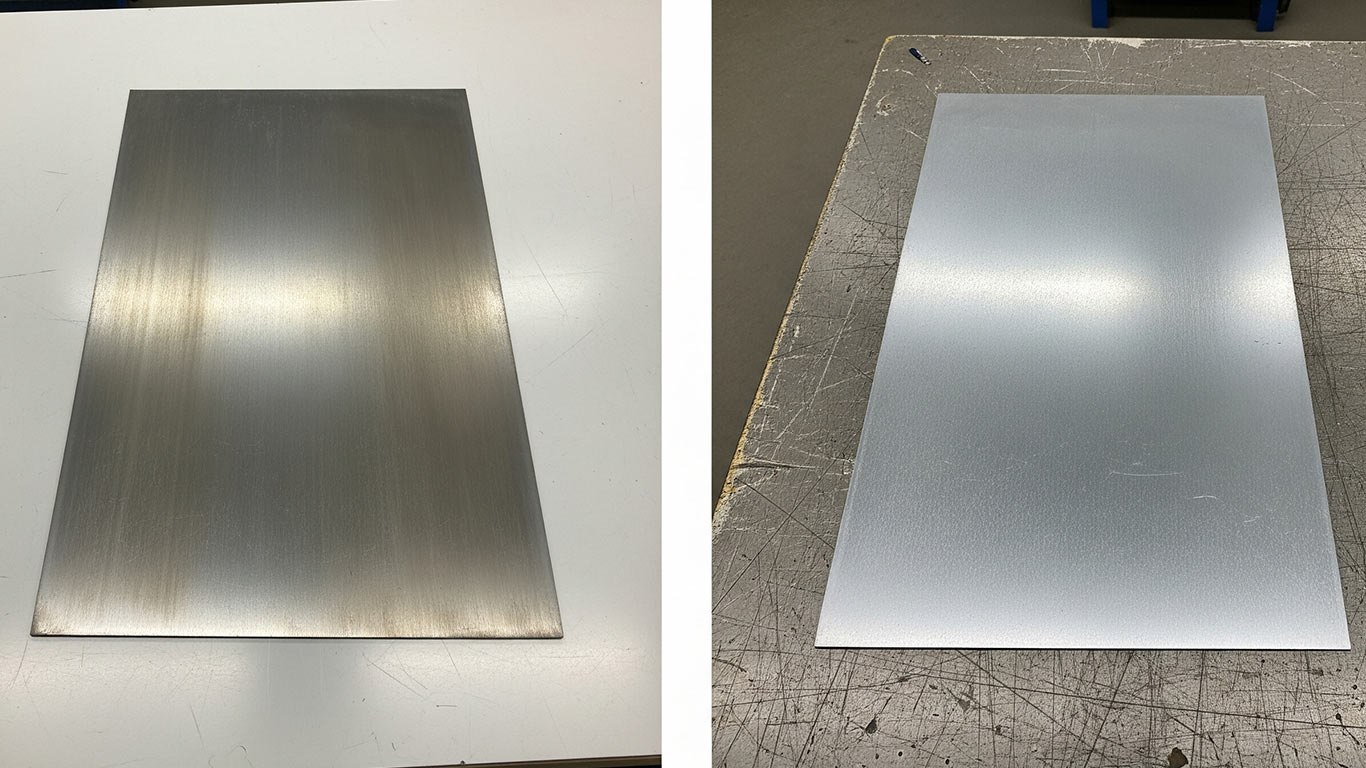

Zinc shows up as die-cast parts, rolled sheet, and galvanized coatings. A pulsed laser can take native oxide and white rust off the face when energy stays inside a gentle range for soft alloys and the job is scoped so the beam does not open bare steel under a coating. The zinc form decides the map. Zinc oxide fume needs capture at the head before weld prep or paint follows.
| Final results | Zinc-galvanizing residue, paint, oxide scale, and metallic surface deposits come off the zinc coating, and the steel underneath stays undamaged. |
| Speed and ease | The laser clears the residue and oxide, without any of the three legacy acid choices, which otherwise run from a few minutes to several hours depending on the acid. |
| Contaminants | Galvanizing, paint, oxide scale, and metallic deposits. |
| Methods | Zinc and tin are soft and melt far below steel, so a steel blast, a steel pickle, or a steel grind takes the coating with the soil. |
| Challenges | The acid reaction has to be watched for bubbling, since there's no fixed timer and the endpoint is visual, not scheduled. The metal must come out the moment bubbling stops, or acid damage to the underlying steel substrate follows. |
Zinc laser cleaning on this page targets die-cast housings and rolled sheet where oxide or white-rust films must leave without slurry. Charted tensile strength sits near 110 megapascals and density near 7,140 kilograms per cubic meter (MatWeb material property data). Thermal conductivity near 116 watts per meter-kelvin spreads heat quickly on thin walls. Short-pulse near-infrared fiber sources are the usual class for soft alloy film work.
| Parameter | Value |
|---|---|
| Canonical substrate | Zinc die-cast / rolled sheet |
| Tensile strength | 110 MPa |
| Density | 7,140 kg/m³ |
| Typical wavelength | 1064 nm, pulsed |
On this chart, common short-pulse 1064 nanometer work on zinc stays between about 1.15 and 2.5 joules per square centimeter, wider than tin but still softer than ferrous stock. Published tests frame a shared upper band from about 1.5 to 4 joules per square centimeter on soft alloy metals (1155-tests-2006 soft alloy damage band). A weathered face needs more energy than polished mill stock, so the scrap test must match the part before full-area scans run (Mustafa et al. Applied Surface Science 2019).
No. Galvanized steel is a layered iron-zinc stack with intermetallics, not a bulk zinc substrate. Wavelength-dependent cleaning studies separate pure-zinc-layer, intermetallic, and steel regimes (Applied Physics A 2022 galvanized cleaning regimes), so weld-prep strip on galvanizing belongs on zinc galvanizing laser cleaning, not this materials page.
Vaporized zinc becomes zinc oxide fume that must stay under the OSHA five milligram per cubic meter eight-hour average. Cal/OSHA Title 8 section 5155 adds a ten milligram per cubic meter short-term ceiling, so hood placement has to target fume, not settled dust (Cal/OSHA Title 8 §5155 airborne contaminants).
No. Heavy wet-storage stain is a voluminous hydroxide film that needs its own lighter pass. Rougher or weathered faces also need higher first-pass energy than polished mill stock, so the coupon has to match the actual surface, not a polished sample.
Name the zinc form before the first pulse, because die-cast stock, rolled sheet, and galvanized steel each carry different removal budgets. On powder-coated galvanizing, published nanosecond work near 0.7 joules per square centimeter at 1064 nanometers can lift polyester when the coupon proves the zinc layer stays intact (Science.gov laser coating removal). Duplex paint-over-galvanizing still limits zinc loss to about one mil, so energy has to stop before bare steel shows. Run fume capture at the head before production scans run.
Zinc absorbs roughly fifteen percent of 1064 nanometer energy on a bright face, so native oxide and white-rust films often darken first and leave the metal underneath for later passes. Charted damage for soft alloy zinc spans about 1.5 to 4 joules per square centimeter in the shared non-ferrous envelope, with production coupon work typically staying below 2.5 joules per square centimeter before melt or fume spikes appear (1155-tests-2006 soft alloy damage band).
Dry zinc laser cleaning produces zinc oxide fume and particulate that need source capture before production coupons run. Federal OSHA chemical data covers zinc oxide fume, California Title 8 section 5155 lists matching fume limits, and Bay Area visible-emission rules still apply to outdoor plumes (OSHA zinc oxide fume chemical data) (Cal/OSHA Title 8 §5155 airborne contaminants) (BAAQMD Regulation 6 particulate matter) (AWS Fact Sheet 25 metal fume fever).
OSHA chemical data entry 215 frames zinc oxide fume at five milligrams per cubic meter as an eight-hour time-weighted average for laser work that vaporizes zinc metal.[1]
Title 8 section 5155 Table AC-1 puts zinc oxide fume at five milligrams per cubic meter TWA and ten milligrams per cubic meter STEL for Bay Area and statewide California shops.[2]

AWS Fact Sheet 25 ties metal fume fever to zinc oxide from galvanized thermal work and cites ACGIH limits beside the federal fume PEL. Laser zinc vapor sits in the same hazard family.[3]
Zinc cleaning fails when the substrate class is wrong, when energy outruns the low melt point, or when leftover coating at a weld joint vaporizes under steel welding heat. Aggressive powder-strip energy can thin the sacrificial zinc layer while clearing paint. Zinc boils near 907 degrees Celsius while steel stays solid above 1,500 degrees, so incomplete strip before welding pressurizes the pool (AWS D-19.0 welding zinc-coated steel).
| Condition | Consequence |
|---|---|
| Galvanized steel run as bulk zinc oxide clean[1] | Wrong fluence stack and wrong acceptance test |
| Continuous-wave or high-duty thermal dwell on soft die-cast zinc[1] | Melt pooling, geometry loss, and zinc oxide fume overload |
| Coating remains at a weld joint after partial laser strip[1] | Zinc vapor defects and porous welds |
Weld preparation laser cleaning removes rust, mill scale, oil, and drawing compound from a joint face right before the arc or beam strikes, so the fitter is not grinding or wire-brushing the same edge on a tight schedule. The laser step targets a thin surface layer only and leaves the base metal dimensions alone, which fits both carbon [steel](/materials/steel-laser-cleaning) and [stainless steel](/materials/stainless-steel-laser-cleaning) joints across [metal fabrication](/applications/metal-fabrication-laser-cleaning-applications) shops. It clears [iron oxide rust](/contaminants/iron-oxide-rust-laser-cleaning) and light mill scale from an edge in a pass or two, but it will not strip heavy, multi-layer scale in one shot, and it is not a substitute for the post-weld passivation steps covered on the [stainless steel weld passivation](/applications/stainless-steel-weld-passivation-laser-cleaning) page. A cleaned joint face still needs a qualified welder to check fit-up, gap, and preheat against the governing welding code; the laser only preps the surface, it does not certify the weld.
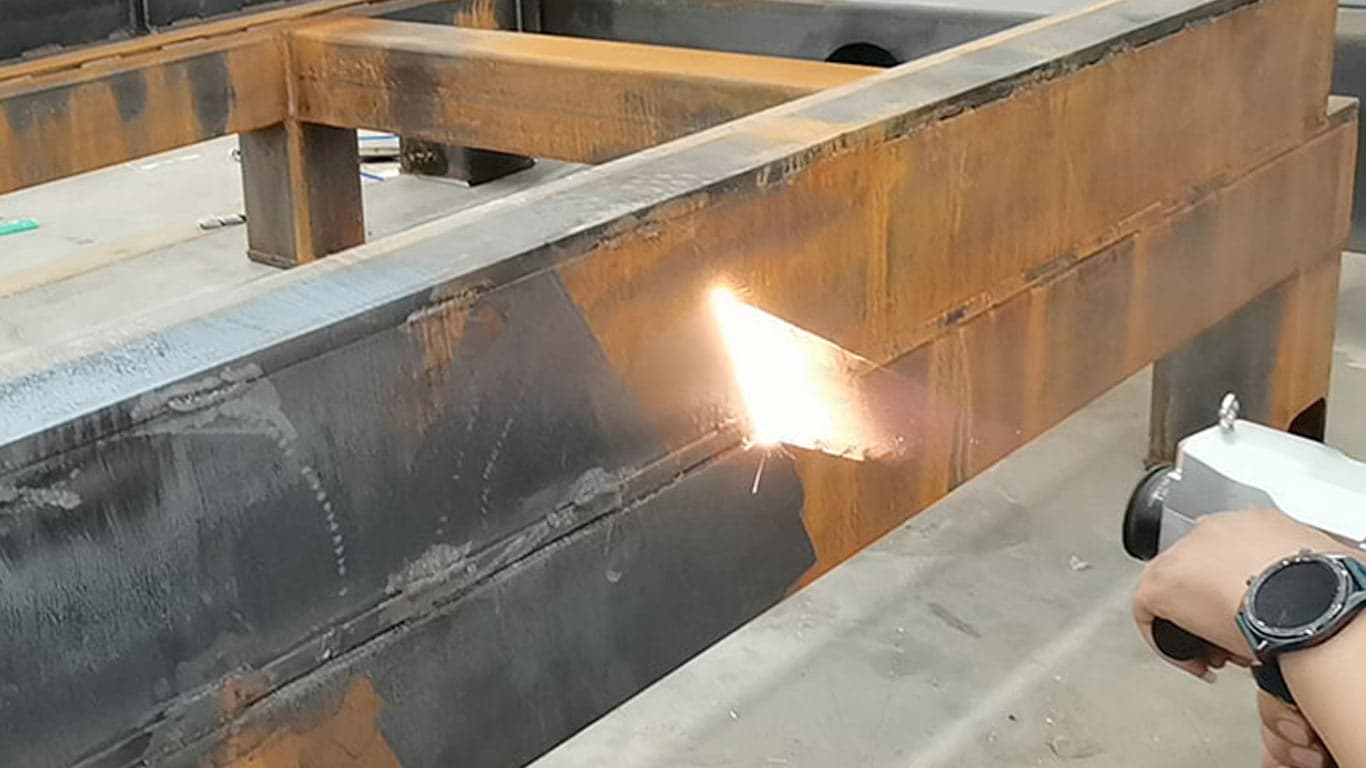
Laser cleaning removes mill scale, oxide layers, and weld residue from fabricated metal parts without abrasive media or chemical strippers. Shops handling [steel](/materials/steel-laser-cleaning), [aluminum](/materials/aluminum-laser-cleaning), and [stainless steel](/materials/stainless-steel-laser-cleaning) stock use the process ahead of [weld prep](/applications/weld-prep-laser-cleaning-applications) to strip [mill scale](/contaminants/mill-scale-magnetite-laser-cleaning) and [oxide scale](/contaminants/oxide-scale-laser-cleaning) before joints go together. The method suits selective cleaning on formed parts, brackets, and structural members where masking or dust containment would slow a chemical line. It does not replace bulk shot blasting on large flat stock, and it does not strip thick paint or coatings in one pass the way a grinder does. Fabricators pair laser cleaning with existing surface prep steps rather than swapping out an entire finishing line.

Automotive and EV production lines use pulsed fiber lasers to strip mill scale from stamped [steel](/materials/steel-laser-cleaning) body panels, clear weld-seam oxide ahead of resistance spot welding, and remove mold-release residue from cast [aluminum](/materials/aluminum-laser-cleaning) housings before adhesive bonding. On battery packs, the same process cleans busbar and terminal surfaces, as covered on the [EV battery busbar cleaning](/applications/ev-battery-busbar-laser-cleaning) page, so welds meet conductivity specs without media contamination. It does not replace chemical passivation baths for corrosion-resistant fastener coatings, deep paint stripping on multi-layer OEM finishes where undercoating risk is high, or bulk descaling of thick castings that still need mechanical grinding first. [Weld-seam preparation](/applications/weld-prep-laser-cleaning-applications) covers pre-weld oxide removal, while post-weld heat-tint removal on [stainless steel](/materials/stainless-steel-laser-cleaning) exhaust components runs on a separate parameter set.

A fiber laser removes galvanized zinc from structural steel without media blast, acid pickling, or a chemical rinse step. Galvanization removal by laser does not restore a reusable zinc layer, so once the gray coating disappears from a section, that section needs a fresh coat or a weld pass before moisture reaches the exposed steel.
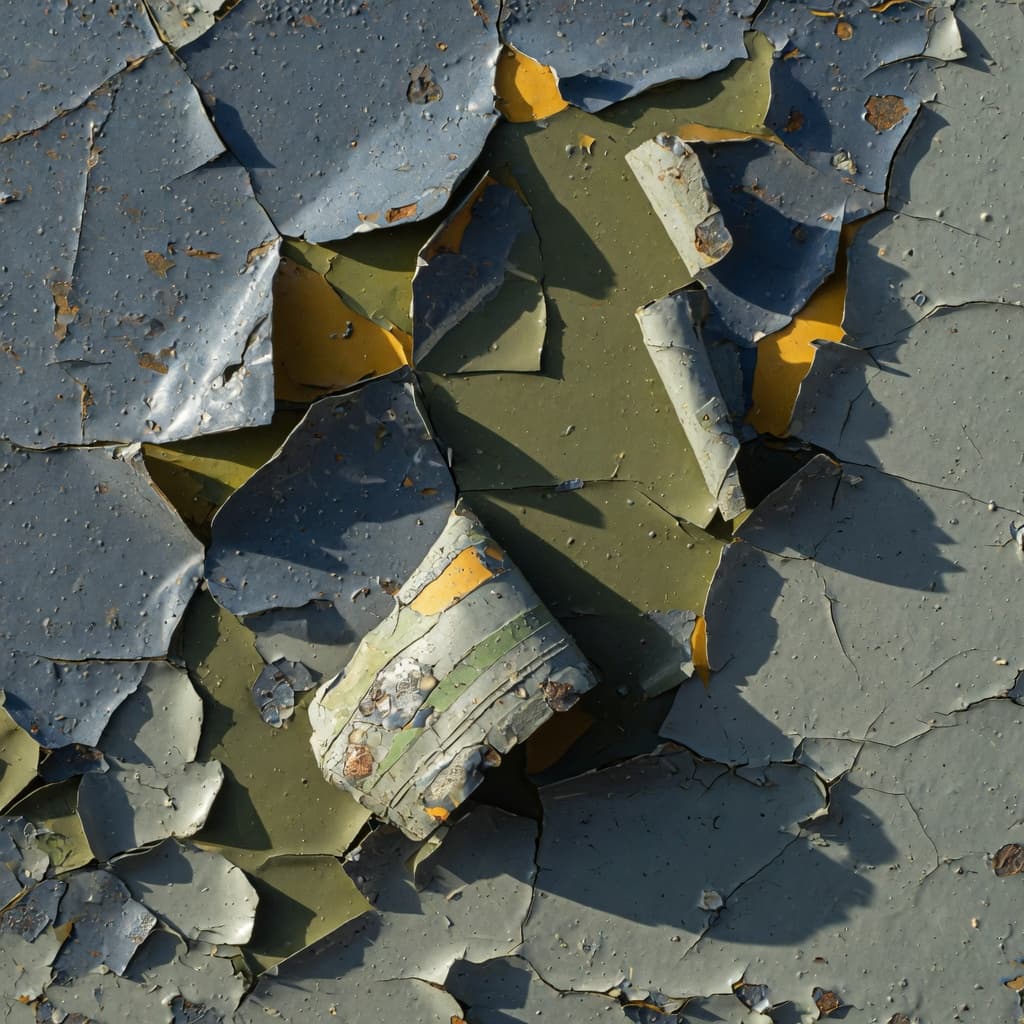
Requires matching the paint system and substrate pairing before setting energy, because a thin single topcoat on [steel](/materials/steel-laser-cleaning) clears at a fraction of the fluence a multilayer primer stack on [aluminum](/materials/aluminum-laser-cleaning) needs, and the substrate sets its own ceiling once the coating is gone. Paint sits as an applied, cross-linked polymer film bonded by mechanical keying and resin adhesion, not a corrosion product, so pigment load and binder chemistry decide more of the setting than the substrate alone. A surface-integrity study on laser-cleaned aluminum alloy carrying a paint layer documents that a visually bare finish does not by itself confirm the metal underneath escaped the pass undamaged (Applied Optics, 2024).
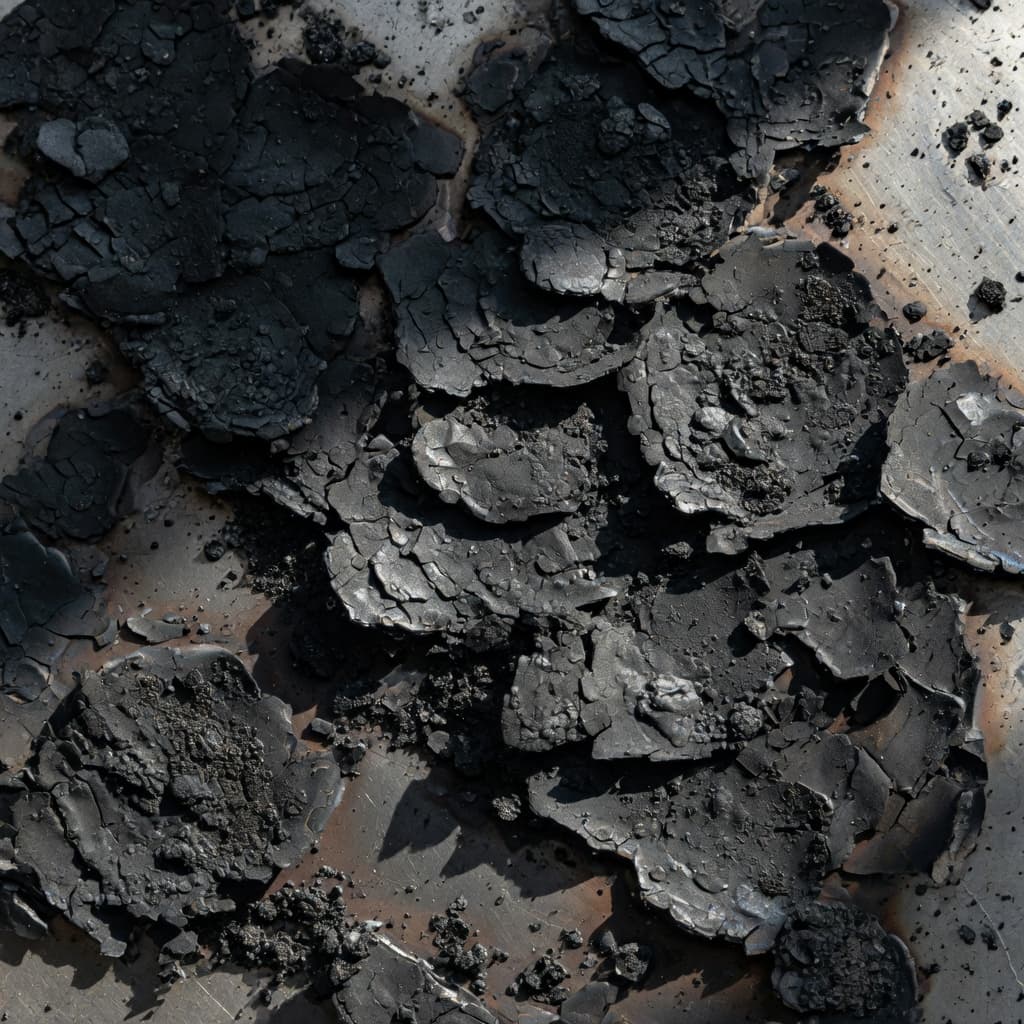
Laser cleaning removes the chromium-oxide and titanium-oxide scale that post-weld and post-anneal heat treatment grows on stainless steel, titanium, and Inconel, clearing the film without a chemical pickling bath. It will not rebuild the chromium that heat already pulled out of the grain boundaries beneath a dark heat-treated color, will not fix titanium alpha case that has already let oxygen diffuse deep into the metal, and will not stop the bare surface from re-oxidizing once it goes back into service heat.
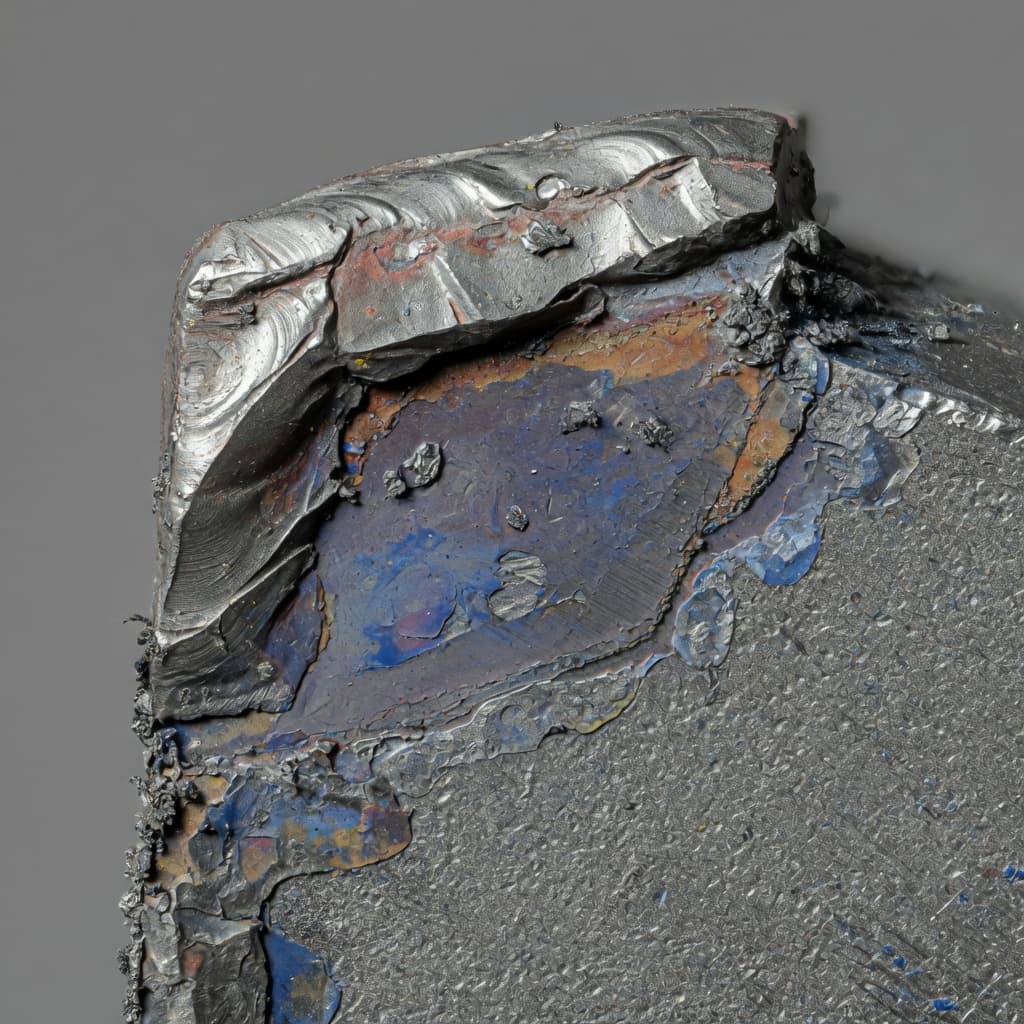
Requires reading the deposit-substrate pair before setting energy, because a [built-up edge](/materials/aluminum-laser-cleaning) on a carbide insert and the same cold-welded smear on a [tool-steel](/materials/tool-steel-laser-cleaning) die do not clear at the same fluence. The deposit got there by mechanical transfer, pressure welding during machining, adhesive wear between sliding parts, or hot workpiece pickup on a die, not by a chemical reaction with the base metal, so a matching offcut decides the setting rather than a rust or oxide default. Built-up edge on cutting tools forms when chip material pressure-welds to the rake face, work-hardens, and seizes the tip, the same transfer path that shows up as galling on dies and as hot pickup on a [tungsten-carbide](/materials/tungsten-carbide-laser-cleaning) cutting edge.
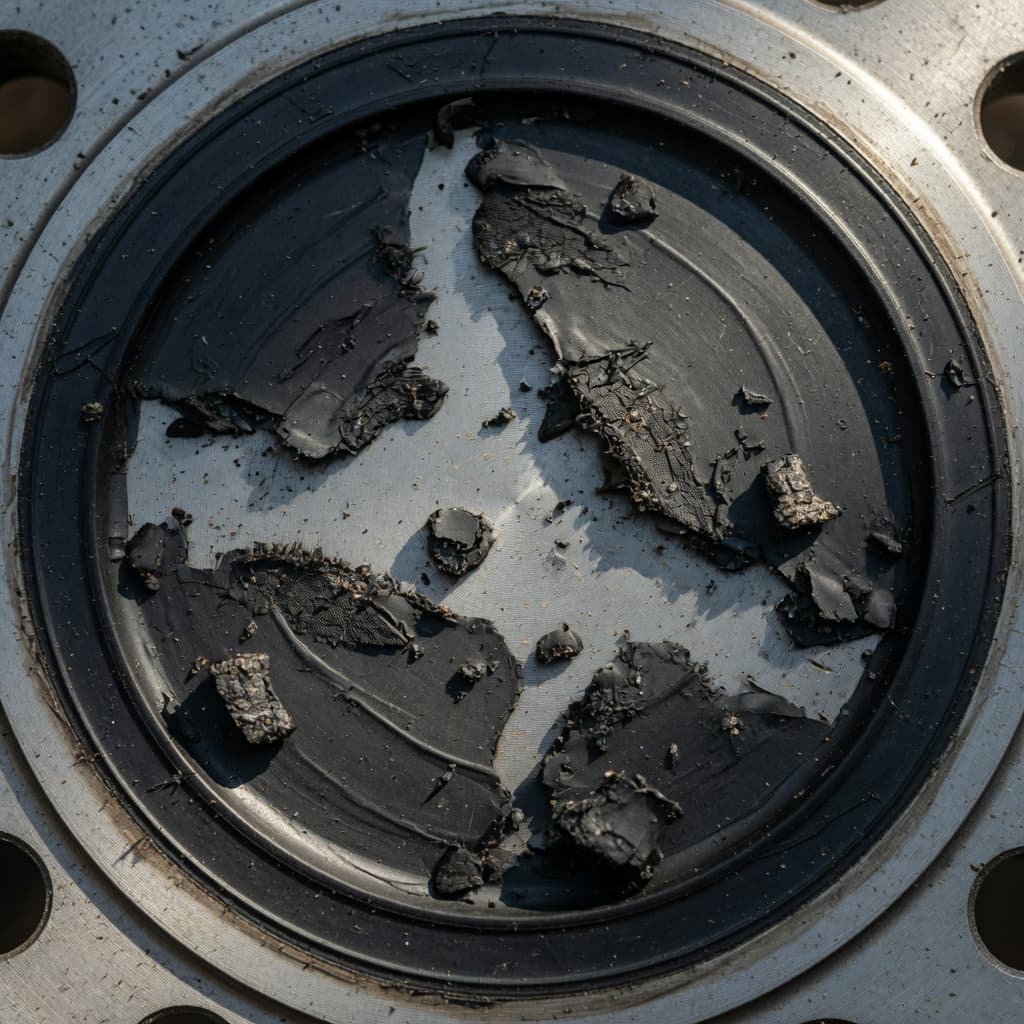
Laser cleaning decomposes mineral oil, synthetic lubricant, and machine grease off steel, aluminum, and stainless steel through fast thermal breakdown of the hydrocarbon film, the same damage-threshold logic that broader laser-cleaning threshold research has documented across very different host materials (Journal of Cultural Heritage, 2000). It is not a substitute for a wet alkaline line degreasing a full rack of parts at once, and it will not clear a bonded hard coating or a thick paint stack sitting on top of the oil.

