

AMPP
View official documentation (opens in new tab)SP21511-1-2024 covers pulsed laser cleaning on ferrous substrates only, so Type 304 acceptance still needs passive-film, roughness, and chemistry checks outside that standard.[1]
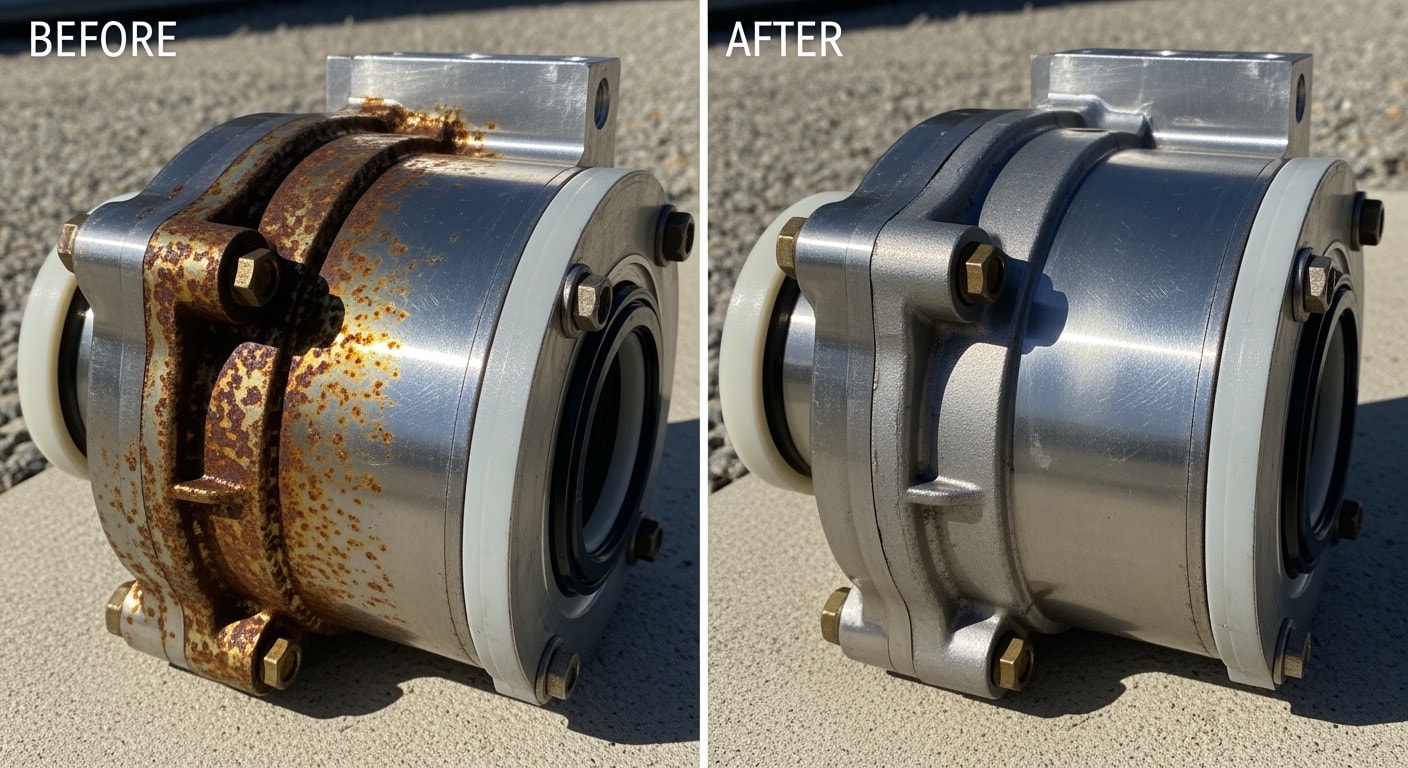

Laser cleaning removes rust, oxide, and residue from 304 stainless without damaging the base metal, using fluence between 0.41 and 2.0 J/cm² while staying below the damage limit at 1064 nm. That damage limit runs 5 to 12 J/cm², and 304 won't match 316's resistance to saltwater, since it fits everyday tanks and sinks instead of marine exposure.
| Final results | Weld heat tint, furnace scale, gasket rubber, and shop rust are gone, and the steel is still sound. |
| Speed and ease | The laser clears the tint and scale, without the 30-to-60-minute pickling-and-passivation-paste wait or the wash-and-haul that follows it. |
| Contaminants | Weld heat tint, furnace scale, gasket rubber, and shop rust. |
| Methods | The paste has to sit, then be washed off, and that wash cannot go down the drain. It has to be collected and hauled to a disposal facility. |
| Challenges | The paste leaves a matte face that then needs a Scotch-Brite polish, adding more time, and 304 resists crevice corrosion only up to about 200 ppm chloride versus roughly 1,000 ppm for 316, so a pickle that leaves residual iron creates a pitting risk sooner on this grade. |
Rust on Type 304L coupons clears near 4.11 J/cm² under a kilowatt-class nanosecond beam once energy stays on film removal alone. That same mapping can still turn up a chromium-rich oxide band that needs verification before wet service (Micromachines 2025 ns rust clean on SS304L). Stop the pass once the soil is gone instead of adding energy for extra shine (AMPP SP21511-1:2024).
Golden-to-blue tint on stainless welds usually returns to a metallic look after one to three nanosecond passes at moderate energy, confirmed before final inspection (Arcus CNC stainless weld tint passes). Deeper blue or black discoloration calls for a fresh coupon series rather than reusing a light-tint recipe.
Product-contact stainless still has to clear the 3-A roughness ceiling near 0.8 micrometers Ra once cleaning is done, since deeper valleys can harbor biofilm even after the rust is gone (3-A primer). See food industry laser cleaning for sanitary-bay habits on the same alloy.
No, AMPP SP21511-1-2024 addresses pulsed laser cleaning on ferrous substrates only, so a Type 304 job still needs its own passive-film, roughness, and chemistry acceptance path rather than borrowing that stamp. OSHA's hex-chrome monitoring duty under 29 CFR 1910.1026 still applies whenever cleaning raises chromium-bearing dust on 304.
A 304 job can look finished and still fail underneath. Nanosecond cleaning can leave a chromium oxide layer only a few micrometers thick with chromium-depleted bands beneath an otherwise bright 304L surface, so a part released on sight can fail a later wet-service chemistry check (Micromachines 16(12) 1366). Extra paint-clean passes carry their own risk, since three repeats above the clearing threshold can push surface roughness into the 3 to 4 micrometer range even after the coating is gone (Micromachines 2026 paint removal on AISI 304).[1]
| Condition | Consequence |
|---|---|
| Extra paint-clean passes after the coating is gone[1],[2] | Ra often rises into the 3–4 µm range and misses finish specs |
| Bright 304L released without chemistry mapping[1],[2] | Wet-service reuse fails when chromium oxide and depleted subsurface bands remain |
| Single-pulse energy above the blank 304L HAZ ceiling[1],[2] | Visible heat ring rewrites surface tint on oxide-only work |
Stainless 304 work requires grade confirmation before any coupon map gets reused, since L-grade stock tolerates less carbon pickup during welding heat. Local exhaust then has to run for the full dry pass because chromium-bearing dust can push hexavalent chromium past the OSHA eight-hour limit.[1]
Four separate rulebooks govern a chromium-bearing 304 job instead of one blanket stainless standard. The first of those rulebooks, AMPP SP21511-1:2024, covers only ferrous pulsed-laser ablation, so Type 304 still needs its own passive-film and roughness check outside that stamp. Federal OSHA then sets a 5 µg/m³[2] eight-hour hexavalent-chromium limit with monitoring at the 2.5 µg/m³ action level once cleaning raises chromium-bearing dust, and Title 8 section 1532.2 repeats that duty on Bay Area field and construction work. BAAQMD Regulation 6 closes the list by capping visible emissions at Ringelmann No. 1 for no more than three minutes an hour on any industrial plume the job throws off.[4]
SP21511-1-2024 covers pulsed laser cleaning on ferrous substrates only, so Type 304 acceptance still needs passive-film, roughness, and chemistry checks outside that standard.[1]

29 CFR 1910.1026 sets a 5 µg/m³ eight-hour hexavalent-chromium limit with monitoring at the 2.5 µg/m³ action level when hot-work or laser cleaning runs on chromium-bearing 304.[2]
Title 8 section 1532.2 still binds Bay Area field and construction work on chromium-bearing 304 when laser cleaning can form Cr(VI) in the breathing zone.[3]

Regulation 6 limits visible emissions to Ringelmann No. 1 for no more than three minutes per hour on industrial plumes, so capture still matters on Bay Area cleaning work.[4]
Charted Type 304 on this page carries about 505 megapascals tensile strength and 8,000 kilograms per cubic meter density, figures that leave a lower mechanical margin than carbon steel peers. Absorption near 0.35 at 1064 nanometers keeps the energy needed for cleaning below what denser ferrous grades require.
| Parameter | Value |
|---|---|
| Canonical substrate | AISI Type 304 / 304L |
| Tensile strength | 505 MPa |
| Density | 8,000 kg/m³ |
| Typical wavelength | 1064 nm, pulsed |
| Pulsed fleet in-window | 52 of 52 |
Blank 304L coupons set the energy ceiling that keeps a cleaning pass from leaving a heat ring. Single-pulse work on those coupons has to stay under about 6.3 joules per square centimeter, the published limit before a visible ring forms on bare 304L (EPJ-N, 304L single-impact HAZ). Cleaning onset on comparable stainless coupons runs from about 0.41 to 2.0 joules per square centimeter in a laser-cleaning mechanisms review, which is why a hidden trial still beats copying a number from this chart (Processes 2023 laser cleaning mechanisms). Slow overlapping passes that build past 200 joules per square millimeter on 304 can push oxidation density above seventy percent and leave fresh tint instead of a clean metallic face (Metals 16(2) 224). 52 of 52 pulsed machines in-window. Parity basis: datasheet max pulse energy (mJ) only · pulsed · ~1064 nm · shared contaminant thresholds · modeled spot (not a certified cross-OEM test).
Bare 304L needs more than about 0.36 joules per square centimeter absorbed before the beam clears soil instead of smearing it, since lighter doses never reach the calculated melt threshold (Carvalho et al. 2017, 304L melt threshold). A related austenitic grade, 316L, shows single-pulse scarring near 2 joules per square centimeter, a remelt warning rather than a 304 production setting (Acta Physica Polonica, 316L single-pulse damage). Charted cleaning onset across stainless coupons runs about 0.41 to 2.0 joules per square centimeter in a mechanisms review, the starting range worth testing before any full-face pass (Processes 2023 laser cleaning mechanisms).

Laser cleaning removes carbon buildup and dried residue from food-contact equipment without water, matching the dry-cleaning logic auditors expect under FSMA 21 CFR 117 for low-moisture plants. It clears open [stainless steel](/materials/stainless-steel-laser-cleaning) on [conveyor belt rollers](/applications/conveyor-belt-roller-laser-cleaning) the same way it clears roasting drums for [coffee roasters](/applications/coffee-roaster-laser-cleaning), but it stops at a sight line: elastomer seals and anything hidden behind a belt still need the plant's sanitize step and an allergen swab.
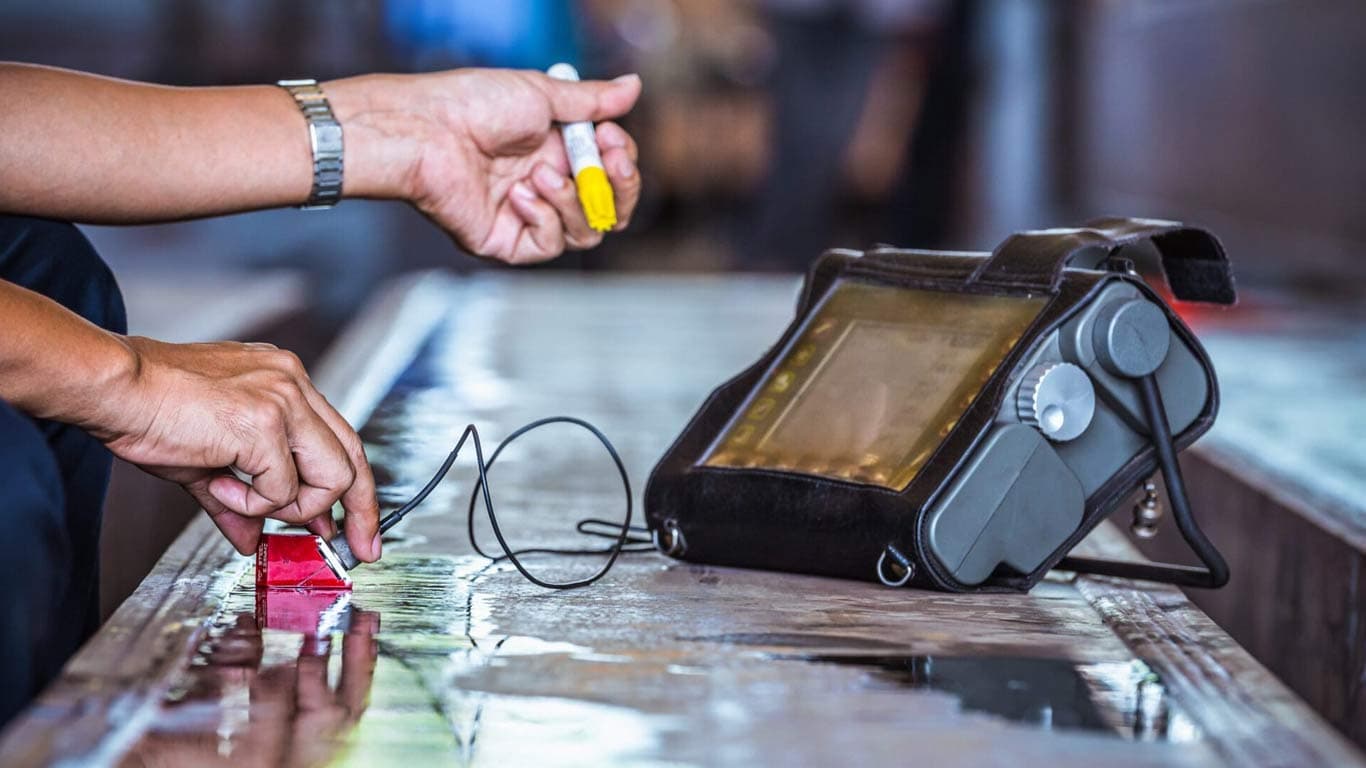
Laser cleaning removes the blue-brown heat tint that forms along a weld seam on [stainless steel](/materials/stainless-steel-laser-cleaning) during [weld prep](/applications/weld-prep-laser-cleaning-applications) work, stripping the chromium-depleted oxide layer so the chromium-rich surface underneath is exposed again. That [heat tint](/contaminants/weld-heat-tint-laser-cleaning) blocks the passive chromium oxide film from forming evenly, so taking it off clears the path to passivation rather than finishing the job outright. Laser cleaning does not replace the ASTM A967 chemical passivation certificate by itself; citric or nitric testing and the paperwork that documents it still have to follow the cleaning pass. The process also will not correct deep pitting that has already eaten into the base metal, since that damage needs grinding or weld repair, not surface cleaning. Energy control matters close to the fusion zone, because too much heat reheats the weld toe and brings the same discoloration right back. Bay Area fabrication plants running stainless pressure vessels and food-grade piping use this step between welding and certification to keep rework off the schedule.
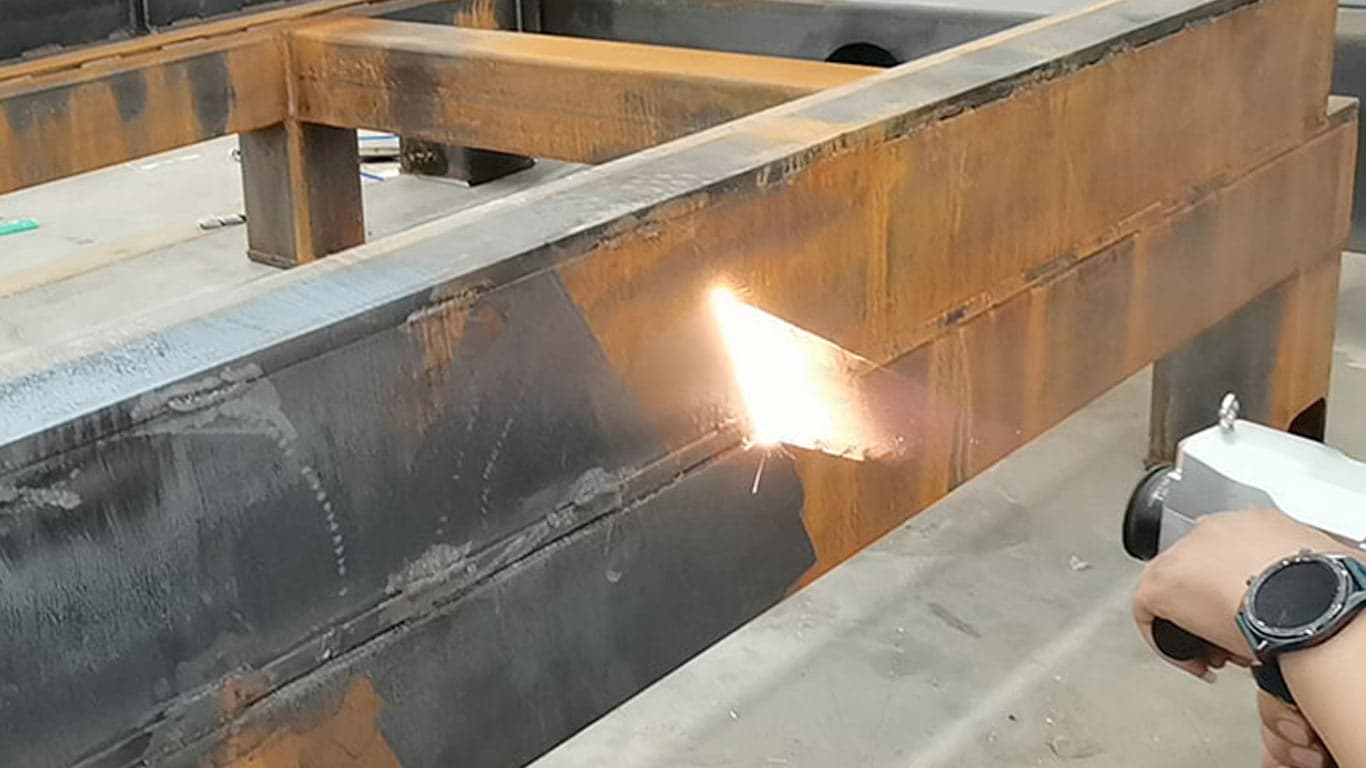
Laser cleaning removes mill scale, oxide layers, and weld residue from fabricated metal parts without abrasive media or chemical strippers. Shops handling [steel](/materials/steel-laser-cleaning), [aluminum](/materials/aluminum-laser-cleaning), and [stainless steel](/materials/stainless-steel-laser-cleaning) stock use the process ahead of [weld prep](/applications/weld-prep-laser-cleaning-applications) to strip [mill scale](/contaminants/mill-scale-magnetite-laser-cleaning) and [oxide scale](/contaminants/oxide-scale-laser-cleaning) before joints go together. The method suits selective cleaning on formed parts, brackets, and structural members where masking or dust containment would slow a chemical line. It does not replace bulk shot blasting on large flat stock, and it does not strip thick paint or coatings in one pass the way a grinder does. Fabricators pair laser cleaning with existing surface prep steps rather than swapping out an entire finishing line.
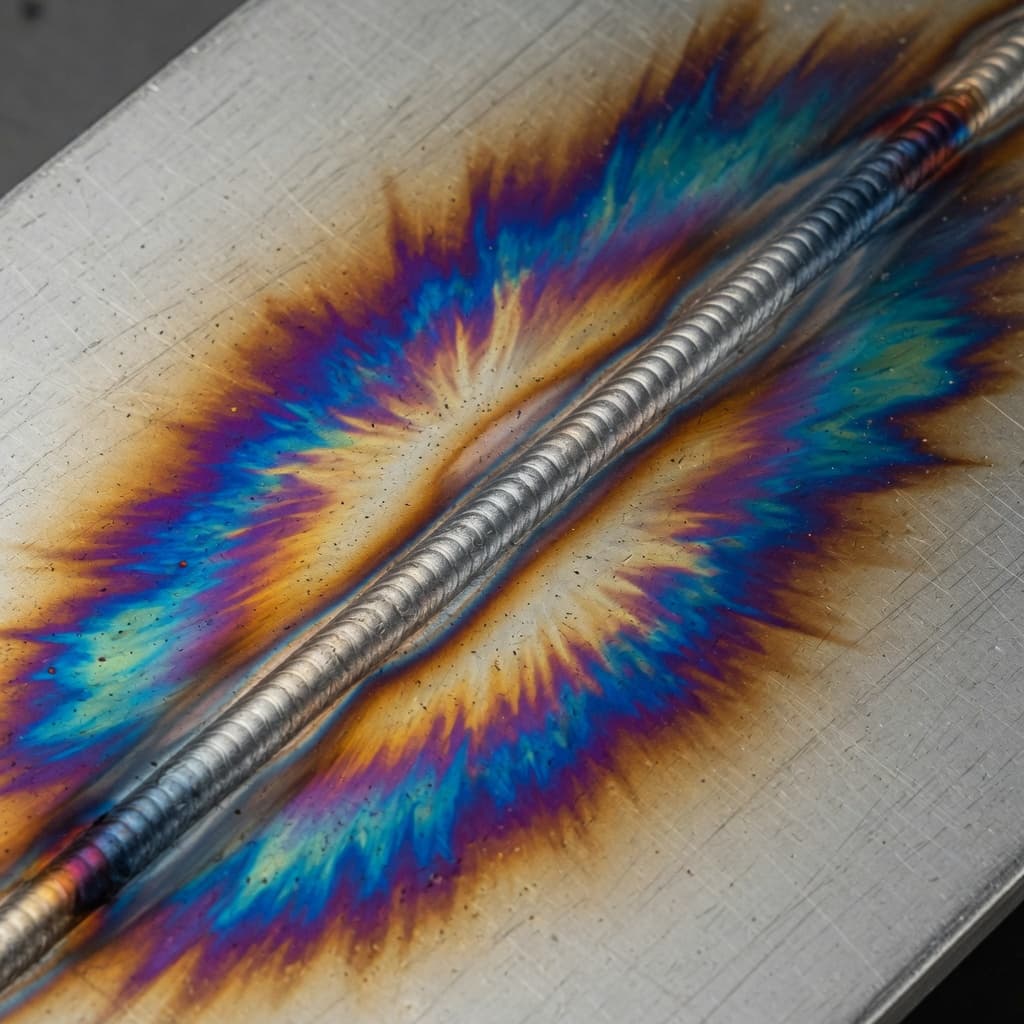
Laser cleaning removes the straw-to-blue heat tint film from a stainless weld bead and leaves the surrounding parent metal untouched. It is not a substitute for a post-weld corrosion sign-off, and it will not remove heavy slag or mill scale sitting on top of the discoloration.
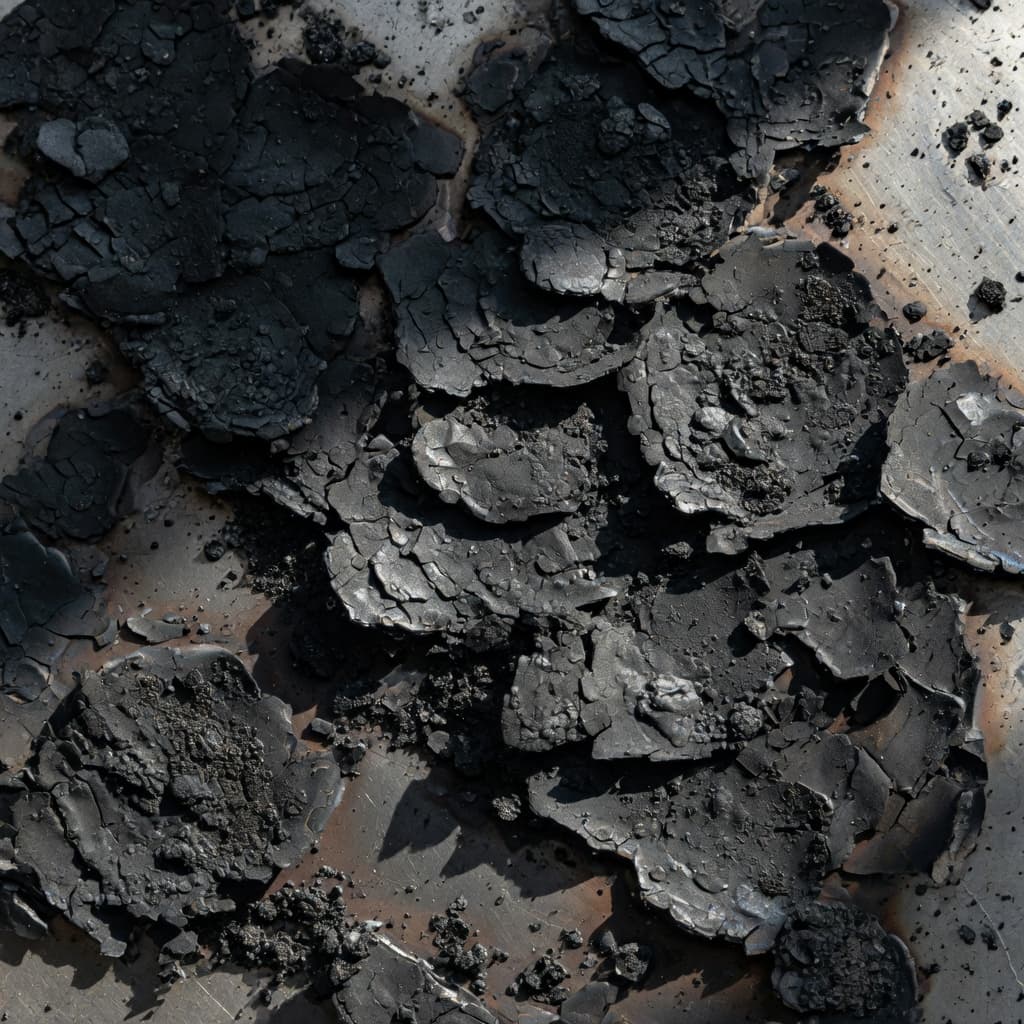
Laser cleaning removes the chromium-oxide and titanium-oxide scale that post-weld and post-anneal heat treatment grows on stainless steel, titanium, and Inconel, clearing the film without a chemical pickling bath. It will not rebuild the chromium that heat already pulled out of the grain boundaries beneath a dark heat-treated color, will not fix titanium alpha case that has already let oxygen diffuse deep into the metal, and will not stop the bare surface from re-oxidizing once it goes back into service heat.
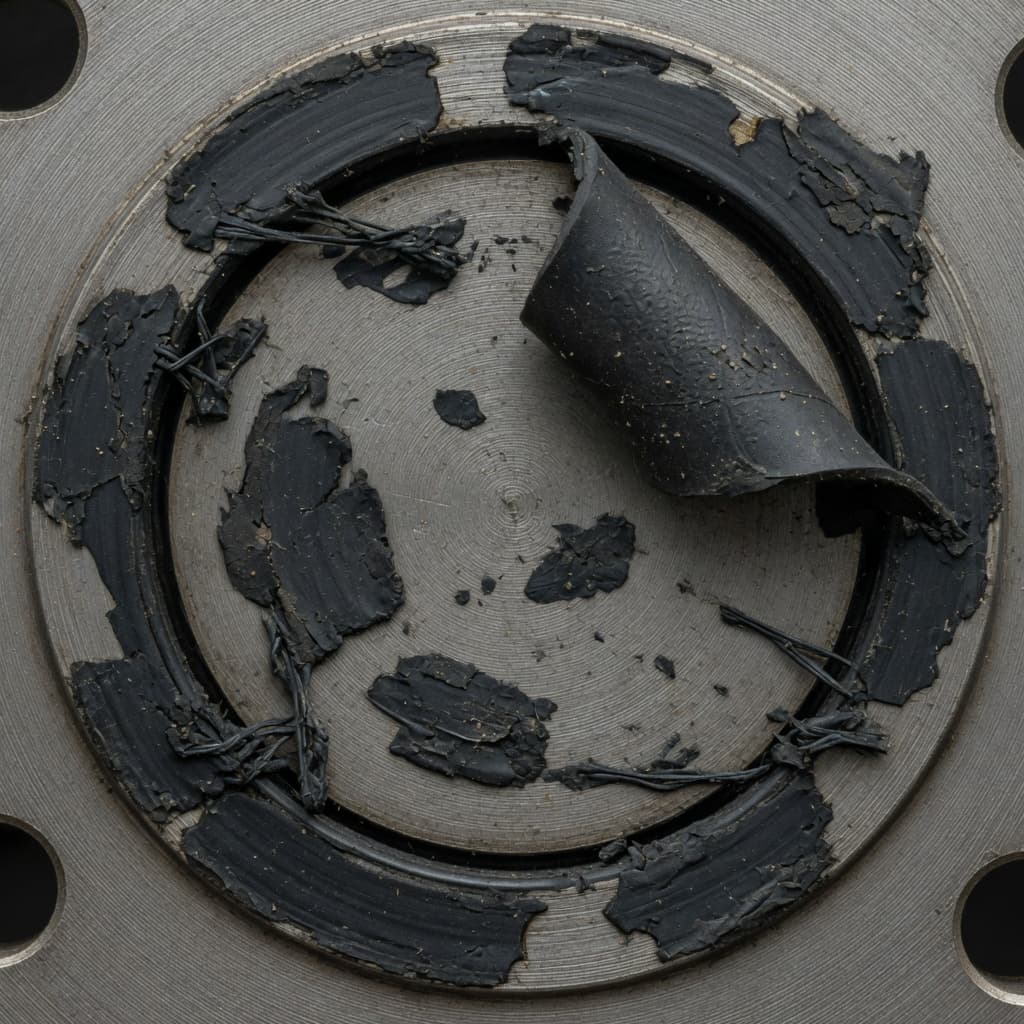
Requires a material call before a setting, since carbon-filled EPDM and nitrile gasket residue absorb a 1064 nanometer beam efficiently while Viton and other FKM compounds carry the same dark filler but decompose above roughly 200°C into hydrogen fluoride gas. [Carbon steel](/materials/steel-laser-cleaning) flange faces clear this residue between about 1 and 3 J/cm2, well under the 8 to 15 J/cm2 point where the metal itself starts to take damage, so the margin stays wide once the gasket type is confirmed on a coupon. Peer-reviewed laser surface-prep work on bonding faces shows the same selective-lift pattern a flange land needs when the rubber film must leave and the metal underneath must stay ready for the next gasket.
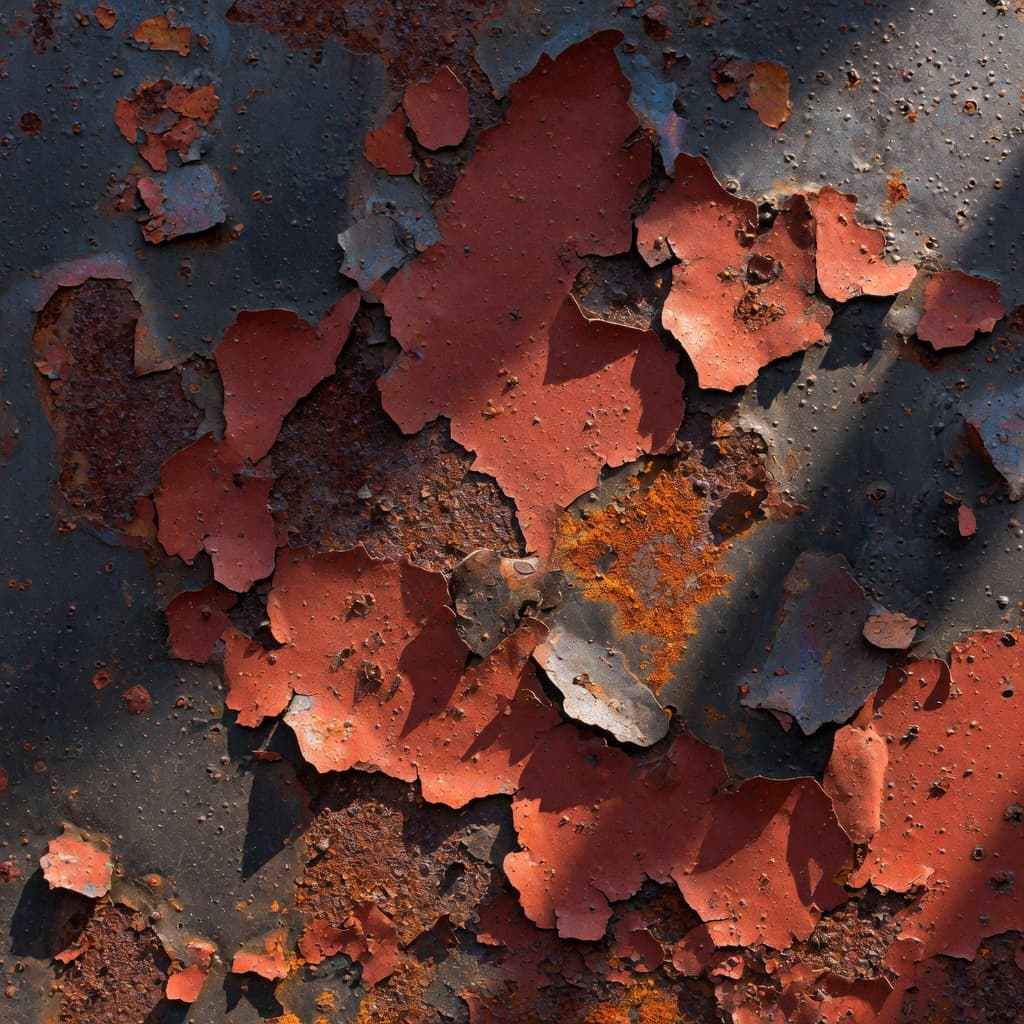
Laser cleaning removes iron oxide rust from steel down to bare metal without grinding wheels, abrasive blasting, or chemical strippers. The beam ablates the oxide layer while leaving sound steel underneath intact, so a part keeps its original dimension and surface finish through cleaning. It will not reverse pitting the rust already caused, repair corrosion damage done to the substrate, or clear a part in one blanket setting; rust depth and iron oxide type both change how many passes the surface needs before it is ready for inspection.