


Aluminum Bronze Laser Cleaning
Aluminum bronze is built around its surface oxide. The Al₂O₃ layer that forms before [the alloy's copper matrix can develop its own patina](/materials/copper-laser-cleaning) gives...


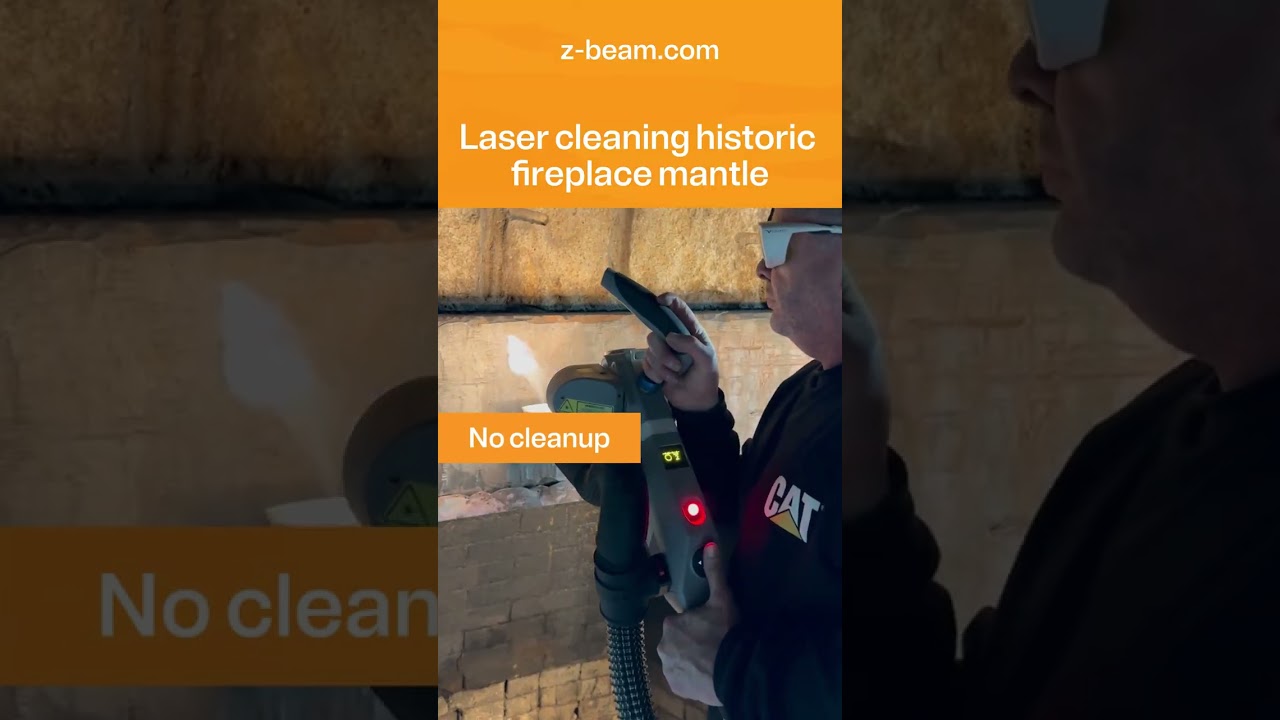
Laser cleaning removes soot and old varnish from a historic fireplace beam and mantle without abrading the carved tool marks or wood grain underneath. Wood chars at aggressive settings, so a steel-cleaning recipe fails here; the operator must run lower power and shorter dwell than techniques suited to oak or walnut stock elsewhere in the shop. This clip does not cover refinishing, stain matching, or structural repair of the timber, since those steps come after cleaning, not during it. Similar caution around substrate scorching applies to heritage architectural cleaning and historic masonry restoration work shown elsewhere on the site. The mantle keeps its carved detail and aged patina after treatment, since the laser targets only the surface contamination layer and spares the wood fiber below.
Short UtW7HEItWyU shows pulsed laser clearing old varnish, soot, and grime from a historic fireplace beam and mantle in 44 seconds without grit.
Aluminum bronze is built around its surface oxide. The Al₂O₃ layer that forms before [the alloy's copper matrix can develop its own patina](/materials/copper-laser-cleaning) gives...

Pulsed 1064nm nanosecond fiber laser cleaning removes rust and adherent contamination from carbon steel at fluences of 2–5 J/cm² [1], but AMPP SP21511-1 (August 2024) establishes a...

Oak's open ring-porous structure (porosity 0.55) sets it apart from closed-grain hardwoods like [Maple](/materials/maple-laser-cleaning): soot, biological growth, and finish residu...
The crew classifies the soot as dry powder or wet oily residue, then walks a labeled brick coupon at sub-1 J/cm² fluence where the carbon layer vaporizes while the masonry stays cool. Structural wood gets the same pass only after species tests, because the margin between lifting surface char and scorching fiber is narrower than on brick. HEPA capture keeps laser-generated soot particulate under California's five-milligram respirable dust limit, and wet synthetic fires still trigger the tighter PAH exposure line for tar-like volatiles.
Bridge crews reach for HEPA before solvent when lead or chromate primers hide under aged topcoats, because BAAQMD cold-cleaner rules cap stripper VOC well below what commercial products carry. A pulsed 1064 nm pass removes organic films without a liquid hazmat stream, yet [oak](/materials/oak-laser-cleaning) and [concrete](/materials/concrete-laser-cleaning) test coupons on the same job do not inherit plate-[steel](/materials/steel-laser-cleaning) damage margins. Grit-profile recoats that demand ISO 8503 anchor tooth stay out of scope even when the visible coat is gone.
Greasy steel and aluminum weld coupons need extraction bracketed before the pulsed pass. Cutting-fluid residue pyrolyzes at the lowest degrease energy band of any contaminant family on those joint faces, coupon work, not a production shell throughput claim.
Hard coatings laser cleaning starts with XRF on the insert, TiAlN and CrTiAlN flank strips need coupon fluence, not one 1064 nm setting for all five chemistries. Hot alkaline baths leach cobalt from WC-Co; laser leaves dry nitride dust sized to Cal/OSHA 0.5 mg/m³ chromium and 0.02 mg/m³ cobalt ceilings.

Exterior cleaning of San Francisco City Landmarks and Mills Act properties must satisfy the Secretary of the Interior's Standards. The "gentlest means possible" mandate under 36 CF...

A Bay Area coating shop can lift industrial film on a dry pulsed pass and stay under the 50 g/L VOC cap in BAAQMD 8-16-303.5. The repair cleaner never starts, so the solvent-usage...
