


Cal/OSHA
View official documentation (opens in new tab)Title 8 section 5155 airborne contaminant tables still govern shop exposure when CFRP laser cleaning throws dust into the breathing zone.[1]
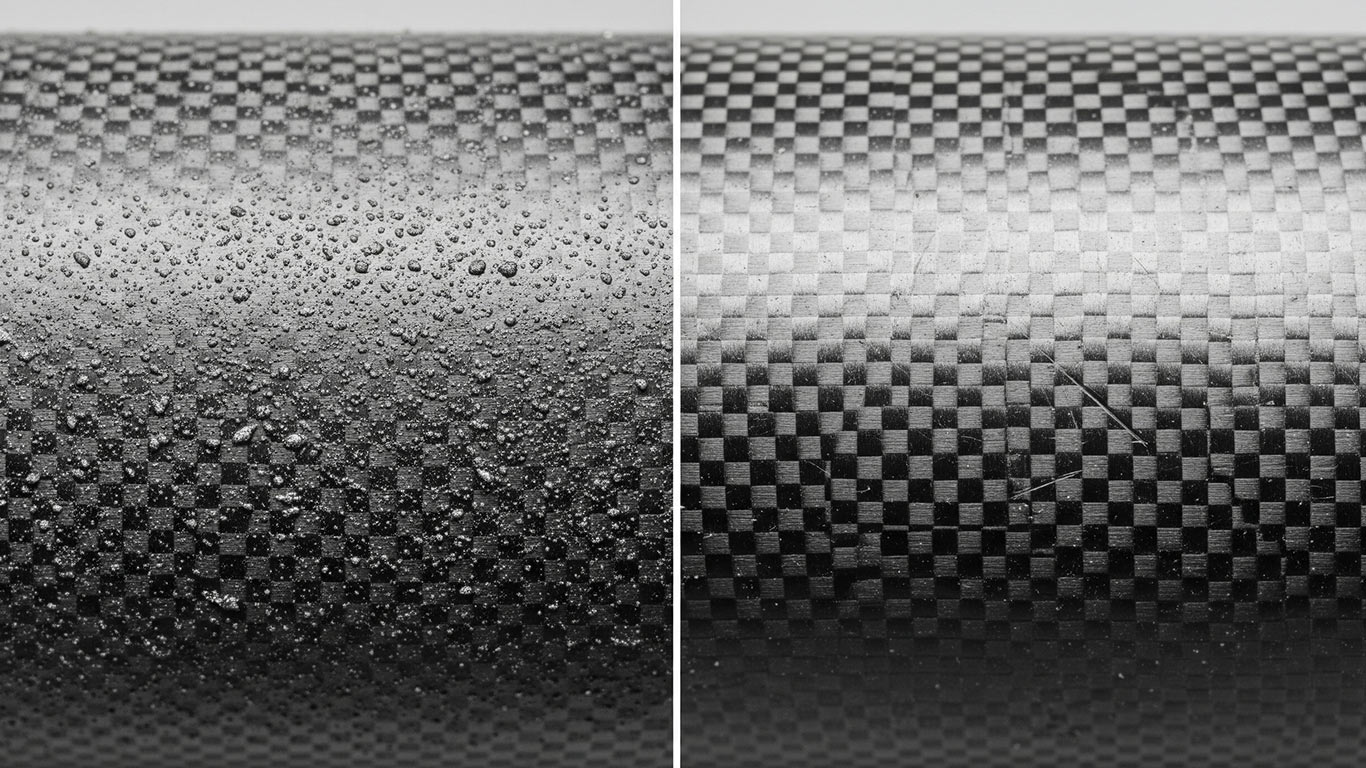

CFRP panels need a layup check so a resin-side pass stops before fiber shows. Release agents and paint can come off with a dry laser pass if energy stays in the resin. The matrix chars or powders when the pass runs hot. Exposed weave is the injury that matters. Dust capture stays on for the dry job. Scrap of the same layup and resin family sets working energy before any production panel.
| Final results | Manufacturing residue, paint, hard coatings, and fire char are off the skin, and the fibers stay covered by a thin resin film. |
| Speed and ease | The beam clears the surface film and does not wait out the poultice, stripper, or wipe dwell. The laser clears down to that thin resin film and does not wait out the multiple sandpaper grits and checks hand-stripping needs. |
| Contaminants | Mold release, paint, a hard coating, and soot. |
| Methods | Standard CFRP bonding prep lacks precision and reproducibility. |
| Challenges | Mechanical abrasion sanding risks damaging the underlying fibers. |
On the chart, production CFRP stays in a safe energy band between about 1.5 and 3.0 joules per square centimeter for common short-pulse near-infrared work (Int. J. Adhes. Adhes. 2016). Epoxy-selective cleaning often starts lower, near 0.5 to 1.2 joules per square centimeter, so soil can leave before the matrix hits the published damage band (Wolynski et al. 2020). Treat that lower band as a coupon guide for release agent and light soil, not a license to strip thick paint with the same start energy. Keep dust capture on for the whole dry job, and stop at the first fiber expose before climbing further. 52 of 52 pulsed machines in-window. Parity basis: datasheet max pulse energy (mJ) only · pulsed · ~1064 nm · shared contaminant thresholds · modeled spot (not a certified cross-OEM test).
Dry CFRP laser cleaning still throws particulate that needs capture at the head. California Title 8 section 5155 covers airborne contaminants in the breathing zone, and Bay Area plumes still sit under BAAQMD Regulation 6 visible-emission limits (Cal/OSHA Title 8 §5155 airborne contaminants) (BAAQMD Regulation 6 particulate matter).
Title 8 section 5155 airborne contaminant tables still govern shop exposure when CFRP laser cleaning throws dust into the breathing zone.[1]

Regulation 6 limits visible emissions to Ringelmann No. 1 for no more than three minutes per hour on industrial plumes, so capture still matters on Bay Area CFRP cleaning work.[2]
Before any energy raise, CFRP cleaning requires a layup and coating-stack check, then a light resin-side pass before climbing toward paint removal. Metal paint recipes need a separate path. See aerospace cleaning when flight hardware is next after surface preparation notes are clear (Palmieri NASA picosecond CFRP 2017).
CFRP facts on this chart cover epoxy-matrix carbon fiber stock. Charted tensile strength sits near 1,480 megapascals and density near 1,550 kilograms per cubic meter (MatWeb material property data). Short-pulse near-infrared sources are the usual class for this property set. See aerospace cleaning for flight-hardware contexts that work the same composite.
| Parameter | Value |
|---|---|
| Canonical substrate | Carbon fiber reinforced polymer (CFRP) |
| Tensile strength | 1,480 MPa |
| Density | 1,550 kg/m³ |
| Typical wavelength | 1064 nm, pulsed |
| Pulsed fleet in-window | 52 of 52 |
CFRP cleaning fails when metal paint recipes get copied onto the composite. It also fails when resin damage is ignored during paint lift. Fiber expose on the coupon means the matrix already burned past a safe clean, and later bonds suffer (Fischer et al. 2022).
CFRP takes the short-pulse beam as a resin-and-fiber stack, not a single metal face. Epoxy matrix cleaning under nanosecond near-infrared work is reported near 0.5 to 1.2 joules per square centimeter (Wolynski et al. 2020) (Li et al. 2020). Published damage for this page sits near 1.5 to 3.0 joules per square centimeter. That gap is why operators clear release agent or light soil in the lower band and stop before fiber exposure, because exposed fiber hurts later bond strength. Coupons still need a look between energy steps, because layup and paint thickness change how soon the matrix chars.

Laser cleaning removes oxide, sealant, and coating buildup from aircraft skins, engine components, and defense hardware without media blasting or chemical stripping. It works on [aluminum](/materials/aluminum-laser-cleaning), [titanium](/materials/titanium-laser-cleaning), and [Ti-6Al-4V](/materials/titanium-alloy-ti-6al-4v-laser-cleaning) airframe alloys, plus composite skins near [weld prep](/applications/weld-prep-laser-cleaning-applications) and [turbine maintenance](/applications/laser-cleaning-turbine-boiler-maintenance) tasks. It does not replace certified [paint removal](/applications/laser-paint-coating-removal-bay-area) chemistry on every topcoat, and it fails on composite layups where fiber sits close to the surface. Aerospace programs still require engineering approval before substituting laser methods for abrasive or chemical processes on flight-critical parts, since parameters that clear coating on one alloy can alter a titanium surface or char a resin matrix on the next.
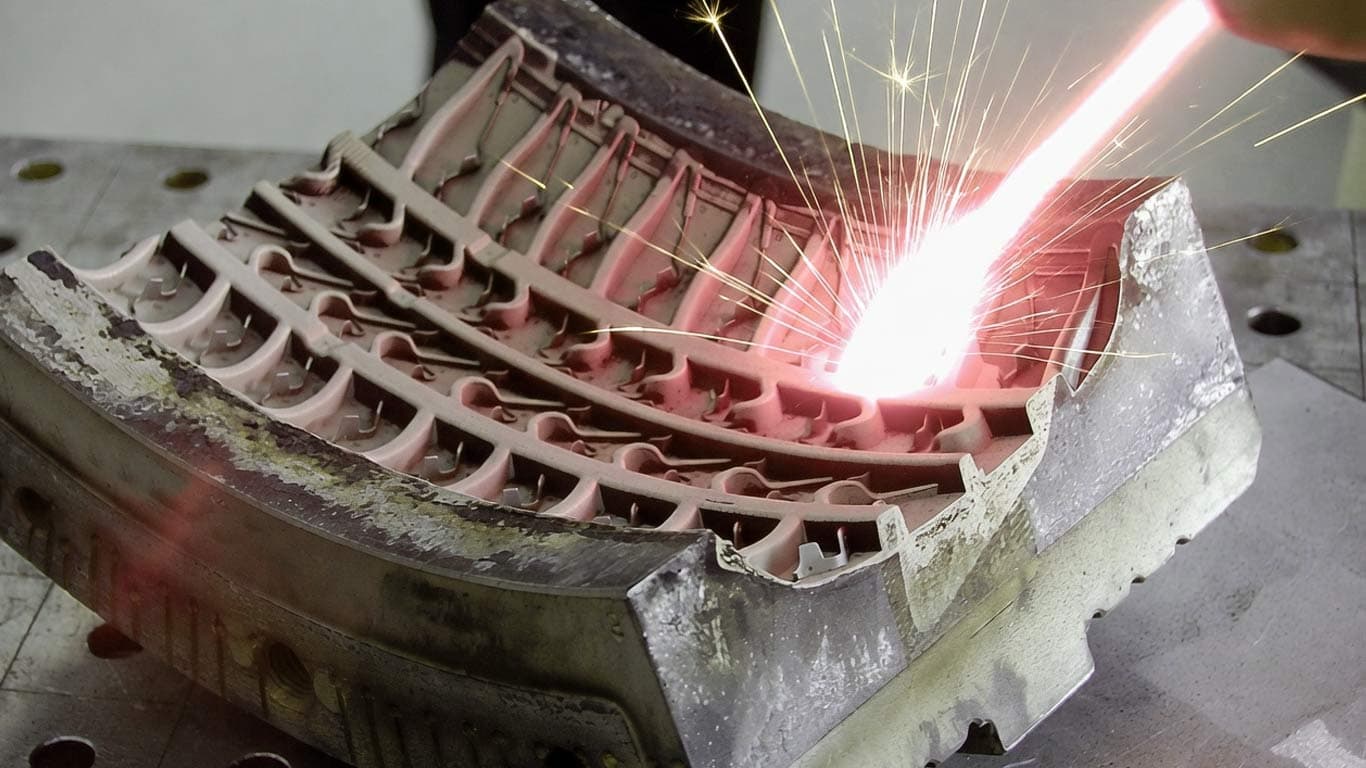
High-pressure die-casting tooling fails for a different reason than an [injection mold](/applications/injection-mold-tooling-laser-cleaning): molten [aluminum](/materials/aluminum-laser-cleaning) reacts with iron in [H13 cavity steel](/materials/tool-steel-laser-cleaning) to form a hard Fe-Al intermetallic layer that raises cavity roughness and locks a shot in place long before surface dirt alone would cause a reject. OSHA Table Z-1 caps total nuisance dust at 15 milligrams per cubic meter in an enclosed die-casting cell, and laser cleaning strips that intermetallic film and the carbonized release residue around it without the abrasive media that would raise roughness further. The process also leaves PVD and nitride anti-soldering coatings intact, where abrasive blasting cuts through them in one pass. It does not recoat a worn insert or re-cut a soldered cavity back to print dimensions.
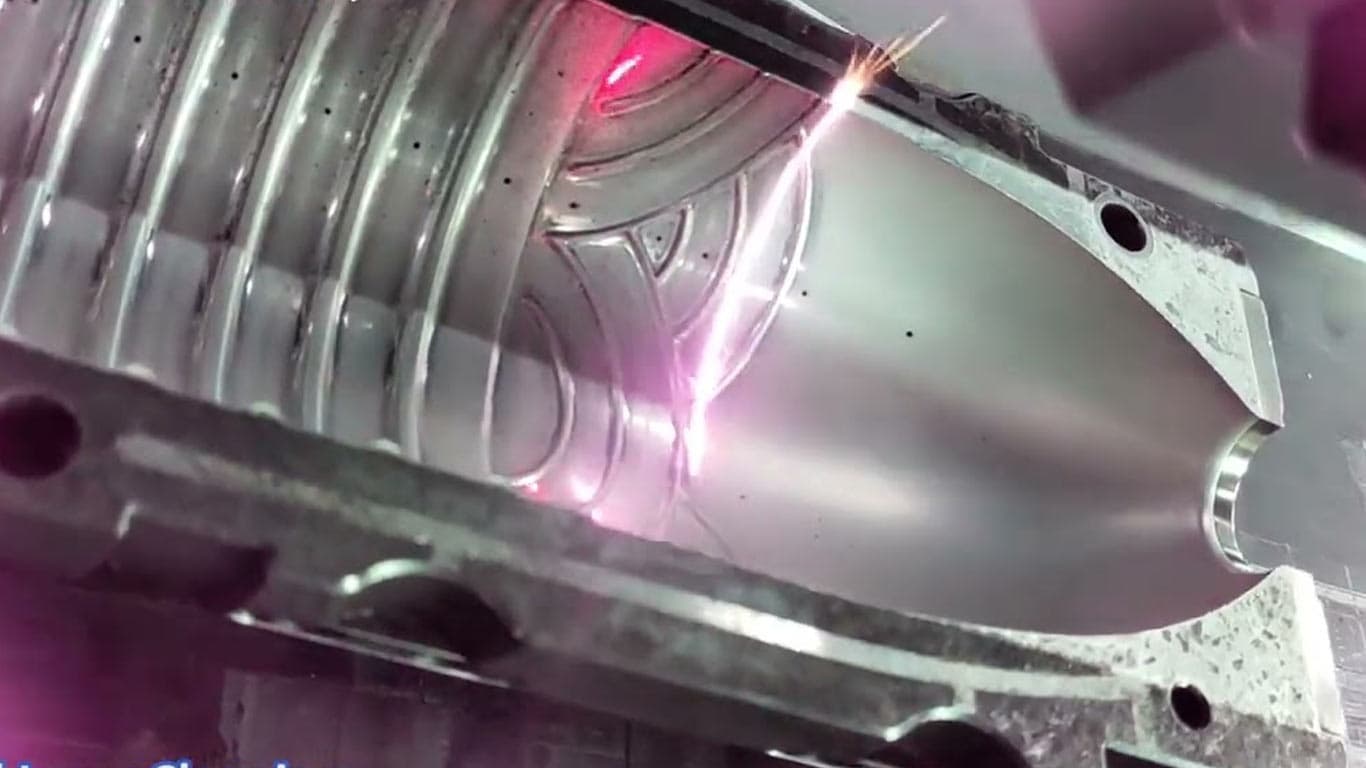
Precision surface work requires contact-free cleaning because gauge faces, optical flats, and polished tooling scratch under abrasive pads or chemical baths. Pulsed fiber sources remove fingerprint films, particulates, and thin oxide from these finishes without touching the substrate, but a continuous-wave fiber laser is not treated as a safe default here until a peer-reviewed study backs that claim. Semiconductor wafer chambers keep their own class-rated rules on [semiconductor cleanroom tooling laser cleaning](/applications/semiconductor-cleanroom-tooling-laser-cleaning), and release-layer mold work belongs on [mold and die laser cleaning](/applications/mold-die-laser-cleaning-applications) rather than here. Titanium implants and [stainless steel](/materials/stainless-steel-laser-cleaning) precision parts each need a shop-tested cleaning limit, since no single particulate count works across every polished substrate.
When energy climbs past the resin-safe band, the matrix chars and fiber shows on the face. Stop at the first fiber expose and drop energy before another try.
Release agent and thick paint respond differently under the beam, so light soil needs its own lighter pass first. Clear the soil, then review paint settings only if fiber stays covered.
CFRP laser cleaning still counts as industrial particulate work under Title 8 section 5155 airborne contaminant rules, so keep capture at the head even on dry jobs (Cal/OSHA Title 8 §5155 airborne contaminants).
Settings meant for aluminum paint stacks should not be copied onto CFRP without a fresh layup review and coupon map (Zhu critical review laser paint CFRP 2025).

Release agent, cured resin flash, and paint stack come off a composite tool only when the pulsed beam stays inside the film and never opens carbon fiber or scorches the polymer matrix. Coupon work that held ablation inside roughly 0.1 to 20 micrometers on epoxy laminates shows that band is reachable when energy stays on the contaminant land. Without a labeled offcut proof first, the same settings that clear wax open fiber or leave a charred resin face that fails bond or paint adhesion.
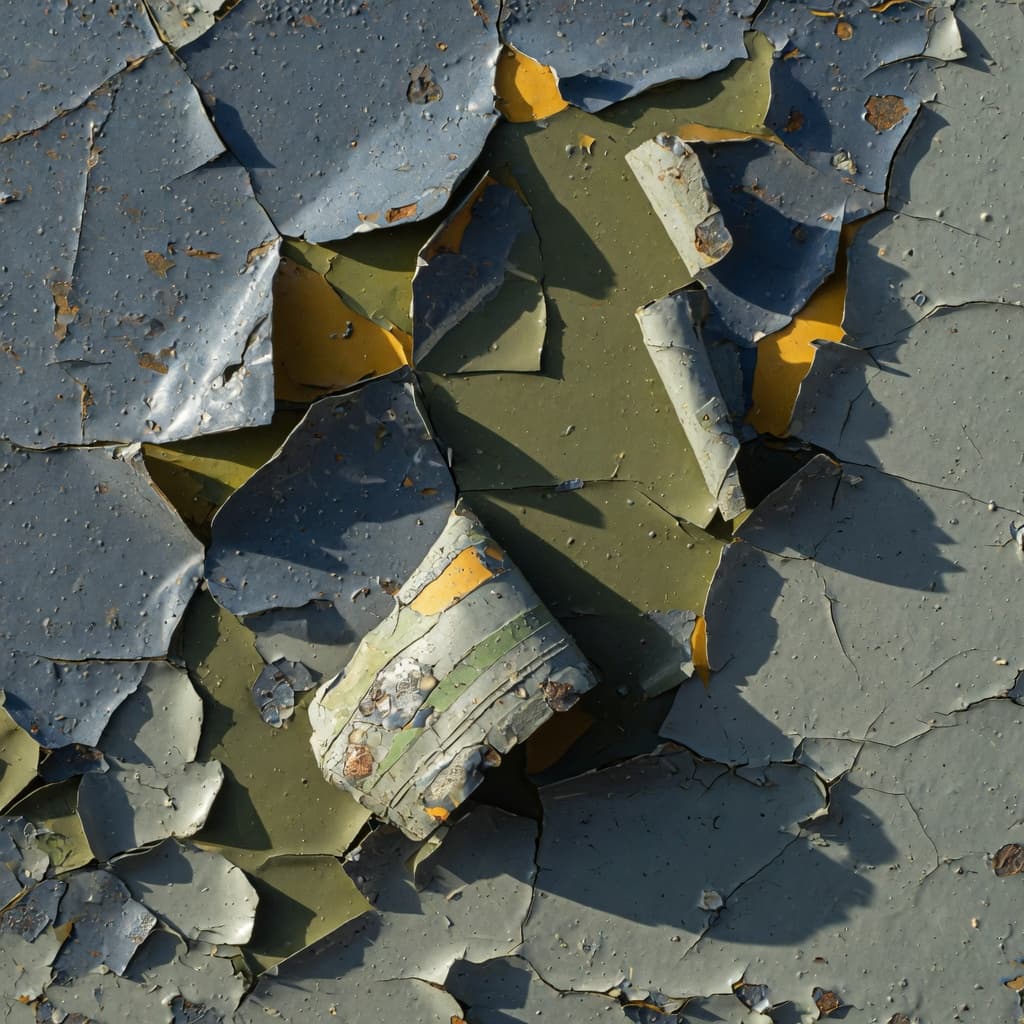
Requires matching the paint system and substrate pairing before setting energy, because a thin single topcoat on [steel](/materials/steel-laser-cleaning) clears at a fraction of the fluence a multilayer primer stack on [aluminum](/materials/aluminum-laser-cleaning) needs, and the substrate sets its own ceiling once the coating is gone. Paint sits as an applied, cross-linked polymer film bonded by mechanical keying and resin adhesion, not a corrosion product, so pigment load and binder chemistry decide more of the setting than the substrate alone. A surface-integrity study on laser-cleaned aluminum alloy carrying a paint layer documents that a visually bare finish does not by itself confirm the metal underneath escaped the pass undamaged (Applied Optics, 2024).
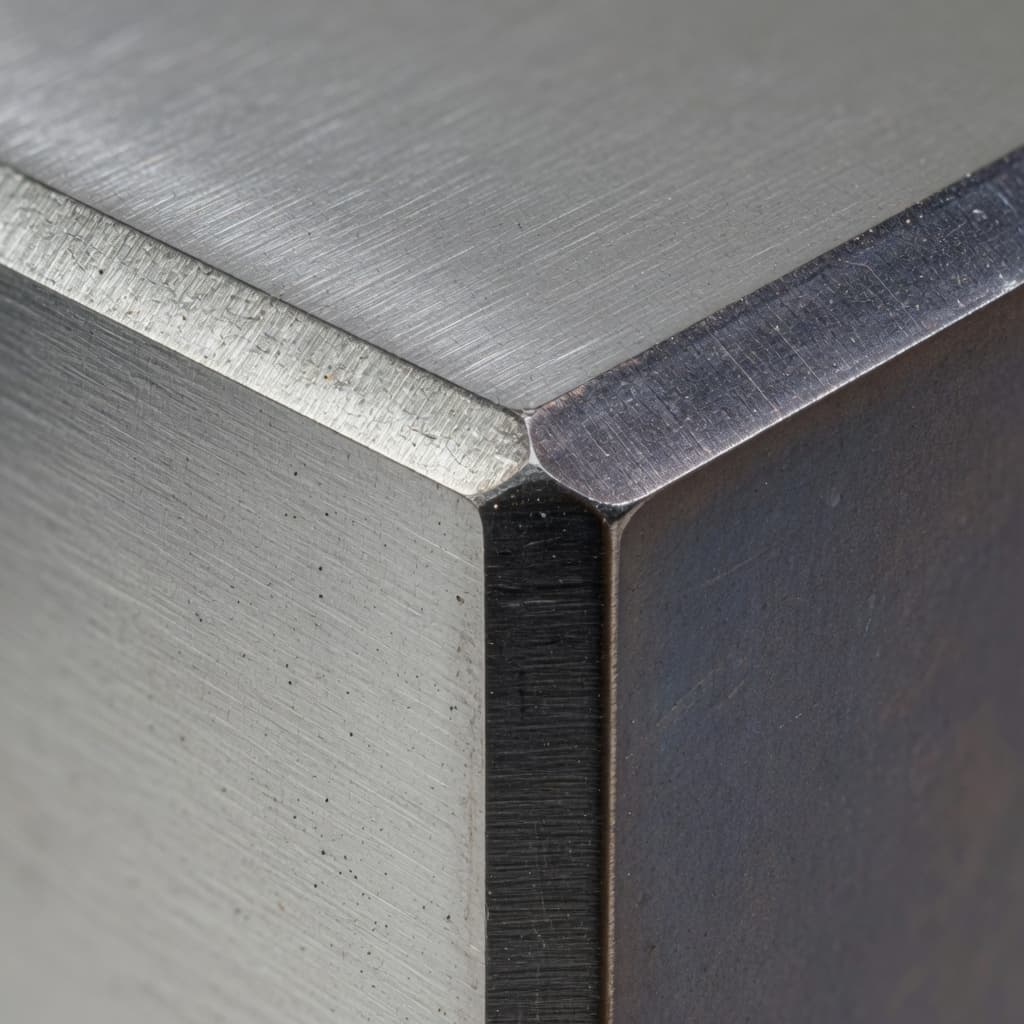
A pulsed fiber laser strips PVD and CVD hard coatings, CrN, TiN, TiAlN, CrTiAlN, and DLC, from tool steel and cemented carbide without a hot alkaline bath or media blast, and the same beam clears Type III hardcoat anodize from aluminum. Removal fluence is coating and substrate specific, not a single fleet number, and a separate study clearing titanium oxide needed its own coupon-proven band near 5 to 7 J/cm², with residue remaining below it and cracking above it, the same chemistry-and-substrate sensitivity a hard-coating strip job has to respect before running a full tool through the cell.
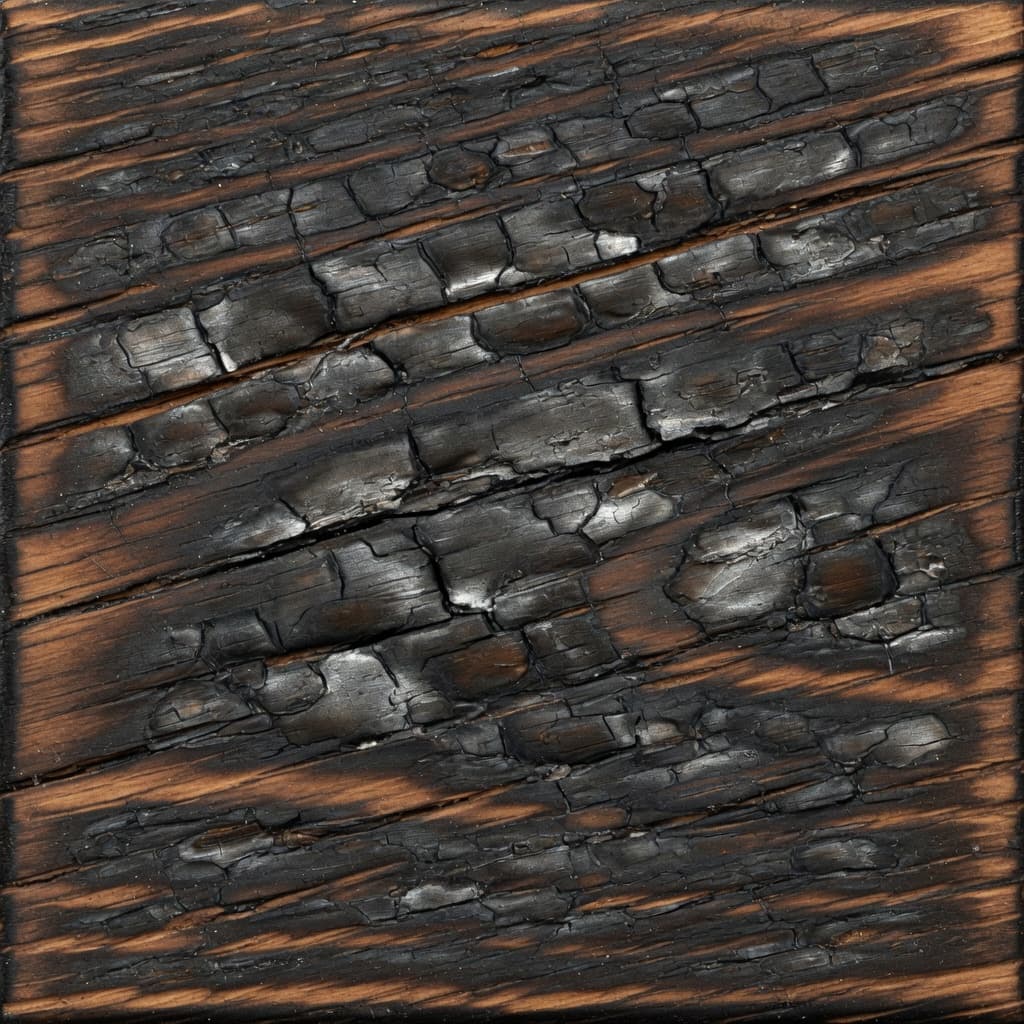
Loose soot and bonded char leave brick, concrete, and painted exterior trim under a dry pulsed near-infrared pass that replaces water, chemical sponges, and grit. Burned drywall paper and timber that already lost structural backing stay outside this page, and any wood still needs a scrap coupon before production settings.