

ANSI
ANSI Z136.1 - Safe Use of Lasers


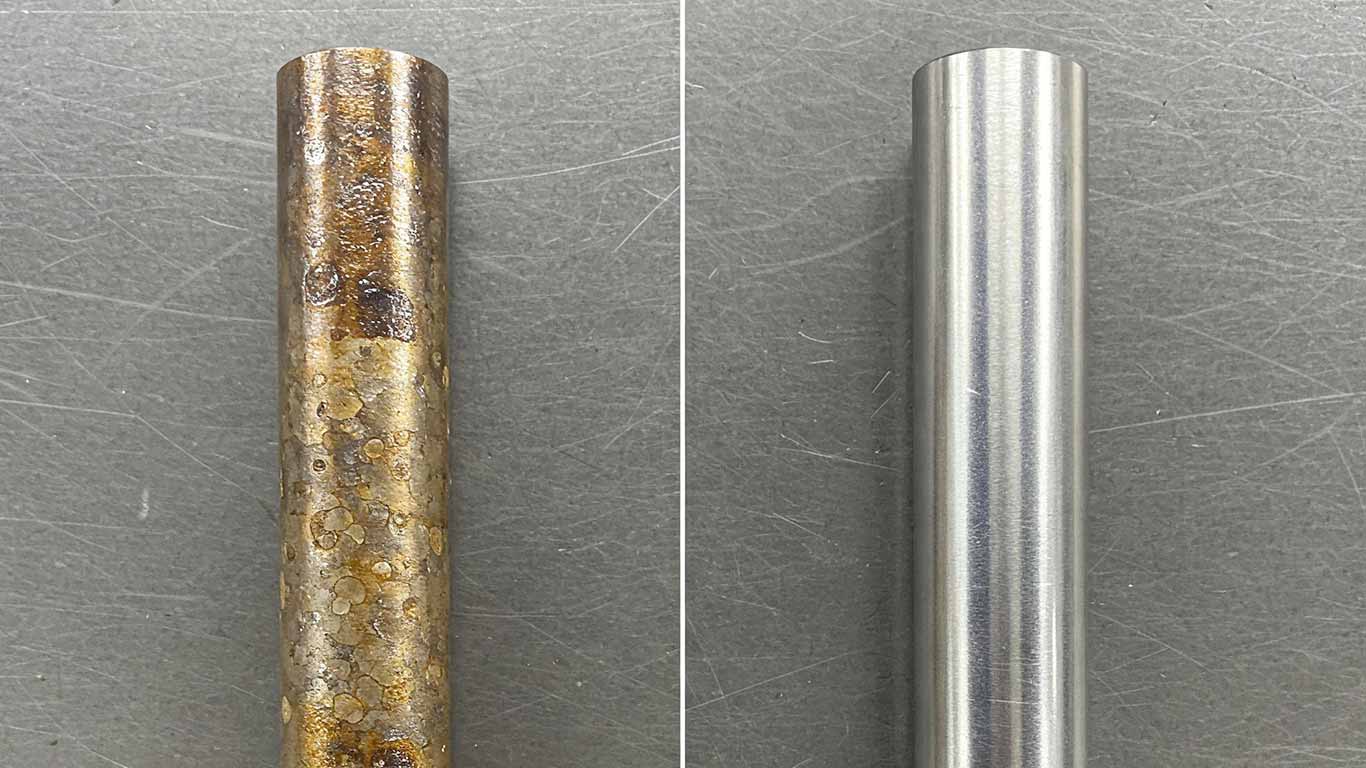
Commercially pure titanium carries a rutile TiO₂ native oxide film 1–6 nm thick that pulsed laser cleaning removes selectively — without creating alpha case. Alpha case is an oxygen/nitrogen solid-solution embrittlement zone that forms when bulk titanium is held above 650°C with oxygen present; nanosecond pulses ablate the oxide in under 20 ns, keeping bulk temperature well below that threshold.
Pulsed laser cleaning handles most titanium oxide removal reliably, but three specific conditions require extra attention — alloy variant, dust classification, and over-energy level.
Laser cleaning protocols validated for Grade 5 Ti-6Al-4V do not transfer to Ti-6Al-2Sn-4Zr-6Mo (Ti6246). The 6% Mo content in Ti6246 shifts oxide composition and cleaning response at 1064 nm relative to Ti-6Al-4V; the magnitude depends on prior thermal history and surface condition. Alloy-specific qualification is required.
Z-Beam approach
Z-Beam qualifies each alloy variant separately before production runs. Bring your material certification sheet — alloy grade determines starting parameters.
Titanium particles in the 10–70 µm range generated during laser cleaning are classified as pyrophoric under NFPA 484 (Standard for Combustible Metals). NFPA 484 mandates wet collection systems for pyrophoric metal dusts when dry filtration cannot guarantee safe capture — wet scrubbers meet this requirement; dry bag filters do not.
Z-Beam approach
Z-Beam's cleaning cell uses NFPA 484-compliant wet capture plus HEPA secondary filtration. In-house rental programs require the Netalux Kamino 300 to be paired with an approved wet collection system — we specify this at setup.
Laser energy level above 5.97 J/cm² in ambient air transforms titanium surface from silver-metallic to yellow-brown within a single pass (Li et al., Journal of Manufacturing Processes, Vol. 82, 2022). Re-oxidation from the plasma plume exceeds the starting oxide thickness — the part must be re-processed at 0.3–0.5 J/cm² lower energy.
Z-Beam approach
Z-Beam calibrates fluence to 1.5–2.1 J/cm² and monitors surface color change in real time. Yellow-brown appearance triggers an immediate fluence reduction of 0.3–0.5 J/cm² before proceeding.
Titanium particles in the 10–70 µm range are pyrophoric under NFPA 484 (Standard for Combustible Metals). Titanium dust collection must use wet scrubber systems — dry filters are a code violation for titanium. Z-Beam's laser cleaning cell uses wet capture plus HEPA secondary filtration. Workplace safety rules Table AC-1 lists no substance-specific Permissible exposure limit (PEL) for TiO₂; it falls under PNOR (Particulates Not Otherwise Regulated) at 5.0 mg/m³ respirable (OSHA 1910.1000 Table Z-1).
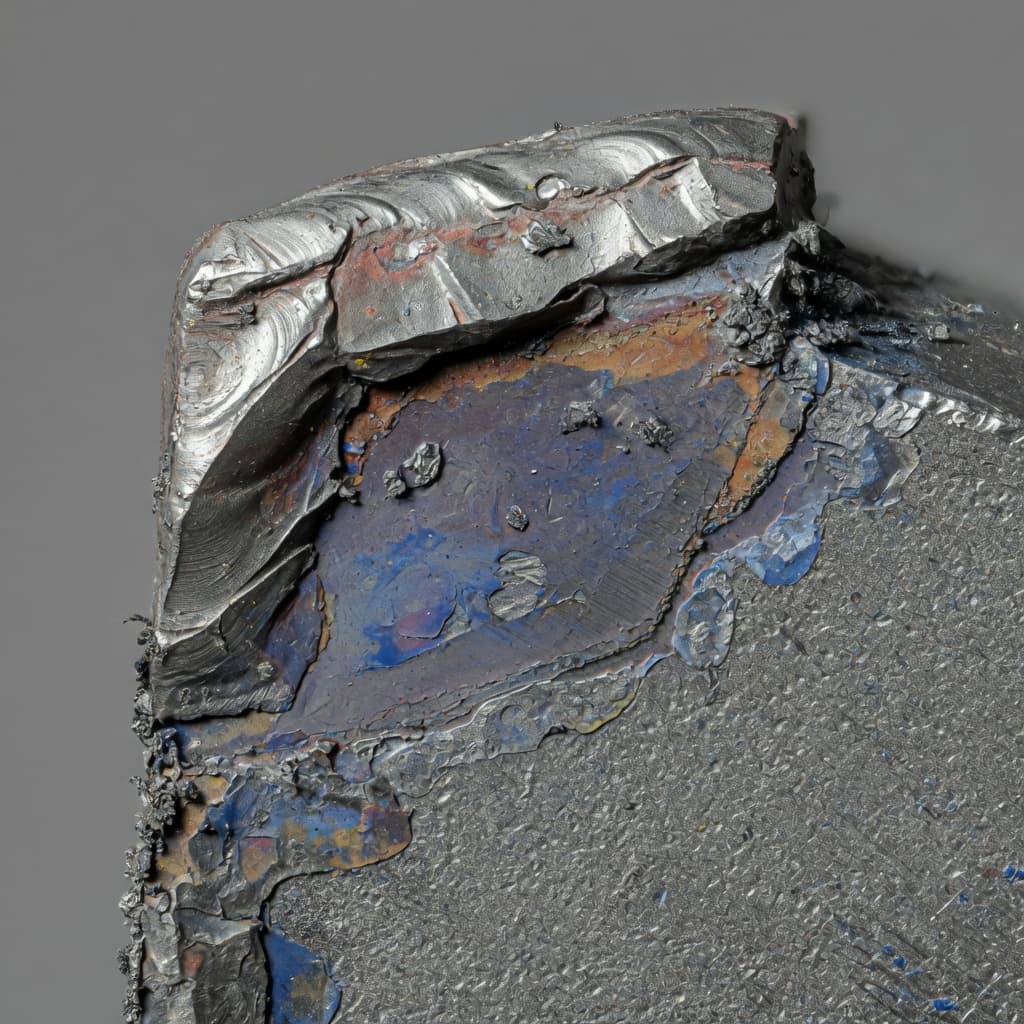
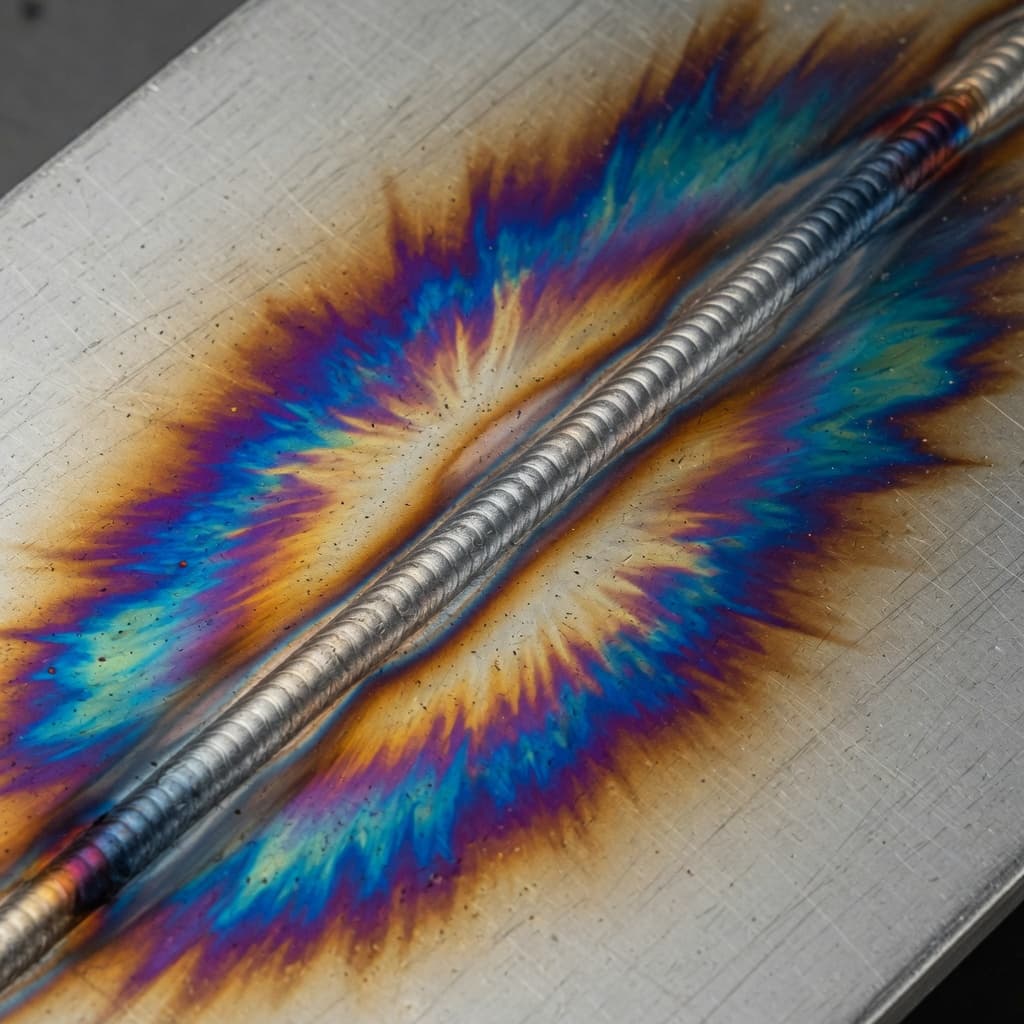
Laser cleaning titanium removes the TiO₂ oxide layer — typically 2–10 µm thick after thermal exposure — at energy levels of 0.5–0.8 J/cm² while preserving the ASTM B265 sheet or ASTM F136 implant-grade substrate. Blue or purple surface discoloration signals oxidation onset above approximately 425°C and is a warning to reduce energy input immediately; it is not evidence of alpha case. Alpha case (oxygen/nitrogen embrittlement) requires sustained bulk temperature above 650°C held for seconds, which nanosecond pulses do not produce. Pulsed laser cleaning is safe for titanium when parameters are properly controlled.
CP titanium Grade 2 and Ti-6Al-4V Grade 5 require meaningfully different starting parameters. Grade 2 CP titanium uses 0.8–1.5 J/cm² at 1064 nm; Ti-6Al-4V runs at 1.0–1.5 J/cm² — a narrower window because the vanadium and aluminum content shift oxide composition and thermal response. Thin sections under 3 mm require a further 20–30% energy reduction on both grades. For Ti-6Al-2Sn-4Zr-6Mo (Ti6246), Grade 5 protocols do not transfer — the 6% Mo content changes cleaning response enough that alloy-specific qualification runs are required. Blue or purple discoloration on any grade signals oxidation onset above approximately 425°C and requires an immediate 0.2–0.3 J/cm² reduction before the next pass.
The validated starting point for CP titanium at 1064 nm is 1.5–2.1 J/cm², 20 ns pulse length, 1,500 mm/s cleaning speed, 60% beam overlap, and 50 kHz repetition rate — parameters calibrated to stay well below the 5.97 J/cm² re-oxidation threshold where yellow-brown discoloration appears (Chen et al. 2026). Ti-6Al-4V uses 1.0–1.5 J/cm² at the same pulse length and speed. Low thermal conductivity (21.9 W/m·K) means cleaning speed and overlap are the dominant control variables — reducing power alone without adjusting speed creates hot spots. Inert gas assist (argon purge) is added for aerospace and medical components where zero surface oxidation is required.
Laser cleaning of aerospace titanium components typically runs $20–100 per part; medical implants run $10–50 each; CP titanium sheet runs $5–15 per square foot. Titanium requires careful parameter control and slower throughput than steel, which is reflected in the cost. Inert gas assist (argon) for critical aerospace or medical applications adds 20–30%. Correct pulsed laser parameters eliminate alpha case risk — that rework cost is not a factor with properly controlled nanosecond laser cleaning.
ASTM B265 covers commercially pure and titanium alloy sheet/strip, while ASTM F136 governs Ti-6Al-4V ELI for surgical implants — both standards require surface cleanliness that 0.5–0.8 J/cm² laser cleaning reliably achieves. Alpha case requires sustained bulk oxygen exposure above 650°C held for seconds to minutes; nanosecond pulses ablate the TiO₂ oxide layer in under 20 ns, keeping bulk temperature well below the alpha case threshold. CW (continuous-wave) laser processing carries genuine alpha case risk because it sustains surface heating. Z-Beam uses nanosecond pulsed laser only. Source — Li et al., Journal of Manufacturing Processes, Vol. 82, 2022.
Yes — laser surface modification of CP titanium achieves Ra ~1.63 µm, within the 1–2 µm range validated in peer-reviewed osseointegration studies to improve bone-implant contact (BIC) rates at 4 and 8 weeks versus acid-etched controls (Babuska et al. 2018). Laser-prepared surfaces consistently outperform mechanically abraded surfaces in BIC in animal models. ASTM F86 does not currently name laser cleaning as an approved method, so facility-level process qualification (IQ/OQ/PQ under ISO 13485) is required. Z-Beam can provide process parameter documentation to support your validation package.
Ablation windows at 1064 nm that map to Titanium in the laser-parameters reference. Screening values from published literature — validate on coupons before production.
Ti oxide scale on Titanium: process-window ratio F_damage/F_th ≈ 1–8 (1064 nm literature).
Z-Beam operates titanium cleaning at 1.0–1.8 J/cm² — above the 1.5 J/cm² cleaning onset and well below the 5.97 J/cm² re-oxidation threshold (Li et al., 2022). Use 1064 nm, 20 ns pulse length, 1,500 mm/s cleaning speed, 60% overlap, 50 kHz, 300 µm spot. Low thermal conductivity (21.9 W/m·K) means overlap and cleaning speed matter more than peak power, which is exactly the regime a short-pulse precision source such as the JPT M7 20–100W — built for oxide work on titanium, where the layer lifts without driving heat into the substrate is designed to exploit. For Ti-6Al-4V, use 1.0–1.5 J/cm²; for CP titanium Grade 2, use 0.8–1.5 J/cm². For thin sections (<3 mm), reduce energy level by 20–30%. Blue/purple discoloration indicates surface oxidation onset — reduce energy level by 0.2–0.3 J/cm² immediately. Inert gas assist (argon) for aerospace applications where zero oxidation is required.
Pulsed nanosecond laser cleaning of titanium at 1.5–2.1 J/cm² selectively ablates the rutile TiO₂ native oxide film without creating alpha case — pulsed exposure ends in under 20 ns, far shorter than the sustained bulk dwell time required for alpha case formation above 650°C. Light absorption is 36% at 1064 nm. Heat spread rate is 9.29×10⁻⁶ m²/s; heat spreads slowly, so cleaning speed (1,500 mm/s) and overlap (60%) matter more than power alone.
Pulsed laser cleaning selectively removes the 1–6 nm rutile TiO₂ native oxide film from CP titanium without alpha case formation — the mechanical cleaning in under 20 ns keeps bulk temperature well below the 650°C threshold where oxygen/nitrogen embrittlement begins. Low thermal conductivity (21.9 W/m·K) — nearly twenty times below the heat-spreading conductivity of copper — confines heat to the cleaning zone and makes cleaning speed and overlap the dominant process variables. Density is 4510 kg/m³, tensile strength 345 MPa, melting point 1941 K. Surface reflectance is 46% at 1064 nm; light absorption is 36%. Blue/purple discoloration indicates surface oxidation onset above ~425°C — a warning to reduce energy level, not evidence of alpha case. Grades 2 and 5 (Ti-6Al-4V) have different cleaning parameters.
| Parameter | Value |
|---|---|
| Equipment operating range | 0.5–1.5 J/cm² (Light contamination) |
| Operating point (20% below ceiling) | 1.2 J/cm² |
| Condition | Consequence |
|---|---|
| Microstructural changes in near-surface titanium from thermal excursionHard stop | Near-surface microstructure permanently altered; fatigue properties degraded; aerospace qualification risk |
| Titanium oxide formation (rutile TiO2) from laser treatment in air above oxide induction threshold | Thickened TiO2 layer alters surface energy; may reduce bond strength or fail aerospace adhesion specs |
| Surface Condition | Floor (J/cm²) | Ceiling (J/cm²) | Window (J/cm²) | Safety % |
|---|---|---|---|---|
| No literature fluence data in research briefs — using equipment operating ranges. The rutile TiO2 primary contaminant here also forms on the [Ti-6Al-4V grade, which carries its own distinct cleaning window](/materials/metal/alloy/titanium-alloy-ti-6al-4v-laser-cleaning) — and it is not in the standard 7-contaminant Cal/OSHA list. TiO2 Cal/OSHA TWA is 10 mg/m³ nuisance dust (less stringent). Light fluence range to minimize thermal effects. Inert gas purge recommended. | 0.5 | 1.5 | 1 | 20% |
…He inspected the table, discussed realistic expectations, explained the process in detail, and answered all of my questions.