
FDA
FDA 21 CFR 1040.10 - Laser Product Performance Standards

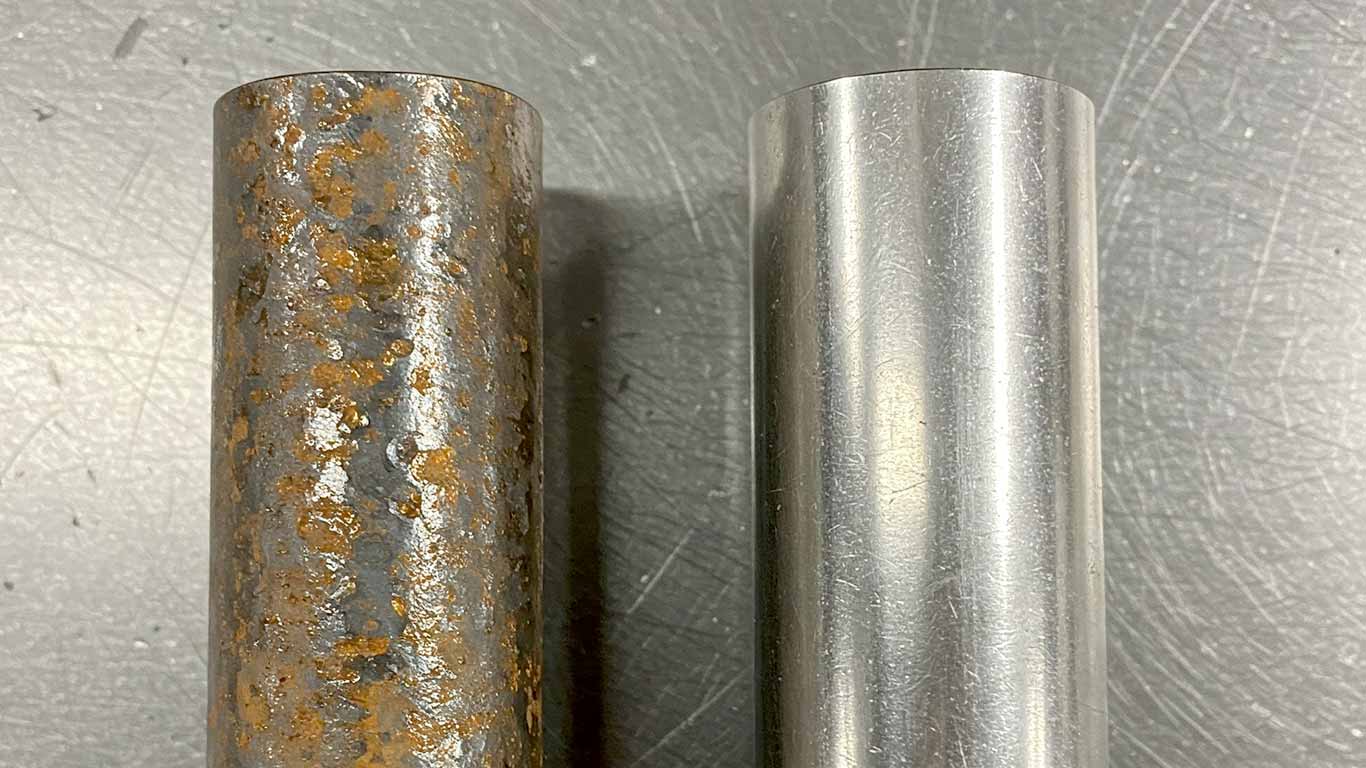

Nickel's thermal conductivity of 90.7 W/m·K makes it far more forgiving than copper or aluminum for laser cleaning — heat distributes quickly, the heat-affected area stays small, and the 2.1 J/cm² damage threshold gives you a generous operating window for oxide removal at 0.8–1.5 J/cm² without touching the passive NiO film underneath. The 37% light absorption at 1064 nm is moderate but workable. What overrides all of that is the toxicology. Nickel oxide fumes are IARC Group 1 carcinogens, and that classification changes everything about how the job is set up. Process enclosure is not optional, HEPA extraction rated for sub-0.2 µm particles must run continuously, and air monitoring runs alongside every job. The 90.7 W/m·K thermal conductivity keeping the heat-affected area small means nickel cleaning is scalable to production volumes in ways that lower-conductivity superalloys like Inconel are not — heat dissipates fast enough that successive passes don't accumulate surface temperature. Nickel cleans well, but fume extraction is always required.
I would highly recommend Z-Beam to anyone facing a difficult restoration project.

Fluence (J/cm²)
At 1064 nm, nickel absorbs approximately 36–37% of incident energy — significantly higher than aluminum (5%) or copper (3%), making nickel well-suited to 1064 nm Nd:YAG or fiber laser cleaning systems. Nickel and nickel compounds are IARC Group 1 carcinogens for lung and nasal cancer; Cal/OSHA CCR Title 8 Section 5155 sets the nickel (metal and insoluble compounds) PEL at 1 mg/m³ (8-hr TWA) — five times stricter than the 5 mg/m³ PNOR standard. Nickel-plated parts common in Bay Area electronics and telecommunications hardware liberate both nickel particulate from the plating layer and copper or steel fume from the surface as plating is removed — requiring simultaneous monitoring for both species. Bay Area aerospace and semiconductor facilities processing nickel-coated vacuum chamber components (NASA Ames, KLA, Applied Materials) require enclosed-extraction systems, not open-booth operation. Surface reflectance is about 63%. This still produces hazardous backscatter. Enclosure and beam dump design are required for safe operation. The damage threshold is 2.1 J/cm² with 10 ns pulses. This sits well above the energy level needed for oxide and residue removal, which is 0.5–1.5 J/cm². Cleaning can proceed without reaching the surface cleaning regime. Heat spread rate is 2.29×10⁻⁵ m²/s. Combined with 90.7 W/m·K conductivity, this means heat spreads quickly from the irradiated zone. That is good for heat-affected area control on solid parts. However, it is a consideration for thermal accumulation on thin nickel electroforms or plated substrates. Use higher overlap and lower energy on thin plated parts. No abrasives means no secondary contamination. Laser cleaning leaves no wet waste on the part.
Nickel has a density of 8,908 kg/m³. This sits close to copper. However, its surface behavior is quite different. A self-repairing NiO passive film forms on oxygen exposure. This film is only 1–3 nanometers thick. It yields corrosion rates as low as 0.005 mm per year in most environments. Hardness measures 150 HV. This is comparable to annealed stainless steel. Nickel is scratch-resistant but not brittle. Thermal conductivity is 90.7 W/m·K. This is high enough to distribute laser-induced heat efficiently. It reduces localized overheating risk compared to low-conductivity superalloys. The critical safety constraint is not mechanical. It is toxicological. IARC classifies nickel oxide fumes as Group 1 carcinogens. OSHA's permissible exposure limit is 1 mg/m³ for nickel metal compounds. Fume extraction is a non-negotiable process requirement, not an enhanced precaution. Every nickel cleaning job requires enclosed extraction from the start. The process is fast and safe.
Start at 0.8–1.2 J/cm² for oxide and contamination removal. This stays well below the 2.1 J/cm² damage threshold. It preserves the NiO passive film on the cleaned surface. Scan at 500–700 mm/s with 40% overlap on solid nickel. Increase overlap to 60% on electroformed or plated parts. Surface uniformity is critical for these components. Rainbow discoloration indicates residual thermal oxide. This usually comes from insufficient speed or poor ventilation. It is a process signal, not surface damage. But correct it before continuing. Fume extraction must be engineered for sub-micron nickel oxide particle capture. Use dedicated HEPA filtration with nickel-rated media. The rating must cover particles down to 0.2 μm. Standard shop dust collection fails this specification completely. Laser cleaning leaves no wet waste on the part. The process is fast and simple to run.
Laser cleaning nickel requires compliance with four primary safety standards. But the critical hazard is toxicological, not optical. Nickel oxide fumes are Group 1 carcinogens. This changes how you apply each standard. FDA 21 CFR 1040.10 governs laser product performance. For nickel, you must also implement fume extraction that meets OSHA's (safe exposure limit). Standard laser enclosure alone is insufficient. ANSI Z136.1 provides laser safety guidelines. Apply its nominal hazard zone calculations to 1064 nm at 100 W. But add continuous air monitoring to detect nickel oxide concentrations. This goes beyond the standard's base requirements. IEC 60825 applies internationally. Ensure your fume extraction HEPA media is rated for 0.2 μm particles. Standard HEPA filters may not capture sub-micron nickel oxides effectively. OSHA 29 CFR 1926.95 mandates PPE. For nickel, this includes laser safety glasses, full-face respirators with P100 or HEPA filters, and fire-resistant clothing. Never rely on laser PPE alone. Process enclosure and extraction are your primary controls. Additional controls specific to nickel include dedicated extraction systems. Do not share extraction with other processes. Nickel oxide cross-contamination is a serious risk. Test air quality regularly and keep records of exposure monitoring.
FDA 21 CFR 1040.10 - Laser Product Performance Standards
ANSI Z136.1 - Safe Use of Lasers

IEC 60825 - Safety of Laser Products

OSHA 29 CFR 1926.95 - Personal Protective Equipment
Application pages where this material appears in cleaning workflows.


Laser cleaning nickel and nickel alloys primarily presents a toxicological hazard due to the generation of nickel oxide fumes, which are classified as Group 1 carcinogens. Mitigation requires stringent safety protocols, including process enclosure, dedicated HEPA extraction systems, and continuous air monitoring to protect personnel from exposure.
Discoloration or rainbow patterns on nickel surfaces after laser cleaning typically result from localized re-oxidation or the formation of thin oxide films. This occurs when laser parameters, such as power level or pulse length, are not precisely optimized, leading to thermal effects that alter the surface chemistry. Maintaining settings below the 2.1 J/cm² damage threshold is crucial to prevent such thermal damage and preserve the passive film.
Nickel's 63% surface reflectance at 1064 nm necessitates higher laser energy levels for efficient material removal, impacting process speed. This surface reflectance also increases the risk of specular reflection, requiring robust laser safety protocols, including appropriate personal protective equipment and beam path enclosures. Furthermore, nickel oxide fumes are Group 1 carcinogens, demanding dedicated HEPA extraction and air monitoring. Z-Beam cleans on-site with full fume controls in place.
Nickel laser cleaning costs are driven primarily by safety infrastructure, not laser energy. Because nickel oxide fumes are Group 1 carcinogens, dedicated HEPA extraction, process enclosure, and air monitoring are non-negotiable baseline expenses. Operating parameters of 100 W power, 1.5 J/cm² power level, 30 kHz frequency, and 1500 mm/s cleaning speed at 60% overlap keep cycle times short, but safety compliance often exceeds direct processing costs.
Pure nickel has a relatively wide cleaning gap, but fume controls are required — Cal/OSHA §5155 governs insoluble nickel compound ventilation.
Our video library shows nickel laser cleaning across several industrial settings. One demonstration follows aerospace component cleaning before inspection. You will see how 1.0 J/cm² removes thermal oxide without damaging the base metal. The video includes real-time fume extraction monitoring. Another video compares cleaning parameters on electroformed nickel parts. Thin sections require lower energy level and higher overlap to prevent heat buildup. Watch how rainbow discoloration appears when cleaning speed drops below 500 mm/s, and learn how to correct it immediately. These videos help operators visualize the relationship between parameter choices and surface outcomes. Seeing the effects of correct versus excessive energy level builds practical intuition. New nickel alloy demonstrations are added quarterly. These videos help operators choose safe energy levels for nickel.